

A familiar police account usually means road updates, public appeals, or practical warnings. A cryptocurrency giveaway appearing between those posts can catch even a careful follower off guard.
The Garda crypto airdrop scam starts with that uncomfortable mismatch. Before following a claim link, it helps to understand why a recognizable account is not enough reassurance.
Overview
Two genuine Garda accounts were accessed without permission
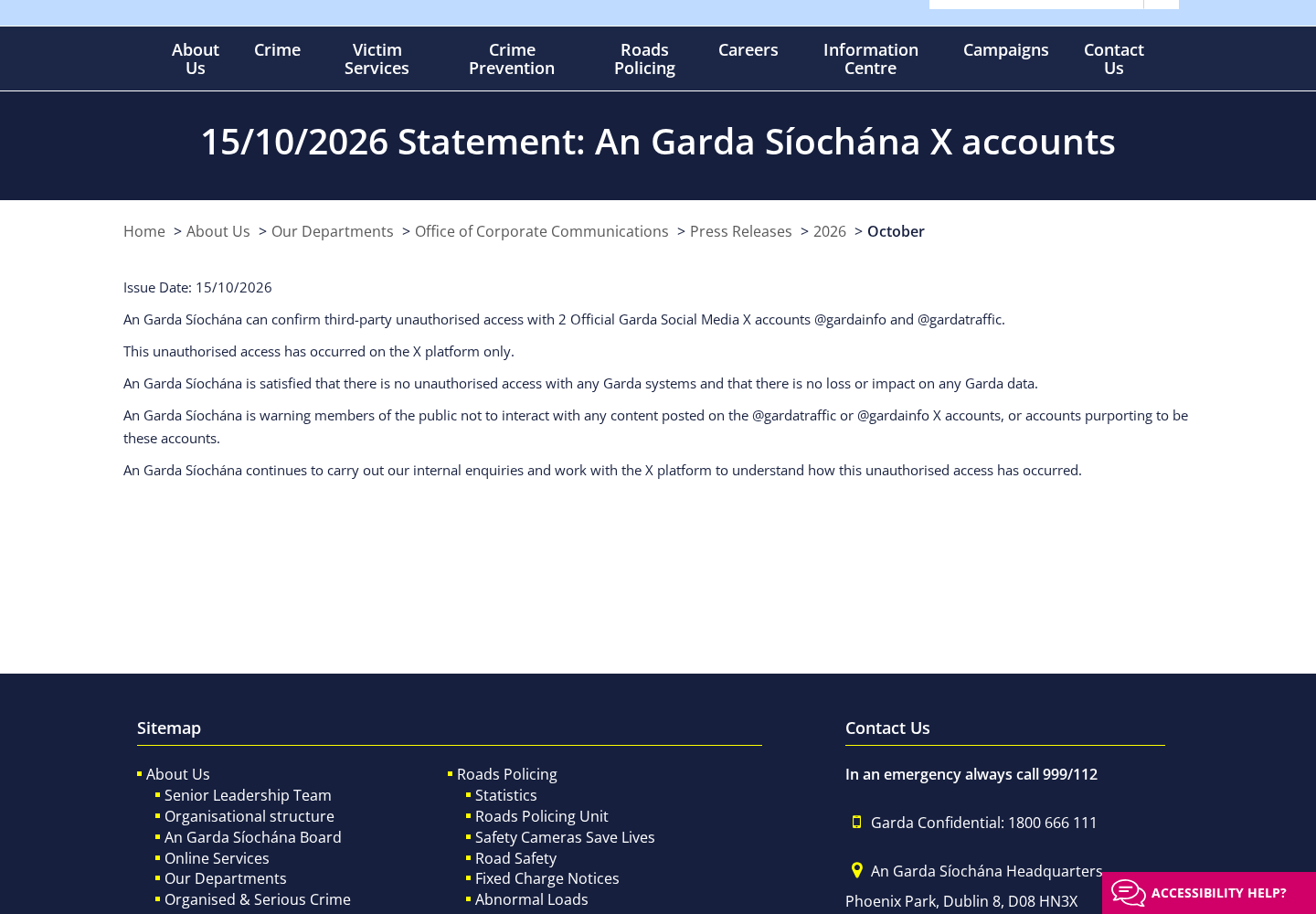
An Garda Síochána, Ireland’s police service, confirmed unauthorized third-party access to the official @GardaInfo and @GardaTraffic accounts on X.
Its October 15, 2026 statement warned people against interacting with content from those accounts or accounts pretending to be them.
The police service said the incident was confined to X, with no unauthorized access to Garda systems and no loss or impact on Garda data.
The crypto promotion was not a police-backed opportunity
The unauthorized posts promoted free cryptocurrency through an airdrop. Coming from a familiar police account, the invitation could look considerably safer than an offer from a stranger.
The Garda is the institution being impersonated, not the operator of a cryptocurrency giveaway. Treat the unauthorized promotion as a scam, rather than an unusual public-service announcement.
There is no reason to connect a wallet, disclose recovery words, or send a verification payment through that promotion.
Your next move depends on what you actually did
- Saw the post only: ignore the promotion and avoid sharing its claim link.
- Opened a page: close it and check whether you downloaded anything or granted permissions.
- Approved a wallet request: inspect the exact permission or transaction rather than assuming disconnecting fixes everything.
- Disclosed recovery words: treat the wallet’s keys as exposed and seek your wallet provider’s official compromise guidance.
A full copy of the incident’s landing page and wallet prompts was not preserved for this article. The wallet scenarios below explain possible risks, not verified individual losses.
Why a Real Account Can Carry a Fake Offer
Most people learn to inspect the sender before trusting a message. That habit is useful, but a hijacked account can pass the familiar-name check.
The name, old posts, and existing audience may all belong to a genuine organization. What has changed is who can publish the latest message.
Imagine following traffic updates for months. You recognize the profile and scroll quickly. A reward announcement may receive less scrutiny than the same text from a stranger.
That shortcut is what the attacker benefits from. The account’s reputation travels with the post even though its owner did not authorize the offer.
Checking spelling alone therefore misses the central problem. A perfectly spelled official handle can still distribute an unauthorized link during a compromise.
The safer question concerns the request itself. Why would a road-safety or police-information account need your cryptocurrency permissions to deliver a public update?
Before assuming the police have launched an unusual new program, leave the post and look for an announcement on their own website.
The Garda’s official statement is the relevant independent warning here. The screenshot above shows that warning, not a giveaway advertisement.
How the Garda Crypto Airdrop Scam Works
Step 1: The attacker borrows an account people already recognize
Unauthorized access gives someone else the ability to put material in front of an established audience. They do not need to persuade every follower to trust a new profile.
That is especially powerful when the account normally shares information people rely on. An unexpected topic can seem like an exception rather than evidence of account abuse.
The entry method for this incident has not been established here. Do not assume a particular employee clicked a phishing email or reused a password.
For a reader, the practical consequence is simpler: an account’s history cannot authorize the request currently appearing on your screen.
Step 2: A free-crypto offer gives followers a reason to click
An airdrop is a distribution of crypto assets. The term sounds familiar enough to make a reward page seem like a normal part of the cryptocurrency world.
In a deceptive promotion, the promised benefit does the persuading. Readers are encouraged to investigate what they could receive before considering what the page might request.
Do not let the word free make the interaction feel harmless. A page can ask for valuable access without displaying a purchase price.
Equally, an airdrop label does not identify a particular token, blockchain, or amount. Those details must come from the actual offer, not guesses about other crypto scams.
Step 3: The linked page tries to carry that borrowed trust further
Once a follower leaves X, the destination is a separate website. Its controls and requests need their own scrutiny, regardless of which profile supplied the link.
A familiar logo or claim button does not connect that website to the police service. Neither does a browser showing an encrypted connection.
A claimant should never need to restore an existing wallet by entering its recovery words into a reward page. That would expose control, not verify eligibility.
Other deceptive giveaways ask users to send cryptocurrency first. Calling the transfer verification does not make it a genuine way to receive free funds.
These are established giveaway risks, not a claim that every one of those prompts appeared in the Garda incident.
Step 4: A wallet request can change the risk substantially
A website may invite you to connect a wallet and then present further requests. Do not treat those separate actions as one harmless sign-in.
Merely connecting an account is different from giving a contract permission to spend tokens. A transaction or signature can have consequences that the page’s friendly wording conceals.
Inspect what the wallet actually describes. A claim page saying verify should not overrule a wallet warning about transfers, spending permissions, or unreadable signing data.
If you cannot explain the request, reject it. Do not approve something just to reach the next screen and see whether the promised reward appears.
Never use the value shown on a claim page as proof that funds are yours. A displayed reward can be invented without any corresponding asset reaching your wallet.
Step 5: Apparent progress can keep the reader involved
A confusing result may leave someone looking for help in the replies. That creates another opportunity for accounts pretending to provide wallet support.
A stranger might offer to validate the wallet, repair a failed claim, or retrieve missing assets. Those labels do not give them authority over your keys.
Do not continue because you have already spent time on the offer. An unfinished claim is a good point to stop, not a debt you need to complete.
If money has moved, preserve the transaction details and use established reporting routes. Sending more funds to unlock a refund can deepen the original loss.
What Connecting, Approving, and Sharing Recovery Words Mean
A connection is not automatically a transfer
Seeing a wallet connection does not, by itself, prove your assets were stolen. Check the wallet’s activity rather than guessing from the website’s success message.
Review the network, account, time, and requests you accepted. Several accounts can exist inside a wallet, so the balance currently displayed may not tell the whole story.
If you declined every request, do not let a stranger persuade you that a paid cleanup is mandatory. Identify the actual exposure first.
An approval may remain after you close the page
MetaMask distinguishes disconnection from approval revocation. Closing a website’s connection does not necessarily remove a smart contract’s existing spending allowance.
Review suspicious allowances through your wallet provider’s documented process or a trusted explorer for the correct network. Revocation is generally an on-chain action with a network fee.
That genuine network cost is different from sending money to a person who claims to unlock the reward. The destination and action matter.
Recovery words expose the wallet itself
A recovery phrase allows a wallet to be restored. Someone who obtains it can gain access independently of the password protecting the app on your phone.
Changing that local password is not a solution to disclosed recovery words. Neither is uninstalling the app and importing the same compromised phrase again.
Use the wallet provider’s compromise instructions from a clean device. If suspicious automated transfers are occurring, do not keep adding funds for transaction fees.
Check the Account Warning, Not the Giveaway Replies
GardaInfo and GardaTraffic are identifiable official accounts, but a reply thread is not an independent source of authorization for a promotion.
A screenshot claiming that someone received a payout may be altered, unrelated, or supplied by another account participating in the deception.
Coinbase’s scam guidance warns about giveaway posts reinforced by fake replies and requests to send cryptocurrency for address verification.
Instead, navigate to the institution’s website yourself. Search its announcements there, using the topic and date rather than a link supplied by the person promoting the giveaway.
Keep the incident’s scope in view, too. Unauthorized social-media access does not establish that a police database was breached or your personal records were taken.
Nor does the original warning establish when an account was subsequently restored. Use a later official update for recovery status, not an old repost of the incident.
If you warned friends by sharing the suspicious post, follow up without its live claim link. A brief correction can keep your warning from sending someone toward the trap.
What to Do if You Have Fallen Victim to This Scam
-
Stop the claim process. Close the linked page and refuse additional wallet requests. Do not send a second payment to release a reward or refund.
Save the post address, destination URL, relevant screenshots, and approximate time. You can preserve evidence without returning to the page or completing another interaction.
-
Work out what you shared. Note whether you only visited, connected a wallet, signed something, transferred assets, entered credentials, or supplied recovery words.
Write those actions in order while you remember them. That timeline helps support staff distinguish a browsing concern from an active wallet compromise.
-
Review the affected wallet account. Check its activity and the relevant blockchain explorer. Record unfamiliar recipient addresses, token movements, amounts, and transaction hashes.
For suspicious spending allowances, follow official revocation instructions. Disconnect the site too, but do not mistake that separate step for cancellation of an on-chain permission.
-
Respond urgently if recovery words escaped. Follow your provider’s compromised-wallet guidance to protect remaining assets using fresh, securely created keys.
Do not disclose the new phrase to anyone offering assistance. If a sweeper appears to remove incoming funds, seek official guidance before depositing more for fees.
-
Secure any login you entered. Open the genuine service independently, change the exposed password, and examine active sessions and connected applications.
If that password was reused elsewhere, change those copies as well. Enable available multifactor protection and check the associated email account for unauthorized changes.
-
Check downloaded software and browser permissions. If the page persuaded you to install a wallet extension or another program, avoid accessing sensitive accounts through it.
Malwarebytes can help check a potentially affected device. A clean scan cannot revoke blockchain permissions, invalidate exposed recovery words, or reverse a transfer.
AdGuard can reduce malicious advertising and tracking exposure. It does not authenticate a hijacked social account or make a wallet signature safe.
-
Contact the relevant payment service and report the incident. If an exchange or bank funded the transfer, explain what happened promptly and provide the transaction records.
In Ireland, report fraud to your local Garda station, using contact details from the official directory. Elsewhere, contact your local police or appropriate cybercrime-reporting service.
Keep case references and any provider response together. Reporting may help an investigation, but it does not guarantee recovery of cryptocurrency already transferred.
-
Ignore unsolicited recovery offers. Do not publish your phrase, private keys, identity documents, or account credentials while asking the community for advice.
Anyone promising guaranteed recovery for an advance payment deserves particular distrust. Reach support through the wallet or exchange’s independently located help center.
Frequently Asked Questions
Was the Garda crypto airdrop a legitimate police promotion?
No. The crypto messages were associated with unauthorized access to police accounts. They should not be treated as a Garda-approved giveaway or investment opportunity.
Were GardaInfo and GardaTraffic fake accounts?
No. The warning concerned unauthorized access to two genuine official accounts. Impersonators can also create lookalike profiles, but that is different from hijacking the real account.
Does seeing the post mean my wallet was hacked?
No. Exposure depends on what you did afterward. Review any link visits, software installations, information entered, approvals, signatures, and actual transactions before deciding which response applies.
Is disconnecting a wallet enough after an approval?
Not necessarily. Disconnection and spending-approval revocation are separate. Review the exact allowance through your provider’s instructions, and treat disclosed recovery words as a different, more serious problem.
Did the incident expose Garda police databases?
The official statement said the unauthorized access occurred on X only, with no unauthorized Garda-system access or loss or impact on Garda data.
Can someone guarantee that stolen cryptocurrency will be recovered?
No. Save the transaction evidence and report promptly, but do not pay a stranger promising certain recovery. A genuine investigation cannot promise a particular outcome.
The Bottom Line
Ignore the Garda crypto airdrop scam. Do not connect a wallet or send a claim payment. A compromised official account cannot make an unauthorized offer legitimate.
If you responded, act on the exposure you actually had. Review wallet requests, secure disclosed credentials, preserve transaction details, and use official support and reporting channels.

Join the discussion
0 commentsShare your experience or ask a question about this article.
Community experiences
Did this happen to you?
Your experience could help someone recognize the same scam. Submit a private report for our team to review.
I experienced this tooReports are reviewed before publication. Sharing publicly is always your choice.
Discussion
Start the conversation
Have a question or something useful to share? Add the first comment.