

A travel confirmation arrives for a trip you don’t remember booking. The email invites you to view the details, and the next page appears to offer a refund.
It’s an unsettling combination: a reservation that seems already paid, followed by a convenient way to put things right.
Overview
The trip confirmation is the beginning of a refund trap
The Hotelplan refund scam uses a false travel confirmation to send recipients to a website impersonating the travel company.
There, an apparent paid hotel reservation creates a reason to request reimbursement. The process collects card details and moves toward a banking approval.
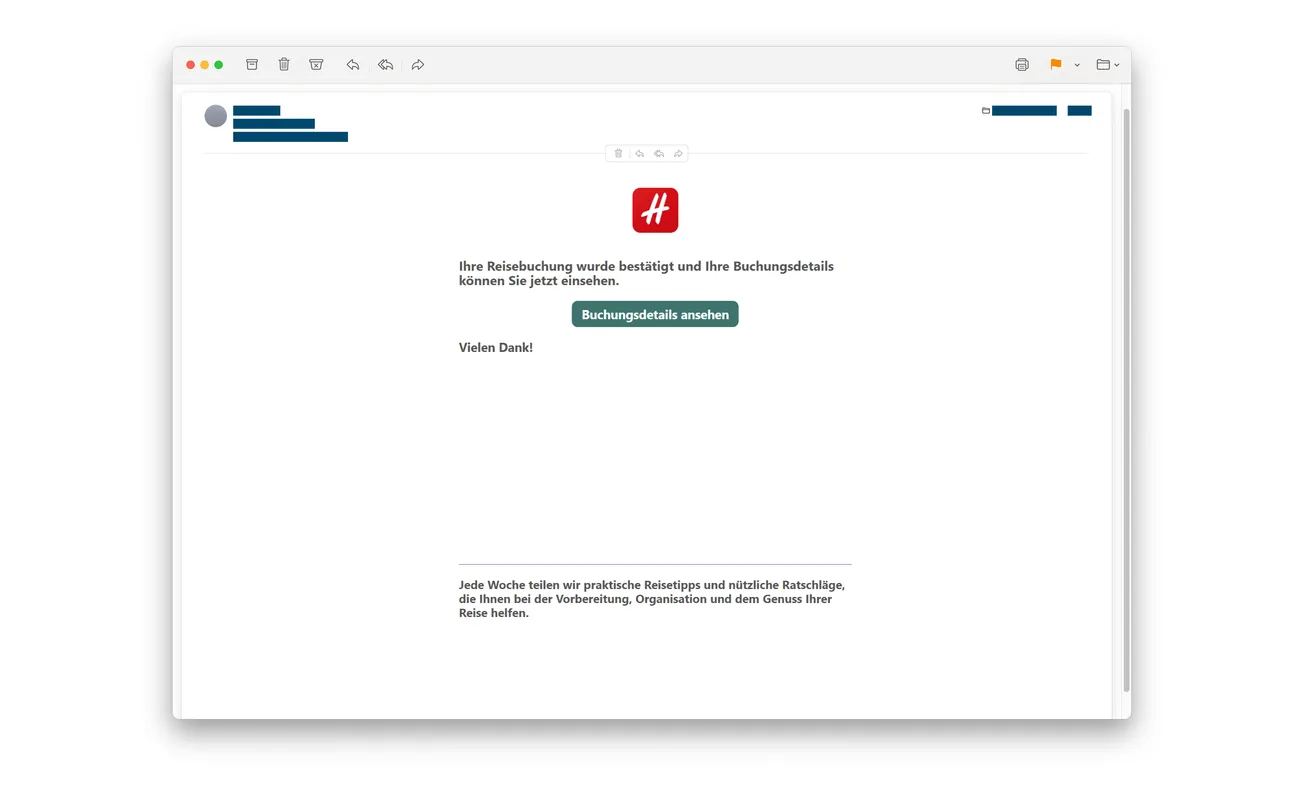
Zurich cantonal police’s September 23 advisory documents this sequence. The original email above includes a “Buchungsdetails ansehen” button for viewing booking details.
The message doesn’t establish that a real reservation exists or that Hotelplan took your money. The company is being impersonated.
The final approval sends money instead of receiving it
After asking for card information, the fake site says the refund is being processed. It then requests confirmation in a banking app or an OTP.
Police explain that this confirmation authorizes a payment, not receipt of a refund. The site’s description and the bank’s actual action don’t match.
- An unexpected travel email creates concern about a booking.
- A copied Hotelplan page displays an apparently paid reservation.
- A refund option encourages the recipient to continue.
- The form collects credit-card information under a reimbursement explanation.
- A banking approval or code releases a charge rather than money coming back.
Verify the booking before trying to cancel or refund it
Check your own booking records and actual card transactions. Contact Hotelplan through an independently reached route if you need to confirm a reservation.
Don’t enter payment information simply to undo something shown only on the suspicious page. First establish whether anything genuine needs undoing.
If you already approved a request, call the issuer promptly. Waiting for the claimed reimbursement gives the fake process more time, not more credibility.
Why an Unwanted Booking Can Feel Like Your Problem to Fix
You don’t have to want a holiday to engage with this email. Concern that someone booked in your name can be enough.
The page seems to offer useful evidence: a hotel, an apparent reservation, and a payment status. It also presents its own solution.
That makes the site both the source of the alarm and the place asking you to resolve it. Nothing outside the site has confirmed the booking.
Before starting a cancellation, check whether a real agency or actual card statement shows the same transaction.
An unfamiliar reservation can also encourage rushed decisions. You may want it stopped before a deadline, a departure date, or a family member notices.
Those understandable concerns shouldn’t put the sender in charge of your payment method. Pause long enough to use the genuine travel and banking channels.
If you do have a real Hotelplan booking, compare the exact reference and details independently. A coincidental match doesn’t authenticate an unexpected refund instruction.
Don’t cancel a genuine trip just because a fraudulent email created uncertainty. Ask the actual agency about your real reservation first.
How the Hotelplan Refund Scam Works
Step 1: A false travel email invites you to inspect a booking
The message announces that a trip has been confirmed. A button offers access to the booking details.
The original example is brief and uses Hotelplan-style branding. It doesn’t need a long story because an unexpected confirmation already supplies the reason to click.
Don’t reply with your passport, full card number, or genuine travel documents to ask what happened. Verify the sender through the actual agency instead.
Keep the confirmation separate from proof of payment. An email saying something was booked doesn’t establish a debit on your account.
Step 2: The link opens a copied page with a security check
The fraudulent site borrows Hotelplan’s name and logo. It first displays an apparent security check before presenting the alleged reservation.
A check can make a site feel controlled, but it doesn’t identify the operator. The documented page is still part of the impersonation.
The police warning doesn’t establish that this check installs malware. Don’t confuse a visual hurdle with proof of either safety or device infection.
At this point, you can leave without completing anything. Opening the page doesn’t create a genuine travel obligation.
Step 3: An apparently paid hotel booking makes a refund seem necessary
The site shows a hotel reservation as already paid. It then allows the recipient to apparently start a reimbursement request.
This reverses the usual expectation of a payment scam. You think you’re recovering funds, not making a purchase.
Check the real statement before accepting that money left. If no corresponding debit exists, the page’s payment label isn’t evidence that one does.
If a transaction does appear, reach the issuer and agency independently. Don’t let the website that supplied the claim also choose the remedy.
Step 4: The reimbursement form asks for card information
The site requests credit-card details for the supposed refund. Submitting them gives the criminals information they can use for payments.
Expecting money back doesn’t protect the card number you type. On this fake page, that information goes to the people running the scam.
After submission, the site displays a refund-processing message. That is a statement from the fraudulent page, not confirmation from your bank.
If you stop here, contact the card issuer anyway. An unapproved payment isn’t the only concern once the card information has been exposed.
Step 5: The banking prompt is explained as receiving the refund
The recipient is asked to confirm a banking-app request or supply an OTP. According to police, that action authorizes a card charge.
Read what the bank itself says: the amount, merchant, and operation being approved. Don’t let the refund page translate a payment into a credit.
If the request doesn’t match an action you intended, decline it. Don’t approve first and ask questions afterward because the page appears to be waiting.
Never share a code with someone claiming they need it to cancel this charge. End the interaction and reach the actual issuer.
Three Checks Before You Touch a Refund Form
Confirm whether a booking exists
Look at your own travel documents and contact the agency through a known route. Hotelplan’s genuine help page provides travel and payment support information.
Ask about the exact reservation reference, not merely whether the agency recognizes a hotel name. Real hotel names can be used in invented bookings.
If you booked through an agent, start with that established contact. A support address printed only in the suspicious email isn’t an independent verification route.
Confirm whether your money actually left
Use your authentic card or bank account, not a balance or payment history displayed by the supposed refund page.
Distinguish a completed charge from a pending entry and ask the issuer about anything unclear. Don’t guess based on the website’s “paid” label.
Write down the genuine transaction reference if there is one. It helps support investigate without requiring another form submission.
Confirm what an approval would do
A request in your banking app has its own meaning. The important information is the action your bank is asking you to authorize.
A genuine bank screen can be part of a fraudulent sequence if you’ve been misled about why you’re approving it.
Don’t rely on the refund page’s progress bar or success message. Those graphics don’t control whether the actual transaction is a debit or credit.
For example, a page can say a reimbursement is ready while the bank asks you to authorize a purchase. Those are different actions, not two descriptions to reconcile.
Don’t approve the purchase on the assumption that it is a technical step toward the refund. Ask your issuer about the actual request first.
If a code arrived by text, keep its accompanying transaction explanation with your private records. Report what the bank asked you to confirm, not just the digits.
Never publish the code or forward it to a stranger analyzing the scam. The institution can tell you which information it needs through its real support process.
If You Have a Real Holiday Coming Up
A travel-related scam can feel especially convincing when a genuine trip is already on your mind. That doesn’t establish how the sender obtained your address.
The documented warning doesn’t prove a Hotelplan database breach. Avoid drawing that conclusion from the appearance of a branded confirmation.
Instead, compare the exact booking and payment through your existing agency relationship. Genuine itinerary changes should be handled in that established conversation.
Tell other travelers on the booking that the email may be false. They might otherwise follow the same link while trying to help.
If somebody already canceled or changed a real reservation because of the message, contact the agency promptly to understand the actual position.
Keep legitimate booking documents separate from the scam evidence. This makes it easier to explain which instruction came from which source.
If another traveler received the email too, check whether either person actually followed it. One person’s safe decision doesn’t establish the other person’s card is protected.
Each cardholder should contact their own issuer about an exposed payment method. The travel agency’s booking inquiry won’t automatically block a card at a different bank.
What to Do if You Have Fallen Victim to This Scam
-
Stop the refund request and reject new approvals. Don’t provide another code to finish, cancel, or correct the fake process.
Close the page. Retain the email and any evidence already available without logging back into the imitation site.
-
Call your card issuer immediately. Say you entered details on a false Hotelplan reimbursement page and explain whether you confirmed a banking prompt.
Ask about blocking the card, reviewing attempted transactions, and disputing any completed charge. The issuer needs your actual exposure, not just the word refund.
-
Identify each approval or transaction. Note the time, amount, merchant, and reference displayed in genuine banking records.
If the page showed a different amount or explanation, preserve that discrepancy too. It helps explain the deception without changing what the bank actually processed.
-
Verify travel separately with the real agency. Confirm whether any genuine reservation or payment needs attention.
Don’t use the scam’s phone number or reply address. A legitimate booking question shouldn’t return you to the same people collecting the card.
-
Record other information disclosed. List contact details, documents, and passwords actually supplied. Change any exposed credentials through their genuine services.
The published mechanism concerns payment deception; don’t assume all travel accounts are compromised. Give support the facts needed to check the relevant exposure.
-
Deal with risky downloads if they occurred. If a separate step persuaded you to install or open something unexpected, seek trusted technical assistance.
Malwarebytes can help inspect relevant device threats. AdGuard may block known malicious pages, but neither reverses a card payment or guarantees a reimbursement.
-
Report the incident through official channels. Preserve the false confirmation, destination, banking records, and provider case numbers.
Police reporting guidance distinguishes online threat tips from formal complaints. Contact your competent local police if you suffered loss or misuse.
Don’t Wait for the Fake Refund Status to Change
A page saying “processing” can keep you waiting while you expect incoming money. That message isn’t a reason to delay contacting the bank.
If card information was disclosed, report it even before a debit appears. If a charge was approved, give the issuer the details now.
Be wary of anyone who later promises to release the refund for an extra payment. A recovery story can exploit the same wish to get the incident resolved.
Use the agency and issuer contacts you independently established. Don’t follow a stranger’s instruction to abandon a dispute because repayment is supposedly imminent.
And don’t blame yourself for wanting to fix an unexpected booking. The scam deliberately turns that sensible concern into a misleading financial task.
Frequently Asked Questions
Does this mean Hotelplan itself is fraudulent?
No. Criminals copied its name and appearance. The warning concerns the false confirmation and reimbursement page, not the real travel business.
Did I really book a trip if this email arrived?
The email doesn’t establish that. Check your own records and ask the genuine agency about the exact reference before attempting cancellation or reimbursement.
Why would a refund require me to approve a payment?
In this scam, the approval is falsely described as receiving money. Police say it actually releases a charge; read the bank’s request and don’t approve it.
What if I entered my card but never supplied an OTP?
Contact the issuer anyway. The card details were exposed, even if you stopped before the final authorization or haven’t seen a charge.
Does the site’s security check make it trustworthy?
No. The check belongs to the same imitation website. It doesn’t verify the operator or establish that the displayed booking is genuine.
Should I wait for the advertised reimbursement to arrive?
No. After suspected disclosure or a payment approval, contact the bank promptly. A processing message on the fake page doesn’t protect your funds.
The Bottom Line
Don’t provide a card or approve banking requests through the Hotelplan refund scam. Verify an unexpected reservation and any actual debit outside the email.
If you already entered details or approved a charge, call the issuer now. Preserve the evidence and check genuine travel arrangements with the real agency.

Join the discussion
0 commentsShare your experience or ask a question about this article.
Discussion
Start the conversation
Have a question or something useful to share? Add the first comment.