

Someone says they sent you money by mistake. They sound worried, the amount looks plausible, and returning it seems like the decent thing to do.
With an unexpected Zelle payment, however, that small favor deserves a bank check before you touch the Send button.
Overview
The word refund can hide a completely new payment
The Zelle refund scam turns a claimed mistake or overpayment into pressure to send money. The requested return may be a separate transfer you authorize.
You could be spending your own money, not reversing a deposit. The alleged credit might never have arrived, or it might need your bank’s review.
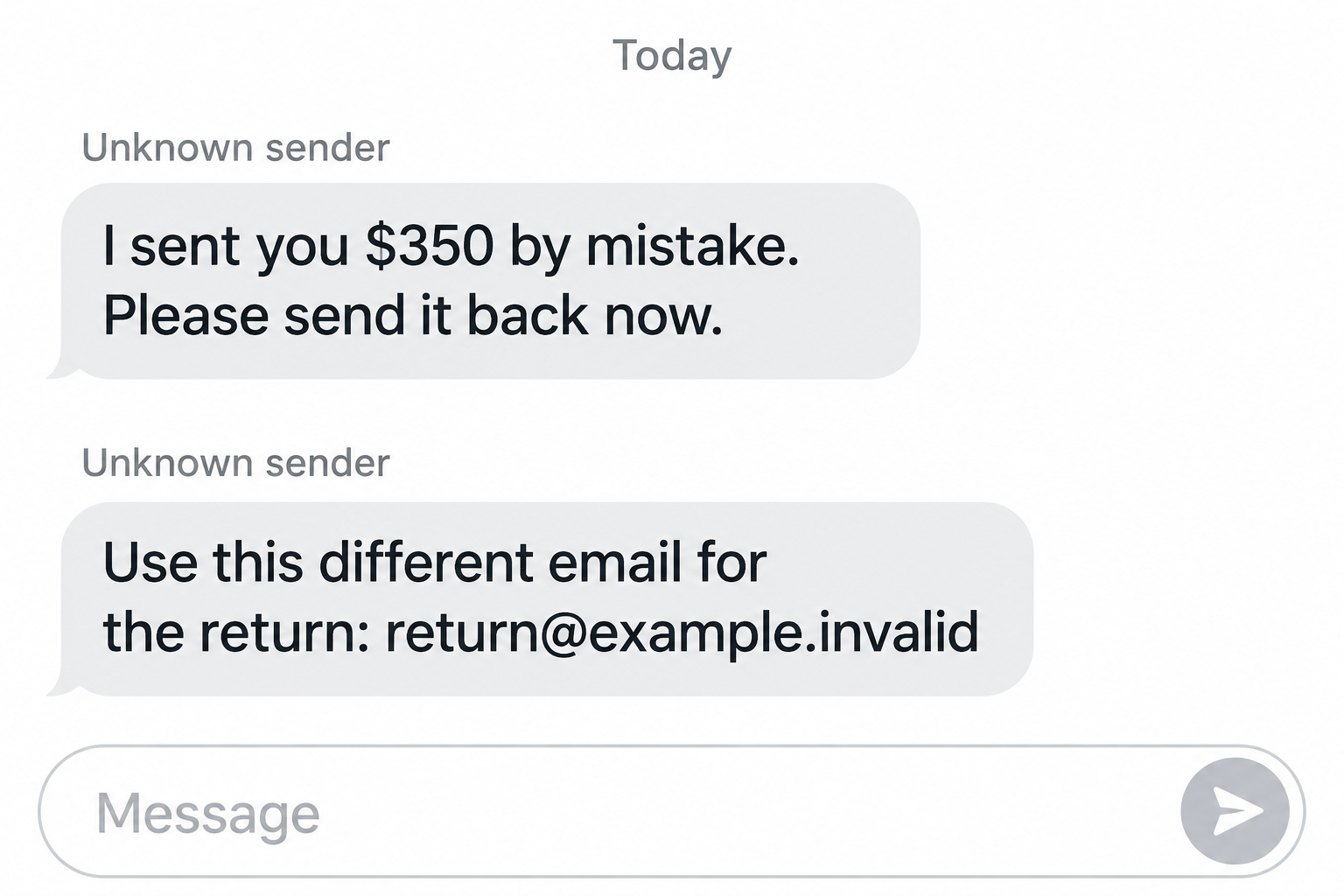
The conversation image uses an invented $350 example and an inactive address. It demonstrates the request, not a verified transfer or a particular customer’s loss.
Zelle itself is a legitimate bank-payment service. A fraudulent message using its name does not mean Zelle sent the message or directed the scam.
An actual mistake is possible, so let your bank sort it out
People can enter the wrong recipient information. An unexpected credit is not automatic proof that its sender is dishonest, and it is not yours to spend.
The safe response handles both possibilities: leave the funds untouched and ask your bank or credit union to review the payment and appropriate return process.
Do not let a stranger’s explanation replace that review. A message claiming an emergency cannot establish who owns the money or where it should go.
Look for an independent record, not a convincing receipt
For an enrolled recipient, Zelle says payments generally arrive directly in the connected bank account. There is no separate acceptance step.
Its receiving-money guidance directs account-specific questions to your financial institution. Start in your own banking app, not at the sender’s link.
- A screenshot sent by someone else does not prove your account received money.
- A request to return funds to a different person deserves particular scrutiny.
- A password or authentication code is not required to discuss a claimed mistake with a stranger.
- Your bank should review suspicious incoming funds before you arrange any return.
Why the Request Feels Reasonable
Unlike a fake prize, this approach does not initially ask you to be greedy. It asks you to be helpful, fair, and quick.
The sender may describe rent, groceries, or a family expense. You can care about that possibility without accepting an unverified payment instruction.
The uncomfortable feeling is part of the pressure: refusing to send money immediately can feel like withholding something that belongs to another person.
But asking your bank to handle an unexplained transfer is not refusing to correct a mistake. It is a way to correct it safely.
A genuine sender also has a bank to contact. You do not need to become their payment processor or follow their private workaround.
This becomes especially important if someone asks you to ignore a warning or avoid speaking to your bank. A legitimate correction should not require secrecy.
How the Zelle Refund Scam Works
Step 1: An unexpected payment claim gives the conversation a starting point
You may receive a text from a stranger, an email resembling a payment notice, or a message from someone buying an item you listed.
The claim can involve money sent accidentally or a buyer who supposedly paid more than agreed. A genuine incoming credit may or may not exist.
First work out what is actually in your account. A stolen-money theory and a convincing receipt are both poor substitutes for your own bank records.
Open your banking app independently and review the account connected to Zelle. Distinguish an actual incoming payment from a request asking you to pay.
If nothing appears, stop there and ask your bank if clarification is needed. Do not send money to compensate for a transfer you cannot verify.
Step 2: A personal story makes the return feel urgent
The sender says they need the money immediately. They may become distressed, insistent, or accusatory when you explain that your bank must check it.
Some messages offer a small amount for your trouble. That can make the requested transfer feel like a mutually convenient arrangement instead of a financial risk.
Neither emotion nor an offered reward establishes the underlying facts. The sender’s circumstances do not authenticate the account, payment, or proposed destination.
You do not need to debate their story. A short decision to work through your bank is enough; further conversation can create more opportunities for pressure.
Step 3: The sender supplies a destination or supposed refund procedure
You might be asked to send the same amount to another email address, mobile number, account, or payment service.
A different destination is particularly concerning because it separates the return from the payment being discussed. The person requesting it may not control the original account.
In a fake-overpayment version, a buyer’s receipt can claim the excess is already yours. They then ask you to forward that excess elsewhere.
If the original payment never existed, that return simply spends your money. A fabricated receipt does not create a credit that covers it.
Do not add a recipient to test whether their details look genuine. A displayed enrollment name cannot settle ownership of the disputed incoming funds.
Step 4: You are coached into approving a separate transfer
The crucial action happens in your banking service: you select a recipient, enter an amount, and authorize money to leave your account.
Calling that action a refund does not necessarily link it to the original credit. A new Send transaction may be recorded as a distinct payment.
Consider the illustrative $350 request. If no credit arrived, sending $350 creates an immediate shortfall, regardless of what the stranger’s screenshot says.
If money did arrive, your bank still needs to assess any error or fraud concern. Do not assume that your separate return resolves those questions.
Reversals and recovery depend on the actual circumstances and bank review. There is no rule that every unexpected Zelle credit is automatically withdrawn later.
Step 5: A second demand can keep the loss growing
After a transfer, the sender may claim that it failed, reached the wrong place, or requires another payment to complete the correction.
Another person may then contact you as supposed support. Treat that as a new unverified contact, not confirmation that the earlier story was genuine.
A bank representative does not become authentic because they know the amount you discussed with the first caller. Shared information can travel between impostors.
Stop further transfers and check with your financial institution. Ask it to review what actually moved rather than following explanations supplied by the person seeking more.
Separate These Three Situations Before You Act
There is a real incoming payment you do not recognize
Leave the amount untouched. Save the transaction reference and contact your bank through its established secure channel to report the unexplained credit.
Explain that someone has requested a return, especially if they named a different recipient. Ask the bank how it will handle verification and correction.
Do not promise a stranger that you will send a new payment after a particular waiting period. Your bank, not the sender, should guide the resolution.
If your verified bank asks you to take an action, clarify the transaction and destination first. Following its confirmed process differs from obeying a stranger’s workaround.
There is only a message claiming money arrived
A notification can be fabricated. Review your own transaction history, keeping in mind that the sender’s screenshot is not part of your bank’s records.
Do not pay an acceptance fee or disclose credentials to make the alleged credit appear. A legitimate account question belongs with your financial institution.
For a sale, do not release goods or return an overpayment based solely on that message. Confirm what your own service actually records.
You accidentally sent money to someone else
If you are the person who made the error, contact your own bank promptly. Provide the transaction details and ask which options remain available.
Do not assume a completed payment can be canceled. Do not threaten the recipient or hire someone promising an unofficial reversal for an upfront fee.
This guide is not advice to keep another person’s money. It is advice to resolve an unexplained transfer without creating a second, avoidable problem.
What to Ask Your Bank About an Unexplained Credit
Have the incoming transaction reference ready and describe the separate messages. Ask whether the bank sees the same credit and whether it needs investigation.
Explain any request to return the money to a different person or service. That detail can matter more than the sender’s explanation for the original mistake.
Ask how the bank wants you to handle the amount while it reviews the issue. Keep a note of the instructions and your contact reference.
If you have already sent a return payment, identify it separately. Do not assume the representative can infer an outgoing transaction from the incoming one.
Finally, ask how to check progress securely. That gives you a known route if another unsolicited caller later claims to be handling the same case.
What to Do if You Have Fallen Victim to This Scam
-
Pause every transfer connected with the conversation.
Do not send an additional amount to complete, unlock, or repair the alleged refund. Stop communicating with the person directing those payments.
If money remains in your account from an unexplained credit, leave it there while the bank reviews it. Do not spend or move it elsewhere.
Ask anyone helping you to avoid replying on your behalf. One clear bank-led process is safer than several people negotiating with the sender.
-
Call the bank or credit union where you use Zelle.
Use its app, a known statement, or the number on your card. Do not accept a support number provided by the stranger.
Explain which incoming transaction was claimed and which outgoing payments you actually authorized. Tell the bank if credentials were stolen or access was taken without permission.
Zelle distinguishes fraud from scams. Give an accurate account of events so the institution can assess the applicable protections and claim process.
-
Preserve the two sides of the transaction separately.
Save your own bank records, the sender’s messages, alleged receipts, recipient identifiers, and timestamps. Clearly label which documents came from the suspicious contact.
If there was a Marketplace sale, retain the listing and conversation. Those can show why you expected payment and how the return request was introduced.
Never post full banking details or authentication codes in a public warning. Share sensitive evidence only through your provider’s or investigators’ secure reporting routes.
-
Ask for the next claim step, not a guaranteed outcome.
Get a reference number and ask whether anything can still be stopped or recalled. Confirm what evidence is needed and when you must supply it.
Do not assume ordinary purchase protection applies. Zelle’s safe-payment advice emphasizes using the service with people you know and trust.
Review the bank’s response and ask for clarification if it does not match what occurred. Keep copies of submissions and written decisions.
-
Protect your banking login if the contact captured it.
Change exposed credentials from a trusted device and review access with your bank. Report any shared verification code, approved login, or unfamiliar recipient.
If you installed software at the caller’s direction, address that access before using the affected device for banking. An unchanged password may not remove remote control.
Malwarebytes can help inspect a risky software download. AdGuard can filter some malicious advertising and destinations; neither reverses transfers or replaces bank account protection.
-
Report the deception and be wary of a recovery pitch.
File a report at ReportFraud.ftc.gov, including the payment method and how the return was requested. Keep your report reference with the bank claim.
If someone later promises to retrieve the money for a fee, do not continue through that contact. A convincing recovery story can reuse the original incident.
Talk to someone you trust if the pressure continues. You do not owe a stranger a live conversation while your bank investigates.
Frequently Asked Questions
Is every unexpected Zelle payment a scam?
No. Genuine mistakes happen. Leave unfamiliar funds untouched and ask your bank to review them rather than deciding from a stranger’s message.
Should I send the money back myself?
Not at an unknown sender’s direction. A new transfer can create separate risk. Ask your bank to verify the incoming payment and guide any correction.
What if they ask me to return it to another account?
Do not do it. Report the alternate destination to your bank. It does not establish where a legitimate return should go.
Does a Zelle screenshot prove I was paid?
No. Check the transaction history in your own banking service. A picture or email supplied by another person can misrepresent a payment.
Can the bank always reverse the original payment?
No universal outcome applies. Payment status, authorization, error or fraud findings, and the bank’s process matter. Ask the institution to assess your actual transactions.
Am I supposed to keep money sent by mistake?
No. Do not treat an unexplained credit as spending money. Work through your bank so a genuine error can be addressed without a risky separate payment.
The Bottom Line
Do not make a private return transfer to resolve a suspected Zelle refund scam. Check your own bank records and let your financial institution guide the correction.
If you already sent money, contact the bank immediately with the outgoing transaction details. Stop further payments while you preserve evidence and follow its claim process.

Join the discussion
0 commentsShare your experience or ask a question about this article.
Community experiences
Did this happen to you?
Your experience could help someone recognize the same scam. Submit a private report for our team to review.
I experienced this tooReports are reviewed before publication. Sharing publicly is always your choice.
Discussion
Start the conversation
Have a question or something useful to share? Add the first comment.