

The “I have got two not really pleasant news for you” email is a scam that tries to trick you into thinking that your computer or phone is infected with malware and then threatens to make your personal data public. Contrary to the claims in the email, you haven’t been hacked (or at least, that’s not what prompted this email) and this is nothing more than a scam that tries to trick you into sending Bitcoins to these scammers. This is merely a new variation on an old scam which is popularly being called “sextortion”.
This is the text of the “I have got two not really pleasant news for you” blackmail email, including the grammatical and spelling errors:
Subject: Bill for Payment #0740
Greetings!I have got two not really pleasant news for you.
I have been monitoring your internet activities for some time by now.The only person to blame in this situation is you, since you are a big fan of adult websites and also have got an uncontrollable desire to indulge yourself with another orgasm.
Simply speaking, all your porn websites search requests have become a key to access your device.
The thing is that I word in a company that provides services related to security and performance of email providers, including [removed] as well.During the pandemic outbreak a lot of providers have faced difficulties in maintaining a huge number of staff in their offices and so they have decided to use outsourcing instead.
While working remotely from home, I have got unlimited abilities to access the user databases.I can easily decrypt passwords of users, access their chat history and online traffic with help of cookie-files.
I have decided to analyse users traffic related to adult websites and adult content.
I was truly shocked to discover that nearly 75% of users regularly access porn websites or participates in sex chats.I have filtered out the worst perverts from the list. Yeah, you are one of them. Not everyone chooses to watch such hardcore videos…
Basically, I have infected your device with one of the best Trojan viruses in the market. It was relatively easy, since I have access to your email address (********).
It was sufficient to prepare one of your routine emails asking you to click the harmful link…My spyware functions as a driver. Hence, I can fully control your device and have access to your microphone, camera, cursor and set of symbols.
Generally speaking, your device is some sort of my remote PC.
Since this spyware is driver-based, then I can constantly update its signatures, so that no antivirus can detect it.
While digging through your hard drive, I have saved your entire contact list, social media access, chat history and media files.One week ago, I have montaged a videoclip, which shows you masturbating on one side of the screen and on the other side a porn video
that you were watching at that moment of time – recently this type of exotic stuff is really popular on the internet!
Don’t worry, I will need just a few mouse clicks in order to share this video with your entire contact list and upload it to some porn website, like Bigle.
I believe that you would not like this to happen, since a long holiday season is just about to start soon –
just imagine the number of silly jokes and loud laughter that would get provoked by your video all over the neighbourhood bars and pubs…I am offering a simple and reasonable solution:
All you need to do is transfer an amount equivalent to $1450 (USA Dollars) to my bitcoin wallet and we both forget about this silly story forever.
All your data and this video will be deleted by me once and for all. You have my honest word!
You’ve got to agree, this amount is really insignificant. Just imagine how much time and resources I have spent to get this done…
If you don’t know how to operate the cryptocurrency – you can always search for assistance online. It is that simple.You have exactly 2 days (48 hours) from the moment of opening this email.
I can easily track when you have opened this email (my software will notify me about it). Once you complete the transaction – I will be able to see and confirm that.
Please, do not try replying me via this email – there is no point in that (I have generated the header of this email as well as return address).Remember that there is no point to complain anywhere, since I cannot be found (Bitcoin system is anonymous and I am also using I2P network in order to access your device).
I have considered all the small details.
In case, if 48 hours after you have opened this email,
I still don’t receive the required amount of money, then your videoclip will be automatically sent to all your contact list and uploaded to public websites.Good luck and please don’t hate me too much!
This is life! You are merely out of luck this time.
Who knows, maybe next time you will get lucky at something else…
The above email and anything it states is just a scam to try and scare you into paying the ransom. If you have received the “I have got two not really pleasant news for you” email, we recommend deleting it and under no circumstances send any money to these cybercriminals.
Is the “I have got two not really pleasant news for you” email real?
No, and don’t panic. The “I have got two not really pleasant news for you” email is a scam that tries to trick you into thinking that your device or email has been hacked, then demands payment, or else they will send compromising information -such as images of you captured through your web camera or your pornographic browsing history – to all your friends and family. And in classic ransomware fashion, there’s typically a ticking clock. Giving users a short time limit to deliver the payment is social engineering at its finest.
Threats, intimidation, and high-pressure tactics are classic signs of a scam.
As you can imagine, the “I have got two not really pleasant news for you” extortion email and anything it states is just a scam to try and scare you into paying the ransom.
They have my password! How did they get my password?
To make the threats more credible, the scammers may include one of your passwords in this email. The scammers have your password from sites that were hacked, and in this case, likely matched up to a database of emails and stolen passwords and sent this scam out to potentially millions of people. You can check if your email or password was compromised in a data breach on Haveibeenpwned.
If the password emailed to you is one that you still use, in any context whatsoever, stop using it and change it NOW. It’s also recommended that you enable two-factor authentication for your email and online accounts whenever that is an option.
Should I pay the ransom?
You should not pay the ransom. If you pay the ransom, you’re not only losing money but you’re encouraging the scammers to continue phishing other people.
Delete the “I have got two not really pleasant news for you” email, and under no circumstances pay these cyber criminals a penny/dime/bitcoin.
What should I do now?
We recommend that you ignore the content of the “I have got two not really pleasant news for you” email and delete it from your Inbox. However, if you have downloaded any attachments or clicked on any links from this email, or if you suspect that your computer might be infected with malware, you can follow the below guide to and scan your device for malware and remove it for free.
Depending on which operating system is installed on the device you want to scan for malicious programs, follow the removal guide.
 Scan and remove malware from Windows
-
 Scan and remove malware from Mac
  Scan and remove malware from Android
STEP 1: Use Malwarebytes Free to remove malware from Windows
In this first step, we will install and run a scan with Malwarebytes to remove adware, browser hijackers, and potentially unwanted programs that might be installed on your computer.
Malwarebytes Free is one of the most popular and most used anti-malware software for Windows, and for good reasons. It is able to destroy many types of malware that other software tends to miss, without costing you absolutely nothing. When it comes to cleaning up an infected device, Malwarebytes has always been free and we recommend it as an essential tool in the fight against malware.
-
Download Malwarebytes Free.
You can download Malwarebytes by clicking the link below.
 MALWAREBYTES DOWNLOAD LINK
(The above link will open a new page from where you can download Malwarebytes) -
Double-click on the Malwarebytes setup file.
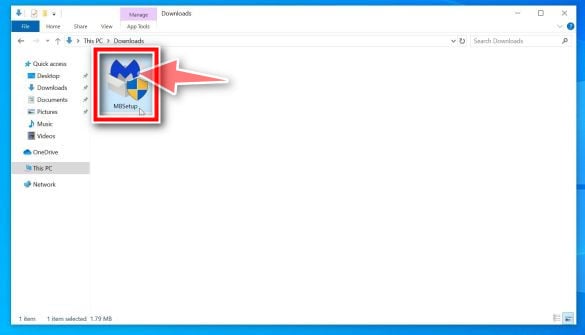
When Malwarebytes has finished downloading, double-click on the MBSetup file to install Malwarebytes on your computer. In most cases, downloaded files are saved to the Downloads folder.
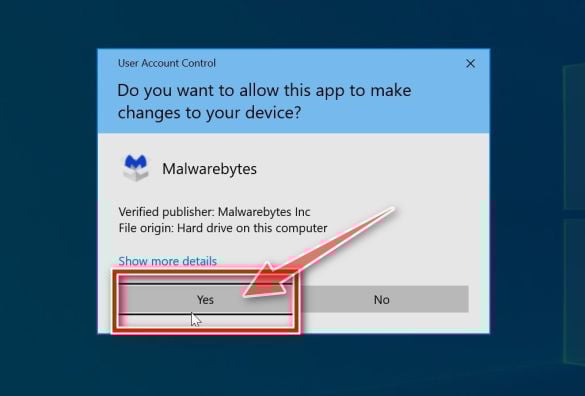
You may be presented with an User Account Control pop-up asking if you want to allow Malwarebytes to make changes to your device. If this happens, you should click “Yes” to continue with the Malwarebytes installation.
-
Follow the on-screen prompts to install Malwarebytes.
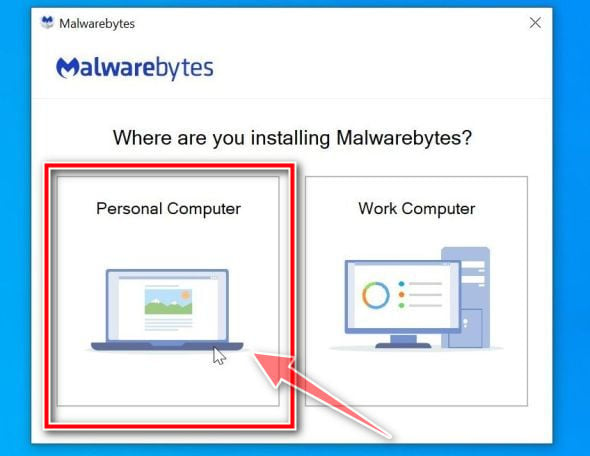
When the Malwarebytes installation begins, you will see the Malwarebytes setup wizard which will guide you through the installation process. The Malwarebytes installer will first ask you on what type of computer are you installing this program, click either Personal Computer or Work Computer.
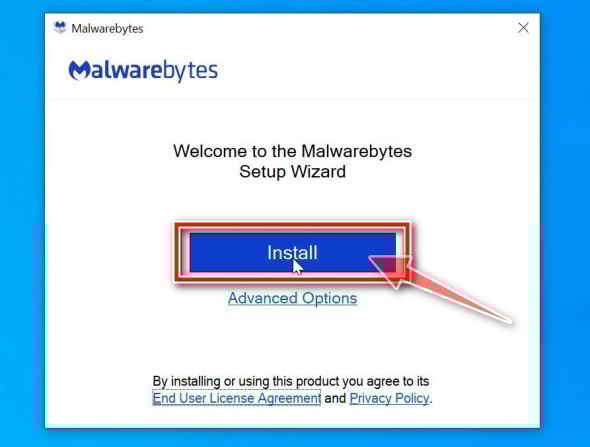
On the next screen, click “Install” to install Malwarebytes on your computer.
When your Malwarebytes installation completes, the program opens to the Welcome to Malwarebytes screen. Click the “Get started” button.
-
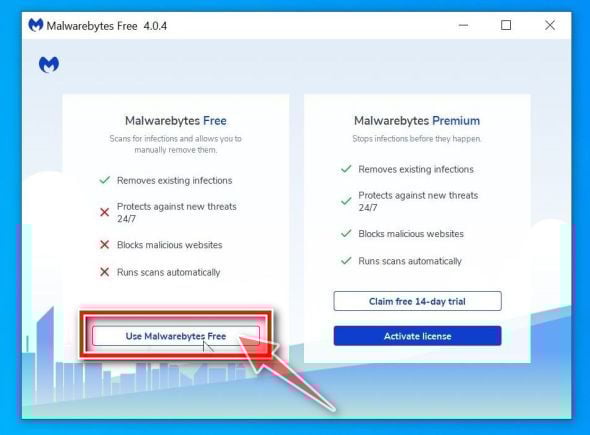
Select “Use Malwarebytes Free”.
After installing Malwarebytes, you’ll be prompted to select between the Free and the Premium version. The Malwarebytes Premium edition includes preventative tools like real-time scanning and ransomware protection, however, we will use the Free version to clean up the computer.
Click on “Use Malwarebytes Free“.
-
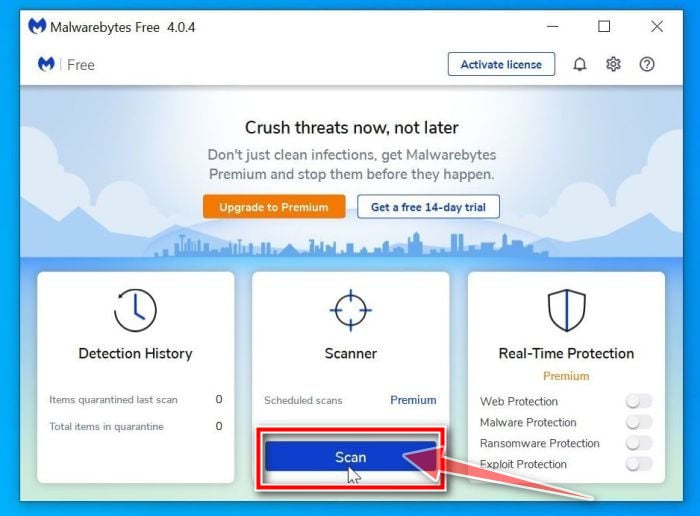
Click on “Scan”.
To scan your computer with Malwarebytes, click on the “Scan” button. Malwarebytes will automatically update the antivirus database and start scanning your computer for malware.
-
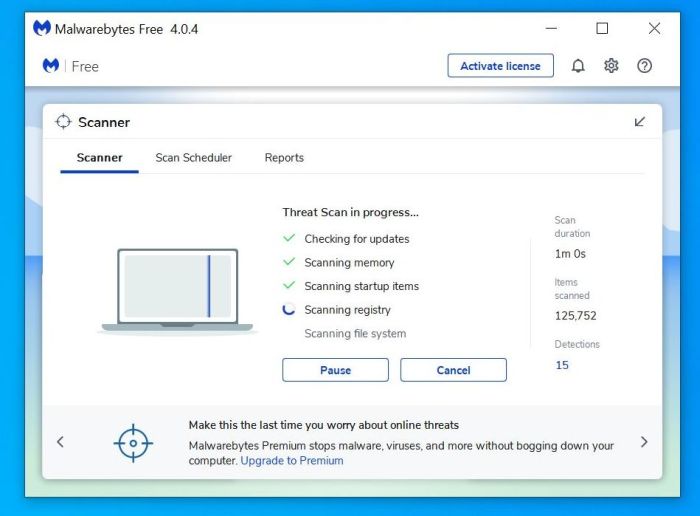
Wait for the Malwarebytes scan to complete.
Malwarebytes will scan your computer for adware and other malicious programs. This process can take a few minutes, so we suggest you do something else and periodically check on the status of the scan to see when it is finished.
-
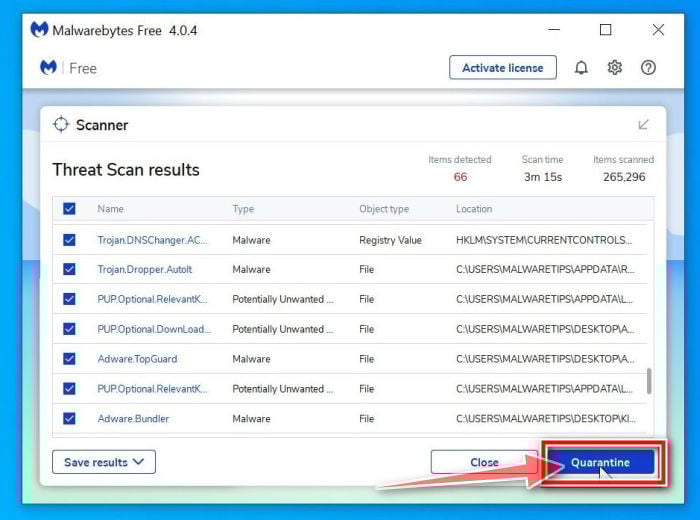
Click on “Quarantine”.
When the scan has completed, you will be presented with a screen showing the malware infections that Malwarebytes has detected. To remove the malicious programs that Malwarebytes has found, click on the “Quarantine” button.
-
Restart computer.
Malwarebytes will now remove all the malicious files and registry keys that it has found. To complete the malware removal process, Malwarebytes may ask you to restart your computer.
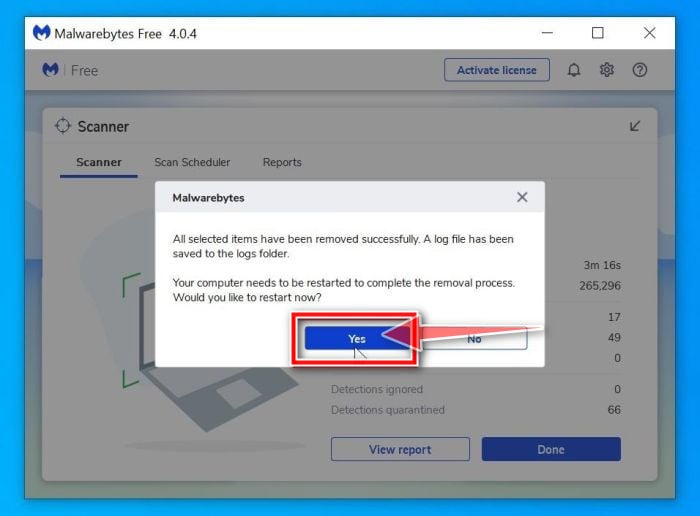
When the malware removal process is complete, you can close Malwarebytes and continue with the rest of the instructions.
STEP 2: Use HitmanPro to scan for malware and unwanted programs
In this second step, we will run a scan with HitmanPro to do a final check for any other malicious programs that may be present on your computer.
HitmanPro is a second opinion scanner that takes a unique cloud-based approach to malware scanning. HitmanPro scans the behavior of active files and also files in locations where malware normally resides for suspicious activity. If it finds a suspicious file that’s not already known, HitmanPro sends it to their clouds to be scanned by two of the best antivirus engines today, which are Bitdefender and Kaspersky.
Although HitmanPro is shareware and costs $24.95 for 1 year on 1 PC, there is actually no limit in scanning. The limitation only kicks in when there is a need to remove or quarantine detected malware by HitmanPro on your system and by then, you can activate the one time 30-days trial to enable the clean up.
-
Download HitmanPro.
You can download HitmanPro by clicking the link below.
 HITMANPRO DOWNLOAD LINK
(The above link will open a new web page from where you can download HitmanPro) -
Install HitmanPro.
When HitmanPro has finished downloading, double-click on “hitmanpro.exe” (for 32-bit versions of Windows) or “hitmanpro_x64.exe” (for 64-bit versions of Windows) to install this program on your PC. In most cases, downloaded files are saved to the Downloads folder.
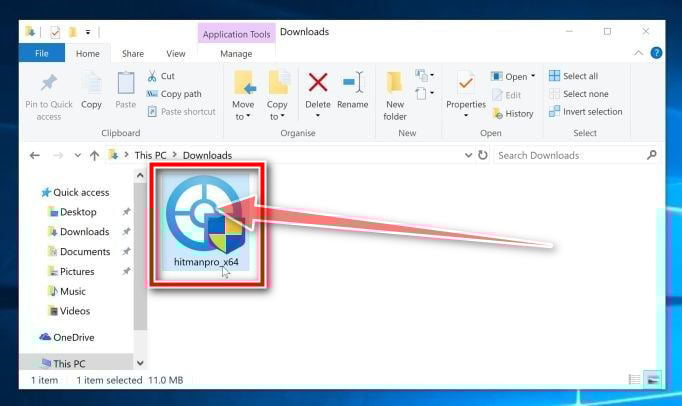
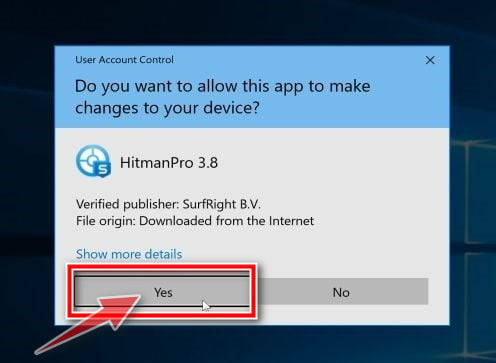
You may be presented with an User Account Control pop-up asking if you want to allow HitmanPro to make changes to your device. If this happens, you should click “Yes” to continue with the installation.
-
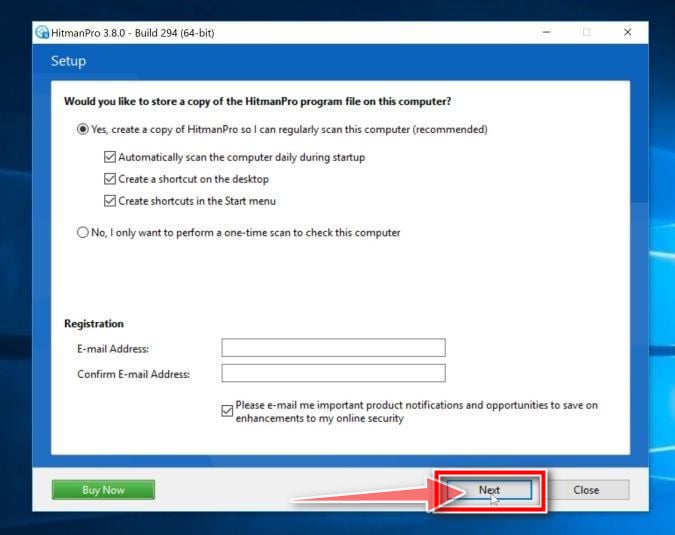
Follow the on-screen prompts.
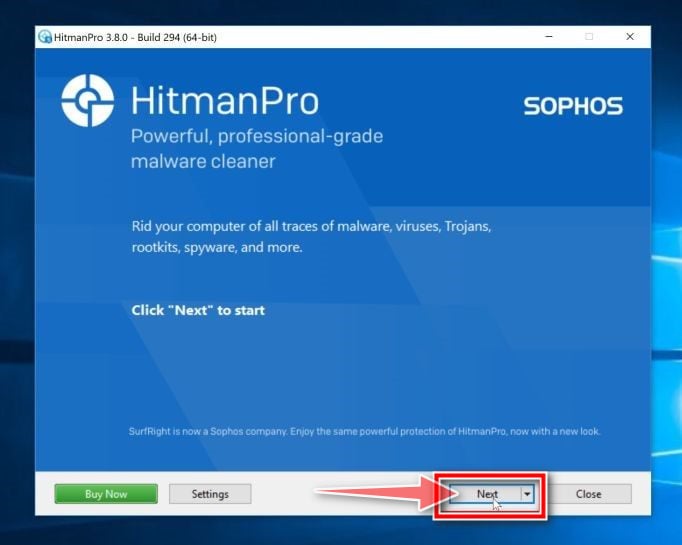
When HitmanPro starts you will be presented with the start screen as shown below. Click on the “Next” button to perform a system scan.
-
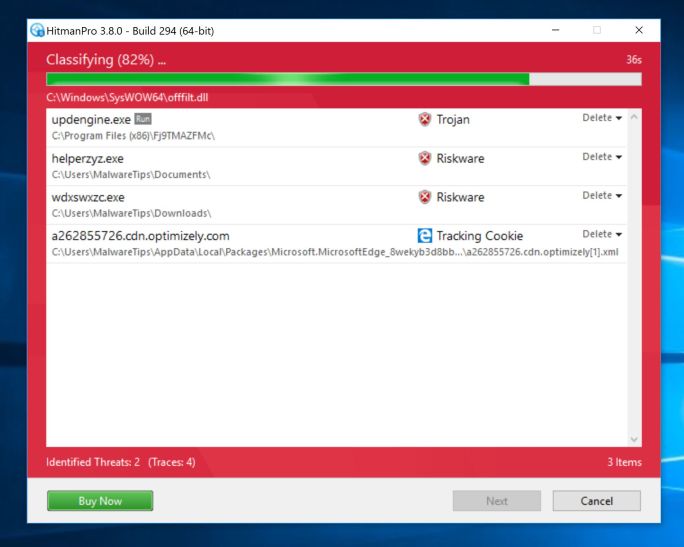
Wait for the HitmanPro scan to complete.
HitmanPro will now begin to scan your computer for malicious programs. This process will take a few minutes.
-
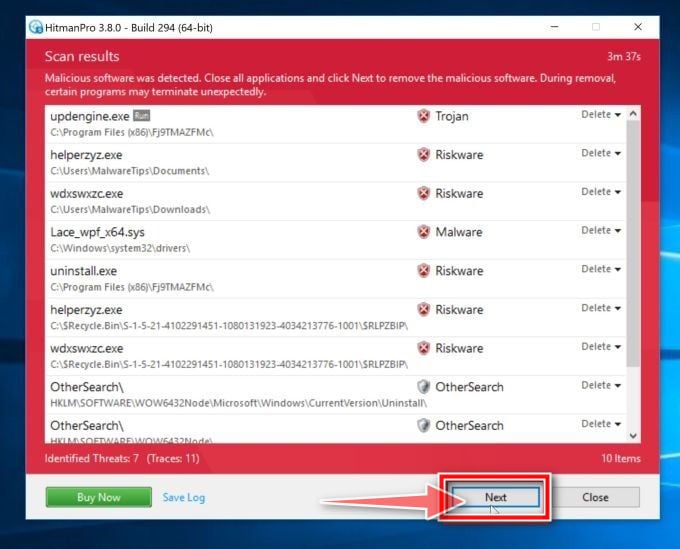
Click on “Next”.
When HitmanPro has finished the scan, it will display a list of all the malware that the program has found. Click on the “Next” button to remove the malicious programs.
-
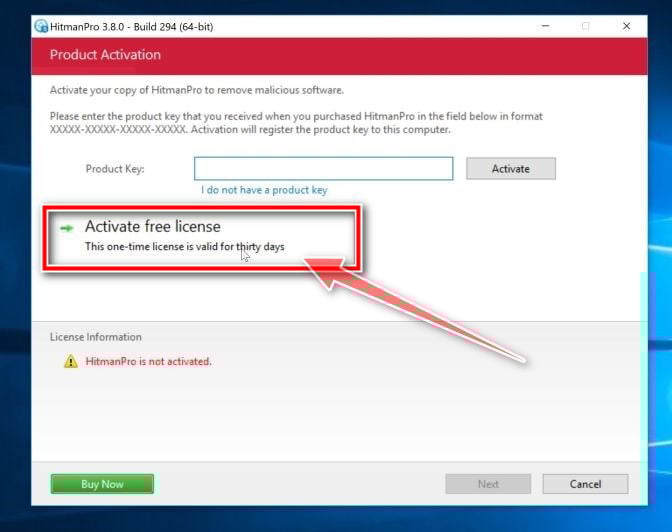
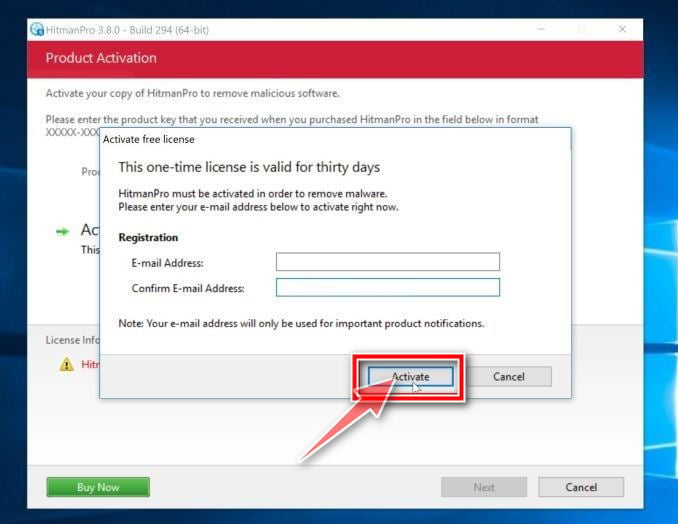
Click on “Activate free license”.
Click on the “Activate free license” button to begin the free 30 days trial and remove all the malicious files from your PC.
Your computer should now be free of the “I have got two not really pleasant news for you” malware. If your current antivirus allowed this malicious program on your computer, you may want to consider purchasing the full-featured version of Malwarebytes Anti-Malware to protect against these types of threats in the future.
If you are still having problems with your computer after completing these instructions, then please follow one of the steps:
- Run a computer scan with ESET Online Scanner
- Ask for help in our Windows Malware Removal Help & Support forum.
To check your computer for malware and remove it from a Macbook or iMac, follow these steps:
STEP 1: Use Malwarebytes Free to remove malware from Mac
In this first step, we will install and run a scan with Malwarebytes to remove adware, browser hijackers, and potentially unwanted programs that might be installed on your computer.
Malwarebytes Free is one of the most popular and most used anti-malware software for Windows, and for good reasons. It is able to destroy many types of malware that other software tends to miss, without costing you absolutely nothing. When it comes to cleaning up an infected device, Malwarebytes has always been free and we recommend it as an essential tool in the fight against malware.
-
Download Malwarebytes Free.
You can download Malwarebytes for Mac by clicking the link below.
MALWAREBYTES FOR MAC DOWNLOAD LINK
(The above link will open a new page from where you can download Malwarebytes for Mac) -
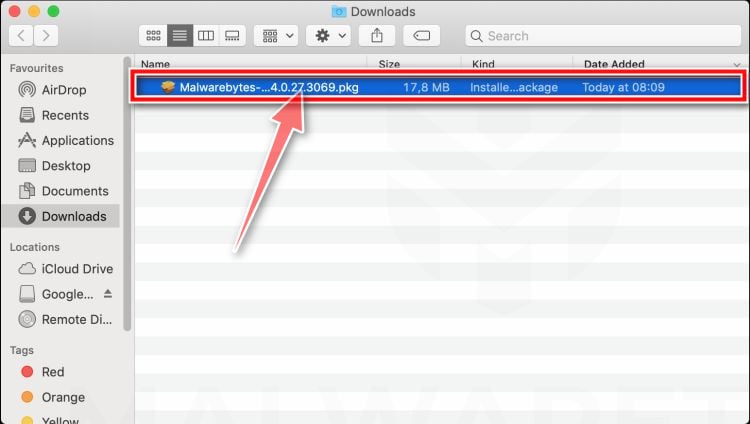
Double-click on the Malwarebytes setup file.
When Malwarebytes has finished downloading, double-click on the setup file to install Malwarebytes on your computer. In most cases, downloaded files are saved to the Downloads folder.
-
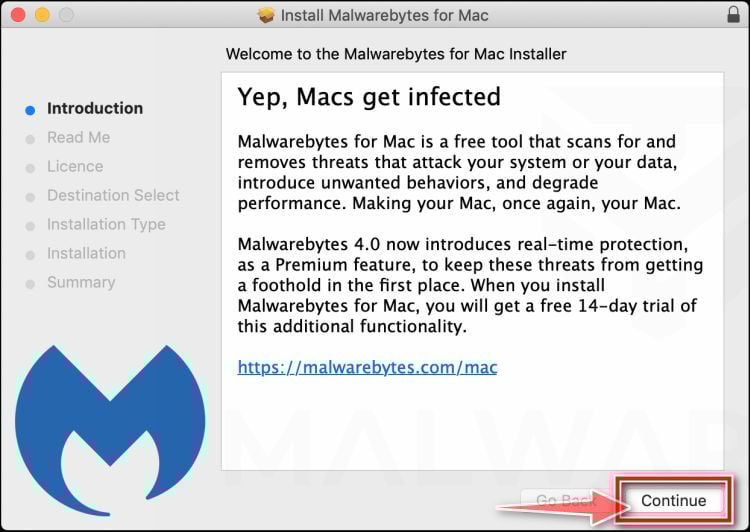
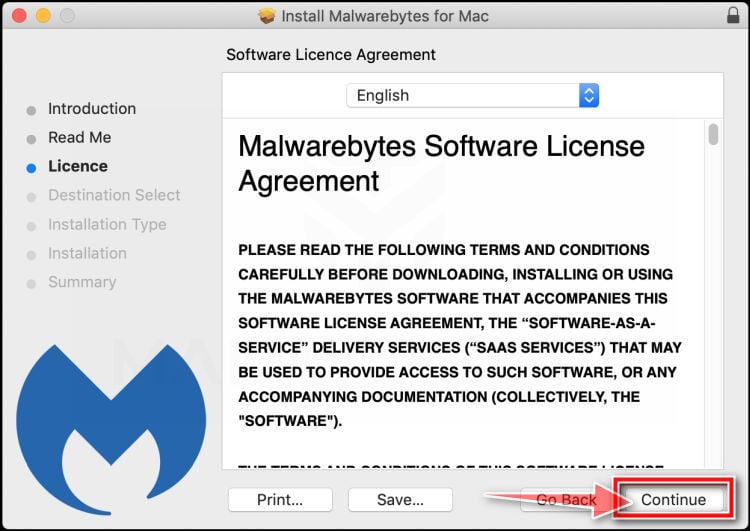
Follow the on-screen prompts to install Malwarebytes.
When the Malwarebytes installation begins, you will see the Malwarebytes for Mac Installer which will guide you through the installation process. Click “Continue“, then keep following the prompts in order to continue with the installation process.
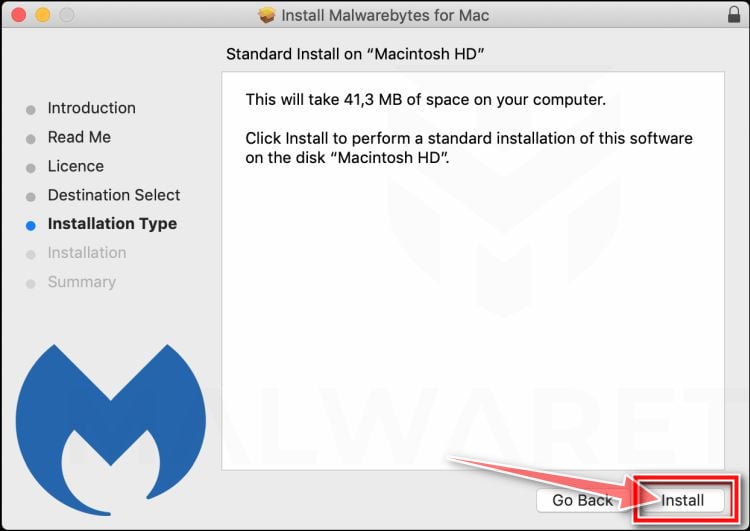
When your Malwarebytes installation completes, the program opens to the Welcome to Malwarebytes screen. Click the “Get started” button.
-
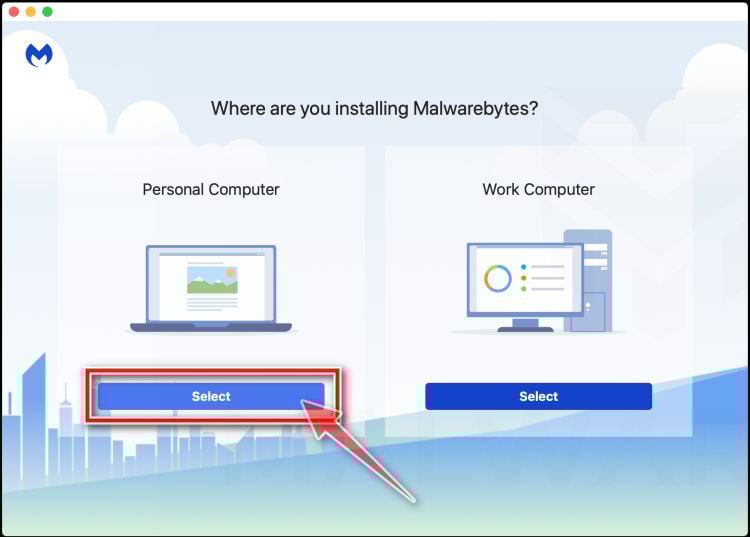
Select “Personal Computer” or “Work Computer”.
The Malwarebytes Welcome screen will first ask you on what type of computer are you installing this program, click either Personal Computer or Work Computer.
-
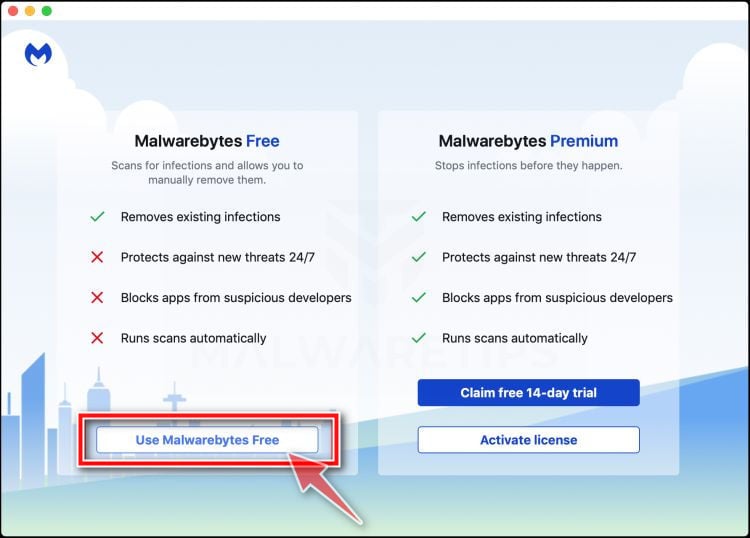
Select “Use Malwarebytes Free”.
You’ll be then prompted to select between the Malwarebytes Free and the Premium version. The Malwarebytes Premium edition includes preventative tools like real-time scanning and ransomware protection, however, we will use the Free version to clean up the computer.
Click on “Use Malwarebytes Free“.
-
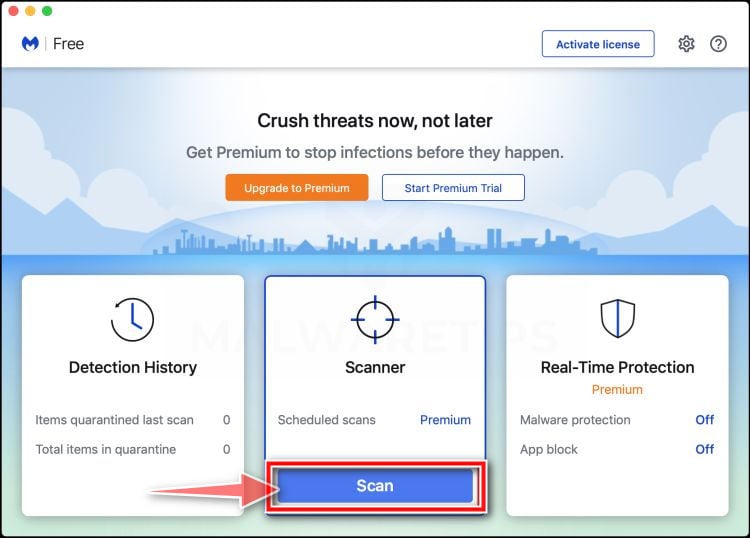
Click on “Scan”.
To scan your computer with Malwarebytes, click on the “Scan” button. Malwarebytes will automatically update the antivirus database and start scanning your computer for malware.
-
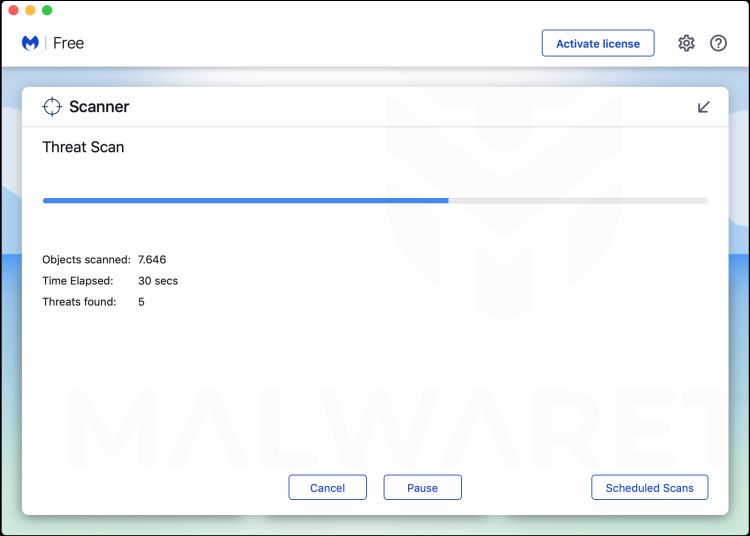
Wait for the Malwarebytes scan to complete.
Malwarebytes will scan your computer for pop-up adss and other malicious programs. This process can take a few minutes, so we suggest you do something else and periodically check on the status of the scan to see when it is finished.
-
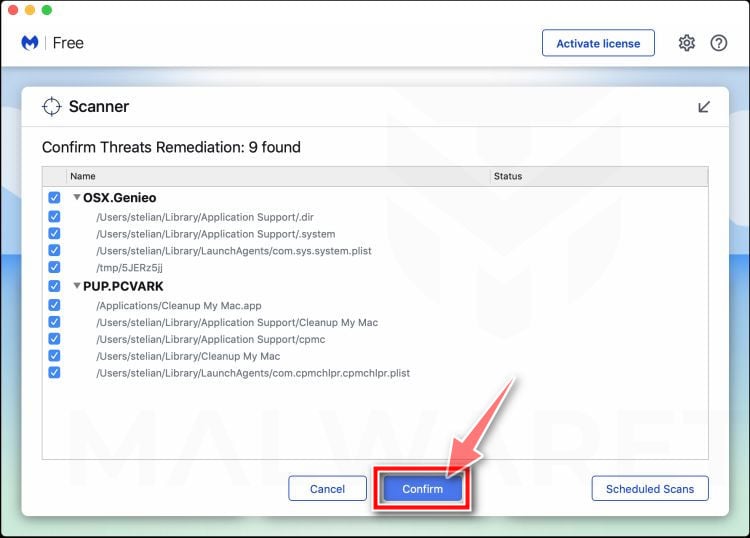
Click on “Quarantine”.
When the scan has completed, you will be presented with a screen showing the malware infections that Malwarebytes has detected. To remove the malicious programs that Malwarebytes has found, click on the “Quarantine” button.
-
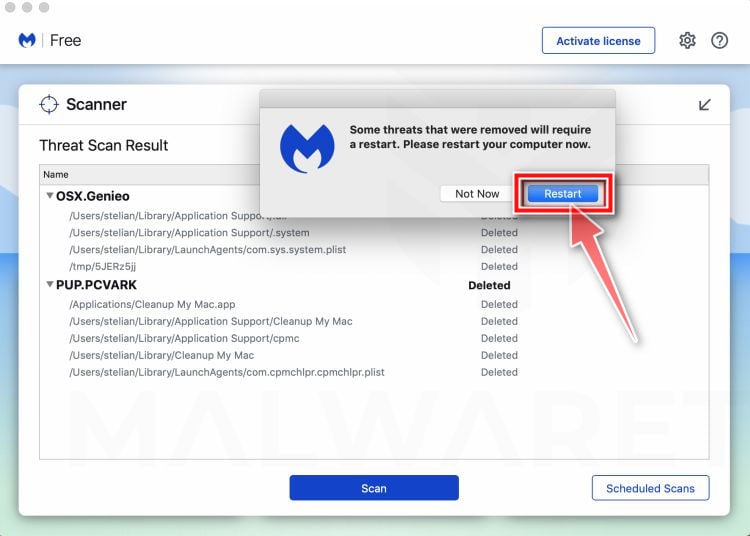
Restart computer.
Malwarebytes will now remove all the malicious files that it has found. To complete the malware removal process, Malwarebytes may ask you to restart your computer.
Your computer should now be free of the “I have got two not really pleasant news for you” malware. If your current antivirus allowed a malicious program on your computer, you may want to consider purchasing the full-featured version of Malwarebytes Anti-Malware to protect against these types of threats in the future.
If you are still experiencing problems while trying to a malicious program from your computer, please ask for help in our Mac Malware Removal Help & Support forum.
To check your device for malware and remove it from an Android phone or tablet, follow these steps:
STEP 1: Use Malwarebytes Free to remove malware from Android
In this first step, we will install and run a scan with Malwarebytes to remove adware, browser hijackers, and potentially unwanted programs that might be installed on your phone or tablet.
Malwarebytes Free is one of the most popular and most used anti-malware software for Windows, and for good reasons. It is able to destroy many types of malware that other software tends to miss, without costing you absolutely nothing. When it comes to cleaning up an infected phone, Malwarebytes has always been free and we recommend it as an essential tool in the fight against malware.
-
Download Malwarebytes.
You can download Malwarebytes by clicking the button below.
MALWAREBYTES DOWNLOAD LINK
(The above link open a Google Play Store from where you can download Malwarebytes) -
Install Malwarebytes on your phone
In the Google Play Store, tap “Install” to install Malwarebytes on your device.

When the installation process has finished, tap “Open” to begin using Malwarebytes for Android. You can also open Malwarebytes by tapping on its icon in your phone menu or home screen.

-
Follow the on-screen prompts to complete the setup process
When the Malwarebytes will open, you will see the Malwarebytes Setup Wizard which will guide you through a series of permissions and other setup options.
This is the first of two screens which explain the difference between the Premium and Free version. Swipe this screen to continue.

Tap on “Got it” to proceed to the next step.

Malwarebytes for Android will now ask for a set of permissions that are required to scan your device and protect it from malware. Tap on “Give permission” to continue.

Tap on “Allow” to give permission to Malwarebytes to access the files on your phone.

-
Update database and run a scan with Malwarebytes
You will now be prompted to update the Malwarebytes database and run a full system scan.

Click on “Update database” to update the Malwarebytes definitions to the latest version, then click on “Run full scan” to perform a system scan.

-
Wait for the Malwarebytes scan to complete.
Malwarebytes will now start scanning your phone for adware and other malicious apps. This process can take a few minutes, so we suggest you do something else and periodically check on the status of the scan to see when it is finished.

-
Click on “Remove Selected”.
When the scan has completed, you will be presented with a screen showing the malware infections that Malwarebytes has detected. To remove the malicious apps that Malwarebytes has found, tap on the “Remove Selected” button.

-
Restart your phone.
Your computer should now be free of the “I have got two not really pleasant news for you” malware. If your current antivirus allowed a malicious program on your computer, you may want to consider purchasing the full-featured version of Malwarebytes Anti-Malware to protect against these types of threats in the future.
If you are still experiencing problems while trying to a malicious program from your computer, please ask for help in our Mobile Malware Removal Help & Support forum.








