

A business-filing reminder arrives between customer calls and invoices. It sounds like another small administrative job, the sort you would rather finish immediately.
If an IllinoisFiling.com text has interrupted your day, slow down before opening your banking app. There are several important questions behind that apparently simple request.
Overview
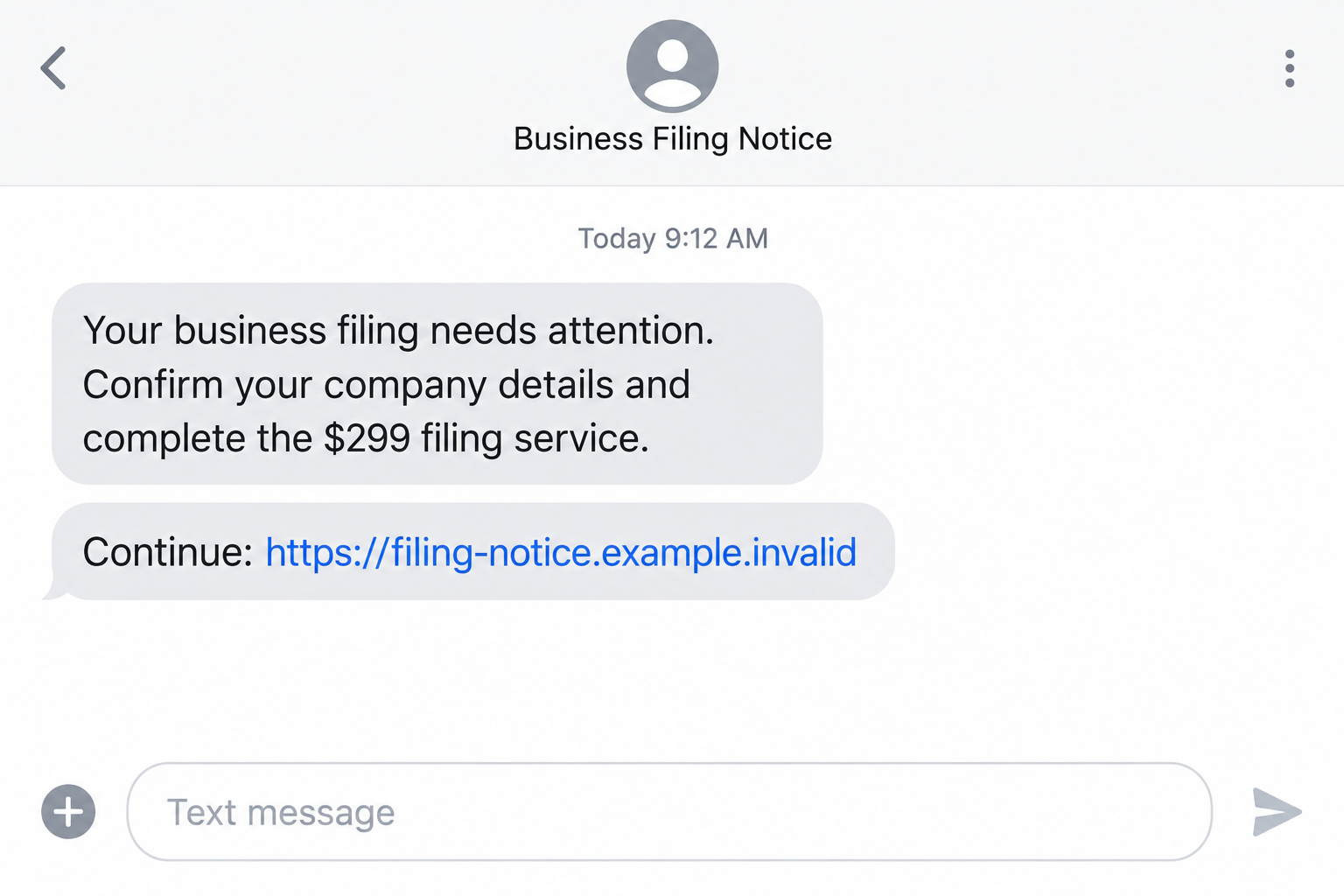
The reported IllinoisFiling.com message asks for $299
A Jonesboro, Illinois, resident reported receiving two unsolicited texts associated with IllinoisFiling.com and the telephone number 833-950-0621.
According to the public complaint, following the link led to requests to confirm information, pay $299, and provide banking details.
The reporter also described an assurance that they would not need to file again. That promise is especially important to question before purchasing any compliance service.
This is one person’s account, not a verified record of a completed transaction. It does not establish that money was taken or identify the site’s operator.
A filing service is not the state filing office
The accessible homepage identified itself as a business-filing and compliance service. That description does not make a commercial website part of the Illinois government.
We could not inspect the complete interactive payment journey. The request described by the complainant therefore remains attributed, rather than presented as a checkout we personally tested.
The image above illustrates the kind of approach being discussed. Its wording and example address are fictional, not an authenticated copy of the reported text.
The checks that matter before sending anything
- Which filing is actually due for your particular business?
- Is the sender a government office or an optional private service?
- What exactly does the $299 buy, and which state fees are separate?
- What does the promise about future filings mean in a written agreement?
- Why are banking details needed before the service and seller are established?
These questions are not paperwork for its own sake. They separate a real business obligation from an unsolicited payment request that merely borrows its urgency.
Why This Kind of Message Catches Business Owners Off Guard
Running a small business involves genuine deadlines. Registration renewals, annual reports, insurance, licenses, and tax filings can arrive through different channels.
A notice about compliance therefore lands on an existing worry. You may remember that something is due without remembering which office handles it.
A recognizable business name or address can make the approach feel personal. Those details do not necessarily come from a private account or an authorized adviser.
Some company information is publicly searchable. Knowing a firm’s name is not the same as proving authority to collect its filing fees.
The promise of finishing everything in one payment can be even more persuasive. It offers relief from an ongoing administrative burden, not just a document.
That is precisely why the service needs a clear definition. Paying someone to prepare a report is different from eliminating the underlying reporting requirement.
A third party might offer reminders or recurring filing assistance. If so, its contract should explain who performs future work and how future government charges are handled.
Without those details, a broad promise leaves the owner carrying the risk. A missed report will still need attention regardless of what an unsolicited message implied.
How the Reported $299 Filing Request Unfolds
Step 1: An unexpected text introduces a compliance task
The reported contact began through SMS rather than a service the owner had knowingly hired. That makes independent verification the first useful step.
Do not decide whether a filing is genuine by replying to its sender. The sender would be answering a question about its own authority.
Instead, note the business entity involved and check the state record separately. Use the actual legal name, not simply the store name customers know.
If another person manages compliance, ask whether they arranged the service. A real engagement should be traceable to an agreement, invoice, or earlier conversation.
Step 2: The link moves the decision onto another website
Clicking a filing link can make a message feel more official, especially when the next page uses administrative language and familiar business details.
But the address of the receiving page matters more than its heading. A commercial domain is not authenticated by the word Illinois appearing in it.
An HTTPS connection protects data traveling to the selected website. It does not certify that the website is the Secretary of State or an authorized agent.
Keep the original message and complete destination address if you need to document the approach. Do not keep reopening the form to investigate it yourself.
Step 3: Confirmation becomes a request for payment information
The complainant described being asked to confirm information and supply banking details. The transition from reviewing a notice to authorizing payment deserves a deliberate pause.
Before entering anything, you should know the legal seller, the specific deliverable, the price breakdown, and the conditions for cancellation or refund.
A routing number, account number, card number, and online-banking password are different kinds of information. Do not treat them as interchangeable form fields.
No unverified filing offer needs your banking password. If you disclosed one, address the account exposure separately from any argument about the service fee.
Step 4: A broad promise makes $299 sound like a final solution
The reported assurance about never filing again raises a straightforward question: does it describe a continuing service, or suggest an obligation disappears?
Ask for the answer in writing. A statement about convenience is not a substitute for a contract identifying future work, renewal charges, and government fees.
Also distinguish a preparation fee from a state filing fee. Two charges can exist in a legitimate arrangement, but they should not be blurred together.
Do not assume $299 is an official state price because it appears beside a compliance message. Verify the actual requirement through the government office.
Step 5: Real compliance still needs separate confirmation
If you hired a service, check whether the promised document was actually submitted and accepted. A payment receipt only establishes that a payment was recorded.
Request the filing confirmation, reporting period, entity number, and submission date. Compare those details with the state record or your existing professional adviser.
Where nothing is due, do not purchase a service simply to make repeated texts stop. Where something is due, resolve it through a route you independently trust.
This avoids the worst combination: paying an uncertain provider while assuming an important business obligation has already been satisfied.
Verify the Filing Without Following the Text
Start with the Illinois Secretary of State
Use the official Illinois LLC annual-report portal when that is the filing appropriate to your entity. It requests the LLC file number.
Other business structures can have different forms and requirements. Do not select a document merely because its name resembles the wording in a text.
Find the entity’s current status, relevant reporting period, and actual deadline. If you cannot identify the correct filing, ask the state office or your established adviser.
Keep a calendar entry for the real due date after verifying it. That makes the next unsolicited reminder easier to assess without rushing.
Understand what the state’s warnings do and do not establish
The Secretary of State maintains a business-solicitation warning page describing unnecessary or misleading requests involving corporate records and certificates.
Those warnings explain why an official-sounding request should be checked. The page we reviewed does not name IllinoisFiling.com, so it is not a state finding against this domain.
Nor does the existence of misleading solicitations make every filing company fraudulent. Owners can legitimately pay professionals for preparation, reminders, or compliance assistance.
The distinction is informed choice. You should understand that the provider is private, what assistance it supplies, and what you could obtain directly.
Keep the payment decision separate from the reporting deadline
An approaching deadline may require action, but it does not require using the first sender who contacts you. Verify the obligation before selecting a provider.
If you need help urgently, contact an accountant, attorney, registered agent, or filing service you already know through its established contact details.
Do not send identity documents to someone who claims they need them to explain an invoice. Ask why each requested item is necessary.
For a business with several owners or employees, designate who approves filing expenses. An unexpected text should not bypass that approval simply by sounding urgent.
What to Do If You Responded or Paid
- Write down what actually happened.
Record whether you only received the message, opened a page, submitted business details, entered bank information, or completed a payment.
Save the texts, sender display, web address, receipt, and any agreement. Keep sensitive account numbers out of screenshots you post publicly.
A precise record helps support staff respond to the real exposure instead of guessing that every interaction involved an unauthorized withdrawal.
- Contact your financial institution if payment details were exposed.
Reach the bank through its app or an independently verified number. Describe exactly which information you supplied and whether any payment was authorized.
Ask what monitoring, account restrictions, credential changes, or replacement payment details are appropriate. Those decisions depend on the type of information involved.
For a disputed charge, ask about the correct dispute procedure and deadline. Do not describe an authorized but disputed service purchase as an unrelated stolen-card transaction.
- Request the service record and any cancellation in writing.
If you purchased filing assistance, ask for the contract, itemized charge, submission confirmation, and cancellation terms. State clearly what resolution you want.
Keep copies of your request and the reply. If no work was authorized or delivered, explain that specific issue rather than sending only a general accusation.
A promised refund is not complete until it appears through the agreed payment method. Record any reference number and follow up on missed commitments.
- Check the business’s real filing status.
Confirm independently whether a report was due and whether it was accepted. Do this even if a seller says payment has completed everything.
If there is an unresolved deadline, ask the genuine filing office or your established adviser how to correct it. Avoid paying another unsolicited sender.
Store the accepted filing confirmation with the business records. Future reminders can then be compared with a document rather than a recollection of paying.
- Secure any account credentials you entered.
Change an exposed password through the authentic account website, starting with banking or email if those credentials were involved. Replace reused passwords elsewhere too.
Review recovery information and enable available multifactor protection. A form containing your business address does not, by itself, mean every account was accessed.
Merely reading the text is not evidence of malware. If you installed nothing and disclosed no secrets, focus on reporting and independently checking the filing.
- Report suspected deception and refuse recovery fees.
The FTC’s recovery guidance recommends promptly contacting the payment provider when money may have been lost. Recovery is not guaranteed.
You can report a suspected misleading solicitation through ReportFraud.ftc.gov. Include the request and transaction facts, not an assumed identity for the sender.
Reject strangers offering to recover a filing payment for an advance fee. Give your evidence directly to the bank, regulator, or adviser handling the issue.
What Would Make a Filing Offer Worth Considering?
A useful provider should explain the exact task before asking for money. The service should have a named contracting business and an understandable scope.
You should receive a clear distinction between preparation charges and government fees, along with a way to verify that the filing was submitted.
Future-service promises need a defined duration. Ask who pays future state charges, whether authorization renews, and how you stop the arrangement.
For one-off work, the invoice should identify the entity and reporting period. For ongoing work, responsibility for reminders and approvals should be equally clear.
Do not let an attractive promise replace those basics. Administrative help is worth paying for when it is understandable and genuinely saves work.
Until that relationship is established, keeping banking details to yourself is the sensible decision. You can verify a deadline without becoming the sender’s customer.
Frequently Asked Questions
Is IllinoisFiling.com the Illinois Secretary of State?
We did not establish government affiliation. Use the Secretary of State’s official website to identify the correct filing and confirm whether a private service is necessary.
Does Illinois require the $299 payment described in the text?
The complaint does not establish an official $299 obligation. Verify your entity’s actual filing and government charges independently before paying a commercial request.
Is 833-950-0621 a verified state filing number?
The number appears in the complainant’s report. We did not authenticate its operator or call it. Find government contact details outside the unsolicited message.
Can paying a filing company end all future reporting requirements?
Do not assume that. A provider might offer continuing assistance, but it needs a written scope. Its marketing cannot establish that your legal obligations disappear.
What if I clicked but did not enter anything?
Close the page and check the filing separately. A click alone does not establish a bank compromise. Respond more urgently if credentials or payment details were submitted.
Is this a confirmed finding of fraud against IllinoisFiling.com?
No. The available evidence supports a warning about a reported solicitation and its payment request, not a completed fraud investigation or verified loss.
The Bottom Line
Do not pay the unsolicited IllinoisFiling.com $299 request or supply banking details on its strength. Verify the filing through Illinois’s official business services first.
If you already paid, preserve the agreement, verify any actual submission, and contact your payment provider about the disputed transaction. A confident text is not filing authority.

Reviews & discussion
0 commentsShare a firsthand experience, or ask a question.
Community reviews
illinoisfiling.com
Moderated reader experiences, not an editorial verdict.
Start the conversation
Have a question or something useful to share? Add the first comment.