

A confidential payroll review appears in the inbox, carrying the language of bonuses, compensation, and internal HR paperwork.
The request feels personal enough to open quickly. A closer inspection reveals important details every employee and payroll team should understand.
Overview
What the unexpected HR message says
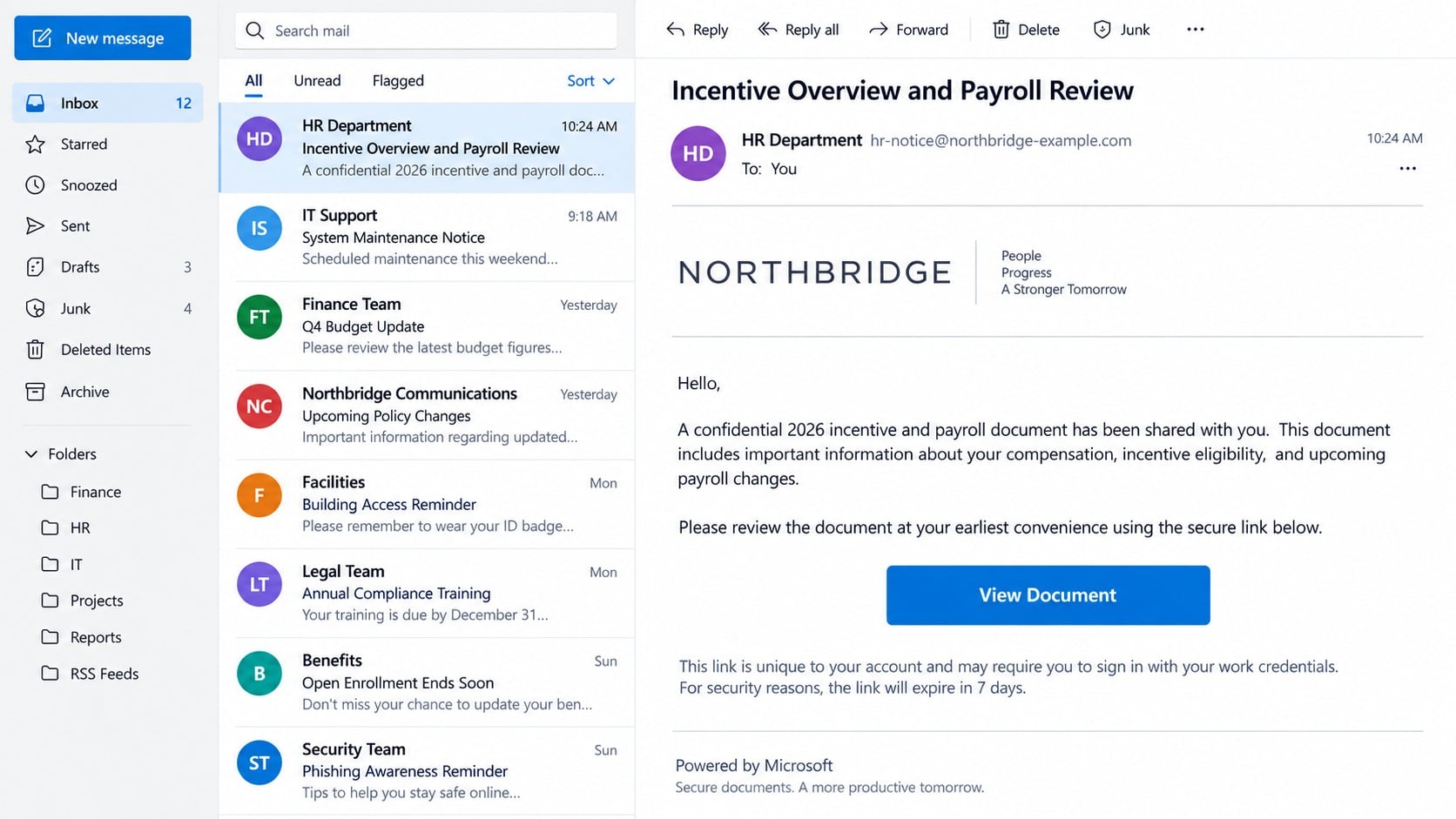
The email claims an HR department shared an “Incentive Overview and Payroll Review” document through a Microsoft-powered file service.
A prominent “View Document” button promises access to information about incentives, payroll adjustments, or compensation.
The wording is brief and administrative. It avoids explaining which payroll period, employee plan, manager, or legal entity supposedly issued the file.
That lack of detail is easy to overlook because compensation documents are often confidential and employees expect short automated notifications.
The sender relies on curiosity. Most workers want to know whether a payroll review concerns a bonus, deduction, raise, or correction.
What can be confirmed about the campaign
The message is not a genuine Microsoft notification, and the company’s branding is being used without authorization.
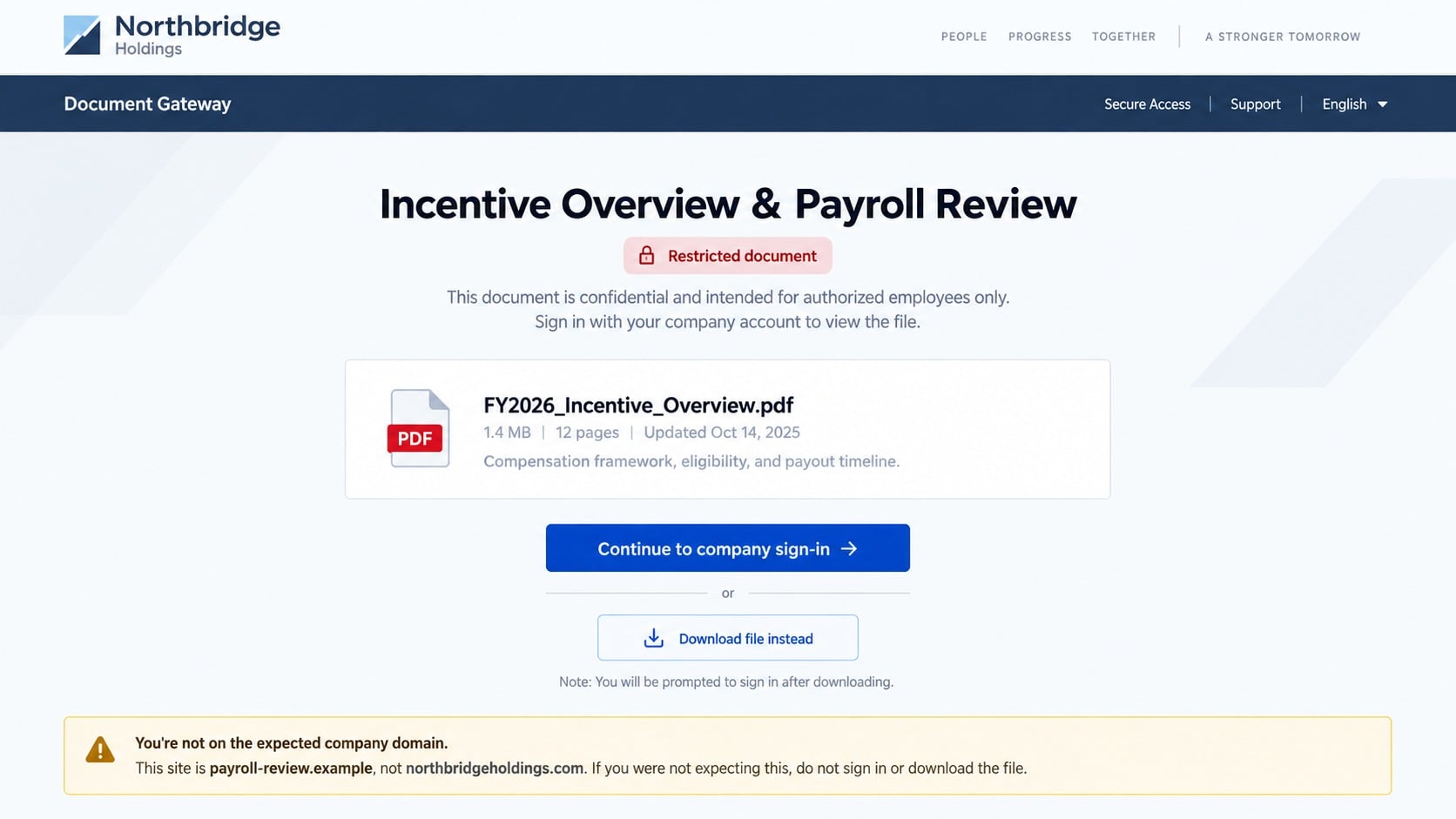
The button led away from a verified workplace environment to an unrelated external page controlled outside the recipient’s normal HR workflow.
That destination was unavailable during later review, so its final action could not be safely reproduced or independently confirmed.
The most likely outcomes are credential phishing or a malicious download, based on the lure, delivery method, and document-sharing pretext.
Those outcomes remain possibilities, not proven facts about every copy. A changed campaign could display a different page tomorrow.
Why the email presents a serious workplace risk
A payroll-themed link can threaten more than one employee. One stolen workplace account may expose internal files, conversations, and trusted contacts.
A downloaded file could also carry an information stealer, remote-access tool, or loader that retrieves additional malware.
Possible consequences include:
- Loss of access to a work email or cloud identity.
- Exposure of salary discussions, tax records, or employee information.
- Fraudulent messages sent to colleagues from a trusted account.
- Changes to payroll deposits or benefits through compromised systems.
- Malware infection after opening an unexpected downloaded file.
- Business email compromise targeting finance and human resources staff.
The safest conclusion is simple. An unsolicited payroll share must be verified through the employer before anyone clicks, signs in, or downloads anything.
How the Incentive Overview and Payroll Review Scam Works
Step 1: The attacker chooses a subject employees cannot easily ignore
Payroll touches everyone in an organization. A message mentioning incentives naturally raises questions about money, performance, and future compensation.
Unlike a generic security warning, the lure does not need threats. Curiosity creates its own urgency, especially near review or bonus periods.
The recipient may worry that waiting could delay a payment or leave an error uncorrected. That concern encourages immediate attention.
Attackers can send the same template broadly because the subject fits executives, hourly staff, contractors, and remote employees.
They may target public work addresses, breached contact lists, or naming patterns discovered from company websites and professional profiles.
Step 2: Familiar workplace formatting supplies borrowed credibility
The body resembles a cloud document notification rather than a personal email. That visual choice makes the request look routine.
HR language, access restrictions, confidentiality notices, and familiar colors create the impression that an internal process already approved the document.
A Microsoft reference adds another layer of trust. However, copied branding says nothing about who sent the message or controls the link.
The email may show the recipient’s address or company name. Criminals can merge those public details into thousands of messages automatically.
Personalization proves only that the sender had data. It does not prove an employment relationship, document share, or authorized HR request.
Step 3: The button moves the conversation outside trusted systems
The “View Document” button is the turning point. Its visible label can hide any destination chosen by the message author.
A real employer may use Microsoft 365, a payroll portal, or another approved service. The link should match that known arrangement exactly.
Phishing pages often sit on newly registered domains, compromised websites, free hosting, or cloud services that permit user-created content.
The page may still use encryption. A padlock only protects traffic between the browser and that page; it does not validate the operator.
Employees should inspect the registrable domain, not the logo, page title, subdomain, or words placed before the final domain ending.
Step 4: The destination turns document access into an unsafe action
One version may display a corporate sign-in form that requests an email address, password, and multifactor code.
Another may present a PDF, spreadsheet, archive, or installer, claiming the file must be downloaded to review payroll information.
A phishing form sends submitted secrets to the page operator. A fake error can ask for the password twice to collect alternatives.
A malicious file may require the victim to open it, enable content, extract an archive, or run a supposed secure viewer.
Because the reviewed destination later became inactive, readers should not assume one fixed payload. The infrastructure and final page can rotate rapidly.
Step 5: Stolen access is expanded into a broader workplace intrusion
Email credentials can unlock much more than messages when the organization uses single sign-on across cloud applications.
An intruder may search for payroll schedules, vendor payments, executive calendars, employee lists, or password reset notices.
They can create inbox rules that hide warnings, forward selected messages, or move replies from suspicious folders.
If multifactor authentication is enabled, the attacker may trigger repeated prompts, steal a session token, or impersonate technical support.
Access to an HR mailbox is especially damaging because employees already trust requests concerning benefits, forms, tax documents, and compensation.
Step 6: The compromised identity is used against colleagues and money flows
A message sent from a real employee account can bypass the skepticism that stopped the original cold email.
Criminals may share another fake file, request payroll data, ask finance to change bank details, or redirect an employee’s direct deposit.
They may also study genuine conversations and wait for a predictable payroll deadline before inserting a believable request.
If malware was installed, saved browser sessions and additional passwords could expose personal accounts beyond the workplace.
The initial document never needed to exist. Its only purpose was to turn ordinary professional curiosity into unauthorized access.
Why Payroll and Incentive Lures Feel Believable
Confidentiality explains away missing context
Workers are accustomed to limited information in payroll notifications. Sensitive details often appear only after authentication.
Scammers exploit that expectation by keeping the email vague. The missing amount, plan name, and manager can seem like privacy safeguards.
In reality, legitimate systems usually identify the employer, portal, document owner, and an independently accessible place to review the notice.
Compensation creates both hope and anxiety
The word “incentive” suggests a reward, while “payroll review” can suggest an error. Either interpretation encourages a quick reaction.
People may click before asking coworkers because compensation is personal. That private response removes helpful social verification.
A strong security culture gives employees a discreet way to confirm sensitive messages without exposing their salary questions publicly.
Remote work weakens familiar office confirmation
Distributed teams receive more automated invitations and may not recognize every HR platform used by partners, subsidiaries, or benefits providers.
An unfamiliar sharing page can therefore seem plausible. Employees may also hesitate to call someone in another time zone.
Employers should publish a short list of approved payroll domains and a known reporting channel available to remote staff.
Copied branding can look cleaner than the genuine message
Modern phishing kits reproduce logos, buttons, fonts, and responsive layouts. Poor spelling is no longer a dependable warning.
Some fake notices look unusually polished because the attacker copied an authentic template and changed only the destination.
Verification must focus on sender identity, domain ownership, expected workflow, and the requested action rather than appearance alone.
How to Verify a Real Payroll Document Safely
Open the known payroll system independently
Use a saved bookmark, company intranet, or official application. Do not reach the portal through the message being investigated.
Check the notification center and recent documents. A genuine incentive review should appear inside the established employee account.
If nothing appears, stop. The absence does not justify trying the email link “just to see” what it contains.
Ask HR through a directory-listed channel
Call or message an HR contact using details already stored in the company directory. Do not reply to the suspicious sender.
Ask whether a document was shared, which platform delivered it, and what exact title employees should expect.
A verified colleague can confirm the campaign without needing your password, multifactor code, tax information, or banking details.
Compare the sender and destination separately
A legitimate sender address does not automatically validate a link. Compromised accounts and altered buttons can appear in authentic-looking mail.
Expand the sender details, inspect the reply address, and preview the link without opening it.
Both identities must fit the employer’s documented setup. One familiar name cannot compensate for an unrelated destination.
Question any download that requires security changes
Payroll documents are commonly delivered as ordinary PDFs or through a protected portal. They should not require a special viewer from an email link.
Reject instructions to enable macros, bypass browser warnings, disable antivirus protection, or paste commands into a system window.
Those actions are not normal document access. They create an execution path that can install software with the employee’s permissions.
Sender, HR, Link, and Document Verification Checks
Inspect the complete sender identity
Expand the From, Reply-To, and return-path details when the mail client allows it. Display names are easily copied.
Look for misspellings, unexpected free-mail accounts, unrelated domains, or addresses belonging to a vendor your employer never announced.
Do not treat a matching employee name as confirmation. Public staff directories and compromised contact lists make names easy to imitate.
Forward the original message as an attachment to security staff so technical headers remain available for analysis.
Confirm the HR event and document owner
Identify which review cycle, incentive plan, payroll period, or policy change supposedly created the file.
A real document should have an accountable owner and a known business reason. Vague confidentiality language is not a substitute.
Check internal announcements and ask the named team independently. Employees should not reveal salary information while requesting confirmation.
If the organization uses an outside payroll provider, verify that relationship through HR before trusting the provider’s branding.
Read the final destination carefully
Preview the button address and identify the actual registered domain. Ignore reassuring words placed in the path or subdomain.
A legitimate Microsoft share should use domains documented by Microsoft or the employer’s configured identity service.
Short links, encoded redirects, free hosting, and unrelated domains prevent meaningful verification and should be reported rather than explored.
Never enter work credentials after arriving through an unsolicited compensation message, even when the page already displays your email address.
Examine the requested file behavior
Ask what type of file HR intended to share and whether downloading is necessary. Compare the answer with the actual prompt.
Do not open executables, script files, disk images, or password-protected archives presented as payroll paperwork.
Keep Office macros disabled. A compensation spreadsheet does not need permission to run code or install an update.
Security teams can analyze suspicious files in an isolated environment. Employees should preserve the message and avoid testing it themselves.
What to Do If You Fell for the Incentive and Payroll Review Scam
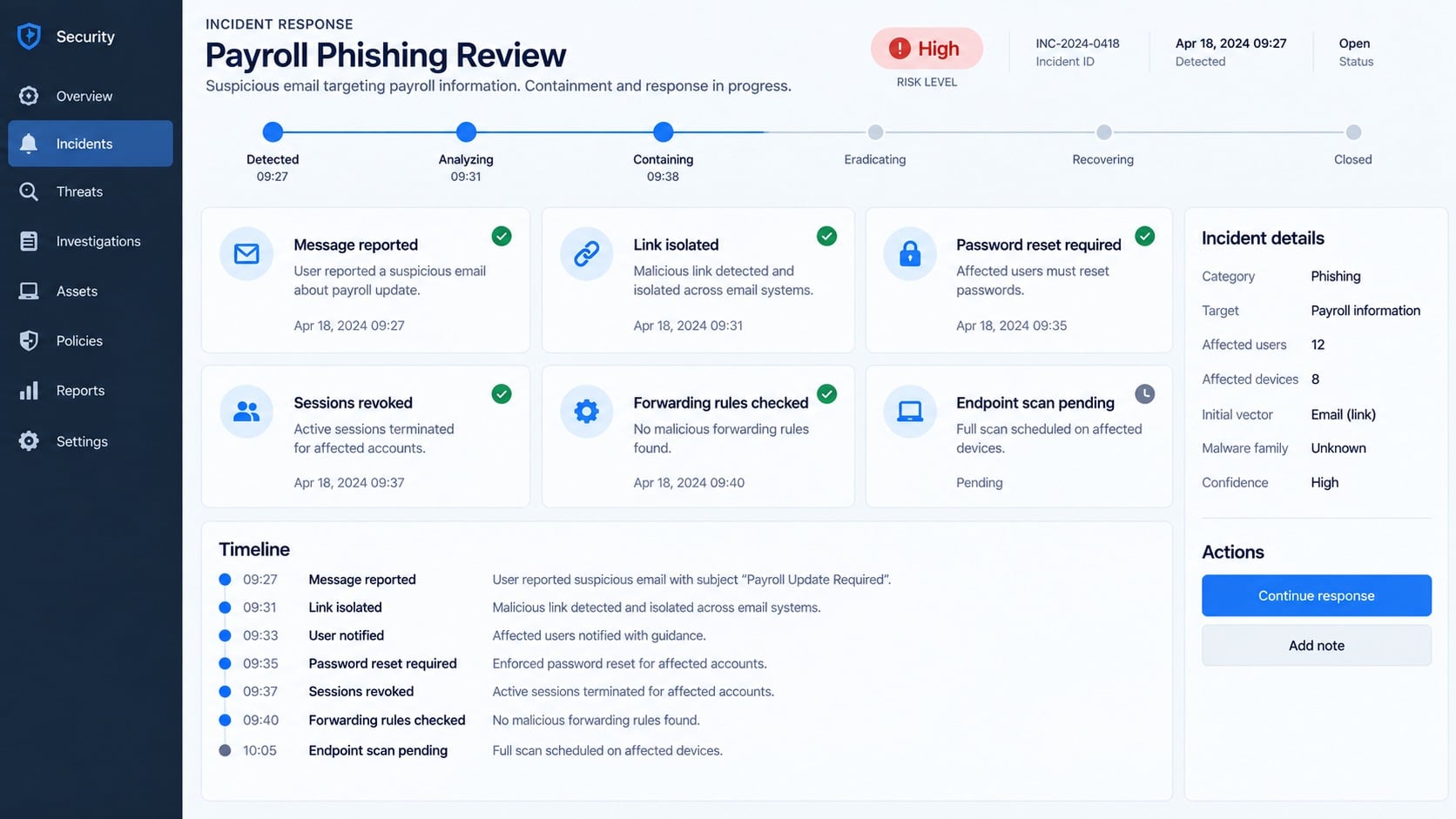
Stay calm and report exactly what happened. Fast, honest reporting gives the organization more time to protect accounts and payroll systems.
The correct response depends on whether you only clicked, entered credentials, approved a prompt, or opened a downloaded file.
- Disconnect after a suspicious download. If you opened or ran a file, disconnect the affected computer from Wi-Fi and Ethernet, then contact support.
- Notify your security team immediately. Provide the original email, link, time of interaction, downloaded filename, and every action you completed.
- Change the exposed password safely. Use a separate trusted device and the employer’s official identity portal, never the link from the payroll message.
- Revoke active access. Ask administrators to terminate sessions, invalidate tokens, remove unknown applications, and review newly registered authentication methods.
- Check mailbox changes. Inspect forwarding rules, delegates, deleted messages, unfamiliar sent mail, recovery details, and filters designed to hide security alerts.
- Protect payroll information. Tell HR to watch for direct-deposit changes, tax document requests, benefit edits, and messages supposedly sent from your account.
- Scan the affected device. Run Malwarebytes and the organization’s approved endpoint protection, especially after any download, extraction, or document opening.
- Block repeat destinations. AdGuard can stop many known malicious pages, while administrators should block confirmed domains and indicators across company systems.
- Replace reused passwords. Change matching credentials on personal and business services, prioritizing email, payroll, cloud storage, banking, and password recovery accounts.
- Warn likely recipients. Ask coworkers to distrust recent document shares or payroll requests from your identity until investigators confirm the account is clean.
Is Your Device Infected? Run a Free Malware Scan
Slow performance, constant pop-ups, or strange behavior? These are classic signs of a malware infection. The fastest way to find out is to scan your device with Malwarebytes Free — one of the most trusted malware removal tools available.
The free version detects and removes the most common threats, including:
- Adware — the cause of those annoying pop-ups
- Browser hijackers — unwanted redirects and changed homepages
- Trojans and spyware — hidden programs stealing your data
- Potentially unwanted programs (PUPs) — software you never asked for
👉 Select your device below — Windows, Mac, or Android — then follow the simple steps to download Malwarebytes, scan your system, and remove any threats it finds. The scan usually takes 5 to 20 minutes.
Run a Malware Scan with Malwarebytes for Windows
Malwarebytes is one of the most popular and trusted anti-malware tools for Windows — and it’s completely free for removing infections. It catches threats that many antivirus programs miss, including adware, browser hijackers, and trojans. Follow the steps below to scan and clean your PC in just a few minutes.
Download Malwarebytes
Click the button below to download the latest version of Malwarebytes for Windows from the official source. The free version is all you need — it will scan your computer and remove adware, browser hijackers, and other malicious software at no cost.
Download MalwarebytesOfficial installer for Windows 11 and 10. Your download starts right away.Want real-time protection? See Malwarebytes Premium Malwarebytes Free for WindowsScans and removes malware at no cost
-
Install Malwarebytes
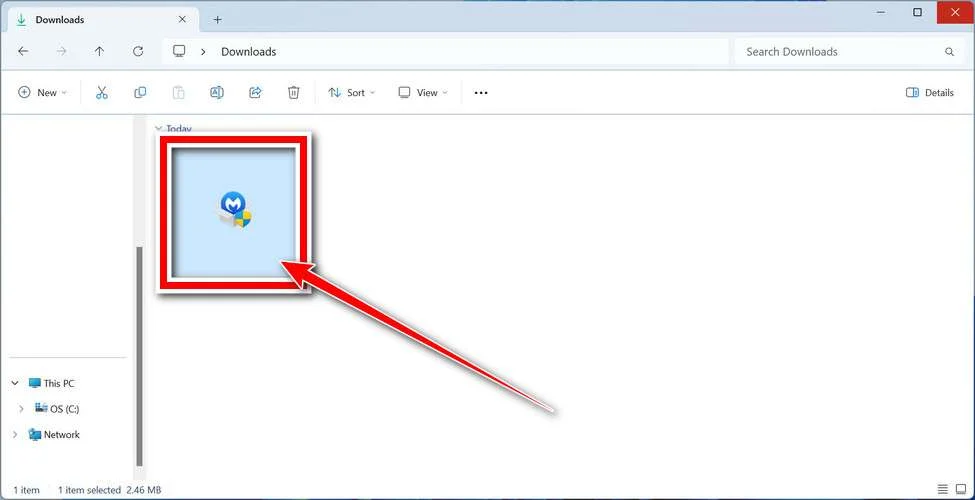
When the download finishes, open your Downloads folder and double-click the MBSetup file. If Windows shows a User Account Control pop-up, click “Yes” to allow the installation.
Follow the On-Screen Prompts to Install Malwarebytes
The setup wizard will walk you through a few quick screens:
-
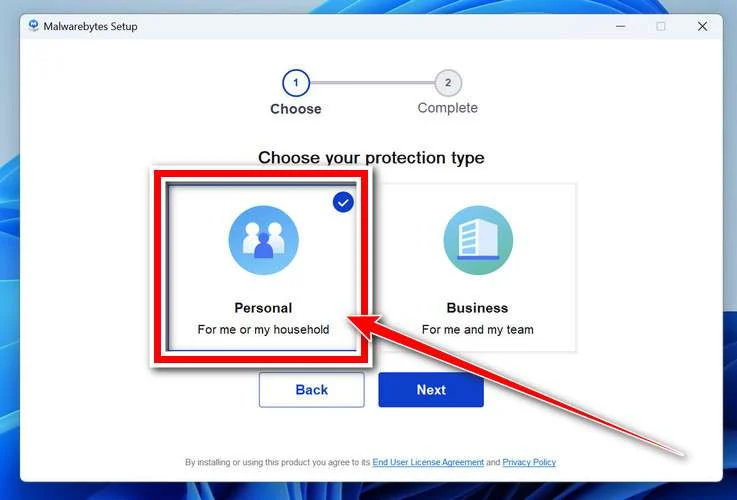
Choose where you’re installing the program — “Personal Computer” or “Work Computer” — then click Next.
-
Malwarebytes will now install on your device. This usually takes under a minute.

-
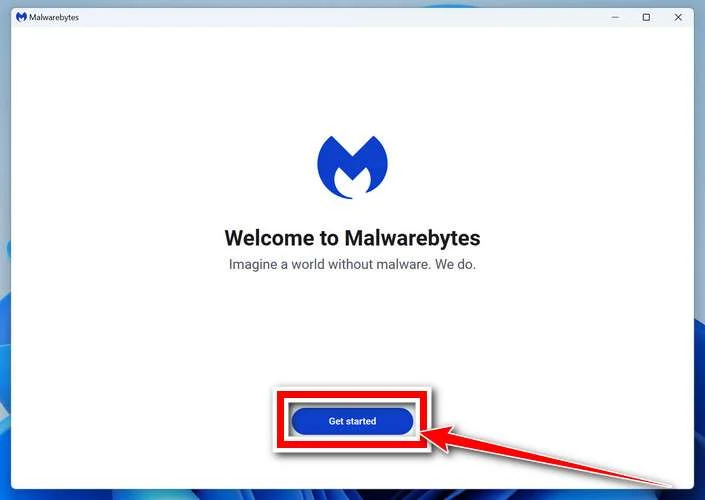
When installation is complete, the “Welcome to Malwarebytes” screen will open automatically.
-
On the final screen, click Open Malwarebytes to launch the program.

-
Enable “Scan for Rootkits”
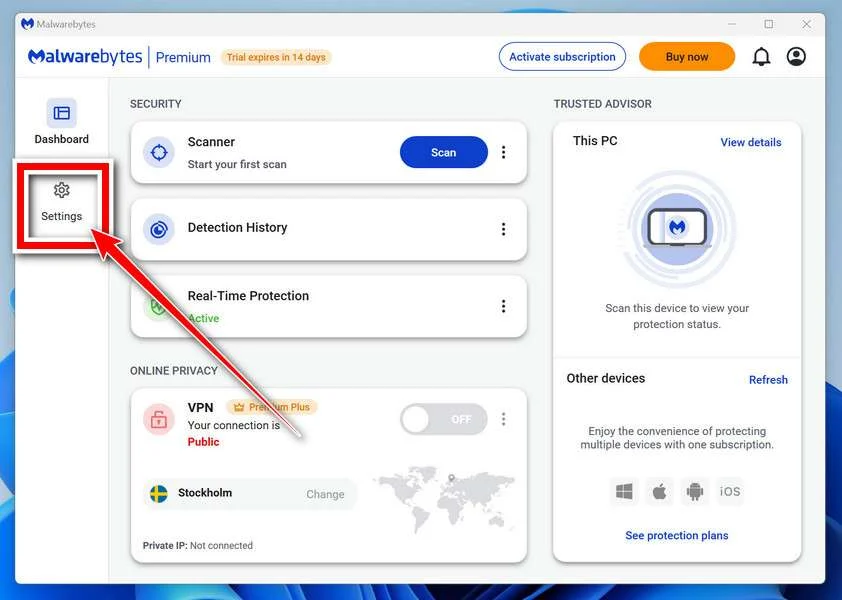
Before scanning, turn on rootkit detection so Malwarebytes can find even the most hidden threats. Click the Settings gear icon on the left side of the screen.
In the settings menu, find “Scan for rootkits” and click the toggle so it turns blue.

Done? Click “Dashboard” in the left pane to return to the main screen.
Start the Scan
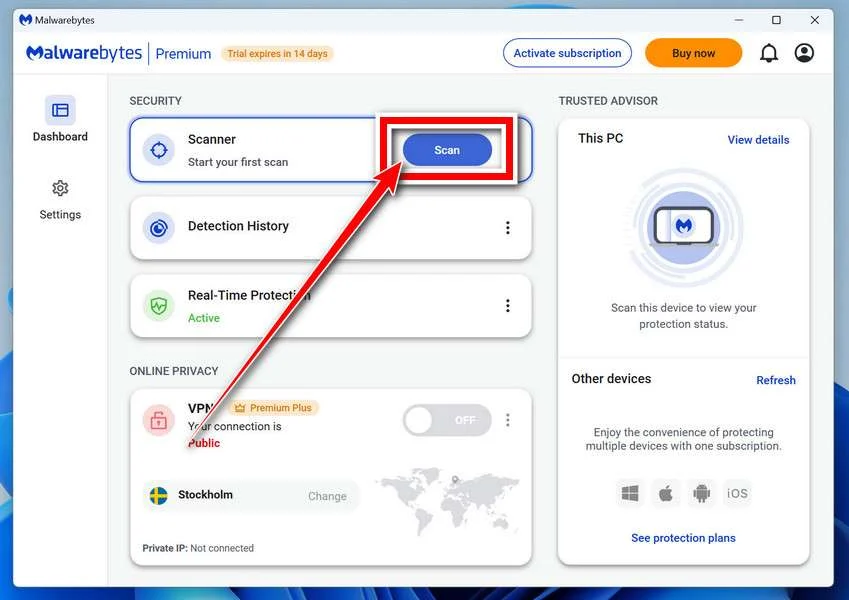
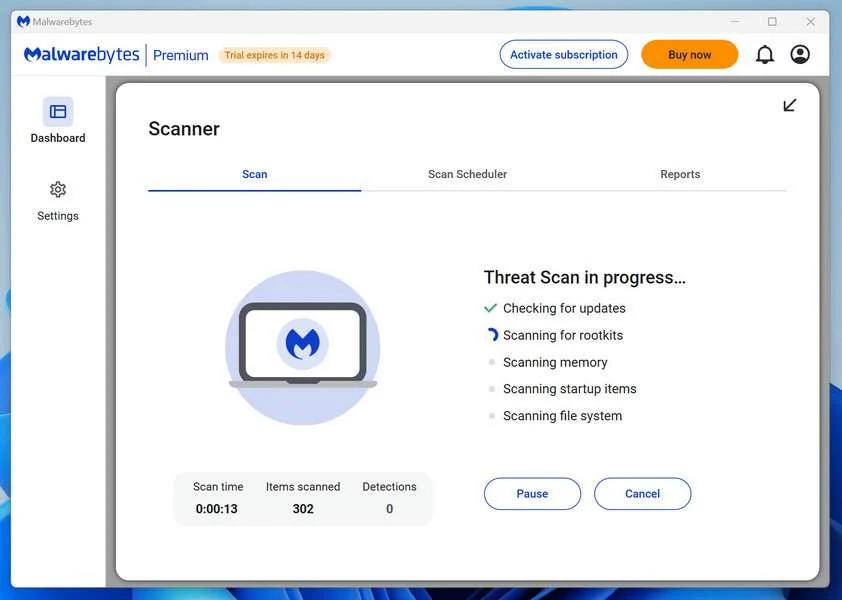
Click the blue Scan button. Malwarebytes will automatically update its virus database and start checking your computer for malware.
-
Wait for the Scan to Finish
The scan checks your entire system for browser hijackers and other malicious programs, so it can take 5 to 20 minutes depending on your computer. Feel free to do something else — just check back occasionally to see the progress.
-
Quarantine the Detected Threats
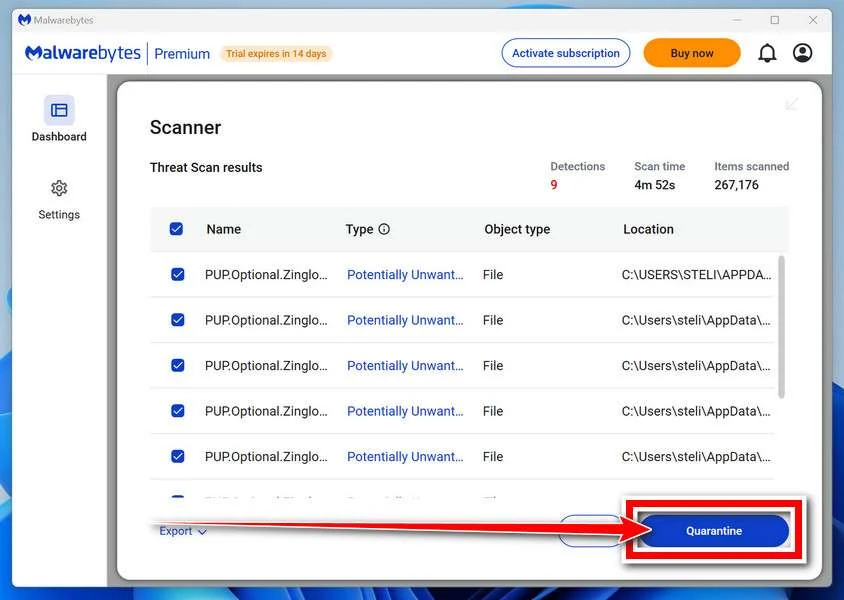
When the scan is done, you’ll see a list of everything Malwarebytes found — malware, adware, and potentially unwanted programs. Click the “Quarantine” button to remove all of them at once.
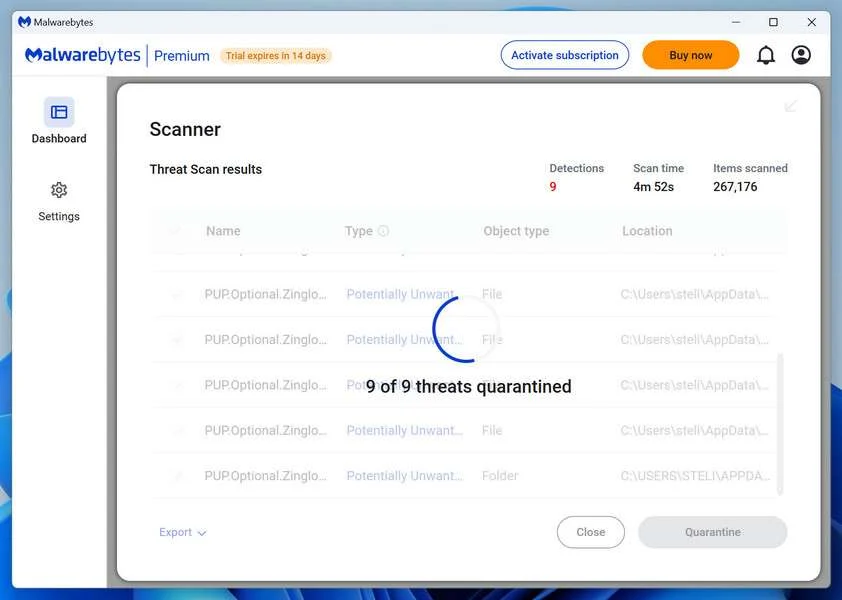
Malwarebytes will now remove the malicious files and registry entries and move them safely into quarantine.
-
Restart Your Computer
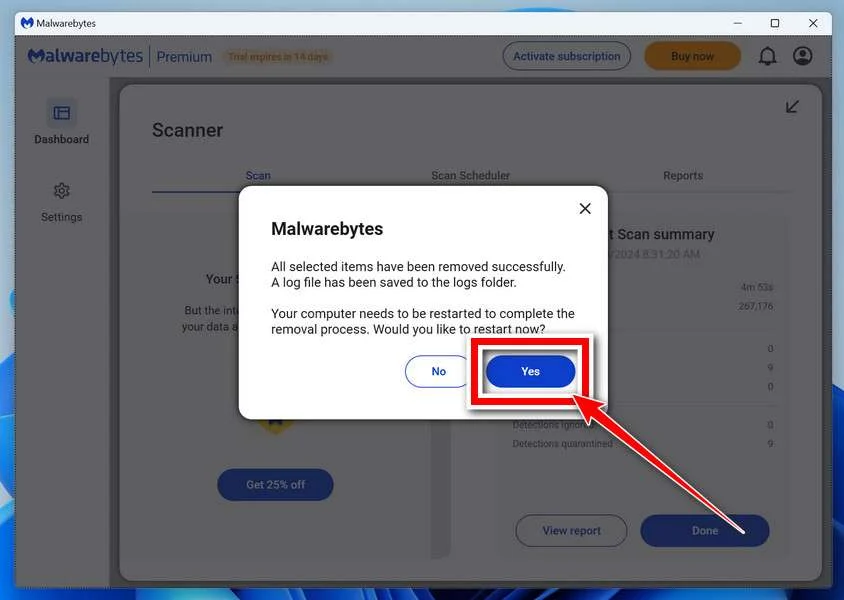
Some threats can only be fully removed after a reboot. If Malwarebytes asks you to restart, click Yes. Once you’re logged back in, Malwarebytes has finished removing the threats it found.
That’s it — your Windows PC is now clean of trojans, adware, and other malware, and should be back to running smoothly.
If you are still having problems with your computer after completing these instructions, then please follow one of the steps:
- Run a computer scan with ESET Online Scanner
- Ask for help in our Windows Malware Removal Help & Support forum.
Run a Malware Scan with Malwarebytes for Mac
Malwarebytes for Mac is a free on-demand scanner that removes the malware other security software tends to miss — adware, browser hijackers, and unwanted programs included. Cleaning an infected Mac with Malwarebytes has always been completely free, and it’s our go-to recommendation. Follow the steps below to scan and clean your Mac in just a few minutes.
-
Download Malwarebytes for Mac
Click the button below to download the latest version of Malwarebytes for Mac.
Download MalwarebytesOfficial installer for macOS. Your download starts right away.Want real-time protection? See Malwarebytes PremiumMalwarebytes Free for MacScans and removes malware at no cost -
Open the Malwarebytes setup file
When the download finishes, open your Downloads folder and double-click the setup file to begin the installation.
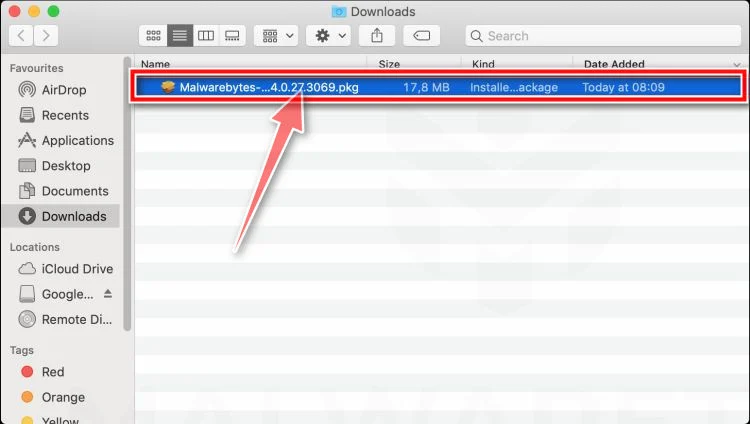
-
Follow the On-Screen Prompts to Install Malwarebytes
The Malwarebytes for Mac Installer will guide you through a few quick screens. Click “Continue” and keep following the prompts until the installation completes.
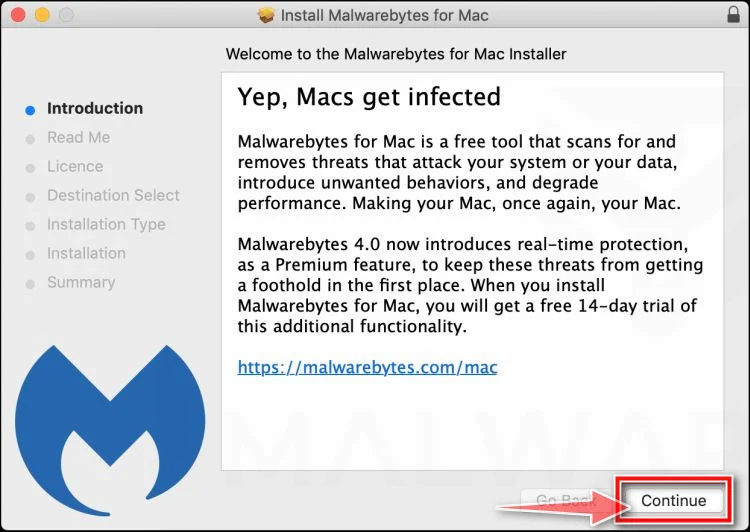
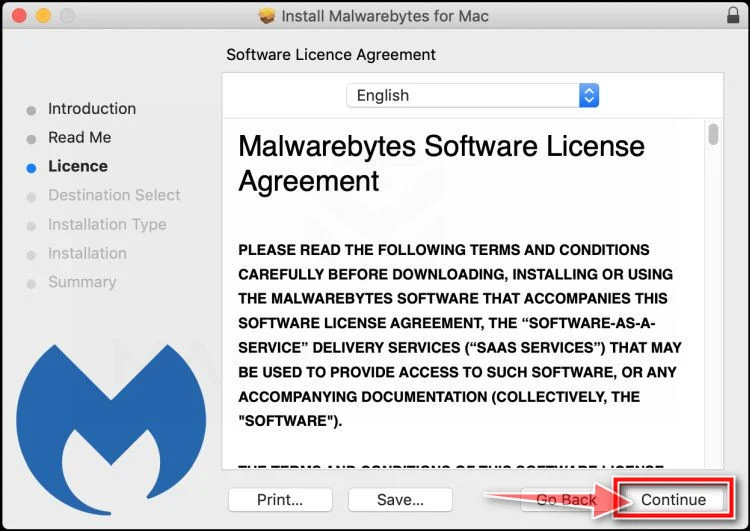
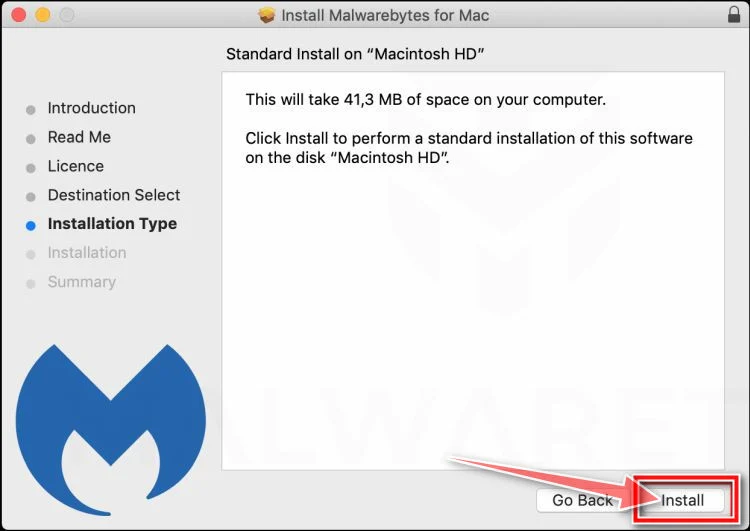
When the installation is complete, Malwarebytes opens to the Welcome to Malwarebytes screen. Click “Get started“.
-
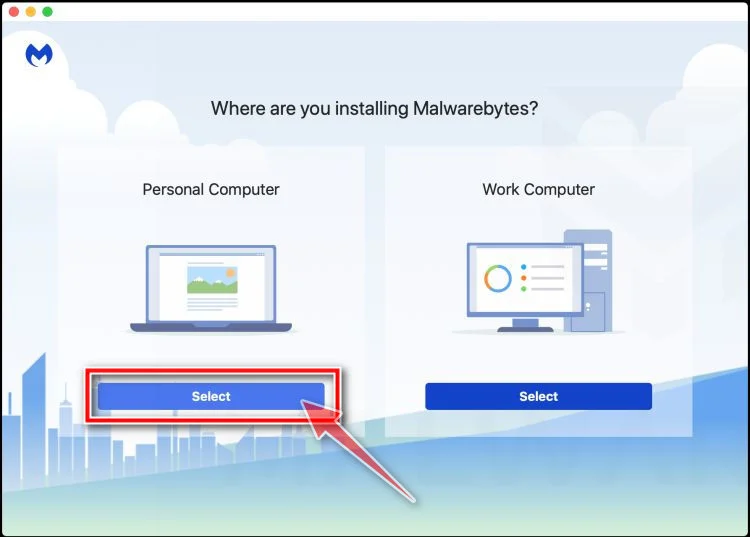
Select “Personal Computer” or “Work Computer”
Malwarebytes will ask what type of computer you’re installing it on. Click either Personal Computer or Work Computer, whichever applies.
-
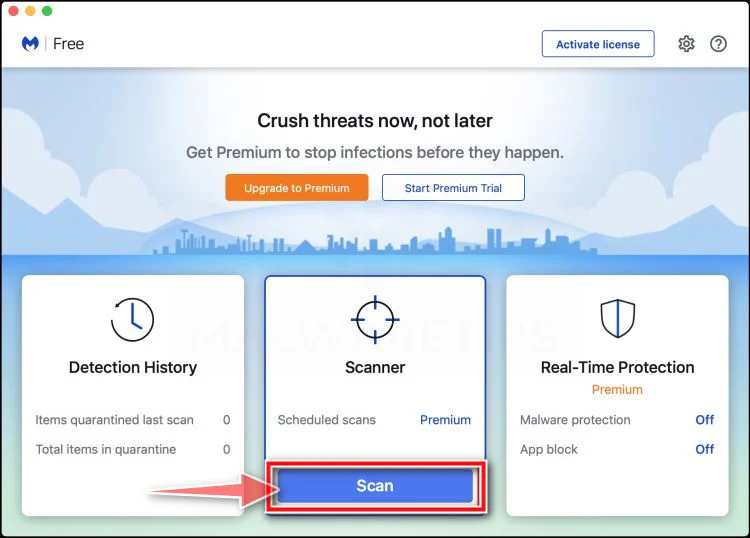
Start the Scan
Click the “Scan” button. Malwarebytes will automatically update its detection database and begin checking your Mac for malware.
-
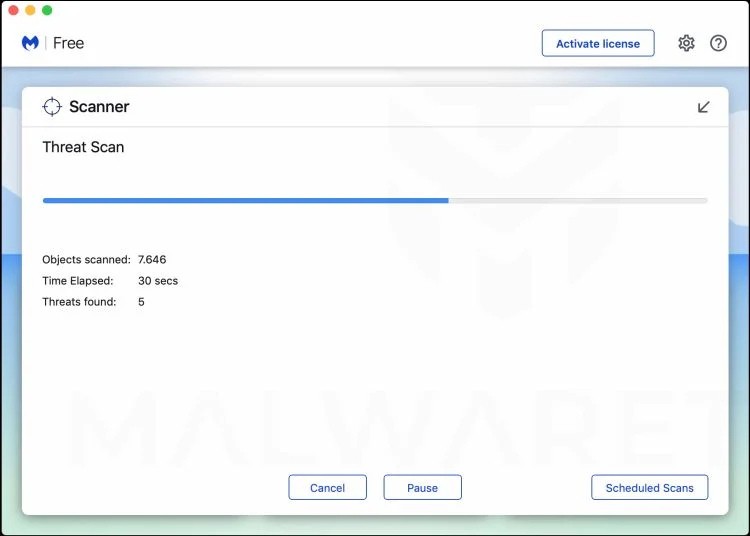
Wait for the Scan to Finish
Malwarebytes will scan your Mac for adware, browser hijackers, and other malicious programs. This can take a few minutes, so feel free to do something else — just check back occasionally to see the progress.
-
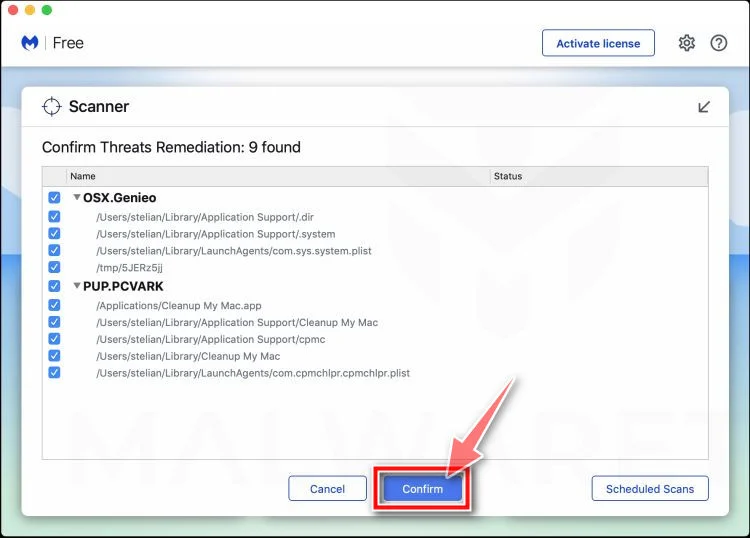
Quarantine the Detected Threats
When the scan is done, you’ll see a list of everything Malwarebytes found. Click the “Quarantine” button to remove all the threats at once.
-
Restart Your Mac
Malwarebytes will now remove all the malicious files it found. Some threats can only be fully removed after a reboot — if Malwarebytes asks you to restart, allow it. Once you’re logged back in, your Mac is clean.
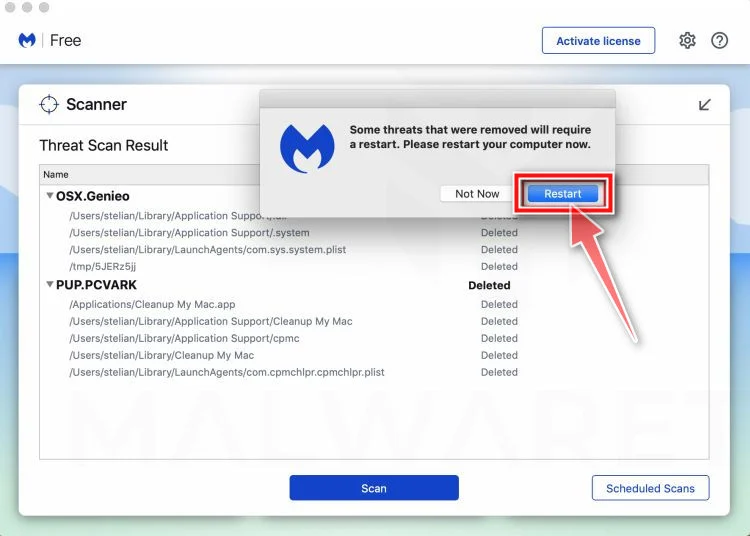
That’s it — your Mac is now free of adware, rogue browser extensions, and other potentially harmful software.
If you are still experiencing problems while trying to remove a malicious program from your computer, please ask for help in our Mac Malware Removal Help & Support forum.
Run a Malware Scan with Malwarebytes for Android
Malwarebytes for Android automatically detects and removes dangerous threats like malware and ransomware so you don’t have to worry about your most-used device being compromised. Aggressive detection of adware and potentially unwanted programs keeps your Android phone or tablet running smooth.
-
Download Malwarebytes for Android.
You can download Malwarebytes for Android by clicking the link below.
Get Malwarebytes for AndroidOpens Google Play in a new tab.Want real-time protection? See Malwarebytes Premium for AndroidMalwarebytes for AndroidScans your phone and removes malware at no cost -
Install Malwarebytes for Android on your phone.
In the Google Play Store, tap “Install” to install Malwarebytes for Android on your device.

When the installation process has finished, tap “Open” to begin using Malwarebytes for Android. You can also open Malwarebytes by tapping on its icon in your phone menu or home screen.

-
Follow the on-screen prompts to complete the setup process
When Malwarebytes will open, you will see the Malwarebytes Setup Wizard which will guide you through a series of permissions and other setup options.
This is the first of two screens that explain the difference between the Premium and Free versions. Swipe this screen to continue.
Tap on “Got it” to proceed to the next step.
Malwarebytes for Android will now ask for a set of permissions that are required to scan your device and protect it from malware. Tap on “Give permission” to continue.
Tap on “Allow” to permit Malwarebytes to access the files on your phone.
-
Update database and run a scan with Malwarebytes for Android
You will now be prompted to update the Malwarebytes database and run a full system scan.

Click on “Update database” to update the Malwarebytes for Android definitions to the latest version, then click on “Run full scan” to perform a system scan.

-
Wait for the Malwarebytes scan to complete.
Malwarebytes will now start scanning your phone for adware and other malicious apps. This process can take a few minutes, so we suggest you do something else and periodically check on the status of the scan to see when it is finished.

-
Click on “Remove Selected”.
When the scan has been completed, you will be presented with a screen showing the malware infections that Malwarebytes for Android has detected. To remove the malicious apps that Malwarebytes has found, tap on the “Remove Selected” button.

-
Restart your phone.
Malwarebytes for Android will now remove all the malicious apps that it has found. To complete the malware removal process, Malwarebytes may ask you to restart your device.
That’s it — your Android phone is now clean — no more malicious apps, adware, or browser redirects.
If you are still having problems with your phone after completing these instructions, then please follow one of the steps:
- Restore your phone to factory settings by going to Settings > General management > Reset > Factory data reset.
- Ask for help in our Mobile Malware Removal Help & Support forum.
Stay Protected: Block Ads and Malicious Sites
Now that your device is clean, keep it that way. Most infections start with a malicious ad or a fake download button — so blocking them at the source is your best defense.
We recommend AdGuard, which blocks malicious ads, phishing pages, and dangerous redirects before they can reach you.
👉 Download AdGuard and browse safely
Frequently Asked Questions
Is the Incentive Overview and Payroll Review email genuine?
The campaign reviewed here is fraudulent. It impersonates an HR file share and directs recipients outside a verified workplace process.
A similar title could appear in legitimate business. Confirm every message through your employer’s known HR portal or directory contact.
Does Microsoft send payroll review documents?
Microsoft provides tools employers can use to share files, but Microsoft does not create an employer’s compensation decision.
Copied Microsoft styling cannot authenticate the sender. The tenant, sharing relationship, destination domain, and document owner still require verification.
What happens if I only clicked the button?
Close the page and report the link. If you entered nothing and downloaded nothing, credential exposure is less likely.
Tell security staff about any unexpected redirects, browser permission requests, downloads, warnings, or sign-in prompts that appeared.
What if I entered my password but multifactor authentication stopped access?
Treat the password as stolen anyway. Change it immediately and revoke existing sessions through the official account portal.
Do not approve unexpected multifactor prompts. Ask administrators to check for token theft, new devices, applications, and authentication-method changes.
Can the linked payroll file install malware?
A malicious download can install malware when opened or executed. The inactive destination prevents confirming the exact payload in this campaign.
If any file reached the device, preserve its name, avoid reopening it, disconnect when appropriate, and run approved security scans.
How can employers prevent similar payroll phishing attacks?
Publish approved HR domains, require phishing-resistant authentication, filter dangerous links, and make incident reporting fast and blame-free.
Payroll and finance changes should require independent confirmation, dual approval, and alerts sent through a separate trusted channel.
The Bottom Line
The Incentive Overview and Payroll Review email borrows HR language and familiar file-sharing design to push employees toward an untrusted destination.
Verify compensation documents through established workplace channels. If you interacted, report quickly, secure the account, inspect payroll changes, and scan any affected device.

Join the discussion
0 commentsShare your experience or ask a question about this article.
Discussion
Start the conversation
Have a question or something useful to share? Add the first comment.