


You open an insurance statement and see a service you never had. The line carries your name, but the date, provider, or equipment is unfamiliar.
Before you pay anything or assume someone stole your identity, find out whether the claim is actually in your insurer’s records. That gives you somewhere useful to start.
Overview
The statement shows how a claim was handled
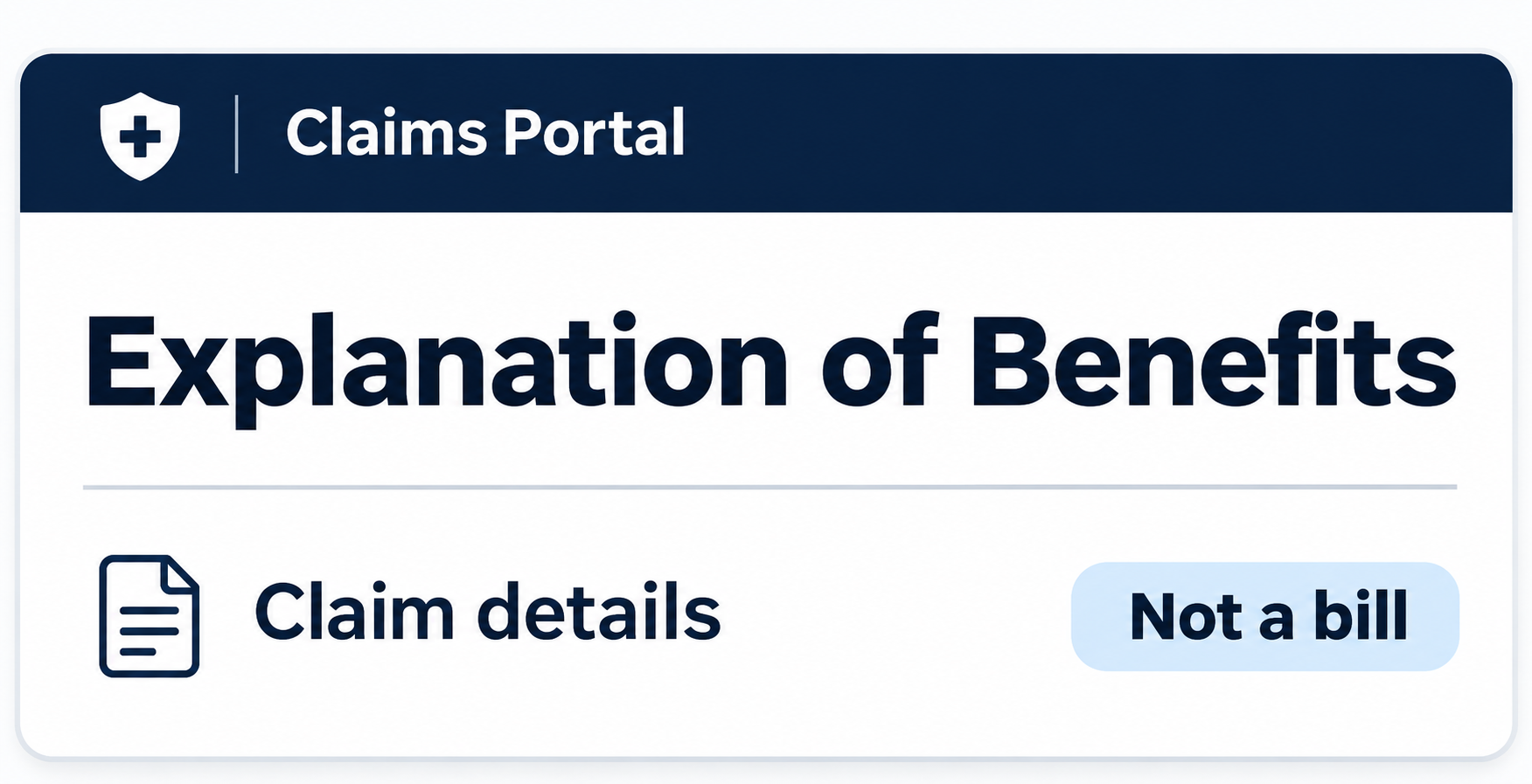
An Explanation of Benefits, or EOB, tells you how a health plan processed a claim. It is not itself a bill, even when it shows an estimated amount you owe.
The Centers for Medicare & Medicaid Services guide explains fields such as the date of service, the provider, the plan payment, and the patient balance.
If something looks wrong, open the insurer’s website or app independently. Your first goal is to establish whether the unfamiliar claim is in the insurer’s system.
An unfamiliar provider can have an ordinary explanation
The name on a claim may be a laboratory, hospital department, or other organization that participated in a visit. You might only remember the clinician you met.
Start with the service date and the kind of care or equipment listed, not just the name. A match to your own appointment gives you a specific question to ask.
If neither the date nor the service makes sense, ask the health plan and billing provider to investigate.
Do not assume someone stole your insurance information before checking for a mistake.
There are three records to keep separate
- Your insurer has the claim it processed, including a number you can give its fraud or billing team.
- The billing office has the charge and can tell you what encounter, order or shipment it relates to.
- Your clinicians may have a medical record that needs attention if unfamiliar diagnoses, prescriptions or care were entered under your name.
A corrected bill does not necessarily correct a medical record. Likewise, an inaccurate claim does not automatically mean that someone changed your main chart.
Read the Claim Before You Call Anyone
Open the records you already trust
Use the account you normally visit or the member services information on your physical card. An unexpected notice should not determine where you sign in.
If there is no matching claim, ask member services whether the notice corresponds to a recent adjustment or a statement for a different plan or family member.
If the plan confirms that it has no matching record, do not use the notice to make a payment. Ask the verified plan where it wants suspicious communications reported.
If you find the claim in your usual account, write down the claim number, named provider, service date, and which covered person is listed. Do not post those details publicly.
Pay attention to whether the page shows an original claim, a revised claim, or a denial.
Multiple lines can represent different records for the same encounter rather than multiple new visits.
Keep the date and the service together
Compare the service date with your calendar, messages, pharmacy history, or paperwork from an appointment. The date the claim was processed can be much later than the visit.
Use the description as a starting point.
If only a code is shown, ask the insurer to describe what was billed rather than diagnosing the claim through a random search result.
Check which person on the policy received the service. If you manage coverage for more than one person, use the plan’s rules for speaking about someone else’s claim.
If you had a procedure at a hospital, separate the facility, surgeon and ancillary services in your review.
Multiple legitimate providers can bill for portions of a single episode of care.
Watch for claims that deserve prompt escalation
An unfamiliar facility in a place you have never visited, a device you never received, or recurring services you did not have warrants a direct call to the plan.
An unfamiliar prescription may merit a check with the pharmacy or prescriber as well as the insurer. Tell your care team if incorrect medication information appears in your actual chart.
A line with no patient balance still deserves review if the care did not happen.
Whoever kept the benefit or was paid is a separate question from whether you owe anything.
Keep an eye out for related entries on other dates. You can identify the first incorrect claim in your report without waiting to build a complete history.
What the Insurer and Provider Can Answer
Call the plan through member services and say which exact service you do not recognize. Ask whether it has paid, denied, or adjusted the claim and who submitted it.
Describe what you know rather than choosing a diagnosis for the error. A provider listed under an unfamiliar business name, a clerical error, and identity theft are not interchangeable explanations.
Ask where the plan wants a suspected fraud referral or billing dispute. Obtain the reference number and the details it needs for a follow-up.
If the provider is genuine, find its billing contact independently. Ask it to connect the charge to a specific appointment, lab order, prescription, or equipment shipment associated with your record.
Ask the provider what process it uses if a claim was submitted under the wrong person. Keep the response and ask how an adjustment will appear in your insurer’s records.
If the insurer and provider give different answers, record the difference precisely. It is more useful to say who cannot find the visit than to report that nobody is helping.
If you have a provider bill as well as an EOB, tell both parties about the discrepancy.
Ask the provider in writing how billing is handled while it reviews the claim.
Do not ignore a separate bill simply because the first document was not a bill.
Continue tracking any deadlines the insurer or billing office communicates, and keep copies of your requests.
Original Medicare and Private Plans Use Different Records
If you have Original Medicare, your Medicare Summary Notice summarizes covered services and how Medicare handled the claims. You can also check processed claims through your secure Medicare account.
If you have Medicare Advantage, start with your plan’s claims and contacts rather than waiting for an Original Medicare notice for a service handled by the plan.
For any unfamiliar item, compare the record with your actual appointments and shipments. Keep written orders or receipts if you have them, especially for supplies delivered to your home.
For Original Medicare, Medicare’s fraud reporting guidance explains who to contact when the claim remains suspicious. Use the published route instead of an unknown caller’s offer to fix it.
The issue may first surface when someone calls about a new card or unsolicited equipment.
Compare what the caller said with the actual claim, and do not provide your Medicare number to them.
If the plan instructs you to contact a different office, verify the contact through the plan’s own documents.
Use your case number to keep each conversation tied to the correct claim.
Worked Example: A Claim for Equipment You Did Not Receive
Suppose your statement shows a supply charge from an unfamiliar company, with no amount due from you. The statement was mailed after a recent appointment.
Begin by asking your insurer what the supply was, who billed it, and what date the claim says it was provided. Compare those answers to your own visit and deliveries.
If the provider describes equipment supplied during the appointment and that matches what happened, the surprise may come from the name on the statement.
Ask whether anything remains for you to do.
If the charge concerns a separate device you never ordered or received, ask the verified billing office whether the claim is tied to a delivery or a clinical order.
Report the mismatch to the insurer: the record names a specific company and date, but you did not order the equipment and the company could not explain the charge.
Do not ask for or publish another patient’s delivery information.
The billing office and insurer can investigate whether the correct patient was attached to the claim without disclosing someone else’s records.
Keep the date you first disputed the claim, what documentation was requested, and the expected time of the next response.
You can chase a specific unresolved question rather than recreating the whole case.
If more supply claims appear in the portal, give the investigator those claim references. Ask if they belong in the same review or need separate reports.
What a resolution should look like
If the provider says a billing record was corrected, check whether the insurer shows a matching adjustment. A portal can retain the original entry and add a reversal or replacement.
If a bill went out before the correction, ask for an updated statement showing what is owed, if anything. Keep a copy in case a reminder arrives after the adjustment.
If the practice corrects an erroneous clinical entry, check that the people currently using your record understand the change. That question matters even when the insurer never paid the claim.
Keep relevant notes securely rather than throwing everything away once a balance changes. The notes can help you explain why a later notice relates to a claim you already reported.
Check Your Medical Record When the Claim Suggests Misuse
An insurance claim can tell you that a service was billed under your name. It cannot tell you whether your own doctor’s file now contains someone else’s information.
If there is reason to suspect misuse, ask the provider or plan for the relevant records.
The FTC’s medical identity theft guide explains how claims, billing, and records can be affected.
You can begin with the specific visit or transaction rather than ordering your entire lifetime record. Use the provider’s official privacy or records process, and keep the request and reply.
If a diagnosis, prescription, test result, or visit is wrong in your chart, flag it to the clinician who relies on the record.
Do not change medication based on a suspicious line.
For records covered by the U.S. HIPAA Privacy Rule, HHS explains how to request an amendment. Identify the exact information you dispute and why it is incorrect.
An amendment is not the same as erasing every record of a disputed encounter.
If a provider or plan denies the amendment, HHS explains how a statement of disagreement can be added.
Follow up with the provider and the insurer separately. A provider’s confirmation that it corrected its chart does not tell you whether the insurance claim was adjusted.
What to Do If You Find a Claim for Care You Did Not Receive
- Verify the claim first. Use your insurer’s official account or the number on your card. Record the service date, provider, claim number, and which family member it names.
- Call the billing office independently. Ask what appointment, order, or delivery led to the charge. Do not share a full record with an unverified caller.
- Report a remaining discrepancy to the plan. Ask whether it needs a claim dispute, a fraud referral, or both. Keep the case number and requested response date.
- Check records that could affect care. Contact your providers about unfamiliar clinical entries and follow their formal amendment process if needed.
- Escalate confirmed or suspected identity misuse. Use IdentityTheft.gov for a U.S. recovery plan and follow your insurer’s reporting route. Keep those records private.
- Confirm each correction separately. Check the updated claim, any outstanding provider bill, and any disputed chart entry. Save a record of what changed and what remains open.
If a collection notice arrives, preserve it rather than discarding it with the misleading correspondence.
Ask for the information linking it to the disputed account and pursue the appropriate billing or debt dispute.
Frequently Asked Questions
Is an Explanation of Benefits a request for payment?
No, it explains how the insurer processed a claim. A separate provider bill may arrive, but verify unfamiliar charges before sending money anywhere.
Is a doctor’s name I don’t recognize proof of identity theft?
Not by itself, since another provider may have participated in a real visit. Compare the date and service and ask the plan who submitted the claim.
Should I report it even when the balance is zero?
Yes, if you confirm that the service is unfamiliar after checking. A zero balance does not answer whether the claim or your records are accurate.
Can an insurer correct my medical chart?
Start with the organization that holds the incorrect record. The insurer can handle its claim, but the treating provider or other record holder may need a separate amendment request.
What if I get a call offering a new Medicare card after I report fraud?
Do not give your number to a caller you cannot verify. Follow up through the official Medicare or plan contact you used for the original report.
Do I need a credit freeze for every unfamiliar medical claim?
No, an unfamiliar claim is not necessarily financial identity theft.
A broader identity theft plan may be appropriate if you find related misuse, but a freeze cannot fix the medical record.
The Bottom Line
Do not pay through an unexpected notice for care you did not receive. Verify the claim with the insurer and check which provider submitted it.
If the service remains unexplained, report the exact claim and follow up on any related bills or chart entries separately. Ask for confirmation of each correction.

Join the discussion
0 commentsShare your experience or ask a question about this article.
Community experiences
Did this happen to you?
Your experience could help someone recognize the same scam. Submit a private report for our team to review.
I experienced this tooReports are reviewed before publication. Sharing publicly is always your choice.
Discussion
Start the conversation
Have a question or something useful to share? Add the first comment.