


A message says a large wire transfer is due to reach your account. It lists banking details and asks what you want to do if you don’t recognize it.
The amount is striking, but the reply instructions deserve just as much attention. They change the kind of conversation you’re being asked to have.
Overview
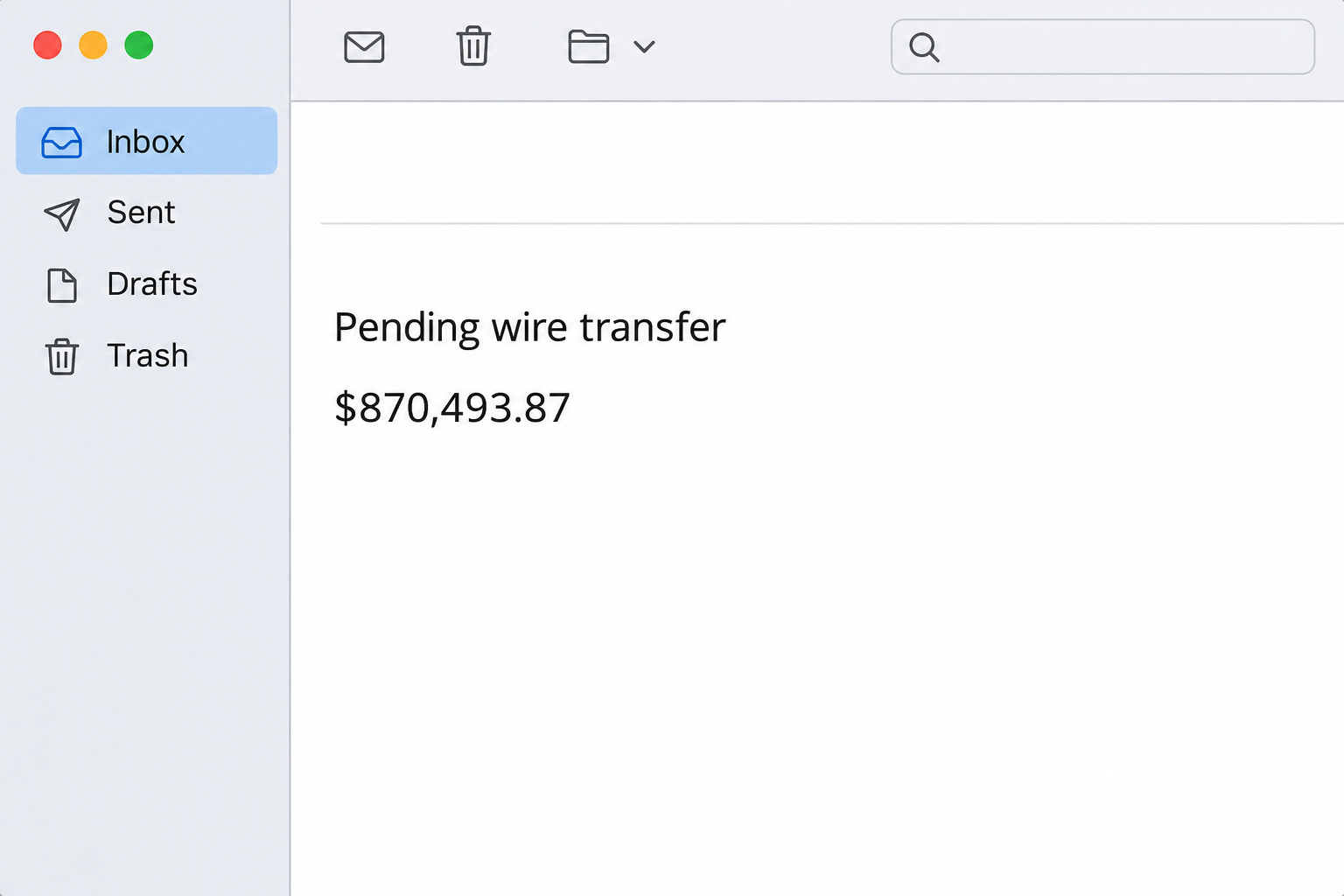
The message promises a pending transfer of $870,493.87
The Wells Fargo pending wire transfer email scam claims a payment of $870,493.87 is scheduled to be credited to a bank account.
It also invokes the Federal Reserve’s name to make the payment appear official.
The person writing presents themselves as Jerome H. Powell and supplies supposed Wells Fargo banking details. The email treats those details as something the recipient should recognize.
If the recipient doesn’t recognize the transaction, the message asks them to reply with updated banking information and a WhatsApp or Telegram contact.
That is not a normal way to verify a transfer. The email is an invitation to disclose information or begin a private exchange, not proof that any money exists.
The reply request is the important part of the lure
The email offers two apparent choices. Recognize the listed details and let the transfer proceed, or say you don’t recognize them and supply information for a correction.
A person who would ordinarily ignore an unexpected payment may reply just to fix the mistake. That response gives the sender an opening to ask more questions.
The message doesn’t establish that a bank account was opened, that a wire is pending, or that the person named in it sent anything.
The Federal Reserve’s own fraud guidance warns about messages claiming people are entitled to funds and requesting personal information. A government name doesn’t authenticate the payment story.
Which details distinguish this specimen
A copy can change its wording, but these elements help distinguish it from an ordinary bank notification or another request to review payment advice.
- The amount in the documented email is $870,493.87.
- The sender invokes the Federal Reserve while naming Wells Fargo as the bank.
- A table or list supplies supposed recipient banking details.
- The alternative to recognizing the transfer is supplying new bank details.
- The requested follow-up includes WhatsApp or Telegram contact information.
Don’t try to validate the supplied routing or account numbers by contacting an unknown account holder. They are part of an unverified story, not instructions to investigate someone else.
How the Wells Fargo Pending Wire Transfer Scam Works
Step 1: A precise amount turns an implausible offer into something to check
A large round prize can be easy to dismiss. An amount with cents and detailed banking references can feel more like a real transaction that needs attention.
The email creates that impression without showing a record from your own bank. A number typed into a message isn’t evidence that a payment was initiated.
You might wonder whether it’s connected to a settlement, inheritance, or business matter. Don’t give the sender those possibilities to incorporate into the next reply.
If you are genuinely expecting funds, use the existing transaction or counterparty record to investigate. The unexpected email should not choose who you speak with.
Step 2: Federal Reserve identity is mixed with a retail banking story
The purported sender borrows the name of a high-profile financial official. That can make the message seem above the level of an ordinary bank account inquiry.
The authority claim doesn’t explain why a private recipient should send banking details in a reply. It also doesn’t make a messaging app an official channel.
The Federal Reserve Inspector General’s fraud guidance describes false communications about large payments and requests for identifying information.
You can check that warning without responding to the email. There is no need to determine who really controls the sender’s address before refusing the request.
Step 3: Incorrect banking details become a reason to disclose the correct ones
The message anticipates that the recipient may not recognize the listed account. Instead of allowing that mismatch to end the exchange, it offers an apparent correction process.
That is the clever part of the setup. A mismatch can make the offer look less credible, yet the email turns it into the precise reason to send private details.
Do not fix the sender’s banking record. If money were genuinely owed to you, the real payer and your bank could help establish the right route independently.
A bank may ask for information through an authenticated process. That doesn’t make a request inside a cold email equivalent to a trusted support interaction.
Step 4: A messaging-app contact can extend the conversation
The notice asks for WhatsApp or Telegram details alongside banking information. That invites a follow-up away from the original mail thread and into more immediate conversation.
Someone can then repeat the amount, ask which bank you use, or invent a new reason the transfer cannot proceed. Those are possible follow-ups, not confirmed steps for every recipient.
The issue isn’t that messaging apps are inherently fraudulent. It is the attempt to move an unverified financial claim onto a channel selected by the sender.
Don’t send a phone number to find out what the next step would be. A real bank can be reached through the contact details you already use.
Step 5: Fees and identity requests can build on the first disclosure
A common advance-fee pattern is to demand a charge before releasing the promised money. The original email does not document a particular fee or a completed loss.
If a follow-up asks for a processing charge, tax, insurance payment, or identity document, don’t treat that as evidence the transfer has reached another stage.
Each new request still rests on the same unverified promise. An invoice for a supposed release fee doesn’t convert the original claim into an actual debt owed to you.
Stop contact rather than negotiating a smaller charge. Use your bank or the genuine party involved in any real financial matter to decide what is legitimate.
How to Check Whether an Actual Wire Is Expected
Start from your own account or the known payer
Open your bank through its app or a saved address. Check actual activity rather than searching for the email’s amount inside a new portal it recommends.
An incoming wire may involve information that your bank or the known sender can help confirm. Ask them through the account and contacts you already had.
If the sender claims to be an attorney, business partner, or organization involved in an ongoing matter, contact that party independently. Don’t introduce them using details from the suspicious email.
You do not need to provide a new destination account just to ask whether a real payment exists. Explain the message to your bank without treating its contents as instructions.
Use the bank’s fraud route if information was shared
Wells Fargo publishes instructions for reporting suspicious messages and activity. Follow the route that matches whether you merely received the message or responded.
A genuine report is separate from a conversation with the supposed transfer officer. Don’t reply to the original sender to say that the bank needs another reference.
If you aren’t a Wells Fargo customer, the message doesn’t give you a reason to open an account. Contact your actual bank if its details were exposed.
If you already sent a payment, use the bank or payment provider that moved your money.
The bank named in the lure isn’t necessarily the one that can act on it.
Separate a promised credit from money you already control
The notice’s wording concerns an incoming credit. It doesn’t establish that anyone took money from your existing account, even if the table includes a familiar bank name.
If you see an unfamiliar credit in the genuine account, ask your bank about it. Don’t send a refund or move funds to a person who contacts you.
A screenshot, transfer certificate, or reference supplied in a later message isn’t a substitute for verified account activity. Keep those materials for a report without relying on them as proof.
For a business payment, compare the real payer with the customer record and the invoice currency. The exact amount matters only when it belongs to an actual transaction.
Ask the known payer to follow up through its own bank if an expected wire is missing. You don’t need a stranger’s private-messaging account to trace it.
If a bank representative needs documents, ask how to submit them securely. Don’t send financial paperwork back to the address in the transfer offer.
What to Do if You Have Fallen Victim to This Scam
-
If you haven’t responded, leave the transfer instructions alone.
Report the message through the bank’s verified fraud page or your mail client’s phishing feature. Don’t reply to decline or correct the supposed transaction.
If you expected a real payment, check it separately with the known sender. Keep the unverified email out of that financial workflow.
-
If you replied with only a contact detail, stop the exchange.
Block further messages if appropriate and watch for new approaches referring to the amount. Knowing the number from the original email does not make a caller legitimate.
Don’t continue just because the person is polite or appears to have a complete file. You may already have supplied the information being repeated.
-
If you supplied banking information, contact your bank promptly.
Tell it exactly what was shared: a bank name, account identifier, card detail, login, or code. Different types of exposure require different protective actions.
Ask what activity to monitor and whether any account or payment controls should change. Don’t close or move funds simply because an unverified caller tells you to.
-
If you disclosed an identity document or sensitive personal details, get targeted help.
Identify which document and numbers were exposed, and contact the relevant issuer or local identity-protection authority for guidance. Keep a list of what you sent.
A bank-account identifier isn’t the same as a full identity file. Be specific so support can recommend measures suited to the actual information involved.
-
If you paid a fee, act through the provider that sent the money.
Preserve the amount, time, payment route, recipient, and transaction reference. Explain that the payment was induced by a fraudulent transfer promise and ask about stopping or recovering it.
Avoid paying another person to release the original funds or refund the fee. A second payment can extend the same loss without making the transfer real.
-
Keep a clear record and use independent reporting channels.
Save the original message and relevant replies privately. Do not publish bank identifiers or personal documents in a public warning about the scam.
If your workplace’s information or money was involved, notify the appropriate finance and security teams. Let them coordinate the report rather than forwarding the demand widely.
You don’t need to wait until every promised stage fails. Reporting the disclosure or payment promptly gives the real bank the best chance to advise on next steps.
Frequently Asked Questions
Is $870,493.87 actually waiting at Wells Fargo for me?
The email doesn’t establish that a transfer exists. The amount is a detail in the fraudulent story, not a balance confirmed in your own banking account.
If you are expecting funds for a real reason, check through the known payer and your bank. Don’t supply a corrected account to test the offer.
Did Jerome H. Powell or the Federal Reserve send this?
The email uses that name, but an identity claim in a message isn’t proof of authorship. The Federal Reserve warns about scammers invoking its name to obtain private information.
Don’t rely on a signature or an apparent official title. You can report the impersonation without continuing the supposed transfer process.
Should I reply if the listed bank account isn’t mine?
No, the mismatch is not a reason to give the sender your real details. That is exactly the response the notice invites when its original banking information isn’t recognized.
If you worry that someone used your identity, ask your bank through a known channel. Don’t use the email as the investigation route.
Is sharing a bank account number the same as sharing a password?
No, the risks are different, which is why you should tell the bank precisely what was sent. The bank can recommend protections appropriate to that disclosure.
Don’t provide any additional details to the sender in an attempt to take the first information back. A demand for a code deserves its own immediate report.
Can a real bank use WhatsApp or Telegram?
Institutions have different communication channels, but the app name alone doesn’t authenticate a conversation. This email is not a verified introduction to bank support.
For this transfer claim, use your bank’s published route. Don’t let an unfamiliar contact define which channel is necessary to release money.
What if I received an apparent transfer receipt after replying?
Keep it as evidence but verify actual funds through your bank. A document supplied by the same person doesn’t independently confirm the promise.
If you are asked to pay before the receipt can be honored, stop. The additional paperwork hasn’t changed the need to verify the underlying transaction.
The Bottom Line
Don’t reply with banking details or a messaging-app contact to claim the supposed Wells Fargo transfer. The precise amount and Federal Reserve identity are parts of an unverified offer.
If you disclosed financial information or paid a fee, contact the institution that holds your account or sent the payment. Deal with that exposure independently of the promised money.

Join the discussion
0 commentsShare your experience or ask a question about this article.
Community experiences
Did this happen to you?
Your experience could help someone recognize the same scam. Submit a private report for our team to review.
I experienced this tooReports are reviewed before publication. Sharing publicly is always your choice.
Discussion
Start the conversation
Have a question or something useful to share? Add the first comment.