

When someone you love starts forgetting familiar things, a hopeful story can be hard to scroll past. Neurocept promotions speak directly to that worry.
Before trusting the familiar face or ordering several bottles, follow the offer beyond its opening promise. The details matter more than the reassuring presentation.
Overview
What is Neurocept?
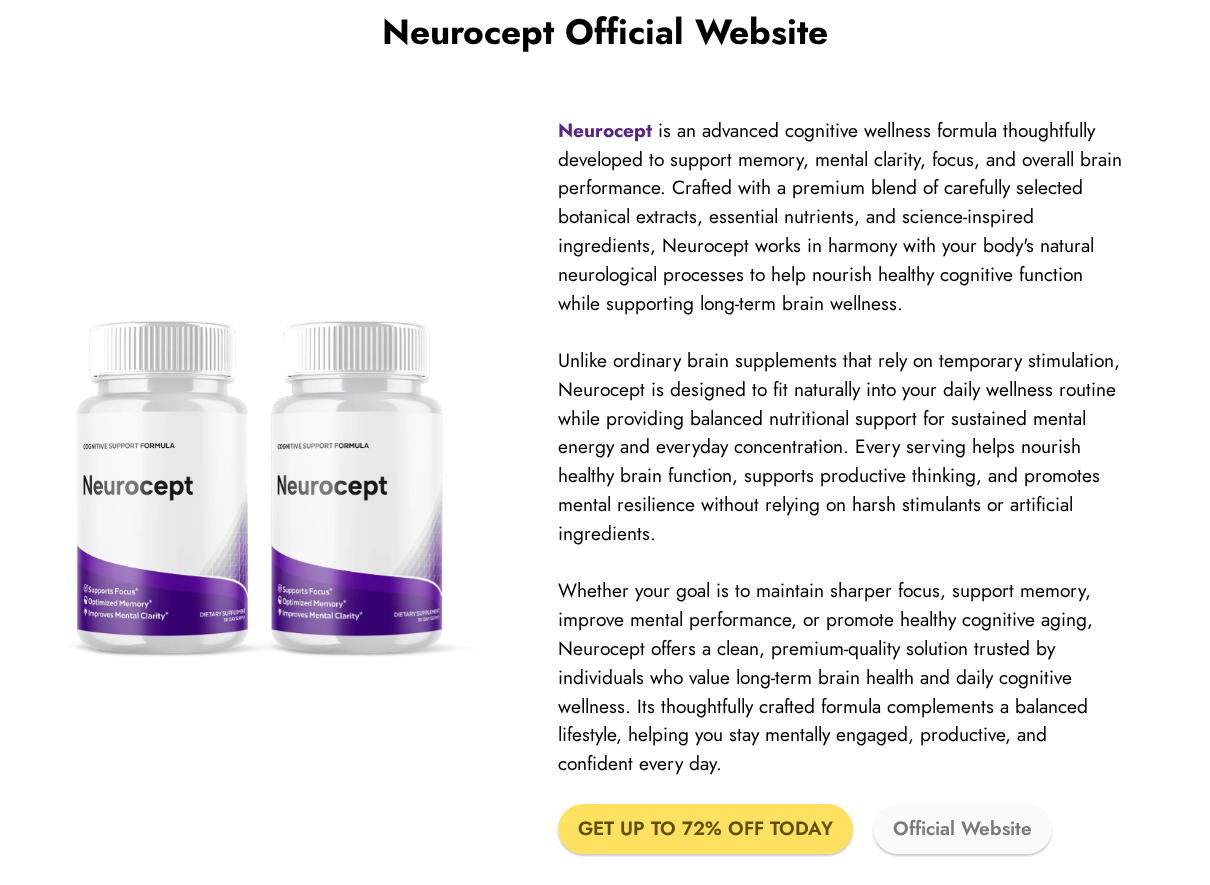
Neurocept is a name used to market cognitive-support supplements online. Promotional pages describe help with memory, concentration, mental clarity, and brain health.
Consumer reports also connect the name to a much more aggressive pitch: celebrity-style videos and honey stories suggesting a remarkable answer to Alzheimer’s disease.
That is not a harmless difference in wording. A general wellness capsule and a treatment capable of reversing dementia are fundamentally different propositions.
Our verdict on the Neurocept scam ads
The fake medical-endorsement and Alzheimer’s-cure advertising is a scam. Do not buy Neurocept because a social-media video appears to feature a trusted doctor or broadcaster.
There is no sound basis for treating it as a proven Alzheimer’s remedy. Current promotional inconsistencies and repeated refund complaints add concrete reasons to avoid this sales route.
What readers should check first
- Whether the doctor actually made the statement on their own verified channel.
- The product name before and after the order button.
- The full ingredient panel, not a honey picture or generic research list.
- The complete bundle charge and the seller responsible for refunds.
Neurocept, VapoCept, and HoneyCept should not be treated as interchangeable medicines. Their overlapping marketing makes careful identification more important, not less.
The Evidence Behind the Fake-Endorsement Warning
On July 31, 2025, CNN broadcast an AI-generated example featuring the likenesses of Anderson Cooper and Dr. Sanjay Gupta promoting a honey-based Alzheimer’s breakthrough.
In CNN’s own transcript, the real Gupta explicitly rejects the video. He says neither person is genuinely making the endorsement and rejects the honey-cure claim.
The same fabricated Gupta and Cooper clips are covered in our Dr. Gupta honey recipe report and Himalayan honey trick investigation.
Neurocept buyers describe the same kind of borrowed authority. A December 2025 BBB Scam Tracker account describes finding Neurocept through a Facebook video involving Gupta and Bill Gates.
After a failed payment, that person says a caller offered a lower price and hung up when they expressed concern about being tricked.
Another Neurocept report describes supposed Gupta and Bruce Willis interviews. The reporter identified a neurocept.work sales route and had begun seeking a return.
These reports are consumers’ accounts, not laboratory findings. CNN’s rebuttal concerns the counterfeit honey video, while the complaints connect similar endorsement pitches to specific Neurocept experiences.
The practical conclusion is firm: a familiar face inside a sponsored clip is not a trustworthy reason to buy this supplement.
How the Neurocept Scam Ads Work
Step 1: A medical worry becomes the opening hook
The message reaches people who are frightened by forgetfulness or caring for a relative with declining memory. It promises something more hopeful than their difficult daily reality.
A honey recipe sounds approachable. A recognizable doctor makes it feel responsible. Together, those elements can lower the skepticism someone would normally bring to an unfamiliar seller.
The story asks viewers to make an emotional decision before they have seen a complete label, a clinical trial, or the identity accepting payment.
Step 2: Borrowed authority replaces medical evidence
Counterfeit interview footage turns the advertisement into what looks like a news development. The supposed discovery seems to arrive from a trusted source rather than a merchant.
The next page may lean on professional-looking imagery, medical language, or regulatory badges. Each element nudges the reader toward believing the scientific questions have already been settled.
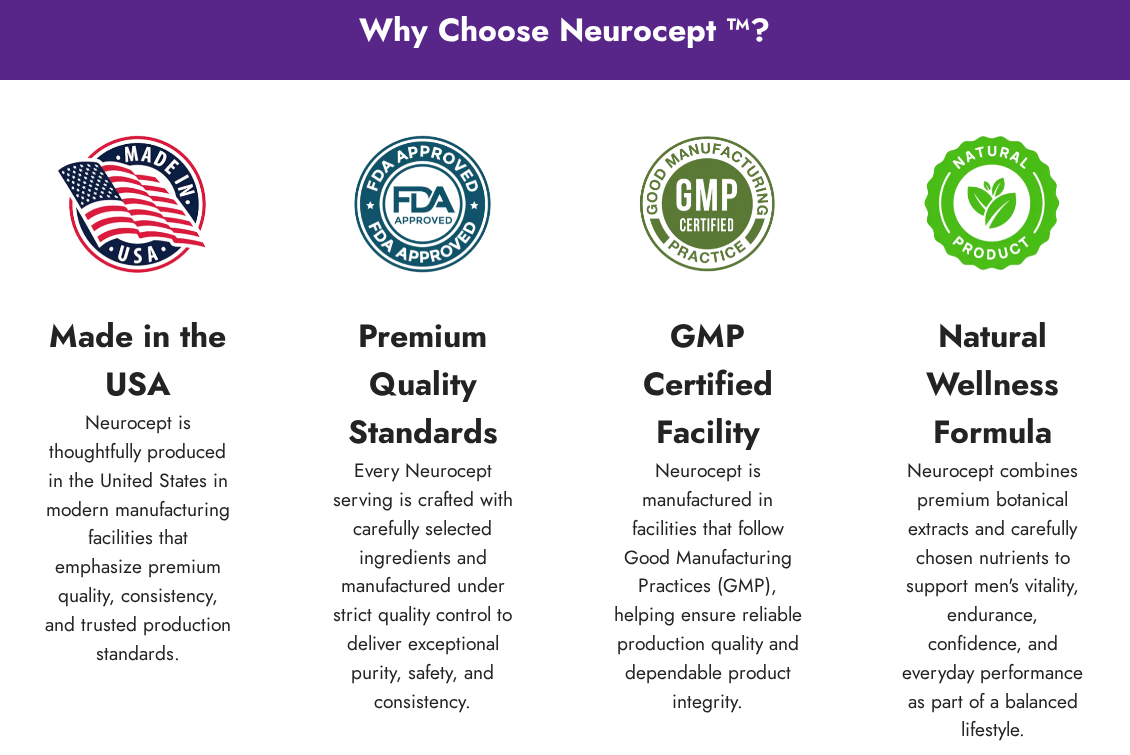
The live website-neurocept.com page displays an “FDA APPROVED” seal. Beneath it, the text discusses premium manufacturing standards rather than identifying an approved medicine.
Under the FDA’s supplement rules, manufacturers do not obtain advance agency approval proving a retail formula safe and effective. A facility badge does not approve Alzheimer’s treatment.
Step 3: The promised discovery becomes a bottle bundle
The reader arrived expecting a recipe or medical explanation. The transaction, however, is for supplements, often presented in packages costing $200 or more.
The current website-neurocept.com offer shows two bottles for $158, three for $207, and six for $294. The six-bottle price is $49 per bottle.
A lower per-bottle figure can distract from the total. Someone thinking about a $49 experiment may actually authorize a $294 purchase.
Farther down, the same page gives different prices: $69 for one bottle, $49 each for three, and $39 each for six. That inconsistency should stop checkout.
Step 4: The product name can change at the order button
The current Neurocept promotional page’s order links point to getneurosharp.com. That destination presents Neuro Sharp, a different product name, with its own package offer.
This is a concrete example of why the opening brand is not enough. Check the actual item, merchant, quantity, and refund terms before sharing payment information.
A reassuring Neurocept paragraph does not guarantee a matching Neurocept transaction. Do not continue simply because the new page has familiar colors or another guarantee badge.
Step 5: Refund friction or follow-up calls extend the problem
Once money has changed hands, the hopeful story can give way to unanswered messages, conflicting return instructions, or pressure to accept another offer.
A January 2026 complaint describes a $302.82 six-bottle order, a honey-themed advertisement, and a label the customer says instead listed green-coffee caffeine.
The person says repeated calls and emails brought no useful response despite an advertised 180-day reimbursement promise.
A separate June 2026 report describes a caller claiming periodic Neurocept deliveries were due. The customer’s card provider reportedly found no attempted renewal charge.
Do not read a caller’s subscription claim as proof that you owe money. Verify it independently against the order agreement and your account.
Does Neurocept Work for Memory or Alzheimer’s Disease?
Alzheimer’s disease does not become a simple supplement deficiency because an advertisement tells a compelling honey story. A medical treatment claim needs evidence for that treatment.
The NHS explains that Alzheimer’s has no current cure, although medicines and other support can help. Proper care is not equivalent to buying a social-media memory formula.
A useful clinical trial would identify the exact formulation and doses, the patients studied, the comparison group, meaningful outcomes, and adverse effects.
Lists of nutrients, references to circulation, and testimonials do not provide those answers. Ingredient research cannot automatically establish that a finished capsule delivers the advertised result.
NIH’s supplement guidance also warns that retail products can differ from products used in studies. Some familiar memory-supplement claims, including ginkgo for dementia, have not held up.
Feeling more alert is not the same as reversing a neurodegenerative disease. That distinction matters especially when a customer receives a stimulant-containing product they were not expecting.
Anyone with persistent memory changes should seek a medical assessment. Do not stop prescribed treatment or give a relative an unfamiliar formula because of an online testimonial.
Neurocept, VapoCept, and HoneyCept: Why the Names Get Confusing
Neurocept pages do not provide a consistent buying trail
The plain neurocept.com domain currently presents a domain-sale listing, not a supplement checkout. Adding official language to another address does not resolve that confusion.
The website-neurocept.com page combines memory marketing with men’s-vitality wording, conflicting prices, and a support email using the unrelated Java Burn product name.
Its footer refers to ClickBank, while its order link leads to the Neuro Sharp offer. Readers should not have to untangle that identity chain before buying capsules.
Is VapoCept legit?
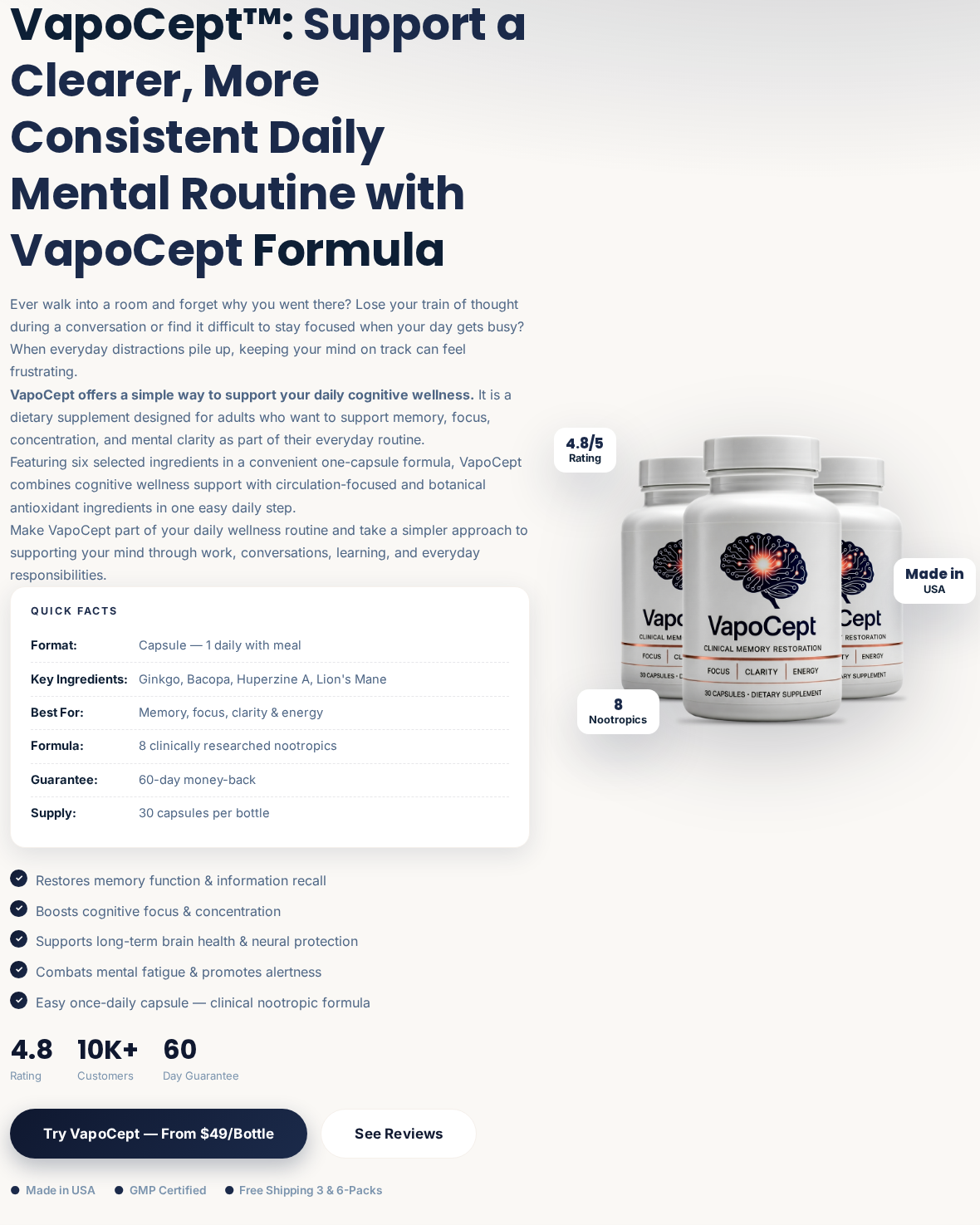
VapoCept is another memory-supplement name, not evidence that Neurocept’s promises are valid. The current vaposcept.com page has its own serious consistency problems.
Its introduction describes six selected ingredients, while the facts panel promotes eight nootropics. Another section describes amino acids and niacin instead of the headline botanical list.
A buyer cannot confidently compare safety or research when the same page describes different formulations. Request the actual Supplement Facts panel before considering any purchase.
Our VapoBrain and VapoCept investigation covers another product-name switch. Follow the documented route rather than assuming every similarly named page is one company.
HoneyCept reviews need the exact product and seller
The live honeycept.com page uses yellow bottles and honey imagery. It advertises six nutrients in one section and five in another.
Its recommendation text unexpectedly names MemoryLift. More importantly, its FAQ about hidden subscriptions answers with a Memory Lift benefits paragraph instead of explaining billing.
That is not a clear no-subscription promise. It is a failure to answer a straightforward financial question before asking for payment.
Similar bottle layouts, bundle prices, and memory language reveal a recurring marketing pattern. They do not establish identical contents or common ownership across these brands.

Company, Checkout, Contact, and Refund Checks
Identify who actually accepted your payment
Keep the merchant name on the receipt and card statement, not just the supplement name. Save the checkout address and any payment-platform confirmation.
The Neurocept page’s generic terms refer to Neurocept.com and generated conditions but do not clearly resolve the seller behind the different-product order link.
A payment processor’s logo is not a medical endorsement. It also does not make every product using that processor fraudulent.
Do not mistake a return address for a manufacturer
Some Neurocept complainants name Healthy Living or Endurox Prime. A September 2025 account identifies an Aurora, Colorado return address and an unreceived refund after tracked delivery.
That is a reported returns destination, not proof of where the capsules were manufactured or who owns every website. Match it against your own order instructions.
Do not send bottles to an address copied from someone else’s complaint. Ask your merchant for written authorization and keep the return tracking if required.
Check whether the contact details match the product
A Neurocept page displaying support@javaburn.com is not a coherent product-specific support arrangement. Do not send personal order information to unrelated brands merely because a template lists them.
The vaposcept.com contact page gives support@vaposcept.com. Honeycept.com instead links its policy pages to an institutoexperience.com.br subdomain, another domain to record before ordering.
These details expose gaps in the buying trail. The receipt and actual checkout must identify the party responsible for your order.
Keep the guarantee that applied when you paid
Current Neurocept promotional copy describes 60 days, while some earlier buyers describe being promised 90 or 180 days. Those are not interchangeable return windows.
HoneyCept describes a 60-day window from purchase with at least 30 days of use before a satisfaction request. Delivery time can consume part of that window.
Save the specific promise, start date, return conditions, and support route. A new page’s guarantee cannot safely substitute for the terms attached to an older order.
What to Do if You Fell for These Supplement Ads
- Pause the supplement and protect medical care.
Show the actual bottle and ingredient panel to a clinician or pharmacist before using it, especially if you take medicines or bought it for someone with dementia.
Do not change prescribed treatment on the strength of the advertisement. If you develop a concerning reaction, stop the supplement and seek appropriate medical advice.
- Save the complete advertising and order trail.
Keep the ad, account name, video, destination pages, receipt, package selection, and guarantee. Photograph every bottle label and the shipping label before returning anything.
Record whether the product changed between the promotional page and checkout. That difference can be important when explaining why the purchase was misleading.
- Send a specific cancellation or refund request.
Use the support route on your transaction. Include the order number, amount, purchase date, and the exact guarantee or advertising discrepancy supporting your request.
Ask for written confirmation, any required return authorization, and the refund deadline. Keep copies rather than relying on an undocumented telephone promise.
- Challenge unresolved charges with the payment provider.
Explain accurately whether the issue is misleading goods, non-delivery, a promised refund not received, or an unauthorized charge. Give the provider your saved evidence.
Ask about dispute deadlines immediately. Repeated requests to wait should not quietly consume the time available to pursue the payment problem.
- Do not pay a caller to unlock a refund.
A Neurocept complainant reported being asked for banking information after seeking reimbursement. Contact your payment provider before providing new financial details.
If someone claims refills are due, request the original agreement and verify charges directly. Do not authorize another payment to cancel a debt you cannot substantiate.
- Report the advertisement and watch for repeat contact.
Report impersonation through the social platform and submit a factual account to consumer-protection channels. Include the actual seller and payment trail, not only the brand name.
Monitor statements for unfamiliar charges. Ignore anyone promising guaranteed recovery for an upfront fee, and ask a trusted relative to help organize records if needed.
Our additional Neurocept coverage and Golden Honey Tonic report explain related warning signs. A changed bottle name does not turn a false medical pitch into evidence.
Frequently Asked Questions
Does Neurocept work for memory loss?
Do not treat Neurocept as a proven Alzheimer’s treatment. The advertising does not establish that the exact finished formula reverses dementia or restores lost memory.
New or worsening memory problems deserve medical evaluation, not a bulk supplement order prompted by an apparently familiar doctor.
Is VapoCept legit or another name for Neurocept?
Do not buy VapoCept on clinical-memory-restoration claims. The current vaposcept.com formula contradictions leave the advertised composition unclear. Its branding does not validate Neurocept’s promises.
Match the exact label, seller, and checkout. Never use one brand’s claims or refund policy as a substitute for another’s.
Are HoneyCept reviews evidence that the honey treatment works?
No. A positive testimonial cannot establish an Alzheimer’s treatment. Honey imagery also does not tell you the contents or quantities in a capsule.
The current HoneyCept page’s mixed product names and unanswered subscription question are reasons to step back, not reassurance to order.
Did Dr. Sanjay Gupta endorse the honey Alzheimer’s cure?
No. In CNN’s direct rebuttal, Gupta identifies the honey-cure video featuring his and Anderson Cooper’s likenesses as fake. Do not trust the sponsored imitation.
Does ordering Neurocept automatically create a subscription?
Check the actual agreement and statements. A multi-bottle order, an unclear FAQ, and a caller claiming renewals are due are different things.
Do not assume you consented because a caller says so. Challenge any unauthorized charge promptly through the merchant and payment provider.
Can I still get a Neurocept refund?
It depends on the transaction, guarantee, timing, and payment method. Save your evidence and request the refund without waiting for another advertising promise.
If support does not resolve it, ask your payment provider about the available dispute route and deadline. Never pay an advance recovery fee.
The Bottom Line
Do not buy Neurocept through fake doctor endorsements or honey-cure stories. The medical claim is unsupported, and current product switches and inconsistent promotional details weaken the offer further.
If you paid, preserve the evidence, pursue the correct merchant and payment provider, and protect ongoing medical care. A new supplement name is not a new scientific breakthrough.

Join the discussion
0 commentsShare your experience or ask a question about this article.
Discussion
Start the conversation
Have a question or something useful to share? Add the first comment.