


The Orivelle Fungus Pen shows up in Facebook ads, discount pages and storefronts that look like the place to buy a treatment for stubborn toenail fungus.
Follow the buttons and the offers stop looking interchangeable. The same pen appears under different advertiser names, and the quantity, billing terms and even the product can change between pages.
Overview
Facebook ads sell the treatment, not just the applicator
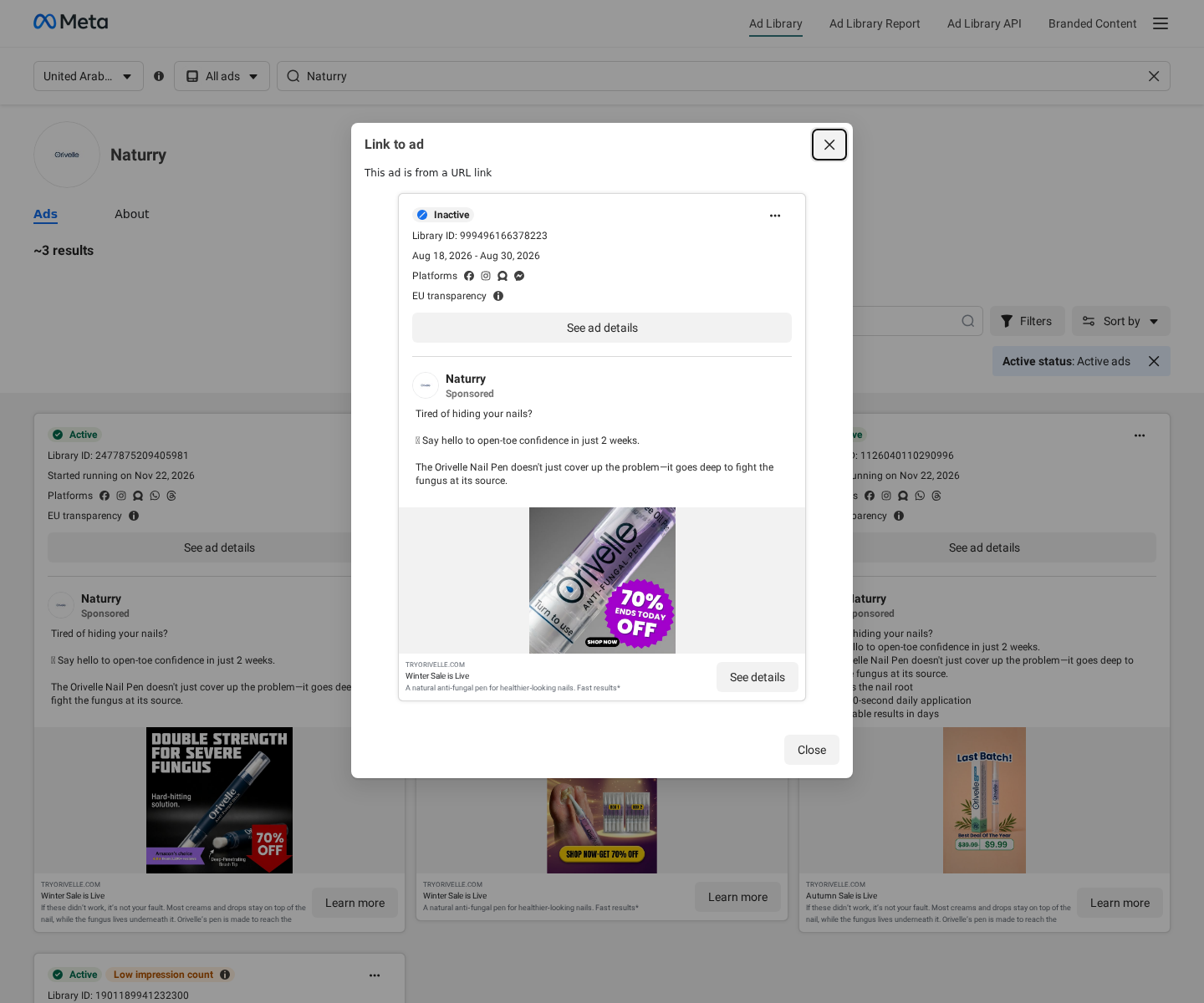
An ad placed under the name Naturry pictures the Orivelle pen, says it fights fungus at its source and lists tryorivelle.com as its destination.
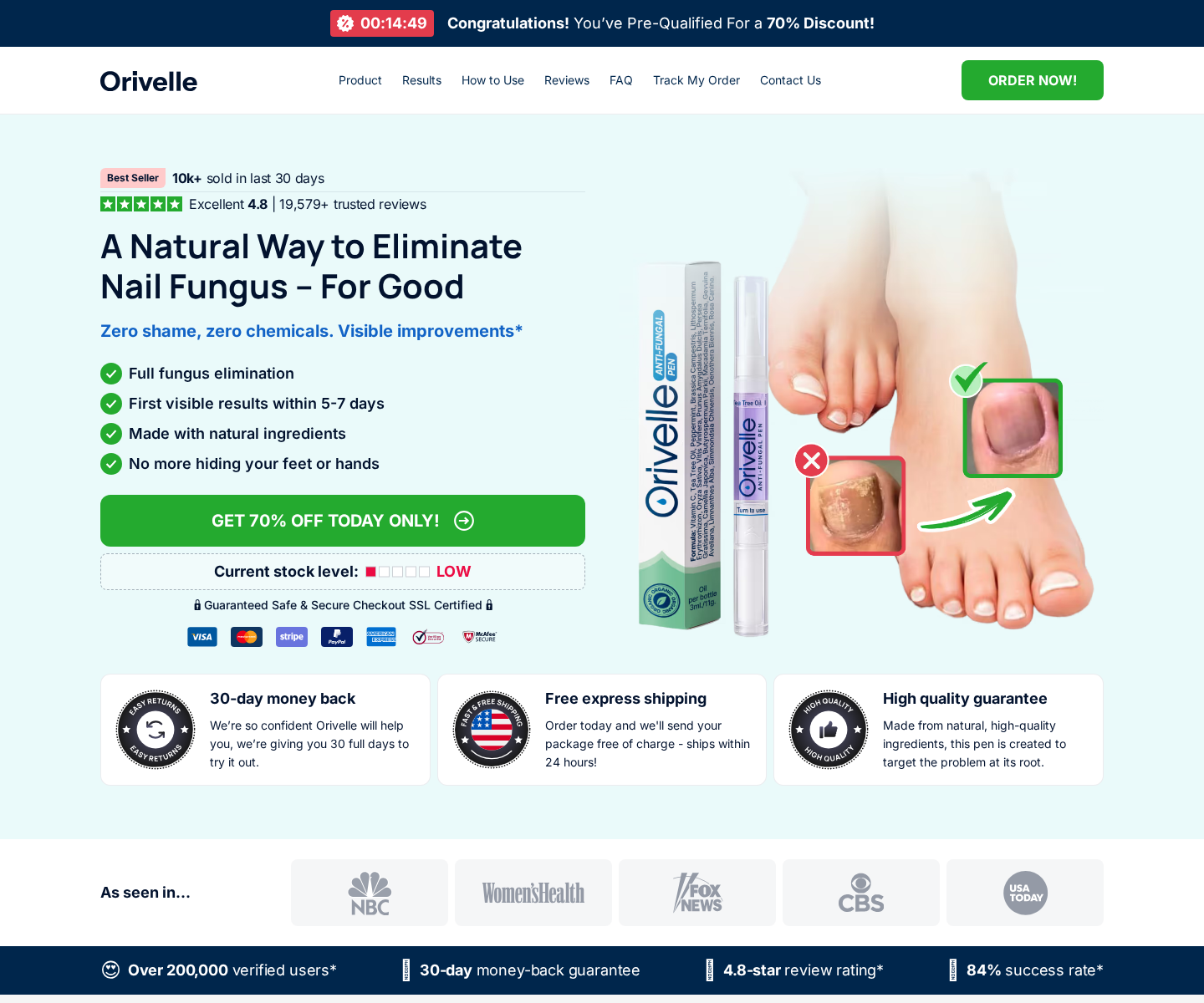
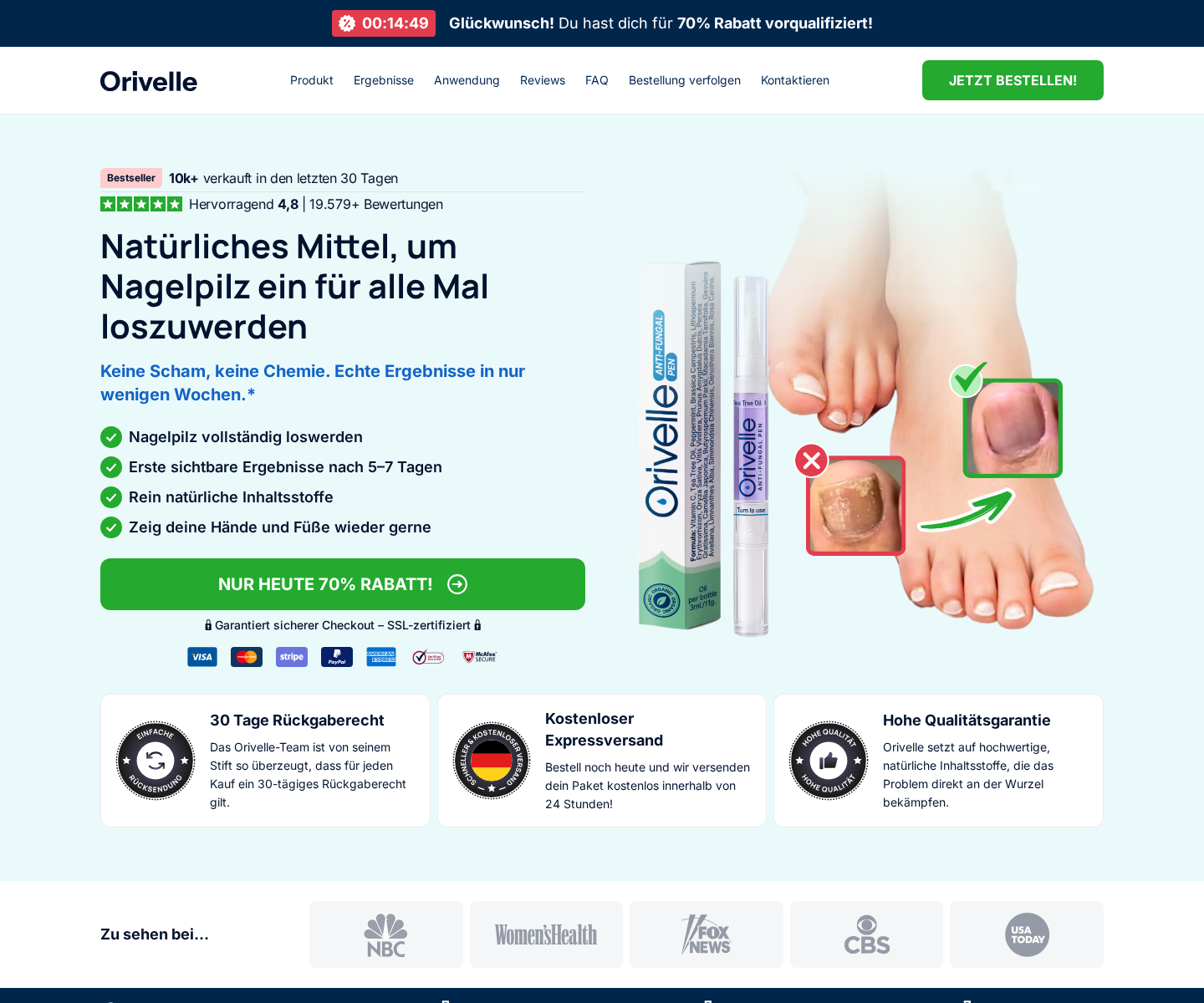
The English and German versions of orivelle-official.com make the stronger promise of getting rid of nail fungus, with visible results advertised in five to seven days.
The same branding leads to different purchase decisions
Here are the distinctions worth checking before paying:
- Social ads: Meta showed 142 ads grouped around one Naturry creative and its text. That is ad reuse, not 142 different advertisers or shops.
- Localized offers: A Norwegian site uses the spelling Otrivelle while showing a box marked Orivelle. The English and German sales pages reuse the same sales imagery.
- Product switch: Buy links from Norwegian and German Orivelle promotions reached the same affiliate route for ProNail Complex, a different product sold as a spray.
- Billing: One cart opened with six pens selected. A separate product page started with one pen and offered a monthly subscription alongside its one-time option.
Do not take the ad as medical evidence
A brush makes liquid easy to apply. It does not show that the mixture reaches the infection, kills the fungus or performs better than an established treatment.
Read the product name, quantity and billing frequency on the final screen. A discount in the ad does not tell you what the seller will put in the order.
How the Orivelle Sales Funnel Works Across Countries
Step 1: A Facebook advertiser makes the pen look like an answer
The Naturry ad in Meta’s library shows the Orivelle label on a transparent pen beside a 70% discount. It promises confidence in open-toed shoes in two weeks.
The ad’s destination was listed as tryorivelle.com. Meta also showed newer Naturry ads for Orivelle with different images, including a dark pen labeled as double strength for severe fungus.
That is a visible connection between the advertiser and the product’s sales website. It does not identify the legal entity paying for every ad.
Other entries ran under the name Orivelle itself. On one archived record, Meta says it later disabled the account or Page that ran the ad for not following advertising standards.
A second entry under that name displays a content-removal notice. Neither notice identifies the exact rule or gives enough information to reconstruct the hidden ad.
A newer Naturry ad showed a graphic calling the product the last batch and listing $9.99. Meta marked that separate ad active when we checked it.
The visible price graphic did not explain pack size. The checkout example below shows why a $9.99 price image cannot tell you what will actually be billed.
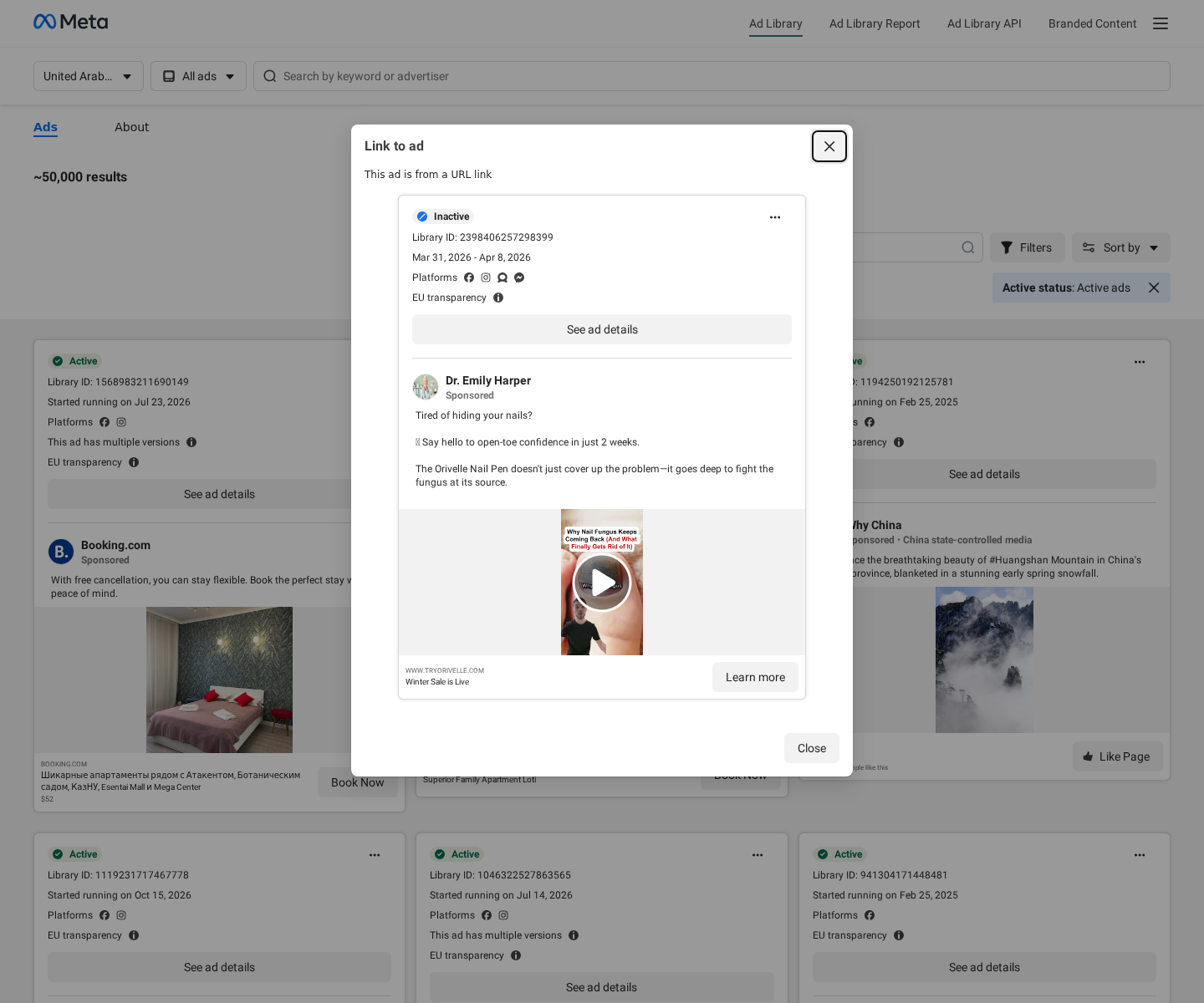
Other ads used doctor titles. Meta records list the advertiser names “Dr. Emily Harper” and “Dr Rebecca Thompson” on separate Orivelle ads.
Both repeat the same pitch about fighting fungus at its source, with similar video thumbnails. Their displayed destinations differ: one says tryorivelle.com and the other says trynailpen.com.
Those records reproduce advertiser display names, not verified medical endorsements. The doctor titles make the ads look like expert advice without supplying credentials or a clinical study for the pen.
A public affiliate listing adds another piece. Smart Adv’s expired international offer listed a $45 payout per qualified action and used the Orivelle landing page as its preview.
That gives publishers a reason to push a purchase even when the page reads like a review. It does not tell us who received a commission for any particular ad.
Step 2: The page changes language without changing the pitch
The English and German sales pages use the same product photo, toenail comparison, 70% promotion and five-to-seven-day claim. Both display a rating of 4.8 and more than 19,579 reviews.
Both displayed just under 15 minutes remaining in separate visits. A matching countdown on separate offers is not a reliable reason to rush a purchase.
The English page displays NBC, Fox News, CBS, USA Today and Women’s Health logos as social proof. The logo strip itself supplies no corresponding articles or endorsements.
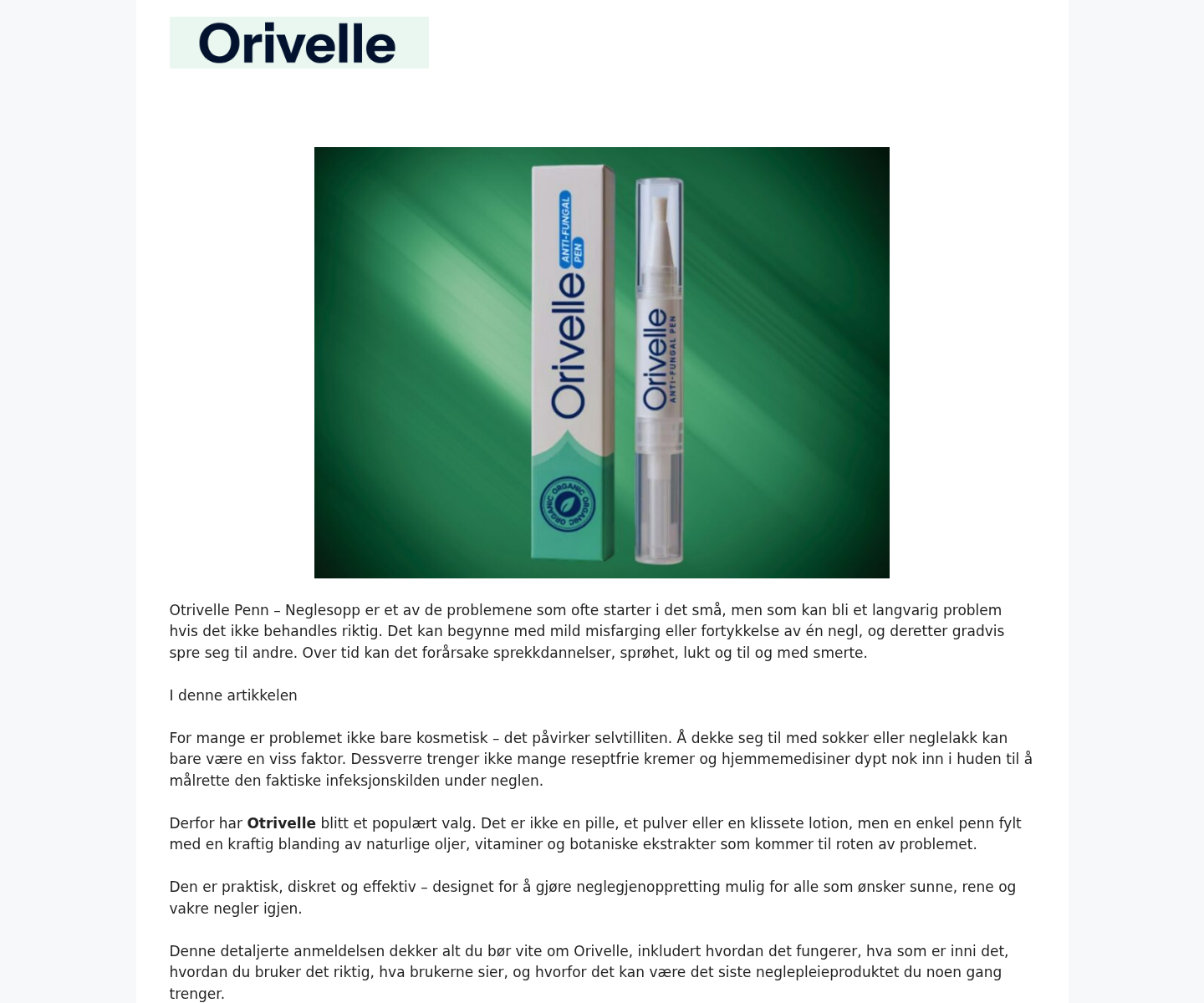
The Norwegian page at otrivelle.no uses both spellings. Its picture shows the Orivelle box and pen, while its copy calls the product Otrivelle and pitches it as a treatment.
It even gives the TryOrivelle support email in its refund instructions. That is a contact match across domains, not a basis for assuming who owns the Norwegian page.
Another inconsistency is visible in its own table: three pens are listed at $13.99 each, but the same row shows $99.99 as the total. Those figures do not multiply out.
Step 3: A buy button can send you to a different product
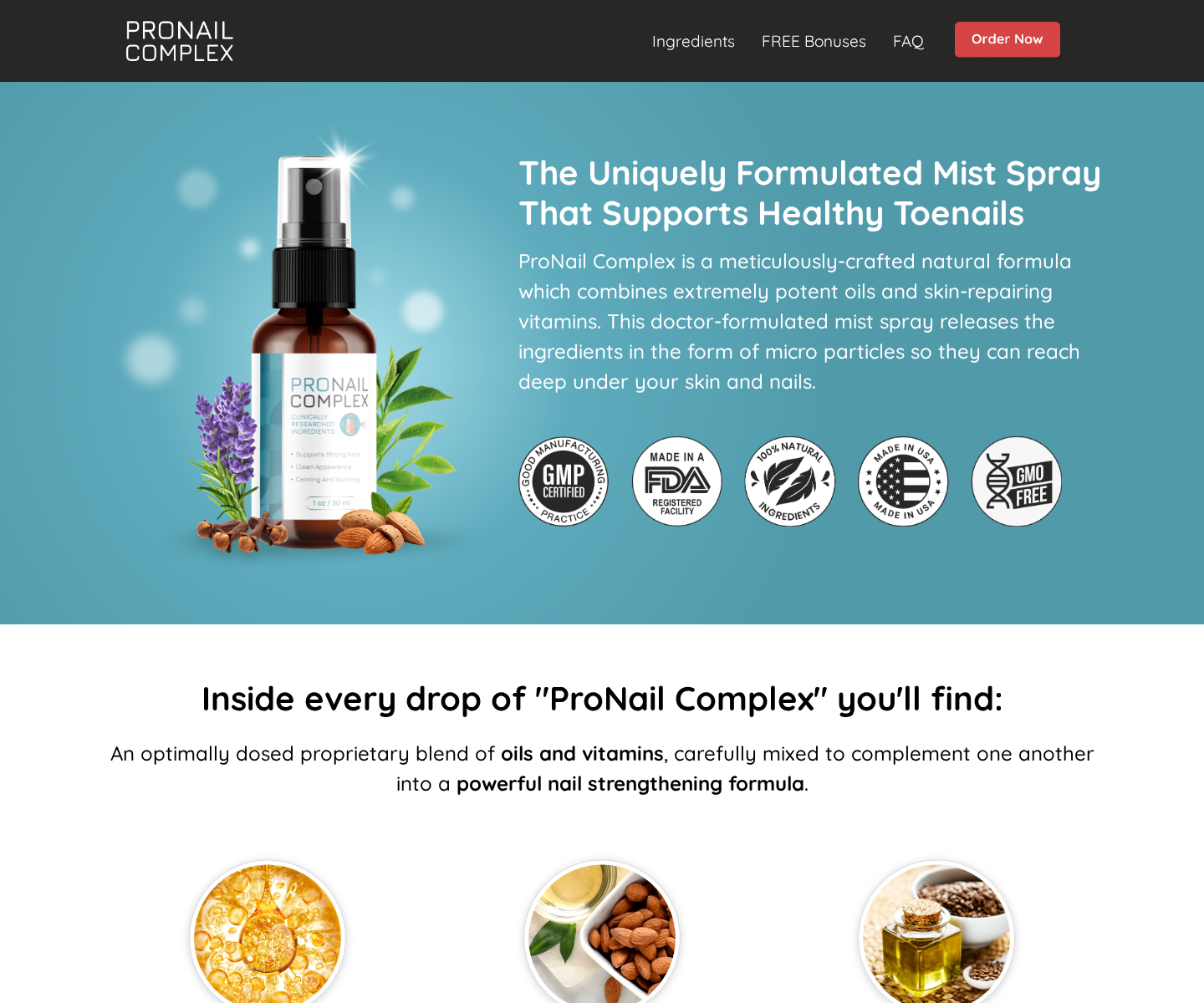
The indexed page at orivelle.com.de presented itself as the official German Orivelle offer. Its buy button pointed to a tracking link on rushmyoffer.com.
The Norwegian site’s buy button and that German tracking link both went to thepronailcomplex.com. The two redirects carried the same affiliate ID and the same tracking values.
That is a real link between two promotions, not a guess from shared pictures. The destination showed a spray bottle, not the Orivelle brush pen that brought shoppers there.
The Norwegian page loaded during our check. The German promotional domain did not, but its indexed buy link still resolved to the same spray page.
Back out if the order link changes the product. The spray’s page makes its own 60-day guarantee claim, which is not the return policy for an Orivelle pen.
Step 4: The lowest number is not necessarily the order total
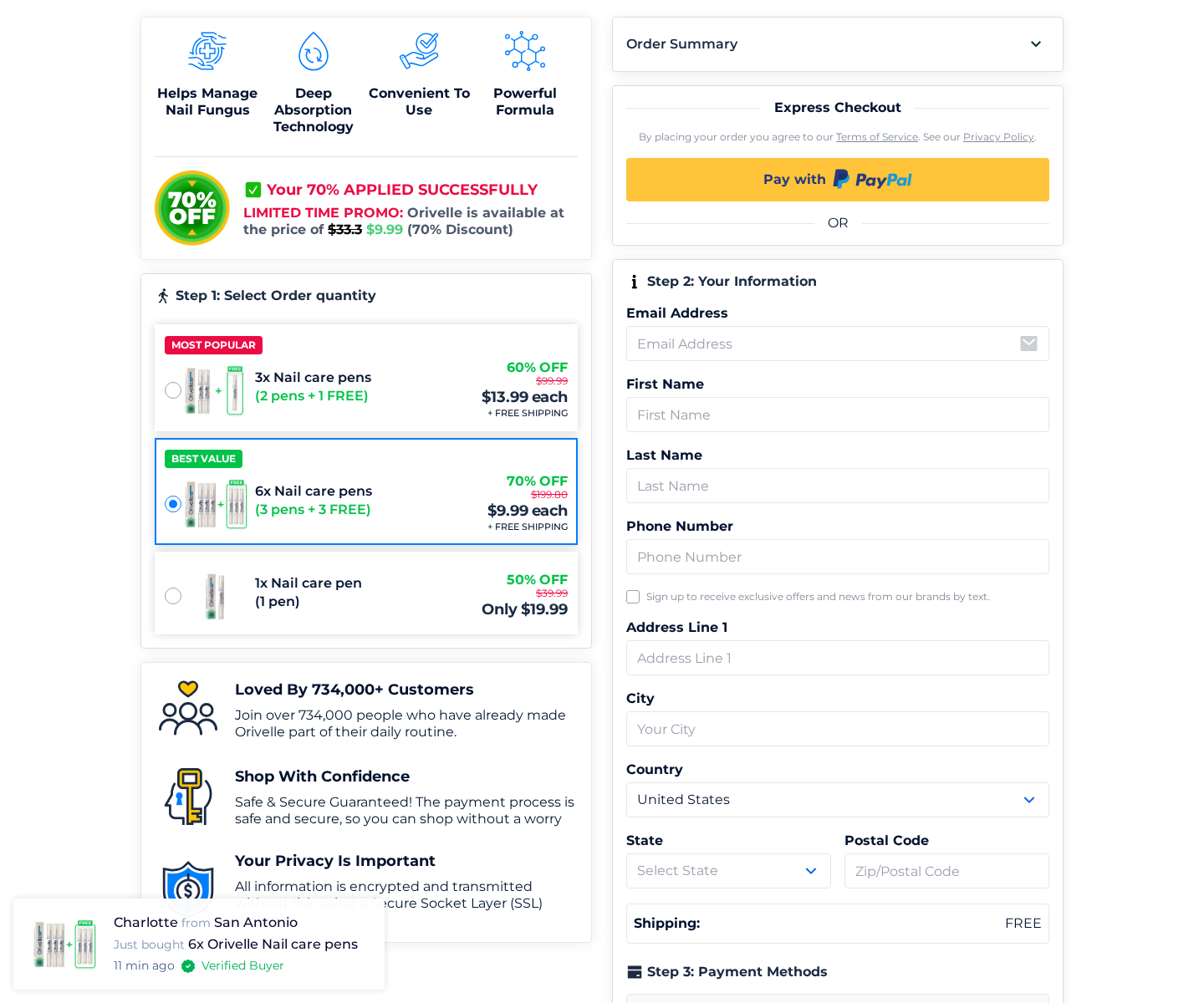
On a checkout served by cart.tryorivelle.com, the “best value” option opened with six pens selected. It emphasized $9.99 each, while a separate one-pen option showed $19.99.
Six at $9.99 each is $59.94, not $9.99. That is the cost implied by the selected pack before any separate adjustments, not a charge we incurred.
In that checkout, the larger pack was already selected before any buyer details were entered. Check the quantity in the order summary rather than trusting the number in the banner.
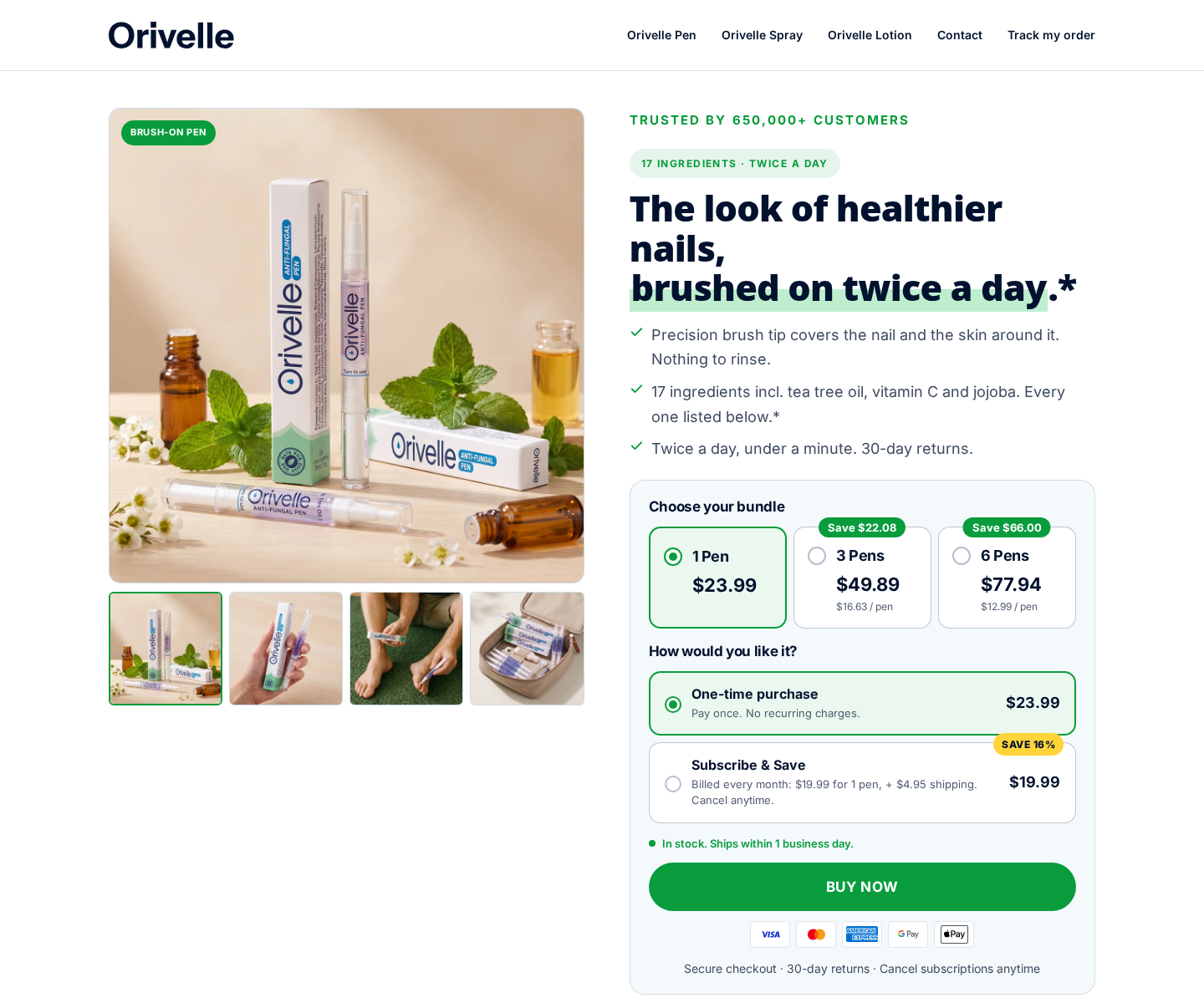
The newer direct page on tryorivelle.com behaved differently. It started on one pen, one-time purchase. Its standard one-pen checkout displayed US$28.94, including US$4.95 shipping.
The US$19.99 option meant one pen per month, plus US$4.95 shipping each time. That works out to US$24.94 per monthly shipment at the posted rate.
Bundle and refill warning: Pack size and billing frequency are separate decisions. On the direct page, one-time purchase and subscription were both visible options; we did not observe forced enrollment.
If you only want one shipment, verify both selections again after changing a bundle. Also check whether the checkout changed currency or added postage after you selected your country.
Watch for two different numbers on the receipt: the price of the pen you chose and the next billing amount. Save that schedule if you opted into monthly delivery.
Who Takes the Order and What Happens if You Want Out
The Facebook Page is not the merchant on your receipt
The German Orivelle sales page linked to a cart on cart.tryorivelle.com. That is a stronger connection than a shared product photo or a name containing the word official.
A TryOrivelle legal notice identifies Astronara Trading FZCO in Dubai. Use your own receipt to identify the merchant; do not assume that name covers every promoter, affiliate or destination.
The billing entity, local shipping estimate and return destination can be different things. The operator named in a notice is not automatically the factory or the return warehouse.
A money-back headline and an unopened-only return are different offers
The English promotion says shoppers have 30 days to try the pen. The newer direct product page says to contact support within 30 days of delivery to return unopened products.
The direct page excludes both original and return shipping from its stated refund. The wording matters because you cannot test a pen and also keep that same pen unopened.
The routes showed different terms. Keep the guarantee from the page that sold you the pen and ask the merchant for the terms that apply to your order.
People report extra charges and difficult cancellations
A buyer who reported starting with a Facebook ad told BBB Scam Tracker that a roughly $59 purchase became a $114 PayPal charge. The buyer reported disputing an unwanted subscription.
On ProductReview Australia, another buyer reported an unexpected additional set. On Trustpilot, shoppers describe both straightforward deliveries and problems with billing or returns.
The reports describe individual transactions, not how often billing issues occur. Use them to identify what to check on your receipt, not to assume your charges will match theirs.
Canceling the plan does not refund the last parcel
The direct seller offers subscription management and says buyers can cancel before the next shipment. If you already have an invoice, use the support route identified there.
Ask in writing to end future charges and separately dispute any existing charge you did not authorize. A skipped shipment or a partial credit does not automatically end a renewal.
What the Fungus Claims Leave Out
On the direct product page the benefit is framed as better-looking nails, and the footer says the pen is not intended to treat disease. The packaging still reads “anti-fungal pen.”
The landing page goes further by promising full fungus elimination and invoking an 84% success rate. A product photo and a statistic are not substitutes for a published trial.
Some ingredients, such as tea tree oil, have been researched separately. A published study used undiluted tea tree oil, not the finished Orivelle formula.
The NHS guide to fungal nail infections explains that a GP can send a nail sample for testing. Treatment can take months, and the nail still has to grow out.
Do not put off assessment because a Facebook ad makes a brush look quicker. If the change is spreading or you have diabetes, ask a healthcare professional for advice.
What to Do If You Ordered Through an Orivelle Offer
- Save the ad and receipt together. Capture the Page name, final product, quantity, currency, order reference and billing frequency. Keep the date the charge appeared.
- Ask the merchant to stop future refills. Use the contact on your receipt. Request written confirmation that the plan ended and no further charges are scheduled.
- Check for a PayPal agreement. On the website, open Settings, then Payments and Automatic Payments or Subscriptions and saved businesses. Select the merchant and cancel the agreement if active.
- Dispute a charge you did not authorize. Ask your card issuer or payment provider about its deadline. Provide the original offer, invoice, cancellation correspondence and disputed amount.
- Get written return instructions before mailing anything. Ask for the exact address, authorization, postage responsibility and expected refund. Keep delivery tracking if you return the package.
Canceling a PayPal payment agreement does not reverse a previous payment. Open a separate dispute if you also contest an existing charge.
When the promotion came from Facebook, find the ad menu and select Report ad. Save the ad record first, so you can show the advertised product and seller if asked.
Frequently Asked Questions
Are all of the Orivelle websites the same company?
The pages share product photos and some link to the same store or list the same support contact. That links parts of the campaign without identifying every operator.
Why does a Facebook ad call the advertiser Naturry?
Naturry is the advertiser name Meta displayed on a creative featuring Orivelle. The same record lists tryorivelle.com as the destination, so the names serve different roles.
Is ProNail Complex another name for the Orivelle pen?
The linked ProNail Complex page advertised a mist spray under a different name. Its appearance after an Orivelle buy link is a product switch, not a pen variant.
Is the $19.99 offer always a subscription?
The direct product page displayed that price for its monthly one-pen option. A separate cart showed the same number beside a one-pen pack, without the same monthly label.
Can the Orivelle Fungus Pen cure a fungal infection?
We found no clinical evidence for the finished pen that supports the cure claims in these ads. Ask a pharmacist or clinician about an appropriate next step for your symptoms.
Can I get a refund after trying the pen?
The newer direct offer’s standard return language specifies unopened items. Check your order’s own terms and applicable consumer rights if the product arrived wrong or was materially misdescribed.
The Bottom Line
Do not buy the Orivelle Fungus Pen through these promotions as a treatment. The cure claims lack product evidence, and two advertised routes led to a different product.
If you already paid, check the receipt for the name, pack size and renewal terms. Cancel unwanted refills in writing and raise any unauthorized charge promptly with your payment provider.

Join the discussion
0 commentsShare your experience or ask a question about this article.
Community experiences
Did this happen to you?
Your experience could help someone recognize the same scam. Submit a private report for our team to review.
I experienced this tooReports are reviewed before publication. Sharing publicly is always your choice.
Discussion
Start the conversation
Have a question or something useful to share? Add the first comment.