


Prime Yield Assets promises 3% to 6% profit every day on crypto, real estate and oil plans, and the UK’s financial regulator has now warned people away from it.
We opened the site, its code and the warning itself, ran the numbers and hunted for a company, and the claims contradicted each other before any deposit was made.
Overview
What Prime Yield Assets Offers
We opened primeyieldassets.com and found a Bitcoin-funded investment platform with twelve plan cards: three asset labels, four deposit tiers and daily profit rates between 3% and 6%.
Deposits run from $300 to $500,000, every card lists a 10% referral bonus, and every card says withdrawals happen weekly.
What Our Checks Found
The domain was created on 13 April 2026, yet the home page talks about investors who have stayed for over seven years and a counter showing 2,288 running days.
No page names a company, an officer or a registration number, and the Companies House search returned no exact match.
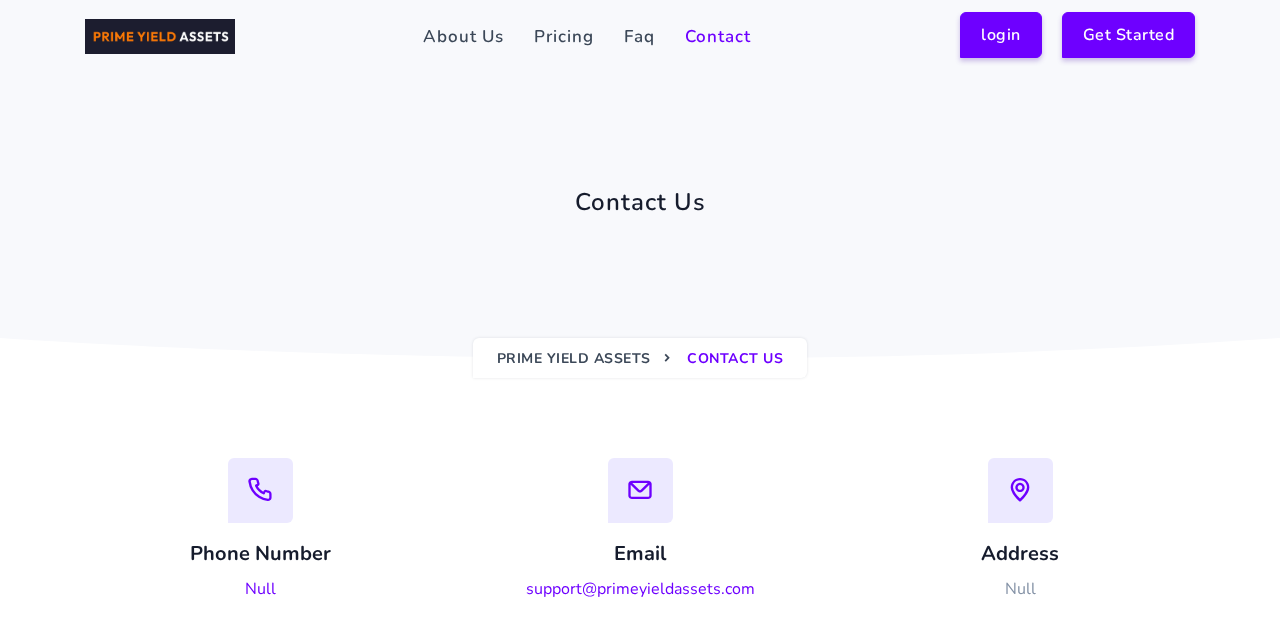
The contact page prints Null where the phone number and address should be.
The Total Profit figures on the plan cards cannot be reconciled with the daily rates beside them, and the footer’s regulator claims lead nowhere we could check.
What We Could and Could Not Verify
Here is where the evidence stands after our checks:
- Verified by us: the FCA warning, the plan figures, the domain dates, the missing company details, the template leftovers and the counter totals.
- Not found: a legal entity, a registration number, any deposit or withdrawal terms, the plan detail pages, or a page where a regulator claim can be checked.
- Not verified: who runs the platform, where deposits go, whether anyone has been paid, and what happens behind the login that we never opened.
Our advice is not to send this platform any money, and the section on what to do below covers anyone who already did.
What the FCA Warning Says
We began with the primary document, the FCA’s public warning about Prime Yield Assets, which lists primeyieldassets.com as the firm’s website and is dated 2 November 2026.
It states that the firm is not authorised by the FCA and may be targeting people in the UK, and it advises readers to avoid dealing with it.
The notice gives an address in Huish Champflower, a Somerset hamlet, lists no phone number, and reminds readers that unauthorised firms may give incorrect or borrowed contact details.
That is a regulator’s statement about permission, not a court’s finding about fraud, and we treat it that way: the firm may be promoting financial services without permission.
The practical consequence is that nobody can check this firm on a regulator’s register, which is the first thing a careful buyer would try before depositing anything.
How the Prime Yield Assets Pitch Works
Step 1: The Promise Arrives as Twelve Plan Cards
We began at the plan section of the home page, which shows twelve cards labelled Cryptocurrency, Real Estate and Crude Oil, each in Beginner, Basic, Advanced and Professional tiers.
The labels differ but the rates barely do: crypto and oil both pay 3%, 4%, 5% and 6% a day across the tiers, while real estate tops out at 5%.
Every card also offers a 10% referral bonus and weekly withdrawals, so the three asset names change the heading far more than they change the terms.
Step 2: Your Deposit Size Sets Your Daily Rate
The tiers follow a simple ladder, and the more a visitor deposits, the higher the daily rate on the card:
- Beginner accepts $300 to $5,000 and pays 3% a day.
- Basic accepts $5,100 to $20,000 and pays 4% a day.
- Advanced accepts $20,100 to $50,000 and pays 5% a day.
- Professional accepts $50,100 to $500,000 and pays 6% a day, or 5% on the real estate card.
Real assets don’t pay a higher daily return because you deposited more, so the ladder tells us the rate is set by the platform and not by any market.
Step 3: Funding Happens in Bitcoin
The How you can join us box says to open an account, choose a plan from the dashboard, and fund it with the Bitcoin payment system directly from your wallet.
We stopped at the front door.
The login and sign-up addresses linked from the home page returned Not Found when we requested them, so we never saw a wallet address or a deposit screen.
A converter in the page code turns USD into Bitcoin at one fixed rate, $85,186.79 a coin, written into the script, so it cannot be a live quote.
Bitcoin sent to an address is difficult to pull back, and Bitcoin is the only funding method the site describes.
Step 4: Referrals Add a 10% Bonus
The last join step invites you to bring others, and each card puts a number on it: a 10% referral bonus.
The site never says who pays that bonus, how many levels it reaches or when it is credited, and the plan pages that might explain it never loaded.
A bonus tied to new depositors deserves attention whenever a daily return has no visible source, because the two together are how recruitment-driven schemes stay afloat.
Step 5: Withdrawals Are Weekly, or Immediate
Every plan card says Withdrawal Weekly, yet the home page FAQ says requests are processed immediately and sent to your Bitcoin wallet.
Both can be true only with a condition the site never states, such as a lock period, a minimum balance or an approval step.
The same FAQ mentions a starter plan limited to three deposits and a VIP plan that allows several accounts, but neither appears among the twelve cards.
Testing the 3% to 6% Daily Returns
A promise of 3% a day sounds modest until it is run forward, so we calculated what each advertised rate produces over 30, 90 and 365 days.
Without compounding, 3% a day adds 90% in 30 days, 270% in 90 days and 1,095% in a year, so a $300 deposit becomes $3,585.
If profits are reinvested every day, 3% becomes 2.4 times your money in 30 days, 14.3 times in 90 days and roughly 48,500 times in a year.
Here is what each rate produces, first without compounding and then with it:
- 3% a day: 90%, 270% and 1,095% over 30, 90 and 365 days; 2.4, 14.3 and 48,483 times your money if compounded.
- 4% a day: 120%, 360% and 1,460%; 3.2, 34.1 and 1,648,803 times your money if compounded.
- 5% a day: 150%, 450% and 1,825%; 4.3, 80.7 and 54,211,842 times your money if compounded.
- 6% a day: 180%, 540% and 2,190%; 5.7, 189.5 and 1,724,411,147 times your money if compounded.
No real estate, oil or crypto market has delivered anything like those figures for a year, and the site names no trade, fund or property that could.
The top tier shows how fast the promise grows: a $50,100 deposit at 6% means $3,006 of profit on day one, and $500,000 means $30,000.
Total Profit Figures That Don’t Fit the Daily Rates
Each card also prints a Total Profit figure, and when we divided it by the daily rate the plans stopped agreeing with themselves.
Read as the full return of a plan, the Beginner crypto card’s 135% at 3% a day implies 45 days, and Basic’s 225% at 4% implies 56 days.
Advanced’s 486% at 5% a day implies about 97 days, so the first three tiers at least follow one logic.
The Professional crypto card breaks the pattern: 5,760% at 6% a day implies 960 days, roughly ten times the tier below it, and no duration is printed anywhere.
The real estate and oil cards are stranger, because they print Total Profit of 10% or 14% beside daily rates of 3% to 6%, implying plans under four days long.
A 10% total at 3% a day is 3.3 days, and 14% at 6% a day is 2.3 days, so either the plans last days or the totals are wrong.
One more mismatch sits in the top tier: the Professional real estate card pays 5% a day while the oil card pays 6% for the same deposits and total.
The detail pages that should state duration, capital return and compounding rules returned Not Found, so we can’t say which reading is intended, but none is consistent.
A Seven-Year Platform on a Seven-Month-Old Domain
We checked the registration record next, because the home page says investors have been with the platform for over seven years and counting.
The public registry record shows primeyieldassets.com was created on 13 April 2026 through the registrar OwnRegistrar, Inc., which makes the domain 211 days old on 10 November 2026.
A counter near the bottom of the home page shows 2,288 running days, about 6.3 years, which would place the start in August 2020, years before the domain existed.
That counter also prefixes the running days with USD, so the page presents a day count as a money amount, which looks like copied code that nobody proofread.
A domain can be new while a business is old, so we looked for earlier traces. The Wayback Machine’s index returned no captures of primeyieldassets.com at all.
The company’s size changes from page to page: the About page claims over 2 million customers, the home page cites 153,000 investments, and a counter shows 49,681 users.
Those same counters show $65,160,817 deposited and $91,638,154 withdrawn, so by the page’s own totals withdrawals exceed deposits by $26,477,337, or about 41%.
The home page also claims more than $5 billion in assets under administration, about 77 times the deposit counter beside it.
The Regulators the Site Names, and the One That Names It
The footer says Prime Yield Assets is regulated by the US SEC, belongs to The Financial Commission, and is a registered dealer and member of the SEC, IIROC and CIPF.
We looked for a registration number or a register link behind those lines and found neither, so each is plain text with nothing for a reader to check.
The SEC registers firms but does not enrol members, so wording that calls the firm a member of it is off before anyone consults a register.
Meanwhile the one regulator record we could open, the FCA’s, says the firm is not authorised, and the other regulators named in the footer come with nothing to look up.
A regulator claim counts only when you can find the firm on that regulator’s own register under the same name and number, and here that test cannot even begin.
Template Leftovers in the Pages and Code
We read each page that loaded as text and found copy that belongs to a software product rather than a company, starting with the About page.
It describes Prime Yield Assets as a solution for creating an investment management platform for fund managers, one that takes a few minutes to set up as your own.

That reads like a brochure for the script behind the site, which is why we doubt the home page’s picture of a trading desk with over 300 experts.
The home page contact box shows a phone number written as +primeyieldassets, and the link behind it in the code is tel:+primeyieldassets, which dials nothing.
Its FAQ asks What is Belt Investments? and answers with a description of Prime Yield Assets, the kind of slip left by a copied page with the name swapped in.
The contact page prints Null for the phone number and Null for the address, and the footer of the inner pages lists Null under Head Office.
The Terms address returned a privacy policy under the browser title Page Title, so no page we could open states deposit, profit or withdrawal terms.
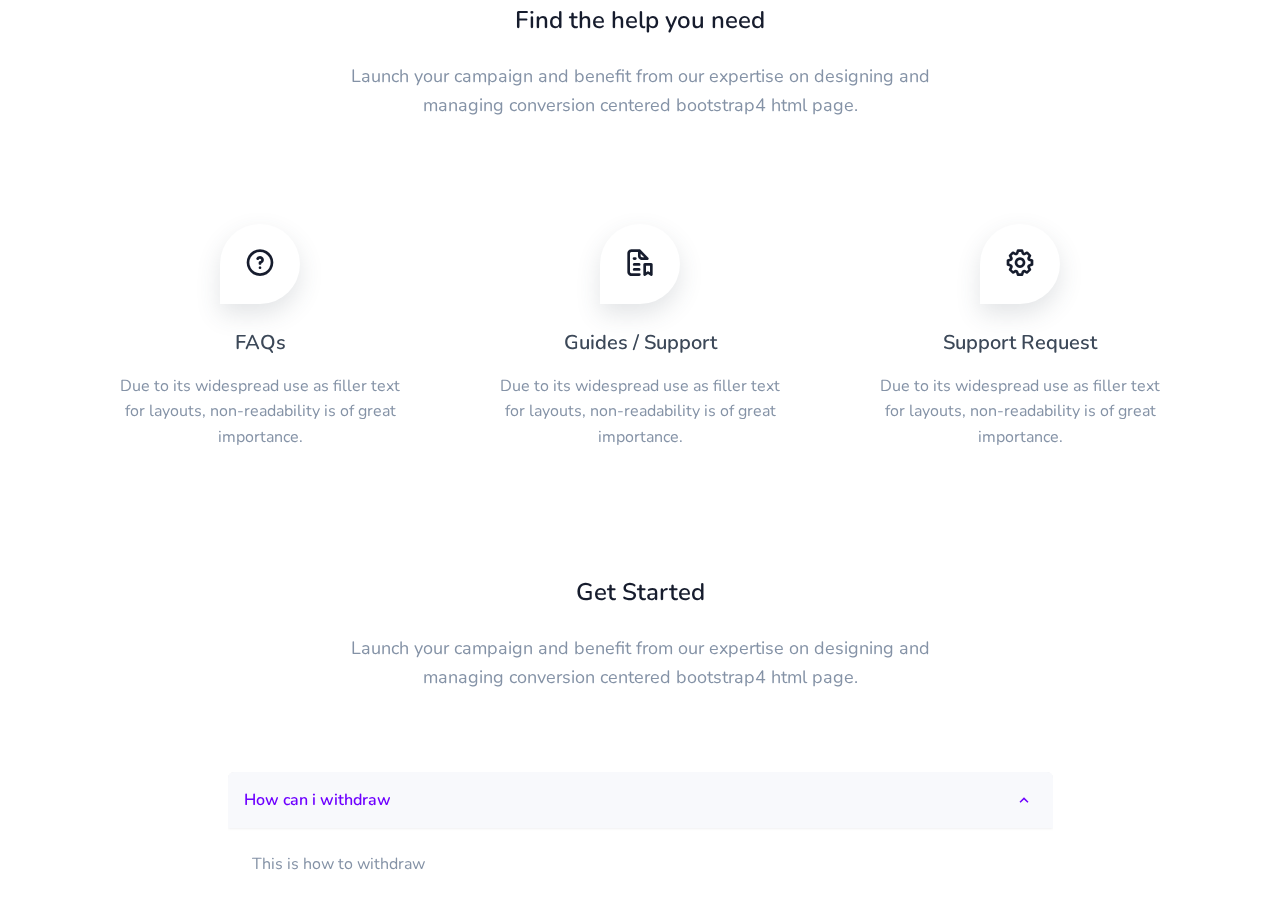
The separate FAQ page is placeholder text, with a line about a bootstrap4 html page and a single entry, How can i withdraw, answered with This is how to withdraw.
The page source also holds two live-chat scripts with different Smartsupp keys, sitting under a comment that names a different chat vendor, Tawk.to.
Several links use names such as plans2207.php?p=3 and estate2d2b.php?d=1, and we infer from those suffixes that the pages were saved from another site.
Of the pages linked from the home page, the plan details, legal, loan, oil, real estate and buy-Bitcoin addresses, plus login and sign-up, all returned Not Found.
The testimonial section holds 23 entries, and two of them read almost identically: each reports a $45,000 or $55,000 investment, a 50% return and thanks for being introduced.
The recurring phrase Prime Yield Assets investment, repeated across the section, sounds like marketing copy rather than the way separate customers write.
Who Runs Prime Yield Assets?
The Site Names No Company
We read every page that loaded for a legal name, an officer or a registration number and found none, because the copyright line says only Prime Yield Assets.
We then searched the Companies House register for the name and for the unspaced version, primeyieldassets.
The unspaced search returned no results, and the spaced search returned only partial matches, none named Prime Yield Assets, so no UK company of that name turned up.
The Address Is a Hamlet in Somerset
The home page and the FCA notice agree on an address in Huish Champflower, Somerset, while the same site’s contact page says Null.
A public postcode lookup confirms that the postcode exists and classifies the surrounding area as a rural hamlet with isolated dwellings.
That is an unusual base for a firm claiming 300 traders and $5 billion, although small places can host real firms and the FCA warns about borrowed details.
We did not confirm that anyone connected with the platform is located there, and we left the street line out of this article on purpose.
The Domain, Name Servers and Mail
The registry record lists only the registrar, with no registrant details, and shows the record was last changed on 18 May 2026, about five weeks after creation.
The name servers belong to Cloudflare, which hides the web host, so the site’s real location is not visible to us.
The mail records are more revealing: the SPF record authorises a single IPv4 address, and the RIPE registry assigns that range to a customer network of a Dutch provider.
That is a technical detail, not a finding about who is behind the site, and it sits oddly beside a claimed office in rural England.
What We Could Not Confirm
The FCA published its warning in the same days as notices for other platforms, so we compared the domains we could reach, looking only for setup that we could observe.
The Global Pip Markets domain was created on 22 May 2026 at a different registrar, with different name servers and a different page template.
The Mobile Savings Plan domain named in the FCA’s notice did not resolve for us, so we could not compare it.
We found no shared tracking keys or template pieces, which means we cannot link Prime Yield Assets to either site and we do not.
We also could not confirm who owns or operates Prime Yield Assets, where deposits go, or whether any investor has ever withdrawn, because the login and plan pages never loaded.
What to Do If You Deposited or Shared Details
-
Stop sending money. Do not add to a deposit, pay a withdrawal fee, or buy more Bitcoin to unlock earnings, whatever the dashboard shows.
-
Keep every record. Save screenshots of your balance, transaction IDs, the wallet addresses you paid, emails, chat logs and the dates you sent money.
-
Report it. In the UK, report an unauthorised firm to the FCA, and in the US file a report at ReportFraud.ftc.gov.
-
Contact your exchange. Tell the exchange or wallet provider you used, give them the receiving address, and ask whether they can flag it, knowing that crypto payments are rarely reversed.
-
Call your card issuer. If a card paid for the Bitcoin, ask about a dispute, using the steps in the FTC’s guide to disputing charges.
-
Ignore recovery offers. Anyone who contacts you promising to retrieve lost crypto for an upfront fee is usually running a second scam.
-
Secure your accounts. Change any password you reused, turn on two-factor authentication and expect phishing emails built from the details you gave the site.
-
Read the guidance. The FTC’s article on cryptocurrency and scams explains why guaranteed returns and demands for crypto are warning signs.
Frequently Asked Questions
Is Prime Yield Assets legit?
We found nothing that supports that, and a lot that argues against it: an FCA warning, no named company, a seven-month-old domain and plan figures that contradict each other.
Is Prime Yield Assets regulated by the FCA or the SEC?
The FCA says the firm is not authorised by it, and the site’s SEC and other regulator claims come with no registration number or link we could check.
Can anyone really earn 3% a day?
Not from a market. At that rate $300 would grow past $4,200 in 90 days with compounding, and the site never names a trade that could produce it.
Why does the site say Null for its phone and address?
Null is what a template prints when a field was never filled in, so the contact page shows that the details were never completed, not that they are hidden.
Can I get my money back if I paid in Bitcoin?
Probably not by reversal, because crypto transfers rarely can be undone, but report the payment to your exchange and your regulator and keep every record you have.
Who owns Prime Yield Assets?
We could not establish that. The site names no company, Companies House shows no match for the name, and the domain record lists no registrant.
The Bottom Line
Do not deposit money with Prime Yield Assets. The FCA says it is not authorised, the company behind it is not named, and its own numbers cannot all be true.
If you want exposure to crypto, property or oil, use a firm you can find on your regulator’s register, and read its terms before you send anything.
If you already paid, stop adding funds, keep the records, report the payment to your exchange and your regulator, and treat every withdrawal fee request as a warning sign.

Join the discussion
0 commentsShare your experience or ask a question about this article.
Discussion
Start the conversation
Have a question or something useful to share? Add the first comment.