


Qu Feng Huo Luo Dan can look like another traditional pain remedy in a crowded medicine cabinet. Its gold packaging makes the name easier to recognize.
If you bought it for aching joints, the next decision deserves careful attention. Identify the exact product before relying on familiar packaging or someone else’s experience.
Overview
FDA found a drug missing from the label
The Qu Feng Huo Luo Dan FDA warning says laboratory analysis confirmed undeclared dexamethasone. This is a named-product finding, not merely a suspicion about herbal remedies.
Dexamethasone is a corticosteroid medication that reduces inflammation. Hidden exposure matters because a person may take it without the precautions, interaction review, or supervision that medication requires.
The advice differs for buyers and current users
FDA advises consumers not to purchase or use this product. People already taking it should immediately consult a health care professional about safely discontinuing it.
Those instructions belong together, because suddenly stopping corticosteroid exposure can also create problems. Do not turn a do-not-buy warning into a homemade withdrawal plan.
Product identification and medical history guide the response
Keep these priorities separate so an administrative task does not delay care:
- Confirm the product name against FDA’s notice and photograph.
- Tell a clinician promptly if you have taken the product.
- Preserve packaging and your best available record of use.
- Address existing orders or renewals without inventing a medication schedule.
FDA’s laboratory finding supports a firm decision not to buy. It does not reveal every purchaser’s exposure, symptoms, or individual plan for stopping safely.
Bundle and refill warning
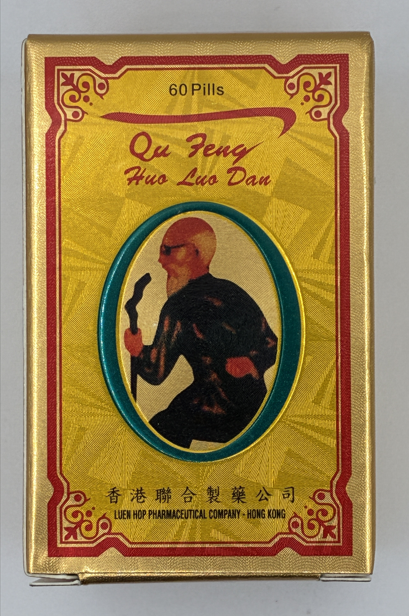
FDA’s photograph shows a box marked 60 pills, not a verified current offer. Do not buy this product to obtain a supposedly better-value supply.
No current checkout or recurring-billing agreement was verified for this report. The safety warning does not establish automatic refills, forced quantities, or a particular cancellation deadline.
Keep any receipt and check your actual order terms for future deliveries. Handle an unwanted renewal through the verified seller while prioritizing medical advice about current use.
What FDA Actually Found in Qu Feng Huo Luo Dan
FDA’s August 25, 2026 public notification identifies Qu Feng Huo Luo Dan as a pain-relief product sold online and possibly in some stores.
It states that dexamethasone was present but missing from the label. A buyer reading the packaging therefore would not receive that important medication information.
The later October 26 warning letter to New Green Nutrition says FDA obtained a sample through the company’s website and confirmed the drug through laboratory analysis.
The letter also describes disease-treatment claims on the packaging, including arthritis and sciatica claims. FDA identifies the product as an unapproved new drug and misbranded drug.
New Green is the sales route FDA documented for its sample. That historical finding does not establish the product’s current availability or a present checkout arrangement.
The letter discusses other named products under its unapproved-drug findings. Its dexamethasone laboratory result should not be transferred to those other products without their own evidence.
A warning letter is a regulatory action identifying concerns and requesting correction. This report does not recast it as a criminal conviction or a universal product recall.
The important purchasing conclusion does not depend on those broader claims: FDA found an undeclared steroid in this named product and advises consumers against buying it.
Use the FDA Photograph to Identify the Product, Not Its Origin
FDA’s photograph shows a gold-colored box with red ornamentation, the product name, a central figure, and a printed count of 60 pills.
The alert uses Qu Feng Huo Luo Dan
, while its image file uses Lou
. Check the official photograph rather than treating that spelling variation as a different safety conclusion.
The box also bears a Hong Kong company name. That printed statement helps describe the label; it does not independently verify a factory, manufacturing country, or supply chain.
Compare the complete name and packaging with what you have. Do not use the photograph to certify another similarly named pain product as safe or unsafe.
If your packaging differs, preserve it and show the difference to your clinician or pharmacist. An uncertain visual match is not a reason to experiment with another pill.
The printed count is likewise an identification clue, not a steroid dose. It does not tell you the amount of dexamethasone in any individual pill.
Keep the actual container and any remaining packaging together. A photograph of the front alone may omit other identifying information useful during a medical or safety report.
If someone else purchased it for you, ask for the container or order details. Do not rely on a secondhand product name when explaining possible exposure.
Why Relief From Pain Does Not Resolve the Safety Question
MedlinePlus explains that dexamethasone is used medically to reduce inflammation and treat several conditions. A prescription steroid is not inherently fraudulent simply because it is potent.
The problem here is undisclosed exposure in a product promoted for pain relief. A person cannot make an informed medication decision from an incomplete label.
If someone says the product helped their discomfort, that experience does not establish what they took. Feeling better cannot authenticate the declared ingredients or rule out medication risks.
FDA specifically warns that dexamethasone can weaken immune defenses and can cause high blood sugar, muscle damage, and mental health problems.
Those are possible harms, not a prediction that every user will experience them. Your symptoms, medical conditions, other medicines, and history of use need individual assessment.
Someone with an ongoing pain condition still deserves appropriate treatment. The response should be a safer clinical plan, not another unverified remedy chosen to replace this one.
Tell the professional treating your pain about this product even if you considered it a supplement. Its marketing category does not remove the relevance of the hidden drug.
Why Safe Discontinuation Requires Prompt Medical Advice
FDA’s product alert specifically directs current users to consult health care professionals immediately for safe discontinuation. It says a professional should assess corticosteroid withdrawal risks.
The National Institute of Diabetes and Digestive and Kidney Diseases explains why longer corticosteroid exposure can affect the body’s own hormone production.
After prolonged exposure, the adrenal system can be slow to resume normal cortisol production when corticosteroids stop. That is one reason an abrupt change can be dangerous.
This background does not diagnose adrenal insufficiency in everyone who took Qu Feng Huo Luo Dan. It explains why the product’s withdrawal warning needs professional attention.
The cited FDA notices do not provide an amount you can use to calculate a safe home schedule. Pill counting cannot supply that missing information.
Do not divide the pills into a self-designed taper, alternate doses based on online advice, or substitute someone else’s steroid prescription.
When contacting your care team, explain that the product contains undeclared dexamethasone according to FDA. Ask for prompt instructions about the next clinical steps and safe discontinuation.
Bring a Useful Record to the Clinician or Pharmacist
You do not need a perfect history before making the first call. Share what you know, identify uncertain details honestly, and gather the records you already have.
A short written note can prevent an important detail from disappearing during a worried conversation. Use the actual product name rather than calling it only an herbal pill.
| Information to bring | Why it helps the conversation |
|---|---|
| Product and packaging | The container and readable photographs help identify the particular product involved. |
| Approximate dates of use | Your earliest and most recent use help describe the exposure timeline. |
| How you used the pills | Describe the amount and frequency you remember without inventing a steroid dose. |
| Other medicines and supplements | A complete list helps the clinician or pharmacist assess possible interactions. |
| Symptoms or recent changes | Explain what changed and when, including changes after stopping or reducing use. |
Include ordinary pain relievers as well as prescriptions. MedlinePlus identifies aspirin and anti-inflammatory medicines such as ibuprofen or naproxen among products requiring discussion with dexamethasone.
Do not adjust those other medicines yourself to compensate for the hidden ingredient. Ask the professional reviewing your complete medication list what changes, if any, are needed.
Mention relevant health conditions and any recent infection or planned procedure. A product that seemed unrelated to medical care may now affect the information your clinicians need.
Keep medical records private while seeking help. A public forum can discuss FDA’s warning without needing your prescription list, identifying label, or personal treatment history.
What to Do If You Bought or Took This Product
-
If you have taken it, contact a clinician immediately. Give the exact name and explain FDA’s dexamethasone finding. Ask about safe discontinuation rather than improvising a taper.
If you already stopped, still disclose the recent use and any symptoms. Do not restart or change the product based on this article.
-
If you have not started, do not begin using it. FDA’s advice is not to purchase or use the named product, even if the package remains sealed.
Keep it away from children and other household members. Do not give leftover pills to someone else as an alternative pain remedy.
-
Preserve the packaging before arranging final disposal. Save readable photographs and any lot, batch, or purchase information. Ask your pharmacist about appropriate disposal after clinical needs are addressed.
Do not empty pills into another medicine bottle. Keep the product identifiable so it cannot be mistaken for a known prescription.
-
Separate medical care from order administration. Keep your receipt and ask the actual seller about an existing order, refund request, or any unwanted future delivery.
Check the agreement you actually accepted rather than assuming there is a subscription. A payment dispute cannot assess steroid withdrawal or replace a medical consultation.
-
Report a suspected adverse event through FDA’s official route. The product alert links to MedWatch for side effects and other safety concerns.
Ask your clinician to help with relevant medical information if needed. You can also submit a voluntary consumer report yourself through FDA’s verified reporting process.
-
Arrange follow-up for the original pain problem. Ask what safer treatment options fit your diagnosis and what follow-up is needed after this exposure.
Keep the resulting instructions where you can find them. If another professional later treats you, disclose this product as part of your recent medication history.
What a Safety Report Can and Cannot Accomplish
FDA’s MedWatch guidance covers serious reactions and product-quality problems. Clinical details can help FDA evaluate a report about a suspected medication-related event.
Describe what happened and when, without claiming that every symptom was conclusively caused by the product. A useful report can preserve uncertainty while documenting the concern.
The packaging, use history, other medicines, and treatment received may help explain the situation. Do not delay urgent care while assembling a complete submission.
Reporting does not automatically cancel an order, produce a refund, or establish an individual diagnosis. Those questions belong with the seller, payment provider, or treating professional.
Likewise, an absence of symptoms does not erase FDA’s laboratory finding. Tell your clinician about exposure rather than waiting for a particular complication to appear.
The firm action for future purchases remains simple: do not buy the FDA-named product. For existing use, replace guesswork with prompt, individualized medical guidance.
Frequently Asked Questions
What hidden ingredient did FDA find in Qu Feng Huo Luo Dan?
FDA confirmed dexamethasone through laboratory analysis and said it was not declared on the label. The finding concerns this named product, not every herbal pain remedy.
Is dexamethasone the same as an ordinary herbal ingredient?
Dexamethasone is a corticosteroid medication with legitimate medical uses and important risks. Hiding it in a pain product prevents informed use and appropriate clinical supervision.
Should current users suddenly stop taking the pills?
FDA directs current users to consult a health care professional immediately about safe discontinuation. Do not create your own stopping, restarting, or tapering schedule.
Does feeling better prove the product is safe?
Pain relief cannot verify the label or exclude steroid-related risks. Tell your clinician what you took, even if you noticed improvement and no obvious side effects.
Does the box’s Hong Kong wording verify where it was made?
The printed wording helps identify the photographed label, but it does not independently establish manufacturing origin. The buying warning rests on FDA’s hidden-drug finding.
Does the FDA alert prove I enrolled in automatic refills?
No, the alert does not establish your billing agreement. Check the actual receipt and enrollment terms, and handle unwanted deliveries separately from immediate medical advice.
The Bottom Line
Do not buy Qu Feng Huo Luo Dan. FDA confirmed undeclared dexamethasone, so familiar packaging or reported pain relief does not make the product suitable to recommend.
If you have taken it, immediately contact a health care professional for safe discontinuation advice. Preserve the package and use history, and never improvise a steroid taper.
Address any existing order or renewal with the actual seller separately. Medical assessment and a safer plan for your pain take priority over refunds or paperwork.

Join the discussion
0 commentsShare your experience or ask a question about this article.
Community experiences
Did this happen to you?
Your experience could help someone recognize the same scam. Submit a private report for our team to review.
I experienced this tooReports are reviewed before publication. Sharing publicly is always your choice.
Discussion
Start the conversation
Have a question or something useful to share? Add the first comment.