


Your online partner says they need a small favor. Instead of another conversation about meeting, they want to discuss your bank account.
The explanation feels personal because the relationship already does. A recent criminal case shows why that request deserves a closer look.
Overview
One criminal enterprise reached individuals and businesses
The Ghana-based conspiracy used fake romantic identities and business email compromise to steal money across the United States. Some victims also helped move other victims’ funds.
Those routes belong to the same documented enterprise. They do not mean every person received the same messages or followed an identical sequence.
Two managing figures admitted the wire fraud conspiracy
Isaac Oduro Boateng and Inusah Ahmed pleaded guilty in October 2026. Prosecutors describe their roles as managing and supervising the organization’s activity.
The enterprise stole and laundered more than $100 million from dozens of victims. That collective figure should not be attributed to either defendant alone.
A request to receive money deserves its own scrutiny
The danger can extend beyond paying an invented partner. Letting someone use your account can connect you to money taken from an entirely different victim.
- Keep an online relationship separate from access to your banking.
- Do not receive and forward payments for someone you have never met.
- Verify business payment changes through established, independent contact details.
- Tell your bank promptly if suspicious funds have arrived or left.
What the Boateng and Ahmed Guilty Pleas Establish
The Justice Department’s case announcement identifies Boateng as Kofi Boat and Ahmed as Pascal. Both admitted conspiracy to commit wire fraud.
Boateng entered his plea on October 29, 2026. Ahmed pleaded guilty two days earlier, before the same federal judge in New York.
Members of the conspiracy assumed false identities and developed online romantic relationships. Many targets were older men and women who believed those relationships were genuine.
After gaining trust, the conspirators persuaded people to send their own money or help launder proceeds from other victims. Businesses were also induced to wire funds.
Prosecutors describe Boateng and Ahmed as managing and supervising the enterprise. Their responsibility concerns its operation, including criminal activity carried out by other members.
Both men were extradited from Ghana on August 7, 2025, before entering their guilty pleas in a New York federal court.
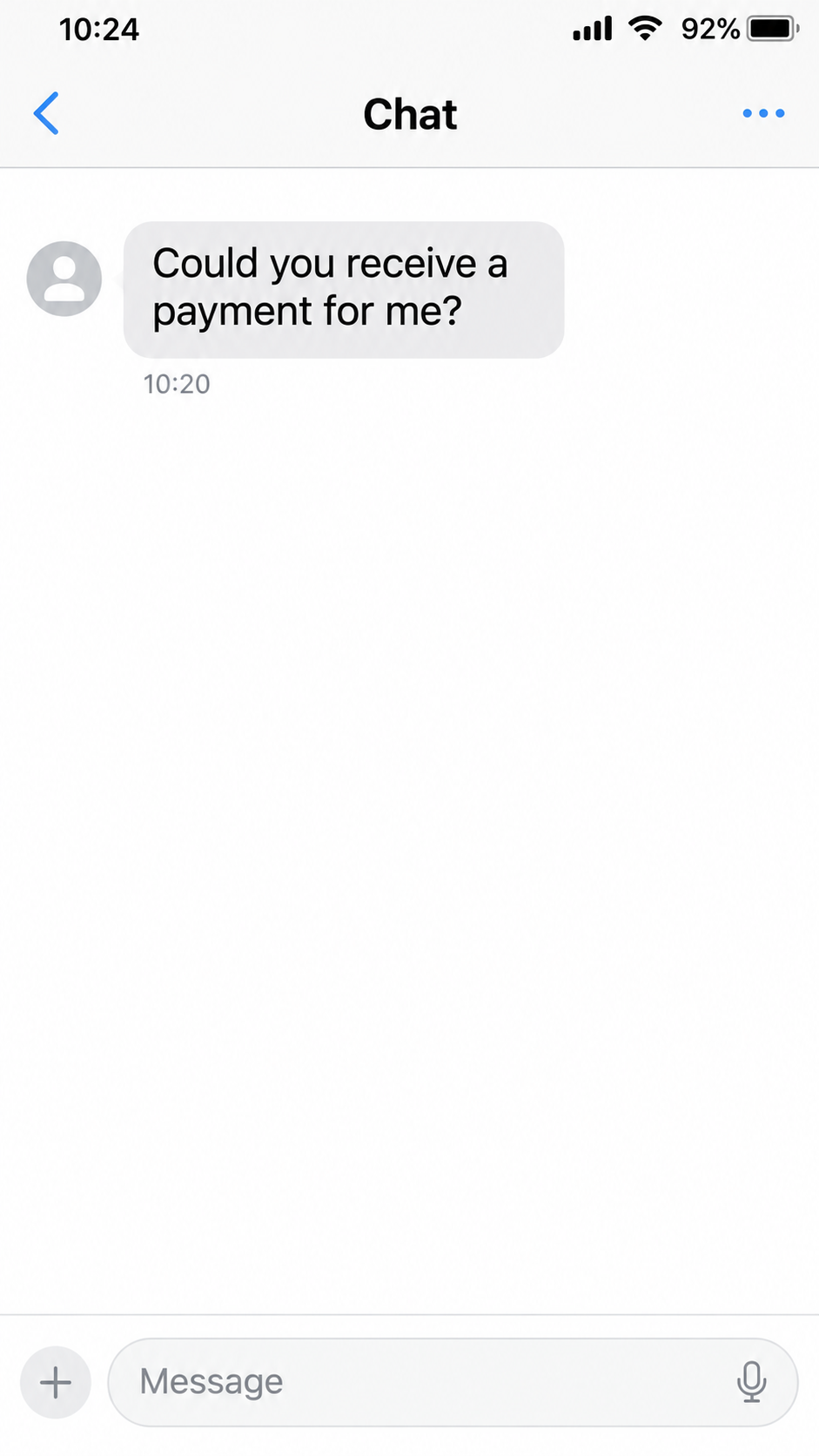
The chat illustration is fictional and shows a request to receive money. It is not a recovered message from this prosecution or a defendant’s account.
How the Romance and Business Payment Scam Worked
Step 1: A false online identity builds personal trust
Conspiracy members presented themselves as people seeking romantic relationships. The person developing feelings was responding to an identity created for the fraud.
That distinction changes how to interpret familiarity. Remembering your routines or continuing a conversation does not establish that the person behind the profile is genuine.
Keep the original profile identifier and messages if a relationship led to payments. A display name alone can change between conversations.
Step 2: Trust becomes a request for money or financial help
The enterprise used the relationship to obtain payments. It also persuaded some victims to assist with money originating from other people.
A request to receive money can sound less costly than sending your savings. Your account can nevertheless become part of the transfer route.
Ask what the request requires you to do, rather than whether it sounds generous. Receiving, withdrawing, and forwarding money are financial actions with separate consequences.
Step 3: Businesses are targeted through a parallel email route
The same conspiracy used business email compromise to obtain corporate wire payments. That was another route into the enterprise, alongside its romantic deception.
Treat the changed payment instructions as the disputed request. A familiar sender name can accompany a false demand without proving the entire mailbox was compromised.
In its business email compromise guidance, the FBI explains how apparent requests from trusted contacts can divert payments. Confirm changed instructions independently before authorizing a transfer.
Step 4: Other people’s accounts create distance from the theft
Someone transferring funds may see only an incoming payment and a request from a trusted contact. The original victim can remain outside that conversation.
The FBI’s money mule guidance explains that moving criminal proceeds adds distance between victims and criminals. Some participants understand their role; others are deceived.
That distinction matters when reporting your experience. Describe what you were told, what arrived, and what you moved, without inventing knowledge you did not have.
Step 5: The enterprise moves the proceeds onward
Prosecutors describe stolen funds being laundered to West Africa after the enterprise received them. The payment chain extended beyond the person a victim trusted.
The practical issue is the payment trail. An account holder you recognize may be one participant in a process involving other accounts and victims.
Keep the actual beneficiary details and transaction references. A display name in a chat cannot replace the information your bank needs to trace a transfer.
Read the Loss Figures Without Double Counting Them
The enterprise-wide figure exceeds $100 million. Prosecutors separately attribute approximately $12.5 million in victim loss to Boateng and approximately $28.5 million to Ahmed.
These figures describe different levels of responsibility within the case. Adding the individual amounts to the overall loss would count them as separate losses without support.
Boateng agreed to restitution and forfeiture of $12,529,213.98 each. Ahmed’s agreement lists $28,574,002 for each obligation, according to the announcement.
The agreements do not confirm that victims have been repaid. Check any refund contact independently before sending documents or accepting instructions about another payment.
The announcement gives their guilty-plea status and financial agreements. It does not announce prison sentences for either man.
For someone seeking recovery, a bank reference, agency contact, or genuine case notice is more useful than a stranger promising access to the headline amount.
Why Receiving a Payment Does Not Authenticate the Relationship
An incoming payment can feel like reassurance: somebody trusted you with money, so perhaps their explanation was genuine. That reverses the question you need answered.
The deposit does not establish who originally owned the funds or why they were sent. It also does not verify the person requesting their next destination.
In this case, some people were deceived into helping move other victims’ money. A person could be persuaded through affection while another victim supplied the funds.
Do not test that explanation by completing one small transfer. Ask your bank about an unexpected payment before withdrawing, spending, or forwarding it.
If the online contact says the payment belongs to a relative or business associate, that explanation still needs verification. Another unfamiliar name does not resolve its origin.
Likewise, a request to send the money back should go through your bank’s handling process. Follow instructions from verified bank staff rather than the chat contact.
Keep the incoming transaction and any proposed return separate in your records. Explain whether the proposed return uses the same account or a different destination.
That gives the bank concrete information without requiring you to decide who legally owns an unfamiliar deposit or personally investigate the wider network.
Two Kinds of Trust Need Two Different Checks
For an online relationship, examine the financial request itself
The FBI’s romance scam guidance warns about online contacts seeking bank details to receive money. It recommends ending contact after discovering a scam.
Separate the person’s account of their life from your banking decisions. A warm conversation cannot authorize them to receive funds through your account.
If you are helping a relative, ask about the requested transaction before arguing about the relationship. You need to know whether money is about to move.
For a business payment, return to the existing supplier relationship
Use contact details established before the disputed message to verify changes. Do not let the email requesting new bank details also provide the only verification number.
Explain which invoice, beneficiary, or payment procedure changed. A familiar company name does not by itself confirm that the new instructions came from that company.
If a transfer already happened, notify the responsible finance team and bank immediately. Preserving the email matters, but it should not delay the payment response.
Choose the Response That Matches the Money Movement
Keep bank information private while choosing your next action. These branches explain different situations without asking for your name, account details, or transaction records.
I sent money to the online contact
Tell the bank or payment provider that deception induced the payment. Give the date, amount, beneficiary, and reference, then ask what recovery action remains available.
Stop further payments while the provider handles your report. Keep the relationship messages and transfer records together in a private incident file.
I received money and was asked to forward it
Leave the funds untouched and contact the bank. Explain the online relationship, incoming payment, and proposed onward destination, including anything already withdrawn or transferred.
Follow the bank’s instructions for handling the funds. Do not attempt to resolve the situation by sending money to another account supplied in chat.
My workplace sent a payment using changed instructions
Notify the finance or security team and the sending bank immediately. Identify the genuine supplier relationship separately from the disputed email and beneficiary.
Preserve the original correspondence through the approved internal process. Ask the bank about contacting the receiving institution and attempting recovery.
What to Do if You Have Fallen Victim to This Scam
-
Stop further contact and pending financial favors. End the conversation without agreeing to another payment, deposit, account opening, or transfer.
Preserve the existing messages before blocking the profile. Keep follow-up demands with those records so the bank can understand the complete sequence.
-
Contact the provider handling each affected transaction. Use your established banking app, card details, or independently obtained support route.
The FTC’s recovery guidance recommends contacting the payment company promptly. Explain accurately whether you authorized a payment under deception or found unfamiliar account activity.
-
Describe incoming and outgoing money separately. List the transaction date, amount, recipient, reference, and any onward payment requested or completed.
If several institutions were involved, identify which transaction each handled. Keep the provider’s case reference and instructions rather than relying on the online contact.
-
Save the relationship and payment evidence privately. Keep original chats, profile identifiers, email messages, receipts, and the timeline of financial requests.
A screenshot can omit useful context, so retain original records where possible. Do not publish another victim’s account details or your own identification documents.
-
Report the fraud through an official channel. The FBI directs romance, money mule, and business email compromise reports to its Internet Crime Complaint Center.
Use IC3.gov independently and explain the actual conduct. You do not need to prove that a current contact belongs to the Boateng and Ahmed conspiracy.
-
Address any account information you actually disclosed. Tell the bank about exposed banking credentials and follow its security instructions.
Replace any password you disclosed through the genuine provider, and secure other accounts reusing it. Receiving a chat alone does not establish device compromise.
Helping Someone Who Still Trusts the Contact
A person can recognize a suspicious payment request while still feeling attached to the relationship. Give them room to describe both without turning the discussion into blame.
Start with the immediate financial question: has money arrived, left, or been scheduled? Help them contact their own bank before trying to explain the entire conspiracy.
If they are reluctant to share private conversations, begin with transaction dates and instructions. An investigator may need fuller records later through an appropriate private channel.
Keep support practical after the report as well. Someone offering emotional reassurance can become persuasive again when the victim feels embarrassed or isolated.
Frequently Asked Questions
Is the Boateng and Ahmed case a confirmed scam?
Both men pleaded guilty to conspiracy to commit wire fraud. The case describes an enterprise using false romantic identities and business email compromise to steal money.
Did either defendant personally steal the entire $100 million?
The total belongs to the wider conspiracy. Prosecutors separately identify approximately $12.5 million in victim loss for Boateng and approximately $28.5 million for Ahmed.
Why would a romance scammer send me money?
Some conspirators persuaded victims to help move other victims’ funds. An incoming payment can therefore be part of the fraud rather than proof of genuine affection.
Should I return an unexpected deposit myself?
Contact your bank before touching or forwarding unfamiliar funds. Explain the requested return and follow verified bank instructions instead of choosing a destination supplied in chat.
Do the restitution agreements guarantee a refund?
The agreements identify obligations within the criminal case. They do not establish that your loss has been recovered or that a stranger can collect compensation for you.
Must I identify this specific network before reporting?
Report the messages, accounts, transactions, and requests you actually experienced. Similar behavior does not establish membership in this conspiracy, and reporting does not require that conclusion.
The Bottom Line
Do not receive or forward third-party payments for an online partner you have never met. The Boateng and Ahmed case shows how romantic trust served a wider fraud.
If money has already moved, contact the relevant bank or payment provider and preserve the complete trail. Leave unfamiliar incoming funds untouched while seeking verified bank instructions.

Join the discussion
0 commentsShare your experience or ask a question about this article.
Community experiences
Did this happen to you?
Your experience could help someone recognize the same scam. Submit a private report for our team to review.
I experienced this tooReports are reviewed before publication. Sharing publicly is always your choice.
Discussion
Start the conversation
Have a question or something useful to share? Add the first comment.