


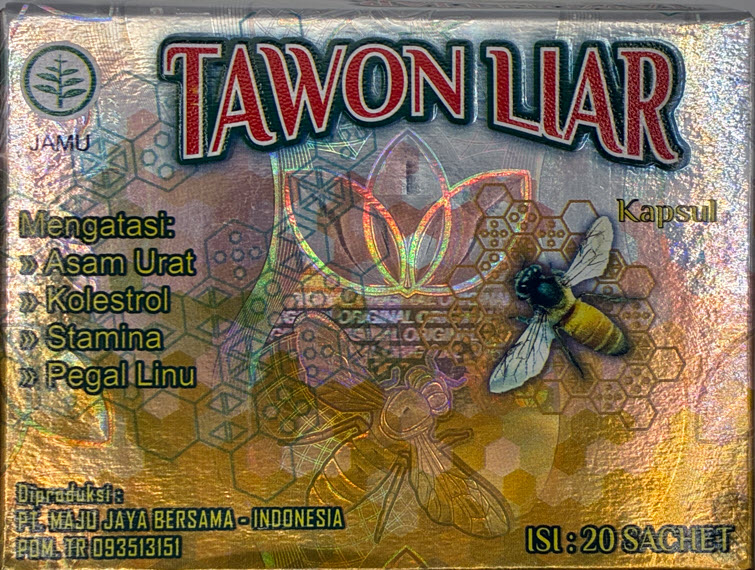
Tawon Liar is a pain product people may recognize by its metallic packaging and bee illustration. Its familiar appearance deserves a closer look before purchase.
If you already have a box at home, keep the packaging nearby. The FDA record matters both for identifying the product and discussing previous use.
Overview
The current warning concerns undeclared medicines
FDA testing reported in May 2026 found tapentadol, dexamethasone, and meloxicam in Tawon Liar. Those drug ingredients were absent from the product label.
Earlier findings describe different testing periods
The same FDA alert preserves results from 2022 and 2023. Reading their dates prevents an older ingredient list from being mistaken for the latest finding.
Previous use needs a medically informed response
Hidden drugs create risks that a herbal-looking package cannot explain. Someone who has used Tawon Liar needs advice based on symptoms and actual use history.
- Do not buy Tawon Liar or give it to another person.
- Seek emergency help for slowed breathing, prolonged breathing pauses, or unresponsiveness.
- Contact a clinician promptly about safely discontinuing previous regular use.
- Keep the box, remaining product, and purchase records available for identification.
Bundle and refill warning
Do not purchase additional Tawon Liar packages because of a discount. The FDA warning concerns product safety, regardless of the advertised bundle size.
This report does not establish current prices, checkout choices, or recurring enrollment. Existing buyers should check their own receipts for any actual future-order authorization.
If another shipment is scheduled, request cancellation through the documented seller channel and preserve the response. Billing action does not replace medical assessment.
What the Latest FDA Finding Actually Establishes
The FDA consumer alert advises against purchasing or using Tawon Liar. Its May 29, 2026 update identifies three undeclared drugs after additional laboratory testing.
Tapentadol is an opioid, dexamethasone is a corticosteroid, and meloxicam is a nonsteroidal anti-inflammatory drug, commonly abbreviated NSAID. Their risks differ across those drug classes.
This is not simply uncertainty about whether a botanical ingredient works. FDA identified medicines that buyers would not discover by reading the product’s ingredient declaration.
A label that omits those medicines also cannot provide a dependable basis for checking their strengths or interactions. Counting sachets cannot resolve that problem.
FDA’s October 26, 2026 letter to Bella’s Nutri Shop separately describes obtaining a Tawon Liar sample through the company’s website.
The letter reports dexamethasone, tapentadol, and meloxicam in that sample. It also discusses disease-treatment claims and identifies unapproved-drug and misbranding violations.
The alert and letter identify the same drugs, but neither explains how their samples relate. Readers shouldn’t treat them as independent laboratory replications.
Nor do they supply a tested strength for every package in circulation. The finding supports avoiding the named product, not calculating anyone’s consumed drug dose.
The letter requests a response about regulatory violations; it neither announces a recall nor records a criminal judgment against the company.
Why the 2022, 2023, and 2026 Results Must Stay Separate
FDA’s alert contains successive updates rather than one timeless formula. Each date tells readers which laboratory findings the agency was describing at that point.
| FDA alert date | Reported undeclared ingredients | Important distinction |
|---|---|---|
| January 7, 2022 | The analysis reported meloxicam as an undeclared ingredient. | This earlier finding did not list the later opioid. |
| February 16, 2023 | The analysis reported meloxicam, ketorolac, and dexamethasone together. | Ketorolac belongs to this update, not the 2026 trio. |
| May 29, 2026 | Additional testing reported tapentadol, dexamethasone, and meloxicam together. | This update introduced an explicitly identified opioid risk. |
Combining those rows would create a four-drug formulation that the latest update does not report. Dropping the older dates would obscure the changing evidence.
The differences also make retrospective guessing unsafe. A person who remembers using Tawon Liar years ago cannot identify the contents solely from a current headline.
Purchase dates, surviving packaging, lot markings, and photographs can help a clinician or regulator investigate. None of those details replaces chemical testing.
FDA also displays an older product photograph, reproduced below. The two images support recognition across presentations, not a guarantee that matching packages contain identical ingredients.
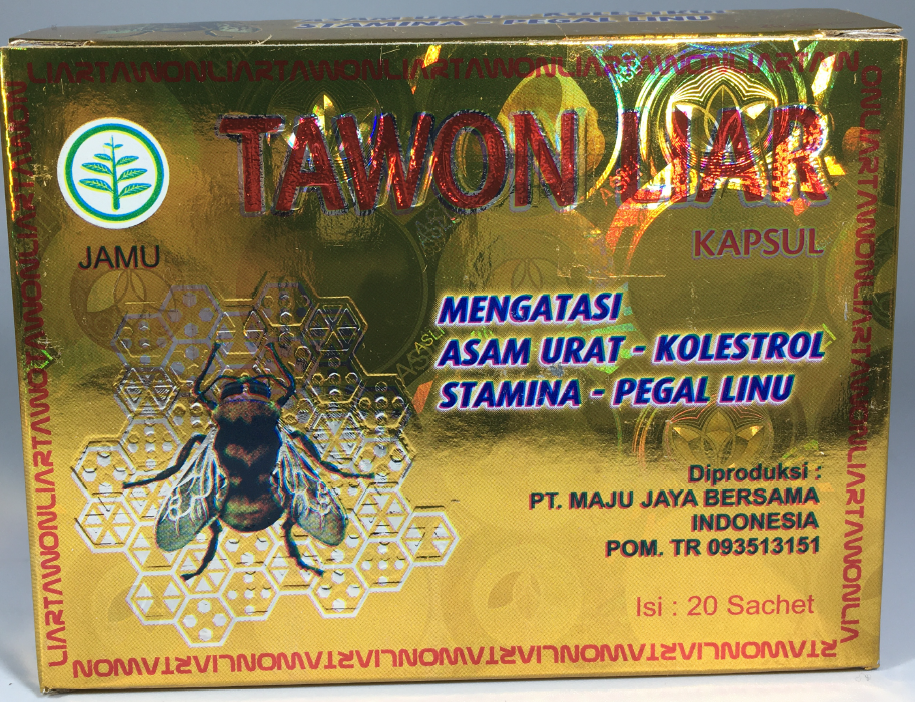
Both photographs show printed packaging rather than an inspected consumer’s individual supply. A close visual match is useful identification evidence, not a personal laboratory result.
Three Drug Classes Create Different Safety Problems
Tapentadol raises breathing and sedation concerns
The opioid finding changes how unexplained sleepiness deserves attention. FDA warns that tapentadol can slow or stop breathing and cause dangerously low blood pressure.
The National Library of Medicine’s tapentadol information also warns about breathing problems, sedation, and potentially dangerous combinations with alcohol or certain other medicines.
Someone expecting only a herbal pain product might not mention it when discussing sedatives, sleep medicines, or alcohol. That missing history can matter during treatment.
Tell the treating professional about Tawon Liar explicitly, even if the package never mentions an opioid. Explain when it was last used, if known.
Dependence and withdrawal are additional reasons for clinical guidance after regular exposure. The presence of an opioid does not prove that every user has developed dependence.
Prescription tapentadol schedules cannot be transferred to this product. Unknown quantities and an incomplete label make home conversion, substitution, or taper calculations unreliable.
Dexamethasone makes discontinuation a clinical question
Dexamethasone can reduce inflammation, but it is not a harmless substitute for identifying the cause of pain. Its corticosteroid effects extend beyond the painful area.
FDA describes infection, blood-sugar, muscle, and psychiatric risks. It also warns that prolonged or high-dose corticosteroid exposure can suppress normal adrenal function.
That concern complicates a simplistic instruction to stop suddenly after long-term use. Abrupt withdrawal can itself create problems when the body has become dependent on steroid exposure.
The MedlinePlus dexamethasone reference advises discussing discontinuation with a doctor. A gradual reduction may be needed after substantial, prolonged prescribed use.
For Tawon Liar, the hidden amount is precisely what remains unknown. A clinician must assess whether withdrawal precautions, examination, or further testing are appropriate.
This does not make continued unsupervised use safe. Contact a clinician promptly for a safe discontinuation plan instead of designing a taper from sachet counts.
Meloxicam can overlap with ordinary pain medicines
Meloxicam belongs to the NSAID family, which also includes familiar medicines such as ibuprofen and naproxen. Unrecognized overlap can occur when someone adds another pain reliever.
The MedlinePlus meloxicam reference describes serious cardiovascular and digestive-system risks. These include heart attack, stroke, ulcers, and bleeding that can occur without advance warning.
It identifies other NSAIDs, blood thinners, and oral steroids among important medicines to disclose. The combination reported by FDA therefore deserves a complete medication review.
Bring nonprescription products into that conversation, not just the prescriptions printed on a pharmacy list. Cold remedies and occasional pain treatments are easily forgotten.
Do not independently stop prescribed aspirin, anticoagulants, steroids, or other essential medicines because of this article. Ask the treating professional to reconcile the complete list.
The earlier ketorolac finding involved another NSAID. It adds historical context but should not be inserted into the latest three-drug result as though newly confirmed.
Emergency symptoms need immediate medical attention, not an online refund request.
In the United States, call 911 for slowed or stopped breathing, prolonged breathing pauses, unresponsiveness, chest pain, or stroke symptoms such as one-sided weakness.
Bloody vomit, vomit resembling coffee grounds, or black, tarry stools require urgent medical assessment. Tell responders about possible exposure to the FDA-named product.
Why Feeling Better Does Not Settle the Question
A buyer may reasonably wonder how a concerning product could seem helpful. Pain improvement and safe, accurately labeled treatment are different questions.
FDA identified drugs that have legitimate medical uses under appropriate supervision. Their hidden presence does not turn an unapproved product into a properly managed prescription.
Relief after taking Tawon Liar cannot show which ingredient produced the effect. It also cannot reveal the amount taken or exclude an interaction.
Similarly, feeling well today does not confirm that previous exposure was harmless. Some medication risks may develop without the obvious symptoms people expect.
A clinician can consider the original pain problem alongside the exposure history. That is more useful than replacing one uncertain product with another advertised herbal alternative.
If pain returns during a medically supervised change, report it rather than assuming the product was necessary. The underlying condition still deserves appropriate assessment and treatment.
What to Do If You Bought or Used Tawon Liar
-
Check for immediate danger before sorting out the purchase. Breathing problems, unresponsiveness, chest pain, or stroke symptoms take priority over finding an order number.
Call emergency services when those signs occur. Tell the dispatcher what happened and mention Tawon Liar as a possible source of undeclared drug exposure.
Do not delay help while searching for a perfect package match. If another person can safely retrieve the box, bring it for the medical team.
If an opioid-overdose rescue medicine is available, follow its instructions and the emergency dispatcher’s guidance. Giving rescue medicine does not replace emergency medical care.
-
Arrange prompt clinical advice after previous use. Explain that FDA has identified an opioid, a corticosteroid, and an NSAID in the named product.
Describe how long you used it, how often, and when you last took it. An honest estimate is more useful than an invented precise history.
Tell the clinician about new symptoms, existing medical conditions, and previous changes in use. Mention possible pregnancy or breastfeeding because those details can affect assessment.
If you have used it regularly, ask specifically about safely discontinuing possible hidden steroid or opioid exposure. Do not choose a taper without professional advice.
If you already stopped, explain when and how that happened. Do not restart the product on your own because you read a withdrawal warning.
-
Prepare one complete medication and product list. Include prescriptions, occasional nonprescription medicines, vitamins, herbal products, alcohol use, and anything taken to help with sleep.
Bring containers or clear photographs when names are difficult to remember. Include pain relievers bought at convenience stores or received from friends and relatives.
A pharmacist can help identify overlapping ingredients and communicate concerns to the treating clinician. A package’s herbal wording should not exclude it from this review.
Ask before adding another pain product while the situation is assessed. Do not use this warning as a reason to change unrelated prescriptions independently.
-
Preserve identifying details without testing the product yourself. Photograph every side of the box, inner packages, lot markings, expiration information, and any remaining printed instructions.
Keep the purchase date, seller name, order confirmation, and payment record. If the product arrived without a box, document what you actually received.
Record observations separately from assumptions about contents or origin. A photograph cannot establish drug concentration, and a seller’s name does not identify the manufacturer.
Secure the remaining product away from children, pets, and anyone who might mistake it for a routine supplement. Do not share or resell it.
-
Deal with future orders separately from health decisions. Review the actual receipt or account record for additional shipments, rather than assuming a subscription exists.
If you find an authorized repeating order, use the seller’s documented cancellation route and keep confirmation. If a charge is unfamiliar, contact your payment provider.
Ask what refund or dispute deadlines apply to your specific transaction. FDA’s safety finding does not automatically establish a merchant’s present return procedure or guarantee reimbursement.
Do not consume more product to satisfy a testimonial request or claimed refund condition. Your clinician’s safety advice should not depend on the seller approving a return.
-
Report suspected harm after arranging appropriate care. FDA encourages consumers and health professionals to report serious reactions and product problems through its MedWatch program.
The FDA reporting page explains consumer reporting options. A clinician can contribute medical details, but consumers may also submit a report themselves.
Describe the product, timing, symptoms, other medicines, and seller information as accurately as possible. Distinguish what a clinician diagnosed from what you merely suspect.
MedWatch is not an emergency service or an individual refund process. Ask your pharmacist or regulator about retaining samples before arranging appropriate disposal.
Frequently Asked Questions
Does FDA say every Tawon Liar package contains the same drugs?
No public finding here establishes the contents of every package. FDA reports identified ingredients from testing, while its dated updates preserve differences between testing periods.
That limitation is not reassurance about an untested box. An incomplete label prevents buyers from reliably excluding the dangerous ingredients that FDA has already identified.
Was ketorolac part of the latest 2026 result?
Ketorolac appears in the February 2023 update alongside meloxicam and dexamethasone. The May 2026 update instead reports tapentadol, dexamethasone, and meloxicam.
Keep those lists attached to their dates. Combining them would misstate the latest result and could confuse a clinician reviewing someone’s possible exposure history.
Should someone who used it regularly stop without medical advice?
Seek prompt clinical advice about safely discontinuing it, particularly after regular use. Possible hidden steroid or opioid exposure makes an individual assessment important.
This is not advice to continue unsupervised use or attempt a home taper. Emergency symptoms require emergency help, not waiting for a routine appointment.
Does pain relief mean the product is a safe alternative?
No improvement in symptoms can establish accurate labeling or safe drug exposure. Hidden medicines can have effects without the safeguards of a supervised prescription.
Discuss the pain itself with a qualified professional. Bring the product history so that an alternative plan addresses both the original symptoms and possible interactions.
Can I identify a safe version from the packaging?
The FDA photographs help recognize the named product, but they are not a safety certification. Different packaging does not demonstrate that a version excludes undeclared drugs.
Preserve package and lot details for clinical or regulatory review. Do not treat a familiar bee image, country statement, or herbal description as chemical verification.
Does the FDA warning automatically cancel an order or refund me?
The warning does not cancel a private transaction on your behalf. Check your actual order, request any necessary cancellation, and preserve written communications.
Payment remedies depend on the transaction and applicable deadlines. Handle those questions separately from medical care, which should not wait for a merchant’s answer.
The Bottom Line
Do not buy Tawon Liar for pain relief. FDA has identified undeclared medicines, including a controlled opioid, and the public label cannot support an informed assessment of exposure.
If you already used it, contact a clinician promptly for a safe response based on your history. Do not create your own discontinuation schedule.
Breathing problems, unresponsiveness, chest pain, or stroke symptoms require immediate emergency help. Keep the packaging and purchase records, but put medical attention first.

Join the discussion
0 commentsShare your experience or ask a question about this article.
Community experiences
Did this happen to you?
Your experience could help someone recognize the same scam. Submit a private report for our team to review.
I experienced this tooReports are reviewed before publication. Sharing publicly is always your choice.
Discussion
Start the conversation
Have a question or something useful to share? Add the first comment.