


You search for a debt collector’s telephone number because you want to resolve an account. The conversation turns instead toward paying somebody to repair your credit.
Those are different tasks, even when the person answering sounds helpful. The Credit Glory FTC case examines what happened when that distinction became blurred.
Overview
The FTC challenged search advertising and advance fees
The FTC alleges Credit Glory-related businesses used misleading search advertisements, unsupported credit-improvement promises, prohibited advance fees, and inadequately disclosed recurring charges.
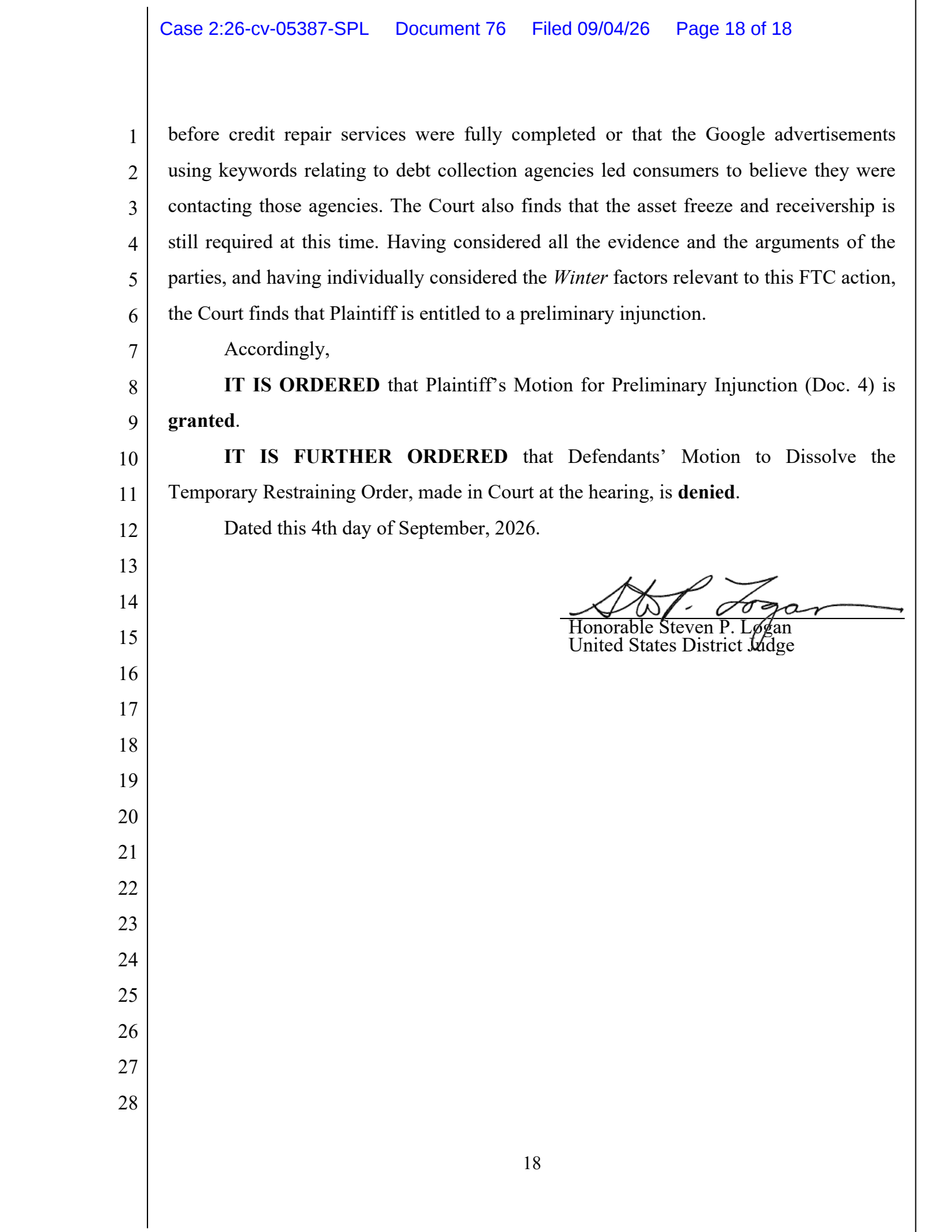
A September 4, 2026 preliminary-injunction order found the FTC likely to succeed on key claims and continued the asset freeze and receivership.
That ruling is significant, but preliminary findings are not a final judgment on every allegation. The litigation’s procedural stage should remain clear.
The businesses are not continuing ordinary operations
The court-appointed receiver says operations involving Credit Glory, Credit Sage, Credit Joy, Clerk Credit, Standard Scores, and related businesses are suspended.
The receiver’s September 10 update says these businesses will not continue disputing debts or credit-report items. Customers should not assume an existing account is still being worked.
The same notice says refunds are not currently available. Any possible future consumer refunds depend on further proceedings and sufficient recovered funds.
A repair fee is not a payment toward your debt
- Identify whether you contacted your creditor or another business.
- Separate repair fees from payments reducing your balance.
- Check whether a second monitoring subscription was added.
- Continue legitimate disputes through the appropriate official channels.
- Do not file an identity-theft report unless it is truthful.
If you need to discuss an actual debt, independently contact the creditor or collector concerned. Hiring a repair company does not automatically settle that obligation.
When a search for one business reaches another
A person searching a creditor’s name often wants a balance, payment arrangement, or explanation. That intention makes a telephone advertisement especially influential.
The FTC complaint alleges advertisements using creditor and collector-related searches connected callers with the defendants’ credit-repair sales operations.
The concern is not merely that an advertisement appeared near a search result. It is whether callers were misled about whom they were reaching.
A conversation can remain misleading even when credit repair eventually gets mentioned. A caller may still believe the business is affiliated with the creditor they sought.
The complaint also describes advertisements aimed at people searching for credit bureaus or credit help. Those callers could enter the same broader sales operation through another route.
For consumers, the first protective question is therefore simple: which legal business is speaking, and what service is it actually selling?
Do not rely on a search advertisement’s position to answer that question. Use contact information from an account statement or an independently reached official business website.
If you have already spoken with another company, compare the contract’s name with the creditor’s name. A different role requires a clear explanation before payment.
The promises and payments described in the complaint
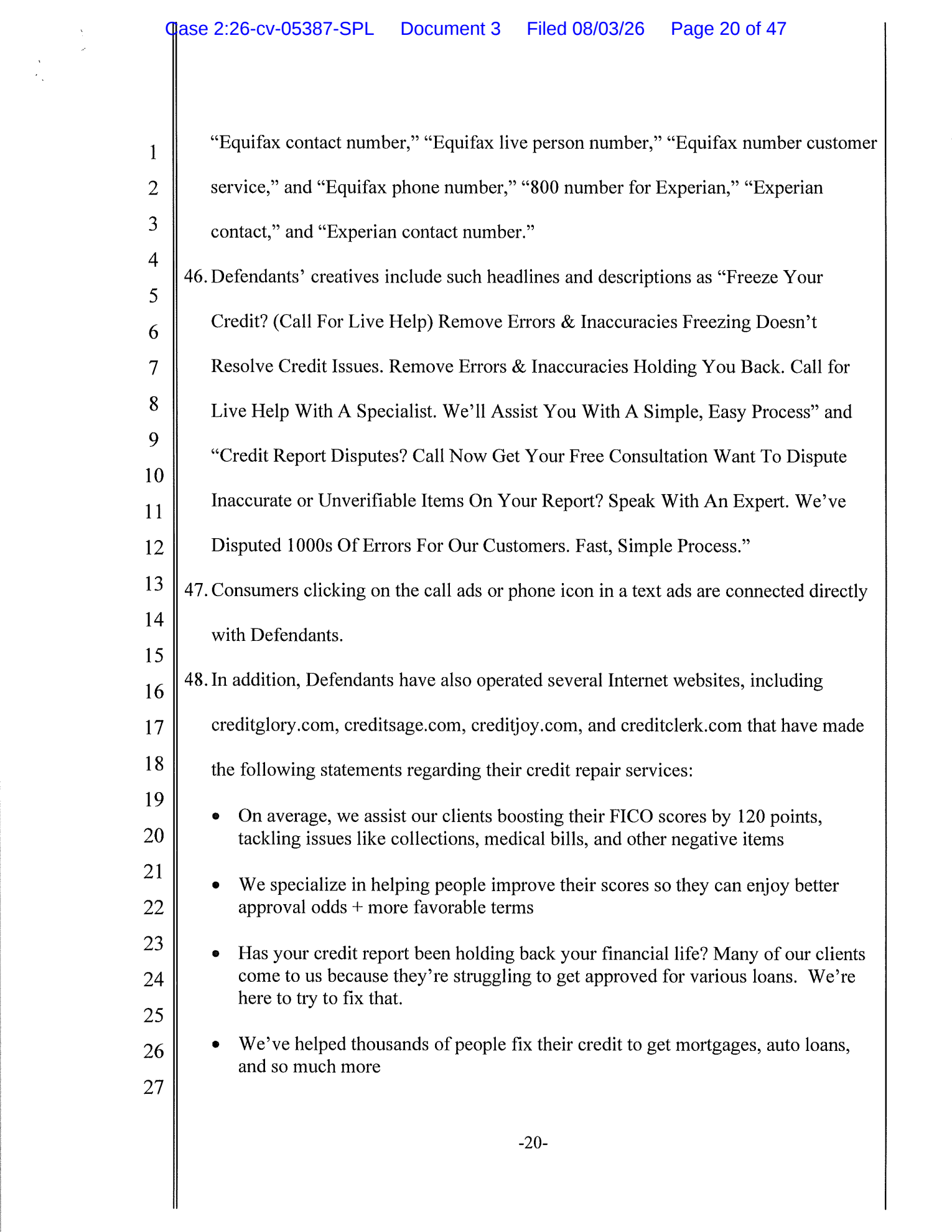
The FTC challenges claims about substantial credit-score improvements and removal of negative information. Its complaint reproduces historical marketing language, including a claimed average 120-point improvement.
An improvement claim needs a meaningful basis, not simply a reassuring number. Credit files differ, and removing an actual error is different from erasing an accurate account.
The historical passages reproduced in the filing explain the disputed promises. They should not be treated as an offer currently available from a normally operating business.
The complaint describes an initial $1 report-related payment followed by credit-repair fees and recurring charges. It also describes separate monitoring charges involving Standard Scores.
For a caller, a small first payment can make the next request feel routine. But the amount initially discussed does not explain every later authorization.
A customer needs to know the total cost, renewal amount, service duration, cancellation route, and identity of each charging business before agreeing.
The FTC alleges these matters were misrepresented or insufficiently disclosed in numerous instances. That qualification matters because contracts and conversations can vary between customers.
| What you wanted | What a different payment may buy | What to verify |
|---|---|---|
| Resolve a collector’s account | A separate credit-repair service that charges its own fees. | Whether any money reduces the actual debt. |
| Obtain a credit report | A continuing monitoring subscription with its own renewal terms. | The recurring amount and cancellation conditions. |
| Correct an inaccurate entry | Preparation or submission of dispute letters. | Which particular error is being challenged. |
| Improve a credit score | A service promising a future result. | The basis, limits, and timing of that promise. |
These are not interchangeable services simply because they all involve credit. Paying for one does not prove the others were included or successfully completed.
What the court decided at the preliminary stage
The September ruling followed briefing and a hearing, rather than simply repeating an initial press release. The court considered arguments from both sides.
The defendants argued that obtaining reports and providing portal access meant services had already been performed. The court rejected that position for the advance-fee issue before it.
The order explains that the relevant credit-repair services were not fully completed merely because initial tasks had begun. That distinction matters when evaluating an upfront charge.
The court also considered defenses concerning the agency’s evidence, positive reviews, and compliance measures. It nevertheless found the FTC had shown the required likelihood of success.
A preliminary injunction is designed to address the situation while a lawsuit continues. It is not the same as a completed trial deciding all merits permanently.
The earlier temporary restraining order appointed a receiver and addressed assets, records, and prohibited conduct. The later ruling continued the protective arrangements.
For a customer, the operational consequence is immediate even though the litigation continues: do not assume the former credit-repair workflow remains active.
The brands, billing entities, and receiver have different roles
Credit Glory is part of a larger named group
The complaint names several Credit Glory entities alongside Credit Sage, Joy Credit Software, Clerk Credit businesses, Standard Scores, and other companies and individuals.
The FTC alleges the named corporate defendants operated as a common enterprise. The article’s connection between these businesses comes from that allegation and the court documents.
A shared phrase or similar website name alone would not establish the same relationship. Check the actual entity named on your own contract and receipt.
Monitoring charges may carry another company name
Standard Scores is separately named in the case, and the complaint discusses its monitoring subscription. A customer may therefore need to examine more than one statement entry.
Do not assume canceling one described service automatically addressed another recurring charge. Identify each item and ask the payment provider about its current status.
Equally, do not assume every unfamiliar credit-related charge belongs to this case. Match the business, date, and agreement before reaching that conclusion.
The receiver acts for the court
The temporary order appointed Thomas McNamara as receiver. The receiver’s notice emphasizes that this role is an agent of the court, not an FTC affiliation.
The receivership information page provides case documents and customer updates. It is a more appropriate status source than an old promotional page.
Its current notice says the affected businesses will not take further action to dispute debts or contest credit-report items. Plan your own next steps accordingly.
A refund promise needs an actual authorized process
The receiver says no refunds are available at this point. Possible later refunds depend on the FTC prevailing and sufficient funds being collected.
That is not a claims invitation, a guaranteed recovery percentage, or permission for a third party to collect a release fee.
Use the receiver’s posted updates for developments and questions. Do not supply account secrets to somebody who approaches you claiming an expedited refund connection.
A false identity-theft report is not a repair shortcut
The FTC alleges some consumers’ information was used for identity-theft reports without their knowledge, or that consumers were encouraged to make reports despite no actual theft.
That allegation concerns the truth of the underlying statement, not simply whether an online form can be submitted successfully.
Identity-theft reporting exists to address actual misuse of identity. It should not become a method for challenging a debt you recognize merely because the entry is unfavorable.
The FTC’s credit-repair guidance warns against false identity-theft reports and promises to remove information that is accurate and current.
If a report was submitted in your name and contains inaccurate statements, seek guidance through the relevant official reporting service about correcting the record.
Do not submit another false report to undo the first one. Explain what actually happened, including whether another business prepared or submitted the information.
For a genuine reporting error, a direct dispute is available without inventing identity theft. Name the specific inaccuracy and supply appropriate supporting documents.
Take back control of a genuine credit-report dispute
A suspended repair service does not remove your ability to challenge errors. The question becomes which entry is wrong and which organization needs to examine it.
The CFPB’s current dispute instructions explain contacting both the credit reporting company and the business that supplied the information.
Explain the error clearly, identify the relevant account, and include copies of supporting documents. Keep originals and retain copies of what you submit.
For example, a payment wrongly shown as late requires evidence about that payment. A vague request to improve your score does not identify the reporting mistake.
If the account genuinely belongs to somebody else, explain that factual issue. If the balance is wrong, identify the correct amount and why.
An accurate negative entry may be frustrating, but dissatisfaction does not make it inaccurate. No repair service can legitimately guarantee removal simply because you dislike it.
Paying a repair business also does not settle a collection account automatically. Contact the actual creditor independently when your goal is discussing or paying the debt.
Keep those conversations separate so you understand what each payment accomplishes. A service fee and a debt payment have different destinations and consequences.
What to Do If You Paid a Related Business
-
Find your contract, receipts, and account statements before making another payment. Identify every business name and recurring item associated with the service.
Write down what you originally wanted, such as contacting a collector, and what you were actually sold. That difference may be central to your concern.
-
Read the receiver’s latest posted notice and retain a copy for your records. Do not assume the former company is still preparing dispute letters.
If you have a case-specific question, use the receiver’s published contact instructions. Avoid sending unnecessary full credit reports through an unsolicited email thread.
-
Ask your payment provider promptly about an unwanted or disputed charge. Explain whether the issue is an undisclosed renewal, misleading enrollment, or another identifiable problem.
Check future statements as well as past payments. A request for help should establish what happens next, not only whether an earlier charge is disputed.
-
Continue necessary credit-report work directly through the appropriate bureau and furnisher. Choose the actual error rather than repeating unsupported promises from the sales conversation.
Preserve the correspondence and any response deadlines relevant to that separate dispute. The receivership does not mean every underlying reporting problem has been corrected.
-
Decline anyone offering guaranteed score increases or advance access to a supposed refund. A payment demand is not made legitimate by mentioning this lawsuit.
When reporting your experience, give a factual account of the contact, charges, and promises. Avoid claiming a final court outcome that has not occurred.
Find the route that fits your situation
I only wanted to pay or discuss a debt
Contact the creditor or collector through independently verified account information. Ask whether any payment you made elsewhere reached the actual debt account.
I still need an inaccurate report entry corrected
Use the CFPB’s direct-dispute instructions and identify the specific error. The receiver says the suspended businesses will not continue those disputes for you.
I am waiting for a refund from the case
Follow the receiver’s official notices and keep your records. Its current update says refunds are unavailable, so reject claims of guaranteed immediate payment.
I suspect an untrue identity-theft report was submitted
Review the information privately and seek correction through the relevant official process. Do not repeat an inaccurate statement merely because a service prepared it.
Frequently Asked Questions
Has the court entered a final merits judgment?
The cited September ruling is a preliminary injunction. It found the FTC likely to succeed on key claims while continuing protective measures during the case.
Are Credit Glory’s repair operations continuing normally?
No, the receiver says the affected businesses are suspended and will not continue disputing debts or credit-report items. Arrange any necessary reporting dispute directly instead.
Does paying a repair company reduce my debt?
Not automatically, because a repair-service fee purchases a different service. Confirm any actual debt payment with the creditor or collector concerned.
Can accurate negative information simply be removed?
The FTC says repair companies cannot legally remove information that is accurate and current. A legitimate dispute should identify a genuine error or other valid issue.
Are customer refunds available through the receiver?
The receiver’s posted update says refunds are not available at this point. Any future recovery depends on later developments and sufficient collected funds.
Should I file identity theft to improve my score?
No, an identity-theft report must be truthful. Use the normal reporting-dispute process for genuine errors rather than inventing theft to challenge an unfavorable entry.
The Bottom Line
The Credit Glory FTC case concerns who callers reached, what they were promised, and how they were charged. Do not treat a repair fee as debt repayment.
With operations suspended, take genuine reporting issues directly to the appropriate organizations. Review related charges promptly and reject anyone promising a guaranteed refund or score increase.

Join the discussion
0 commentsShare your experience or ask a question about this article.
Community experiences
Did this happen to you?
Your experience could help someone recognize the same scam. Submit a private report for our team to review.
I experienced this tooReports are reviewed before publication. Sharing publicly is always your choice.
Discussion
Start the conversation
Have a question or something useful to share? Add the first comment.