


A caller says investigators found your name on a burglar’s list. The number on your screen appears to belong to the Rijksrecherche, making the warning harder to dismiss.
Then the conversation turns to protecting valuables inside your home. Before agreeing to any collection, separate the caller’s reassuring identity from what they actually want you to do.
Overview
The institution is real, but this protective pickup is not
The Rijksrecherche valuables-collection scam impersonates Dutch investigators to persuade residents to hand property to a supposed official. The protection story is the means of obtaining it.
Fraudehelpdesk’s October 9 warning describes callers claiming nearby burglaries and a list containing the recipient’s name, followed by a purported investigator collecting valuables.
A genuine-looking number cannot authenticate an incoming call
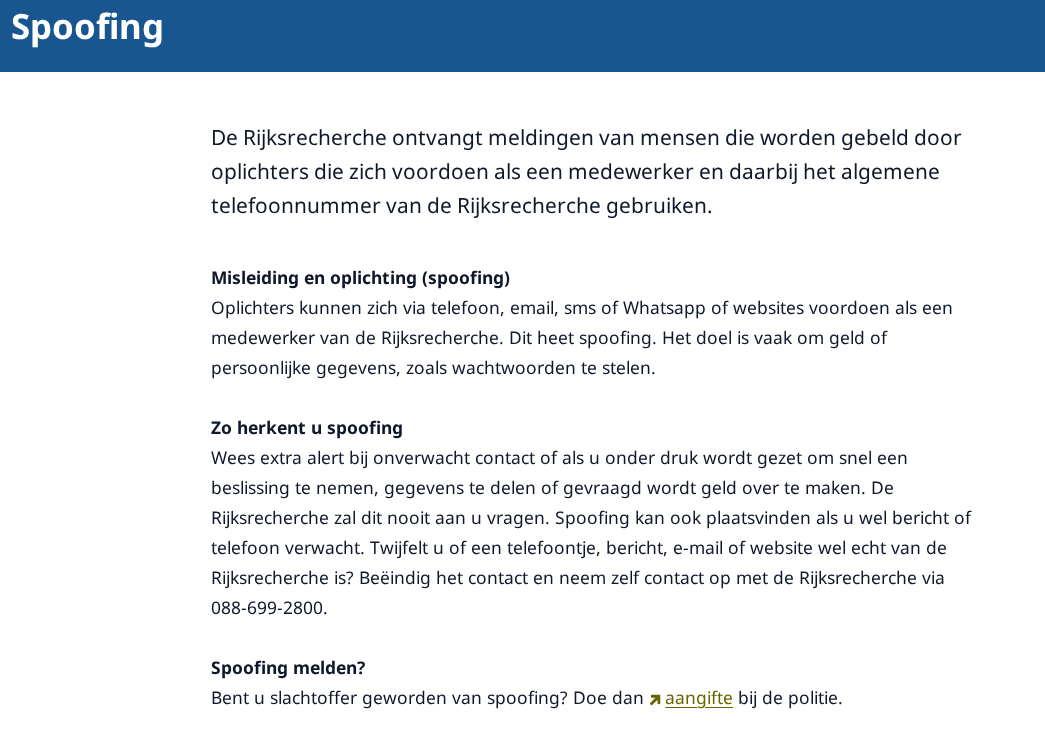
The Rijksrecherche’s own spoofing notice confirms misuse of its identity and public number. An incoming caller ID can imitate a legitimate organization without originating from it.
The immediate goal is to prevent the handover
- End the unsolicited conversation instead of discussing your valuables.
- Do not admit a collector or hand over property.
- Verify separately using the institution’s genuine published contact route.
- Seek urgent police help if someone is coming to collect valuables.
The Burglar Story Turns Fear Into Apparent Cooperation
The claim creates two pressures at once: a threat to your home and an official who appears to offer a solution. Refusing can feel like ignoring useful protection.
But the proposed solution removes property from your control. The caller’s description of safekeeping does not establish that the person receiving it has any legitimate authority.
Focus on that change rather than trying to verify every detail of the burglary story. You can decline the collection without proving whether a nearby burglary occurred.
Do not tell the caller what jewelry, cash, or other valuable items you own. A genuine-sounding concern does not justify turning an unsolicited conversation into an inventory.
The same principle applies if the caller already knows your name. Accurate personal details do not authenticate an identity or establish a lawful reason to collect your possessions.
If you are worried about a real crime risk, contact police independently. Keep ordinary home security separate from a stranger’s instructions to prepare property for removal.
How the Rijksrecherche Pickup Scam Works
Step 1: The Caller Borrows an Investigative Identity
The opening claim places the speaker inside an organization associated with investigations. The listener may assume that a person using that name has access to authoritative information.
A displayed public number adds another apparent confirmation. Yet the name spoken during a call and the number displayed by the phone are not independent identity checks.
Before discussing any sensitive matter, leave the incoming conversation and obtain contact information yourself. Do not let the speaker provide the only route for checking their authority.
Step 2: A Claimed Burglary Risk Makes the Situation Personal
The reported script says investigators found the resident’s name among information held by burglars. That makes an otherwise general warning feel directed at a specific household.
Ask what action the caller wants, rather than supplying extra facts to help them explain the story. The demand for property is the critical decision point.
If the conversation is upsetting, end it before trying to think through the details. You do not owe an unsolicited caller continued access to your attention.
Step 3: Handing Over Valuables Is Presented as Protection
The supposed collector is framed as the answer to the threat. That framing can make giving up possessions feel safer than leaving them where they are.
In reality, a title or promised receipt does not establish who will control the property afterward. Do not package items or disclose where they are stored.
If another person joins the call or arrives at the door, verify that person independently too. A second participant introduced by the first is not separate corroboration.
Step 4: The Proposed Visit Creates an Immediate Safety Issue
Once a collector is coming, this is no longer just a suspicious phone conversation. Preventing the handover and staying physically safe take priority over collecting further evidence.
If a collector is on the way after this approach, Fraudehelpdesk advises calling 112. Then follow the emergency operator’s specific safety instructions.
Do not stage a confrontation, pursue the visitor, or arrange a second meeting to identify them. Leave investigation and intervention to police.
Verify an Investigator Outside the Incoming Conversation
Start a Fresh Call Using an Independent Source
End the call completely, then use contact information from the institution’s genuine website. Do not use a number dictated by the caller as your verification method.
The agency’s current contact page provides its public route and availability. Use that record rather than copying a number from a forwarded warning.
If someone is already coming to your home, do not wait for routine office availability. Use the urgent police route appropriate to that immediate situation.
Explain that an incoming caller claimed an investigative role and proposed collecting possessions. The concrete request is more useful than saying only that the number looked suspicious.
Do Not Turn Verification Into Another Disclosure
You can ask whether an approach is genuine without giving the original caller more information. Do not provide banking credentials, access codes, or a detailed property list.
If the caller claims secrecy prevents an independent check, end the conversation. Their own explanation cannot supply the authority that you are trying to verify.
Similarly, an official-looking document supplied within the same approach is another claim to examine. It does not become independent confirmation because it has a logo or signature.
Keep the Agency Separate From Its Impersonator
Report that somebody claimed to represent the Rijksrecherche. Do not describe the real institution as the collector merely because the caller used its identity.
The genuine agency’s notice exists because its details are being misused. Blocking the abusive incoming contact does not mean refusing genuine help from properly verified authorities.
For future calls, judge the requested action and establish identity independently. Do not rely on a blacklist containing only the number displayed in this incident.
What to Do Before Any Valuables Leave Your Home
- Hang up and stop discussing what you own, where items are kept, or when other people will be home.
- Do not open the door for the proposed collector or place possessions outside for an unattended pickup.
- If someone is on the way to collect valuables after this approach, call 112 in the Netherlands and explain the situation.
- Tell a trusted household member or nearby person what happened, without asking them to confront or follow the visitor.
- Preserve the call time, displayed number, messages, and names used when doing so does not delay immediate safety action.
A collector’s arrival does not oblige you to continue the conversation. Stay in a safe place and follow police instructions about what to do next.
If you are outside the Netherlands, use your local emergency service for an immediate threat or attempted collection. Do not assume a foreign public office can provide local emergency assistance.
There is no need to investigate the caller yourself before asking for help. Describe the attempted pickup and let the relevant service assess the situation.
If You Already Handed Property Over
Report the Handover Promptly
Contact police and explain when and where the property changed hands. Include whether the person is still nearby and whether anyone is currently at risk.
Describe the items accurately, using existing photographs, receipts, serial numbers, or valuations where available. A careful inventory is more useful than guessing a total value under pressure.
Do not delay the report until you have a perfect record. Supply what you know first and ask how to add supporting material afterward.
Preserve Existing Records Without Taking Risks
Save messages and call logs, and note what the collector said or supplied. Preserve any purported receipt as evidence, not as proof that the property is secure.
If your household has existing doorbell or security-camera footage, retain it before automatic deletion. Share it through the police’s requested route rather than posting identifiable people publicly.
Do not contact a suspected collector to demand the items back or arrange a retrieval. That could expose you to another meeting or further payment demand.
Check Whether Money or Account Access Was Also Exposed
If the conversation also involved a transfer, bank details, or authentication approval, contact the actual bank independently. Explain that part separately from the physical loss.
A report about stolen jewelry does not automatically notify the bank of a card or account problem. Each affected provider needs the facts relevant to its service.
Contact an insurer if applicable, keeping the police reference and the requested supporting records. Reporting a loss does not itself establish coverage or guarantee reimbursement.
Help a Relative Stop Without Blaming Them
A person who believed the caller may still think a protective operation is underway. Start by asking whether a visit is planned or any property has already left.
Those answers identify the urgent action. A long argument about how the call sounded can wait until you know whether someone is approaching the home.
Offer to sit with the person while they contact police through an independent route. Do not take over by answering the same scammer and continuing the exchange.
Keep the explanation concrete: a caller wants to remove valuables, while the genuine institution warns about impersonators. Familiarity with your details does not establish authority.
If shame is making the person reluctant to report, focus on preventing further harm. Accurate information about the approach can also help protect another household.
Do Not Pay to Retrieve the Collected Property
A later person claiming to know about the incident needs fresh verification. Knowledge of the handover does not prove that they are a genuine investigator or recovery service.
Do not pay a release, storage, insurance, or administrative fee to an unsolicited contact promising to return items. Give any new request to the police handling your report.
Likewise, do not supply account credentials to receive alleged compensation. An official case reference can be copied into another message without making that message authentic.
Keep follow-up contacts in the same evidence timeline, but separate them from communications you independently confirmed with police. That prevents another stranger becoming a trusted contact by association.
Make Verification Easy Before Another Call Arrives
Agree within the household that unsolicited callers cannot arrange collections of valuables. A simple shared rule is easier to follow under stress than a complicated authenticity checklist.
Keep genuine police and institutional contact routes accessible through trusted bookmarks or existing records. Avoid creating a list that mixes official contacts with numbers supplied by suspect callers.
Discuss how to involve a trusted person when a caller demands secrecy or speed. The goal is to create room for an independent check, not to discourage genuine reporting.
If a relative handles valuable property or lives alone, discuss this approach in advance. Keep the conversation practical and respectful rather than suggesting that only careless people are targeted.
Tell Anyone Who Might Admit the Proposed Visitor
If you already arranged a pickup, tell the household member or building staff who might open the door. Explain that the proposed collection is not authorized.
Share only the information they need for safety. There is no need to disclose a complete list of possessions or private financial details while canceling access.
If keys, entry codes, or access devices were handed over, include that fact in the police report. Ask about appropriate access protection for the particular property.
Do not assume that stopping the phone conversation cancels an already arranged visit. Make the situation clear to police and the people responsible for entry.
Frequently Asked Questions
Is the Rijksrecherche Really Collecting Valuables for Safekeeping?
The protective pickup described here is an impersonation scam. Do not hand over property because an unsolicited caller claims that investigators found your name on a burglar’s list.
What if the Number Matches the Agency’s Website?
A matching caller ID does not establish the call’s origin. End the conversation and start an independent check using the genuine institution’s published contact information.
Should I Open the Door to Check Identification?
Do not admit the proposed collector to investigate the claim yourself. If someone is coming or present, seek police guidance and prioritize your physical safety.
What if I Already Packed the Items?
Preparing possessions does not require you to complete the handover. Stop the arrangement, keep the items under your control, and contact police if collection is imminent.
Do I Need Perfect Evidence Before Reporting?
No, report promptly with the facts available. Preserve existing records and ask how to add photographs, item descriptions, or footage after immediate safety concerns are addressed.
Does Receiving This Call Mean My Phone Was Hacked?
No, a spoofed incoming number does not itself show device compromise. Focus first on the requested handover and any information or payment you actually supplied.
The Bottom Line
Do not hand valuables to a collector arranged by an unsolicited Rijksrecherche caller. The official-looking number and burglary story do not authenticate that person.
If a pickup is imminent, seek urgent police help rather than continuing the call. If property has already left, report promptly and preserve the handover evidence safely.

Join the discussion
0 commentsShare your experience or ask a question about this article.
Community experiences
Did this happen to you?
Your experience could help someone recognize the same scam. Submit a private report for our team to review.
I experienced this tooReports are reviewed before publication. Sharing publicly is always your choice.
Discussion
Start the conversation
Have a question or something useful to share? Add the first comment.