Some prominent mathematicians proposed elaborate designs for universal computers that would operate by following very complicated mathematical rules. It seemed overwhelmingly difficult to build such machines. It took the genius of Turing to show that a very simple machine could in fact compute all that is computable. His hypothetical device is now known as a “Turing machine.” The centerpiece of the machine is a strip of tape, divided into individual boxes. Each box contains a symbol (such as A,C,T, G for the letters of genetic code) or a blank space. The strip of tape is analogous to today’s hard drives that store bits of data. Initially, the string of symbols on the tape corresponds to the input, containing the data for the problem to be solved. The string also serves as the memory of the computer. The Turing machine writes onto the tape data that it needs to access later in the computation.
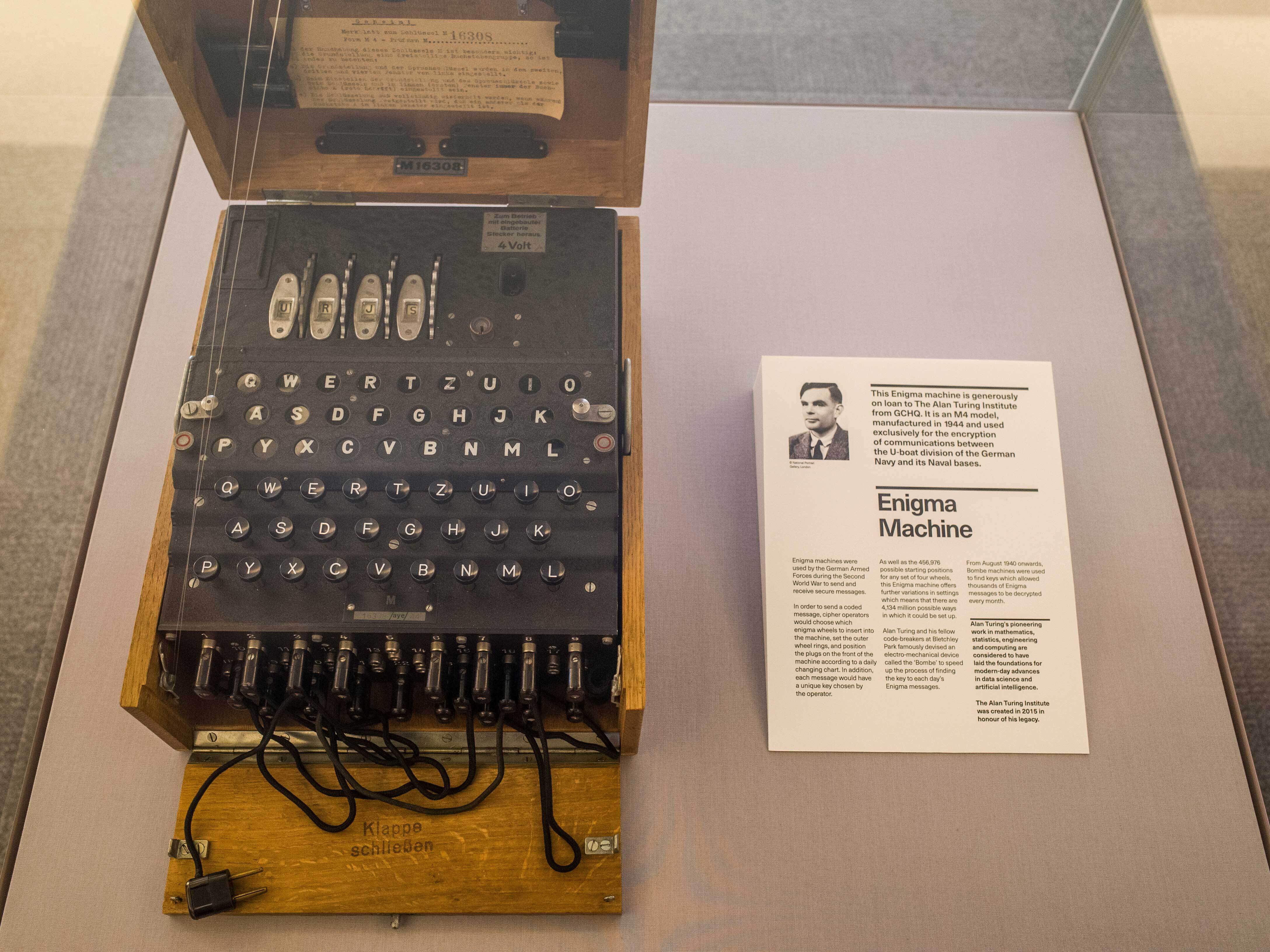
Turing went on to make fundamental contributions to AI, theoretical biology and cryptography. His involvement with this last subject brought him honor and fame during World War II, when he played a very important role in adapting and extending cryptanalytic techniques invented by Polish mathematicians. This work broke the German Enigma machine encryption, making a significant contribution to the war effort.