



Brave 1.92 launches with support for Containers
 chipp.in
Brave Software announced that the latest version of Brave Browser supports the Containers feature now. The main idea behind it is to isolate website data. When you load a website in one container, its data and any third-party data is only accessible in that container. Think of a sandbox for sites.
Containers is not a new feature, as it was originally developed and launched by Mozilla in Firefox. The Brave integration is built-in. I had to enable the feature under chrome://flags/#containers first, but it should be available without that in the coming days.
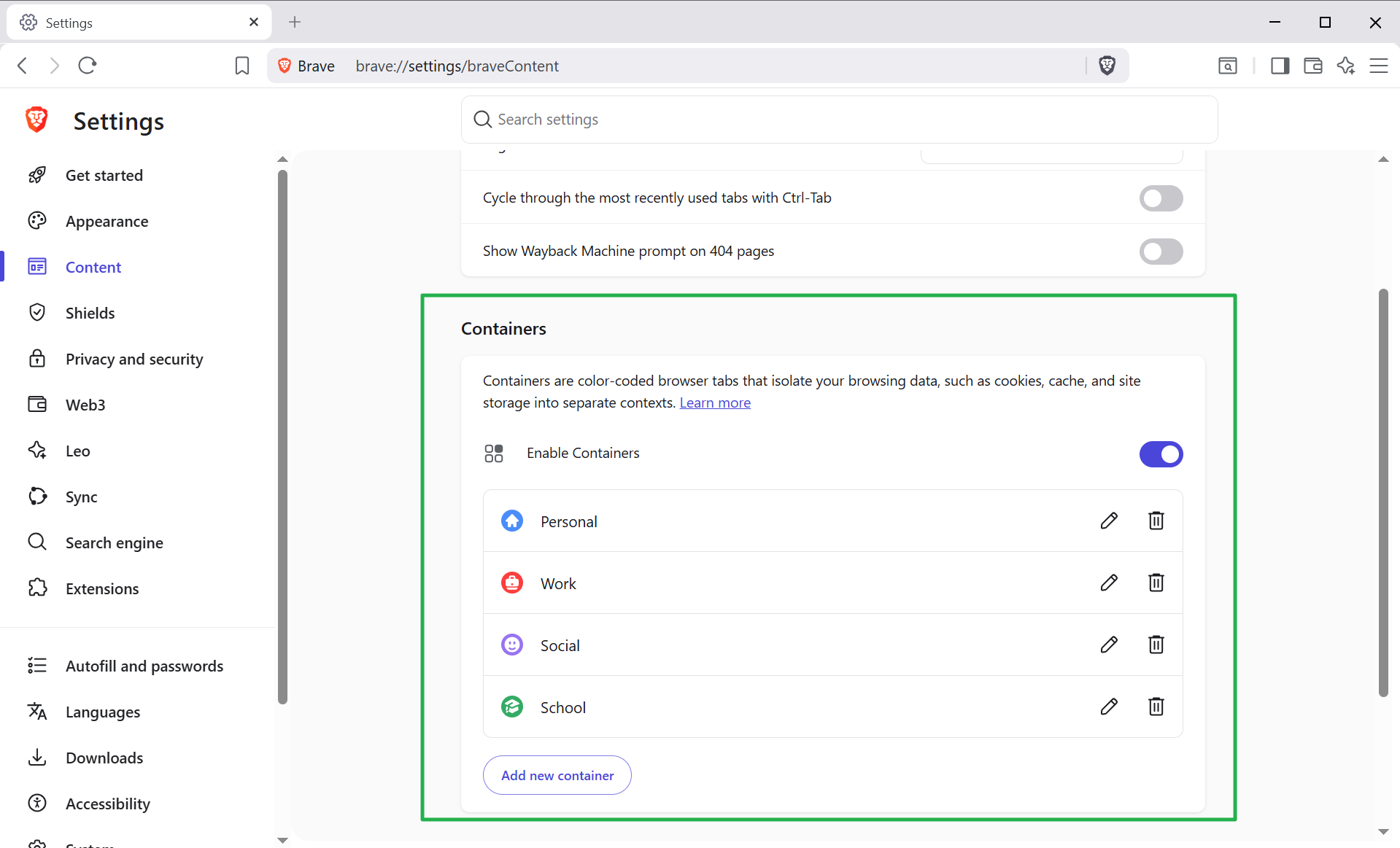
Visit brave://settings/braveContent then to toggle “Enable Containers” there. This turns the feature on so that it is ready for use in the browser.
Like Firefox, Brave includes a set of default containers — personal, work, social and school — but you can add new containers, remove the defaults or rename them.
Once done, right-click on any link or tab and select “Open in Container”. You get the option to pick one of the existing containers and Brave highlights this with a new container icon in front of the tab and also in the address bar.
Brave 1.92 launches with support for Containers - Chipp.in Tech News and Reviews
Brave Software announced that the latest version of Brave Browser supports the Containers feature now. The main idea behind it is to isolate website data....
chipp.in
