
What are you thoughts on this? It "grades" the page you are on for privacy. With tracker blocking.


Open MalwareTips from your Home Screen or desktop. Follow discussions, find answers and pick up where you left off.
If you cannot find an install option, update your browser or use its bookmark option to keep MalwareTips close.
After installation, open the app and sign in. Enable push notifications in Preferences if you want alerts. On iPhone and iPad, push requires a Home Screen web app and iOS or iPadOS 16.4 or later.
Sign in to manage notificationsInstallation is optional. Your notification settings stay under your control.
 Thread starter
Tutman

History
– In researching the background DuckDuckGo, I uncovered some interesting history. The founder of DDG, Gabriel Weinberg, was also behind a social network called Names Database, which collected the real names and addresses of its users. He then sold Names Database (and all the user data) to Classmates.com for “approximately $10 million in cash” in March 2006.
DuckDuckGo was launched a few years later, in 2008 and was branded as a privacy search engine. It rose to popularity in 2013 following the Snowden revelations. DuckDuckGo remains one of the most popular private search engines to date and is well-regarded in the privacy community.
Jurisdiction: United States (and runs on Amazon servers in the US!)
So they piggyback off you to make money on Amazon and Ebay?! I don't like that part! (Will just stick with Adguard.) Thanks much for the research!Some more info. I tested the exntesion and it seems good. Their PP says:
Information Collected
Similarly, we may add an affiliate code to some eCommerce sites (e.g. Amazon & eBay) that results in small commissions being paid back to DuckDuckGo when you make purchases at those sites. We do not use any third parties to do the code insertion, and we do not work with any sites that share personally identifiable information (e.g. name, address, etc.) via their affiliate programs. This means that no information is shared from DuckDuckGo to the sites, and the only information that is collected from this process is product information, which is not tied to any particular user and which we do not save or store on our end. It is completely analogous to the search result case from the previous paragraph--we can see anonymous product info such that we cannot tie them to any particular person (or even tie multiple purchases together). This whole affiliate process is an attempt to keep advertising to a minimal level on DuckDuckGo.
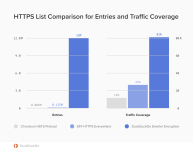
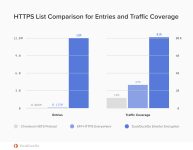
Privacy Essentials offers a far more comprehensive form of forced encryption than HTTPS Everywhere, as seen here:b) https everywhere already forces encryptions and it's from EFF. A nonprofit organization that fights for privacy online.
ToS;DR powers Privacy Essentials grading system:c) there are some extension that already classify sites. I would recommend Terms Of Service; didn't read. It's open source and funded by non profit organizations.
We’ve partnered with Terms of Service Didn't Read (TOSDR) to include their scores of website terms of service and privacy policies, where available. However, because most privacy policies still remain unstudied, we’re working with TOSDR to help them to rate and label as many websites as possible.
Privacy Essentials offers a far more comprehensive form of forced encryption than HTTPS Everywhere, as seen here:
ToS;DR powers Privacy Essentials grading system:
The difference is due to DDG using a web crawler (possibly the same one used to index web pages for their search engine) to automatically generate their Smarter Encryption list, while HTTPS Everywhere relies on a mix of crowd-sourcing and EFF hand-maintaining it.Interesting, but it seems a little exaggerated... Https everywhere is a very solid extension with years of development. It's hard to believe that the difference would be so big. The comparison you posted was made by duckduckgo? If so, i would not rely on that so much.
No need to break websites. Just config cookie setting for sites once and you're done.I'd replace AdGuard and HTTPS Everywhere with Privacy Essentials if it offered a way to block EU cookie warnings.
I have my browser set to clear cookies on exit, so the warnings return every new browsing session.Just config cookie setting for sites once and you're done.
I already do. I just wish Privacy Essentials gave a way to do so so I could replace my current extensions with it.But if you reply want, just use a anti-cookie filterlist in AdGuard.
Yeah, but a lot use HSTS to force encryption which is just gross.Also for HTTPS: all important sites use https nowadays.
So why do this then? Also you can set exceptions for sites which don't get clearedI have my browser set to clear cookies on exit, so the warnings return every new browsing session.
Why not? Not like there's any reason to have all these sites' cookies floating around in my browser.So why do this then?
I already do this for sites I want to stay logged in on.you can set exceptions for sites which don't get cleared
Why not? Not like there's any reason to have all these sites' cookies floating around in my browser.
I already do this for sites I want to stay logged in on.
In Edge you can control that on cookie managementare you using the browser options to delete cookies on exit? If so, how do you add exceptions?
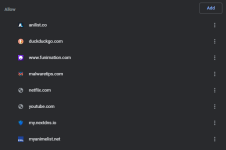
I am. How you add exclusions varies depending on the browser, but for most Chromium-based browsers you can do so by opening Settings ➜ Site settings ➜ Cookies and site data, then add the domain(s) under the Allow section like so:@Arequire , are you using the browser options to delete cookies on exit? If so, how do you add exceptions?

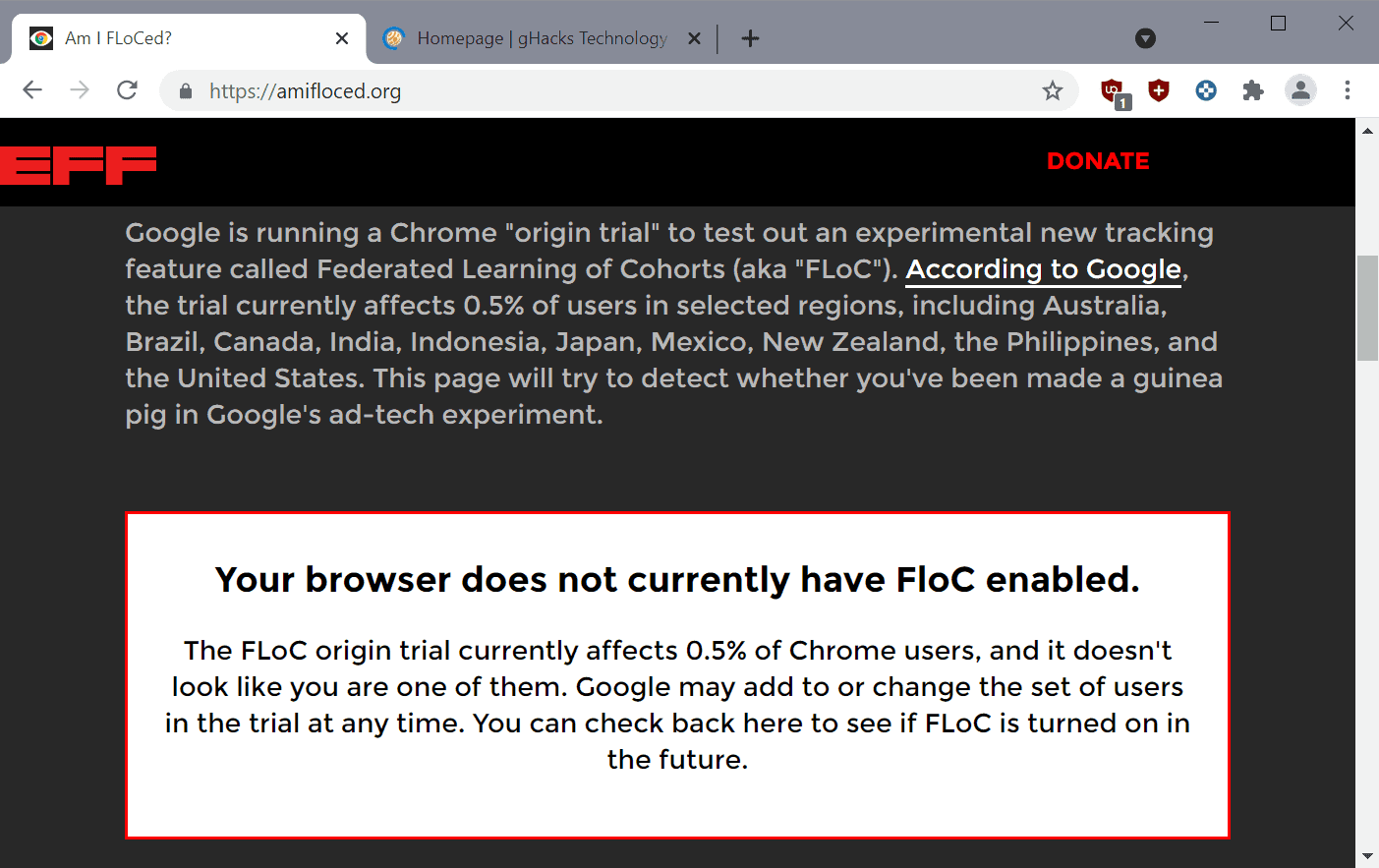
DuckDuckGo released a new version of its browser extension, called DuckDuckGo Privacy Essentials, for all supported web browsers this week. The new version blocks FLoC interactions on websites to protect the privacy of users.
If you have not heard about FLoC yet, it is Google's attempt to shift advertising from a cookie-based system to one that does not require cookies anymore. Basically, what it does is assign a user to a cohort -- FLoC stands for Federated Learning of Cohorts. A cohort is made up of thousands of users who share similar interests.
While that sounds like a nice thing to do on first glance, it is not. You can check out the EFF's Google's FLoC is a Terrible Idea to better understand why FLoC is not necessarily better for Internet users in terms of privacy and tracking.
 www.ghacks.net
Members who viewed this thread in the last 5 minutes


