



Read more:Gamers searching for Minecraft game clients, mods, and cheats are being directed to fake websites that install WeedHack, a Windows malware service capable of stealing accounts, passwords, files, and cryptocurrency wallet data.
The malware is sold to cybercriminals through free and paid plans. Its more expensive version adds keylogging, webcam access, remote screen control, and command-line access to an infected computer.
McAfee first documented the operation in June 2026 targeting Minecraft users. Although WeedHack’s original command server and customer dashboard later went offline, a new investigation found that other websites and download links continued spreading the malware. McAfee WebAdvisor blocked more than 6,300 attempted visits to associated sites during the past month.
In one test, McAfee found that the first two Google results for Xenon Client led to websites distributing WeedHack. The operators used SEO poisoning to push malicious pages higher in search results and place them in front of people looking for legitimate Minecraft software.
Minecraft has long been a popular lure for malware campaigns. In 2021 alone, more than 300,000 malware cases were associated with the game, the highest reported figure for any gaming title that year.
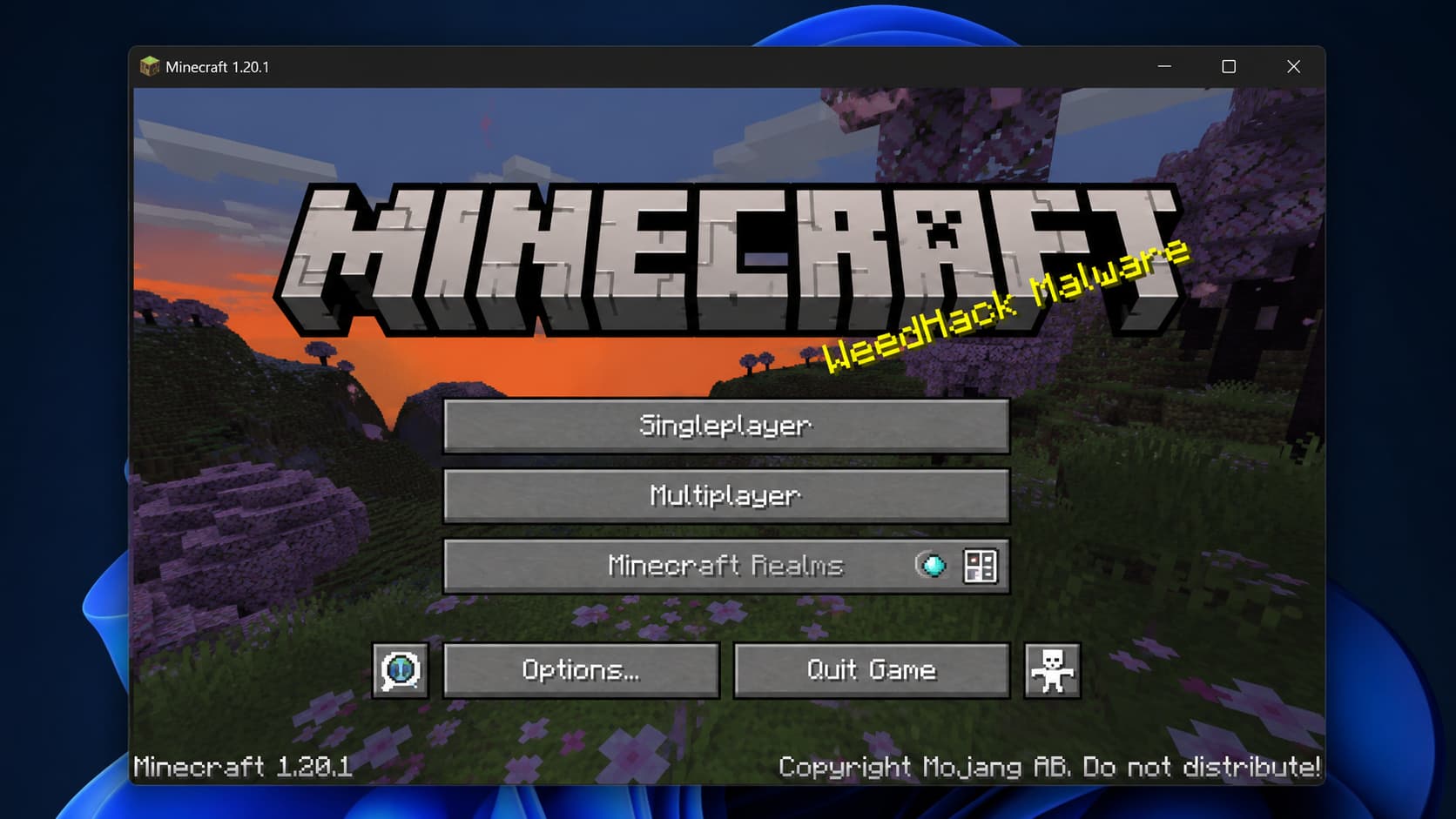
Fake Minecraft Clients Spread WeedHack Malware on Windows to Steal Passwords
Fake Minecraft clients are delivering WeedHack malware that steals gaming sessions, browser passwords, crypto wallets and personal files from infected Windows systems.
 hackread.com


