

The MalwareTips app
Your community, one tap away.
Open MalwareTips from your Home Screen or desktop. Follow discussions, find answers and pick up where you left off.
- Home Screen access
- Optional push alerts
- Your community
You're ready to explore.Explore what's new
Installation instructions
iPhone & iPad
- Open MalwareTips in Safari and tap Share. You may need to open the Page Menu first.
- Choose Add to Home Screen. If it is not listed, use Edit Actions to add it.
- Keep Open as Web App enabled if shown, then tap Add.
Android
- Open MalwareTips in Chrome or another browser that supports app installation.
- Open the browser menu and look for Install app, Install and create shortcut, or Add to Home screen.
- Choose Install and confirm. Wording varies by browser.
Desktop
- Chrome: use the install icon in the address bar, or the menu under Cast, save and share.
- Edge: open the menu, then More tools, Apps and Install this site as an app.
- Safari on Mac: choose Share or File, then Add to Dock. Firefox on Windows: look for the web apps button in the address bar.
If you cannot find an install option, update your browser or use its bookmark option to keep MalwareTips close.
Keep up with your conversations
After installation, open the app and sign in. Enable push notifications in Preferences if you want alerts. On iPhone and iPad, push requires a Home Screen web app and iOS or iPadOS 16.4 or later.
Sign in to manage notificationsInstallation is optional. Your notification settings stay under your control.
You are using an out of date browser. It may not display this or other websites correctly.
You should upgrade or use an alternative browser.
You should upgrade or use an alternative browser.
Advice Request How do I format boot sectors (mbr-gpt etc.)?
Share practical recommendations that address the author's needs.

You can convert.
We have some history threads in this forum
 malwaretips.com
malwaretips.com
malwaretips.com
malwaretips.com
malwaretips.com
We have some history threads in this forum
[How To] Convert a disk from MBR to GPT | MalwareTips
hi guys, So i had a machine originally shipped with Win8 (GPT partition scheme); on it, i installed Win7 and changed the disk scheme to MBR , but after...
malwaretips.com
Convert MBR to GPT drive to switch BIOS to UEFI | MalwareTips
Hello, I found this article, by which i can enable secure boot, i think. Is it worth it...
malwaretips.com
[Solved] Need Help - GPT Partition | MalwareTips
Hello friends, I had such trouble in accer aspire laptop. I wanted to install windows 7 on it and when i boot up it from from my installation media i had...
malwaretips.com
but when we convert it, the data inside it is not deleted? @CyberTechYou can convert.
We have some history threads in this forum
[How To] Convert a disk from MBR to GPT | MalwareTips
hi guys, So i had a machine originally shipped with Win8 (GPT partition scheme); on it, i installed Win7 and changed the disk scheme to MBR , but after...Convert MBR to GPT drive to switch BIOS to UEFI | MalwareTips
Hello, I found this article, by which i can enable secure boot, i think. Is it worth it...[Solved] Need Help - GPT Partition | MalwareTips
Hello friends, I had such trouble in accer aspire laptop. I wanted to install windows 7 on it and when i boot up it from from my installation media i had...
but when we convert it, the data inside it is not deleted? @CyberTech
According to show-Zi she says no data loss. if you follow her step by step what she did:
Convert MBR to GPT drive to switch BIOS to UEFI | MalwareTips
Hello, I found this article, by which i can enable secure boot, i think. Is it worth it...
malwaretips.com
Also this for you to learn it and be careful. please read it if your data is important.
How to Convert MBR to GPT without Data Loss [4 Ways]
This article provides you 4 proven ways to convert MBR to GPT without data loss in Windows 11, 10, 8, 7.
Good luck
I already want to delete the data in the emulation segments. @CyberTechAccording to show-Zi she says no data loss. if you follow her step by step what she did:
Convert MBR to GPT drive to switch BIOS to UEFI | MalwareTips
Hello, I found this article, by which i can enable secure boot, i think. Is it worth it...
Also this for you to learn it and be careful. please read it if your data is important.
How to Convert MBR to GPT without Data Loss [4 Ways]
This article provides you 4 proven ways to convert MBR to GPT without data loss in Windows 11, 10, 8, 7.www.diskpart.com
Good luck
Look, I'm asking you this:It's up to you that you can with or without data it depends on what i posted.
If there is a virus in the boot partition, what can I do to delete this virus?
@CyberTech
Please use search in this forums there are some threads. Also, make sure to use search before make a threadLook, I'm asking you this:
If there is a virus in the boot partition, what can I do to delete this virus?
@CyberTech
 .
.I already looked but couldn't find it. If I find it, I will not open a topic anyway. @CyberTechPlease use search in this forums there are some threads. Also, make sure to use search before make a thread
I already looked but couldn't find it. If I find it, I will not open a topic anyway. @CyberTech
Try the methods described here
How to Remove Boot Sector Virus in USB Easily
Learn how to remove boot sector virus in USB drives easily. This comprehensive guide covers identification, data recovery, and effective removal techniques for USB malware.

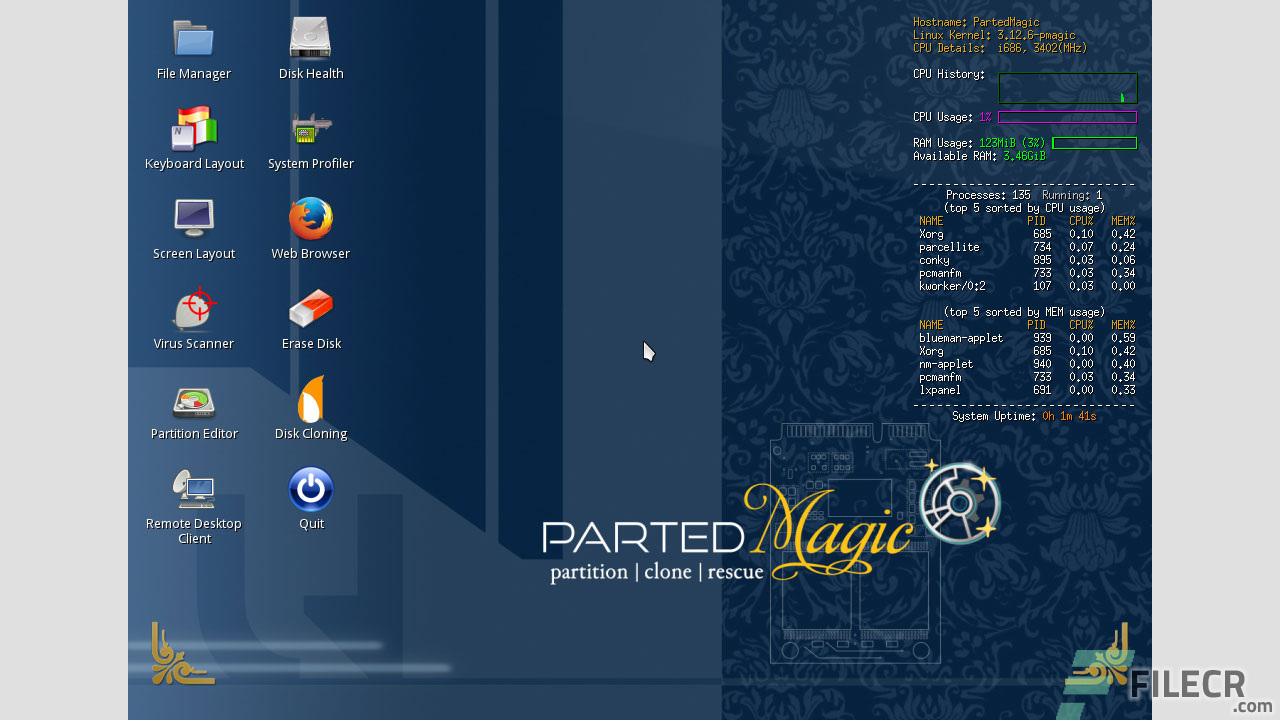
Go download an older version Parted Magic. It has a Erase Disk feature which can sanitize SSD's or zero fill a hard drive.
 filecr.com
Parted Magic ISO Download (Latest 2026) - FileCR
Free download Parted Magic Latest version ISO - For Hard Disk Partitioning, Cloning, Rescue, and Erasing.
filecr.com

But when you throw it there is only scanning. As far as I know virus cannot be found in scans if encrypted @HarborFrontTry the methods described here

How to Remove Boot Sector Virus in USB Easily
Learn how to remove boot sector virus in USB drives easily. This comprehensive guide covers identification, data recovery, and effective removal techniques for USB malware.
Can I also delete data in Mbr with this? @Victor MGo download an older version Parted Magic. It has a Erase Disk feature which can sanitize SSD's or zero fill a hard drive.
Parted Magic ISO Download (Latest 2026) - FileCR
Free download Parted Magic Latest version ISO - For Hard Disk Partitioning, Cloning, Rescue, and Erasing.
But when you throw it there is only scanning. As far as I know virus cannot be found in scans if encrypted @HarborFront
Look. If scanning catches a virus it'll show up otherwise there's nothing for the AV to show.
Definition of a boot sector virus
A boot sector is a reserved section of a disk that contains the code and data needed to start the operating system (OS) of a computer. A boot sector virus is a type of malware that infects a system’s boot partition or the Master Boot Record (MBR) of a hard disk. During startup and before security software can be executed, the virus executes malicious code. Once a computer is infected, a boot sector virus will try to infect every disk that is accessed on the infected system.
If the virus is encrypted then the virus cannot perform its malicious actions without itself decrypt first. That is to say, the virus is useless if it stays in its encrypted state. AV software like Avast can detect during boot time when the encrypted boot sector virus decrypts itself to cause malicious actions. If malware prevents Avast Antivirus from running in normal mode, you can schedule Boot-Time Scan to run in Safe Mode.
Read here
Run a Boot-Time Scan in Avast Antivirus | Official Avast Support
Instructions for running a Boot-Time Scan in Avast Antivirus.
EDIT - I see you already posted at the Malware Removal Section
Last edited:
Start from scratch. A clean PC is better than a disinfected one.Look, I'm asking you this:
If there is a virus in the boot partition, what can I do to delete this virus?
@CyberTech
- Backup all your important data to an external drive, or the cloud.
- Format the whole partition / disk drive.
- Reinstall OS with GPT/UEFI (not MBR/BIOS)
- Don’t download anything from untrusted sites or warez.

MBR2GPT
Use MBR2GPT.EXE to convert a disk from the Master Boot Record (MBR) to the GUID Partition Table (GPT) partition style without modifying or deleting data on the disk.
learn.microsoft.com
Else follow this guide for GPT
Windows Setup: Installing using the MBR or GPT partition style
Windows Setup: Installing using the MBR or GPT partition style
learn.microsoft.com
We have suggest this before, they appear to have abandoned ship due to minor concerns over uploading .txt files.Look. If scanning catches a virus it'll show up otherwise there's nothing for the AV to show.
As for encrypted boot sector virus are you infected with one now? If yes, then post at the Malware Removal Section. There's one expert there to help you
How do I detect if my Legacy System is infected with a BIOS or Boot virus? | MalwareTips
They directed me here, Antiviruses cannot access when the BIOS or boot part of Legacy systems is infected with a virus, so how can I detect the viruses...
malwaretips.com
Side note: Microsoft also offer their own community services for help and support.
Last edited:
It erases the whole disk, including the boot sector.Can I also delete data in Mbr with this? @Victor MIt

Manifestation
Level 1
In AOMEI Backupper there is a Disk Wipe option that will completely erase your disk. AOMEI claims that it will completely get rid of viruses.Look, I'm asking you this:
If there is a virus in the boot partition, what can I do to delete this virus?
@CyberTech

There are a few different ways to format the boot sector, depending on what you're trying to do. Here are some general steps to follow:
1. Open the Disk Management utility in Windows 10. You can do this by right-clicking on the Start button and selecting "Disk Management" from the context menu.
2. Locate the disk that you want to format the boot sector for. You should see a graphical representation of all your disks and partitions in the bottom half of the Disk Management window.
3. Right-click on the partition that you want to format the boot sector for and select "Properties" from the context menu.
4. Click on the "Tools" tab and then click on the "Check" button under the "Error Checking" section.
5. Follow the prompts to check the disk for errors. Depending on what the utility finds, it may suggest formatting the disk in order to fix the errors.
6. If you need to format the disk, right-click on the partition again and select "Format" from the context menu. Choose your preferred filesystem and follow the prompts to format the disk.
Note that formatting the boot sector can be a risky undertaking, especially if you're trying to recover data or repair a damaged partition. Make sure you have a good backup of any important files before you proceed.
1. Open the Disk Management utility in Windows 10. You can do this by right-clicking on the Start button and selecting "Disk Management" from the context menu.
2. Locate the disk that you want to format the boot sector for. You should see a graphical representation of all your disks and partitions in the bottom half of the Disk Management window.
3. Right-click on the partition that you want to format the boot sector for and select "Properties" from the context menu.
4. Click on the "Tools" tab and then click on the "Check" button under the "Error Checking" section.
5. Follow the prompts to check the disk for errors. Depending on what the utility finds, it may suggest formatting the disk in order to fix the errors.
6. If you need to format the disk, right-click on the partition again and select "Format" from the context menu. Choose your preferred filesystem and follow the prompts to format the disk.
Note that formatting the boot sector can be a risky undertaking, especially if you're trying to recover data or repair a damaged partition. Make sure you have a good backup of any important files before you proceed.
Hello, I got a little late reply, but I want to ask, can this virus pass to other devices via wifi and come back to my computer after I format the disk? @InkStart from scratch. A clean PC is better than a disinfected one.
Microsoft offer this tool for Windows 10, it may be useful:
- Backup all your important data to an external drive, or the cloud.
- Format the whole partition / disk drive.
- Reinstall OS with GPT/UEFI (not MBR/BIOS)
- Don’t download anything from untrusted sites or warez.
MBR2GPT
Use MBR2GPT.EXE to convert a disk from the Master Boot Record (MBR) to the GUID Partition Table (GPT) partition style without modifying or deleting data on the disk.learn.microsoft.com
Else follow this guide for GPT
Windows Setup: Installing using the MBR or GPT partition style
Windows Setup: Installing using the MBR or GPT partition stylelearn.microsoft.com
We have suggest this before, they appear to have abandoned ship due to minor concerns over uploading .txt files.
How do I detect if my Legacy System is infected with a BIOS or Boot virus? | MalwareTips
They directed me here, Antiviruses cannot access when the BIOS or boot part of Legacy systems is infected with a virus, so how can I detect the viruses...
Side note: Microsoft also offer their own community services for help and support.
Recently browsing
Members who viewed this thread in the last 5 minutes

