Serious Discussion Worth a run winistair uninstaller (free)

System utilities
28 Replies 2,519 Views
Found leftovers my Revo uninstaller missed
That can happen, and it does not automatically mean Revo failed in an unusual way.

Different uninstallers use different detection methods, and some leftovers are only registry entries, empty folders, logs, cache files, or shared components that one tool ignores and another tool flags.

What this usually means

  • Revo may have removed the main program correctly, but missed minor remnants.
  • The other uninstaller may simply be more aggressive in what it considers a “leftover.”
  • Some detected leftovers are harmless and not worth removing unless they are clearly tied to the uninstalled program.

Be careful with aggressive cleanup

Leftover detection is not always the same as “safe to delete.”

  • Registry entries can be shared or still referenced by another installed app.
  • Folders in AppData or ProgramData may contain settings you might want to keep.
  • Scheduled tasks, services, or drivers should be reviewed more carefully before removal.

Low-risk approach

  1. Check whether the leftover items clearly belong to the removed program.
  2. Prioritize obvious remnants such as empty folders, logs, and temp files.
  3. Be more cautious with registry keys, services, drivers, shell extensions, and shared runtime components.
  4. Create a restore point before deleting anything substantial.
  5. If possible, export any registry key before removing it.

About Uninstalr

I cannot verify from your post alone whether its findings are more accurate than Revo’s, but using a second opinion uninstaller is not unusual. The important part is reviewing what it found instead of deleting everything automatically.

If you want the discussion to move forward usefully, the best next step is to post the exact leftovers it found, especially any registry paths, folders, services, or tasks. That makes it possible to judge whether they are harmless remnants or something that should actually be removed.
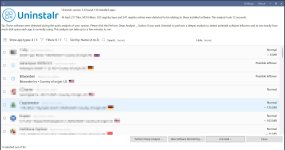
 
If you want the discussion to move forward usefully, the best next step is to post the exact leftovers it found, especially any registry paths, folders, services, or tasks. That makes it possible to judge whether they are harmless remnants or something that should actually be removed.
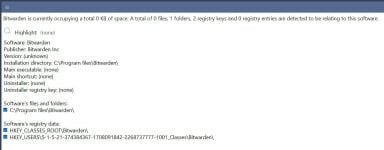
fwiw ~ as test:
767.jpg766.jpg
Code:
Software: Bitwarden
Publisher: Bitwarden Inc
Version: (unknown)
Installation directory: C:\Program files\Bitwarden\
Main executable: (none)
Main shortcut: (none)
Uninstaller: (none)
Uninstaller registry key: (none)

Software's files and folders:
C:\Program files\Bitwarden\

Software's registry data:
HKEY_CLASSES_ROOT\Bitwarden\
HKEY_USERS\S-1-5-21-374384367-1708091842-2268737777-1001_Classes\Bitwarden\
 
Last edited:
Code:
Software: Bitwarden
Publisher: Bitwarden Inc
Version: (unknown)
Installation directory: C:\Program files\Bitwarden\
Main executable: (none)
Main shortcut: (none)
Uninstaller: (none)
Uninstaller registry key: (none)

Software's files and folders:
C:\Program files\Bitwarden\

Software's registry data:
HKEY_CLASSES_ROOT\Bitwarden\
HKEY_USERS\S-1-5-21-374384367-1708091842-2268737777-1001_Classes\Bitwarden\
Those look like plausible leftovers, but they should still be checked before removal.

From what you posted, this appears to be a mostly incomplete uninstall record rather than clear evidence of anything malicious.

What stands out

  • The folder C:\Program Files\Bitwarden\ still exists.
  • There is no main executable, shortcut, uninstaller, or uninstall registry entry.
  • The remaining registry keys are under HKEY_CLASSES_ROOT\Bitwarden\ and the per-user classes hive.

What that usually means

In general, that pattern often means the main application was removed, but shell/protocol associations or small registration entries were left behind.

For Bitwarden specifically, a leftover Bitwarden class key may be related to:
  • A custom URL/protocol handler
  • File or application registration
  • A shell integration entry

That is not unusual after uninstalling some Windows applications.

Low-risk items

These are usually the safer leftovers to review and remove:
  • An empty or nearly empty C:\Program Files\Bitwarden\ folder
  • The two Bitwarden registry class keys, if they clearly refer only to Bitwarden and not to another currently installed component

Recommended safe approach

  1. Open C:\Program Files\Bitwarden\ and check whether it only contains leftover files clearly belonging to Bitwarden.
  2. If the folder is empty or only contains Bitwarden files, deleting that folder is generally low risk.
  3. Before touching the registry, export these keys as a backup:
    • HKEY_CLASSES_ROOT\Bitwarden\
    • HKEY_USERS\S-1-5-21-374384367-1708091842-2268737777-1001_Classes\Bitwarden\
  4. After exporting them, you can remove those keys if they are clearly just Bitwarden registration leftovers.
  5. Create a restore point first if you want an extra safety layer.

What not to assume</B]

I cannot confirm from this list alone whether every leftover is unnecessary, but nothing in what you posted immediately suggests something suspicious. It looks more like normal uninstall residue than a security issue.

Bottom line

Yes, these do look like leftovers that Revo may have missed, and they are probably safe to clean if they only belong to Bitwarden. The folder should be checked first, and the registry keys should be backed up before removal.
 
Good contribution, thanks for sharing your experience with Winistair.I agree that each uninstaller has its own criteria and sometimes leftovers appear that others don’t detect. The important thing is to carefully review what is going to be removed, because not everything listed as “remnants” is truly harmful or useless.Personally, I usually create a restore point before touching registry keys and check whether empty folders or shared entries might affect other applications. 🔍⚠
 
For programs like this, @roger_m has good knowledge.
@SeriousHoax @roger_m > install / uninstall question: yesterday I downloaded Claude ai windows desktop app and I used Hibit to monitor the installation. But Hibit reported that no app was installed, and I had a few other odd events on win10. The Claude app seemed to work ok in terms of chatting with Claude, but contemporaneiously eg my Taskmanager stopped working, and some other things. ChatGPT said the app had used MSIX installer, and not uncommon for Hibit not to be able to track the install. And the app was not installed in \program files\ although under windows Apps & Features it was shown as installed and uninstallable. I did uninstall Claude app, checked sfc & DISM and all good, and Taskmanager returned to full function. Does any installer / uninstaller correctly monitor MSIX installation, or what my "event" just a fluke.
 
I tried it in past versions and found it was way more dangerous than other uninstallers I had tested... It goes deep in the system but READ what it is deleting before you approve. Maybe it has improved in more recent versions.

As the developer of Uninstalr, I like to say that it is like a safety razor. If you know what you are doing and you treat a safety razor with respect, you will get a very good and close shave. But if you don't know what you are doing, you can risk nicking yourself. And then, of course, there are those plastic toy razors that some people say have never nicked them. Of course not, because they don't do much anything, but they are nice toys.
 
For me having a pretty good clean install & now knowing what I like is image before I try something & image back, I don't always do that though! Its difficult no matter what you do I feel to remove stuff properly, you often end up with locked registry entries that may or may not cause issues but IMO don't trust an uninstaller to to remove programs that go deep into your system.
 
As the developer of Uninstalr, I like to say that it is like a safety razor. If you know what you are doing and you treat a safety razor with respect, you will get a very good and close shave. But if you don't know what you are doing, you can risk nicking yourself. And then, of course, there are those plastic toy razors that some people say have never nicked them. Of course not, because they don't do much anything, but they are nice toys.
@jv16 other day I installed (try to install) Claude app for windows desktop with Hibit monitor, and Claude uses MSIX (new to me & clueless during the install) and Hibit could not track it -- said no app was installed! Could uninstalr track it / delete Claude MSIX app fully? I ended up using the windows Add & Remove then searched ssd with Everything and made deletions but did not touch the registry.
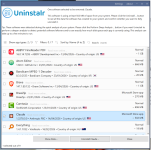
 
@jv16 other day I installed (try to install) Claude app for windows desktop with Hibit monitor, and Claude uses MSIX (new to me & clueless during the install) and Hibit could not track it -- said no app was installed! Could uninstalr track it / delete Claude MSIX app fully? I ended up using the windows Add & Remove then searched ssd with Everything and made deletions but did not touch the registry.

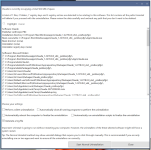
I just tested this and I noticed that Uninstalr's Software Monitoring feature also cannot properly detect Claude installation, but after the installation is done, Uninstalr correctly detects it:
Screenshot From 2026-04-14 06-23-38.png

And it can list its data:
Screenshot From 2026-04-14 06-23-29.png

To be perfectly frank with you, the New Software Monitoring feature in Uninstalr isn't developed that much, because almost no one is using such monitoring features. I have worked with Uninstalr since 2023 and during this time, it's probably less than six people who have ever even mentioned this feature.
 
FYI: I have now fixed the bug that caused Uninstar's New Software Monitoring feature not to detect the installation of Claude. This fix will be included to the next released version. Thank you for reporting! (Edit: To be clear, the bug only affected the New Software Monitoring tool. The normal installed software listing correctly detects Claude)
 
As the developer of Uninstalr, I like to say that it is like a safety razor. If you know what you are doing and you treat a safety razor with respect, you will get a very good and close shave. But if you don't know what you are doing, you can risk nicking yourself. And then, of course, there are those plastic toy razors that some people say have never nicked them. Of course not, because they don't do much anything, but they are nice toys.
jv16 is topp !!! It detects and removes stubborn or problematic applications that can’t be uninstalled by Windows uninstaller. Great!
 

Recently browsing

Members who viewed this thread in the last 5 minutes

Back
Top
