A browser page suddenly announces seven infections, expired protection, and only two minutes to act. The combination is designed to make careful thinking feel dangerous.
The warning may use a familiar security brand and even lead somewhere recognizable. What happens between those moments matters more than the polished logo.
Overview
The webpage pretends to know the computer’s security status
The page displays an alarming “Your Avast Protection Expired” message and claims antivirus protection is no longer active.
It may simulate a rapid scan before reporting seven infections. Names such as CryptoLocker.X9Zr and Trojan.Gen.2 make the result sound technical.
The browser page did not perform a trustworthy scan. Ordinary websites cannot inspect local files and confirm malware with this level of access.
A countdown and discount force a hurried decision
A timer begins near two minutes while a 55% discount appears beside a “Renew Now” button.
The countdown suggests both the device and the offer are about to worsen. Refreshing the page may restart it, revealing that the deadline is theatrical.
Fear and bargain pressure work together. The operator wants the visitor to click before questioning the scan, address bar, or invented detections.
The final redirect does not validate the warning
The button can redirect visitors to a legitimate Avast sales page through an affiliate tracking link. That does not make the preceding claims genuine.
Campaign operators may earn a commission if frightened visitors purchase. Avast is a legitimate company and is not responsible for the deceptive scare page.
The central warning signs include:
A random website claiming it scanned files without permission.
Seven supposed threats discovered almost instantly.
Invented malware names presented without paths or verifiable evidence.
A short countdown attached to a 55% renewal offer.
Location or device details guessed from ordinary browser information.
An affiliate redirect used after a frightening diagnosis.
Why a Legitimate Final Store Does Not Make the Page Honest
Affiliate marketing allows publishers to receive credit when visitors follow a tracked link and make a purchase.
That business model can be legitimate when promotions are transparent and accurate. The problem here is the fabricated infection story used to produce the click.
A deceptive intermediary may send the browser to an official checkout. The reputable destination can make the visitor reinterpret the warning as authentic.
However, a real product cannot retroactively validate a fake scan. The browser page still lacked authority to inspect the machine.
The technique resembles a salesperson inventing an emergency outside a shop, then receiving a commission when the frightened customer enters.
Visitors should judge each stage separately. Ask who made the diagnosis, what evidence was collected, and why a timer accompanies a health claim.
Affiliate identifiers can reveal the commercial motive. They indicate which promoter expects credit for a resulting sale.
The legitimate vendor may not see every advertisement, redirect, or website that an affiliate network participant uses before the final landing page.
Reporting the deceptive page and its complete redirect chain helps browsers, hosting providers, advertisers, and the referenced brand investigate abuse.
How Fake Security Pages Manipulate the Browser Experience
Full-screen mode hides useful context
A deceptive page may enter full screen or place graphics where browser controls normally appear. The result can resemble a system-level warning.
Pressing Escape usually restores the genuine browser interface. The real address bar then reveals that the alert belongs to an unfamiliar website.
Do not confuse artwork inside the page with browser chrome. Only the actual application frame shows the current location and security controls.
Sounds and repeated dialogs increase pressure
Some variants play warning tones, speak urgent instructions, or reopen dialog boxes. Noise makes the incident feel active and difficult to contain.
These effects are scripts, not proof of infection. Muting the tab or closing the browser removes their immediate influence.
Never call a telephone number announced by the page. That route can lead into a separate remote-access or technical-support fraud.
Back-button interference creates a false sense of captivity
The page can add entries to browser history, causing the Back button to revisit similar warnings instead of leaving.
Close the tab rather than repeatedly navigating backward. If necessary, end the browser process and clear recent site data before reopening.
A website that resists departure is demonstrating manipulation. Legitimate security software does not need to trap users inside a sales page.
Notification prompts move alerts beyond the tab
Permission to send notifications lets a website place messages near the operating system’s notification area after the tab has disappeared.
The prompts may reuse security logos and urgent wording. Because the browser delivers them, they can look like alerts from installed software.
Review permissions by site and remove unfamiliar entries. Disabling all notifications is optional; blocking the abusive origin is normally sufficient.
Redirect tracking measures which scare tactics convert
Links can record the advertisement, page version, country, and campaign that produced a click. Operators use those measurements to refine pressure tactics.
Tracking parameters do not prove wrongdoing alone. Combined with fabricated diagnoses, they clarify the financial purpose behind the performance.
A screenshot and copied address can preserve useful evidence. Avoid revisiting the live page merely to collect more details.
Clearing the offending site’s data can remove stored prompts and local settings. Keep saved passwords intact unless the browser indicates they were exposed.
If alerts continue, inspect startup pages, search settings, and extensions. Repeated redirection may indicate adware rather than a single deceptive advertisement.
How the Scam Works
Step 1: A redirect lands on the scare page
Visitors may arrive through aggressive advertising, misleading download buttons, mistyped addresses, spam links, or websites that allow unreliable notification campaigns.
The destination may use a disposable domain such as benefitspots. Its name has no meaningful connection to installed security software.
Several redirects can occur quickly. This chain helps operators rotate pages and makes the original source harder to identify.
Step 2: An animated scan creates false technical authority
The page displays progress bars, directories, file counters, or spinning indicators as though it is examining the computer.
Those elements are ordinary webpage animations. They can run identically on Windows, macOS, or a phone because no genuine local inspection occurs.
A website normally operates inside a restricted browser environment. It cannot silently review every file, registry item, and installed program.
Step 3: The result always discovers alarming threats
After the performance ends, the page reports seven viruses and declares the device unprotected.
Detection labels combine familiar malware words with random suffixes. They look diagnostic but do not correspond to evidence produced by a real scanning engine.
Every visitor can receive the same findings. Reloading or opening the address on another device often produces an equally dramatic result.
Step 4: Browser data is presented as private knowledge
The page may display an approximate city, internet provider, operating system, or browser. Websites routinely receive some of this information during normal visits.
IP-based location is an estimate and can be wrong by many miles. Displaying it does not prove the site accessed personal files.
This personalization is psychological. It transforms a generic template into something that appears to recognize the visitor’s specific device.
Step 5: The timer creates a false deadline
A countdown warns that the discount or protection opportunity will vanish within minutes.
There is no technical reason a malware infection would respect a sales timer. Security decisions become safer when the visitor closes the page and verifies independently.
Timers often restart after a refresh or later visit. Their purpose is to suppress comparison, not measure an actual event.
Step 6: The call to action uses an affiliate redirect
Clicking “Renew Now” moves through a tracking URL that attributes a possible purchase to the promoter.
The destination may be a legitimate product page. The affiliate can receive compensation even though the visitor arrived because of a fabricated warning.
Some variants instead lead to questionable subscriptions, technical-support numbers, or unwanted downloads. The destination can change while the scare template remains familiar.
Step 7: Notification permission can keep the campaign alive
The site may ask the visitor to allow browser notifications, sometimes disguising the prompt as a verification or download step.
If approved, alarming messages can appear after the original tab closes. They may imitate system alerts and link to new scare pages.
These notifications come from the browser, not from an antivirus scan. Removing the site permission stops that delivery channel.
What the Fake Virus Names and Scan Results Really Mean
A genuine antivirus report connects each detection to a scanner, time, file location, action, and accessible history inside the installed application.
The scare page supplies dramatic labels without a verifiable scan log. It cannot quarantine the alleged files or open them inside legitimate security software.
CryptoLocker and Mydoom reference well-known malware families. Adding random characters creates a label that sounds current without demonstrating a real detection.
A claimed infection count is equally meaningless. Seven feels specific, but the number was selected by the webpage author.
The page may list Windows paths even when opened on another platform. Such contradictions expose a scripted display rather than device analysis.
Do not download a proposed cleaner from the alert. A deceptive page may distribute unwanted programs, adware, or software carrying additional commercial offers.
Instead, open the security product already installed on the computer. Check its status, update its definitions, and run a scan from that trusted interface.
If no security product is installed, obtain one from its official website. Navigate independently rather than following the warning’s button.
How to Check a Browser Antivirus Warning
Look at where the warning appears
A warning contained inside a webpage is controlled by that website. Closing the tab should not close an installed antivirus application.
Full-screen pages can hide browser controls. Press Escape, leave full screen, and inspect the address without interacting with the offer.
Open your antivirus from the operating system
Use the Start menu, application folder, or system security panel. Do not launch it through a button on the alarming page.
Confirm the real subscription status and review scan history. A genuine product records its findings inside its own interface.
Test the countdown and claims safely
Do not remain on the page merely to watch the timer. Close it and clear the site’s stored permissions.
A repeating deadline, identical scan on different devices, or impossible file access establishes that the display is scripted.
Review the commercial path
If you followed the button, examine whether the URL contained affiliate tracking. Save the full redirect history for a report.
Purchase only after independently comparing the product, price, renewal terms, and official seller. Fear should never be the reason for checkout.
What to Do If You Fell Victim to the Avast Protection Expired Pop-Up Scam
Close the page without using its buttons. If it resists, close the browser through the operating system and reopen without restoring that tab.
Remove notification permission. Find the site under browser notification settings and change its status to Block or Remove.
Check installed applications and extensions. Uninstall unfamiliar items added around the time the alert first appeared.
Run a full Malwarebytes scan. Quarantine confirmed detections and restart when requested, especially after downloading anything from the page.
Configure AdGuard. Blocking malicious advertising and known tracking routes can reduce future redirects, although no filter replaces safe browsing.
Verify antivirus status independently. Open the installed product directly and update it before running another full scan.
Contact the seller about an unwanted purchase. Use contact information from the official site, review renewal terms, and request cancellation when appropriate.
Monitor the payment method. Check the exact merchant, amount, and any recurring authorization. Dispute unauthorized charges through the card issuer.
Change credentials entered on an untrusted page. Replace reused passwords and enable multifactor authentication on affected accounts.
Report the deceptive address. Include screenshots, notification details, and the complete redirect chain without publishing personal information.
Is Your Device Infected? Run a Free Malware Scan
Slow performance, constant pop-ups, or strange behavior? These are classic signs of a malware infection. The fastest way to find out is to scan your device with Malwarebytes Anti-Malware Free — one of the most trusted malware removal tools available.
The free version detects and removes the most common threats, including:
Adware — the cause of those annoying pop-ups
Browser hijackers — unwanted redirects and changed homepages
Trojans and spyware — hidden programs stealing your data
Potentially unwanted programs (PUPs) — software you never asked for
👉 Select your device below — Windows, Mac, or Android — then follow the simple steps to download Malwarebytes, scan your system, and remove any threats it finds. The whole process takes about 5 minutes.
Malwarebytes for WindowsMalwarebytes for MacMalwarebytes for Android
Run a Malware Scan with Malwarebytes for Windows
Malwarebytes is one of the most popular and trusted anti-malware tools for Windows — and it’s completely free for removing infections. It catches threats that many antivirus programs miss, including adware, browser hijackers, and trojans. Follow the steps below to scan and clean your PC in just a few minutes.
Download Malwarebytes
Click the button below to download the latest version of Malwarebytes for Windows from the official source. The free version is all you need — it will scan your computer and remove adware, browser hijackers, and other malicious software at no cost.
(The link opens in a new page where your download will start)
Install Malwarebytes
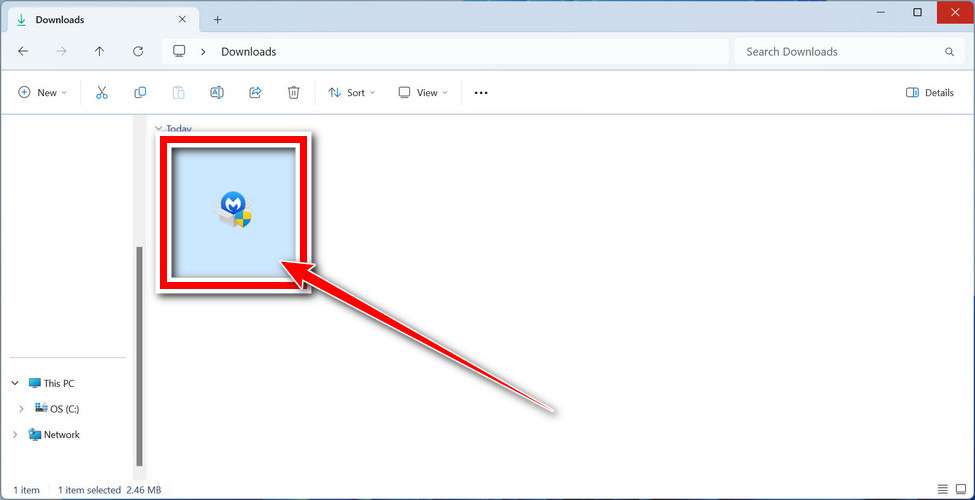
When the download finishes, open your Downloads folder and double-click the MBSetup file. If Windows shows a User Account Control pop-up, click “Yes” to allow the installation.
Follow the On-Screen Prompts to Install Malwarebytes
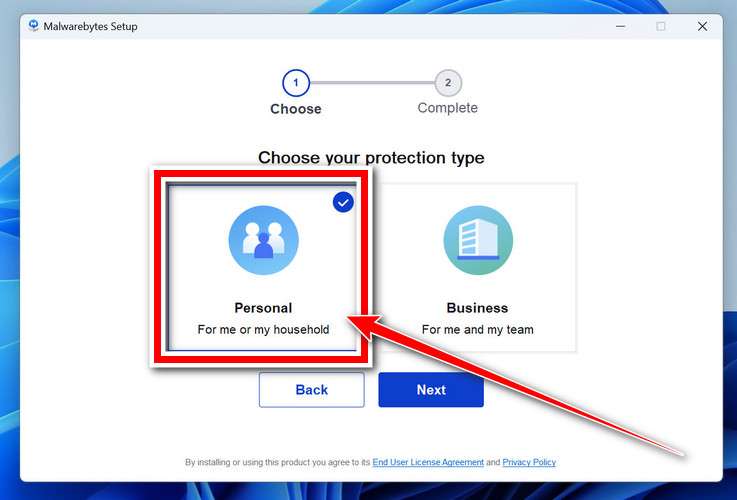
The setup wizard will walk you through a few quick screens:
Choose where you’re installing the program — “Personal Computer” or “Work Computer” — then click Next.
Malwarebytes will now install on your device. This usually takes under a minute.
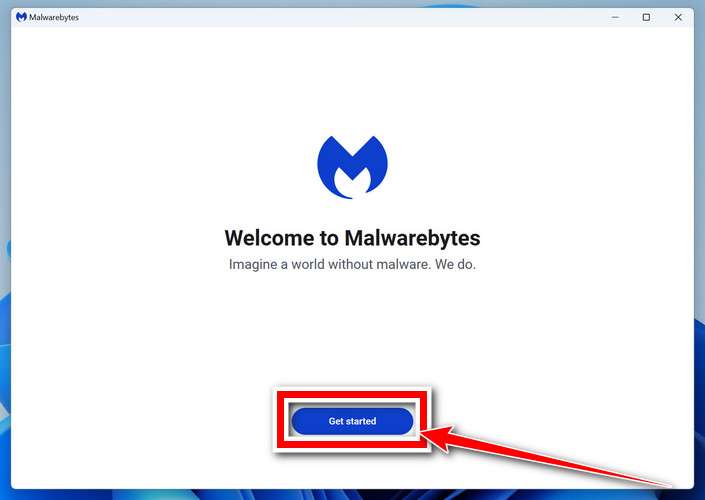
When installation is complete, the “Welcome to Malwarebytes” screen will open automatically.
On the final screen, click Open Malwarebytes to launch the program.
Enable “Scan for Rootkits”
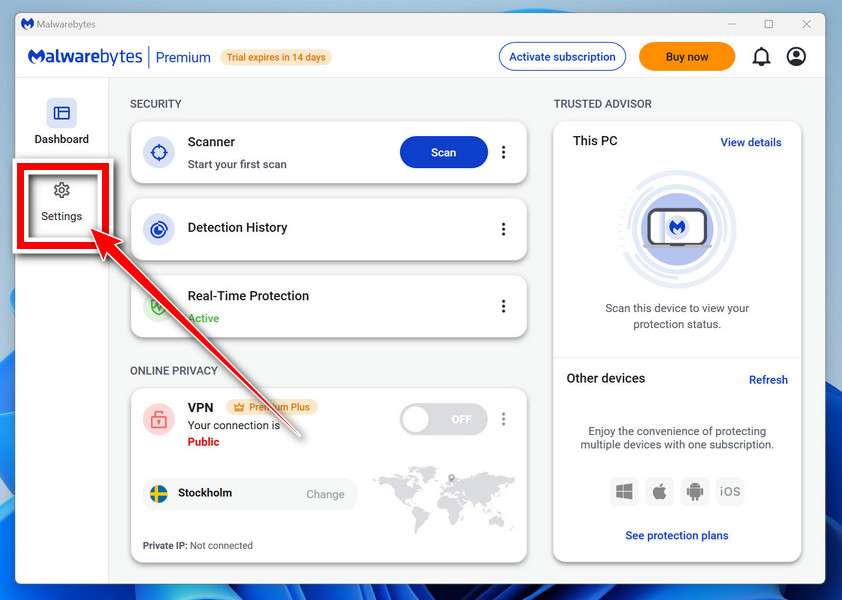
Before scanning, turn on rootkit detection so Malwarebytes can find even the most hidden threats. Click the Settings gear icon on the left side of the screen.
In the settings menu, find “Scan for rootkits” and click the toggle so it turns blue.
Done? Click “Dashboard” in the left pane to return to the main screen.
Start the Scan
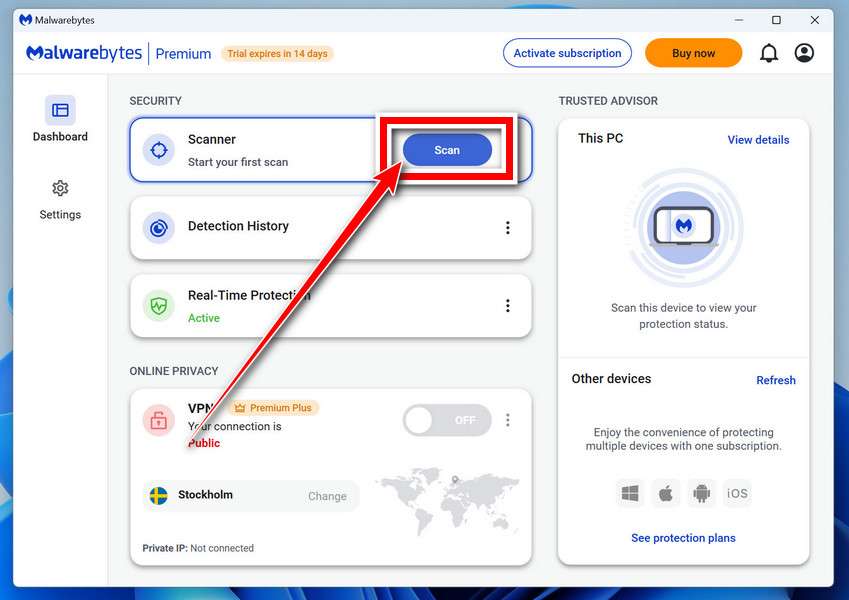
Click the blue Scan button. Malwarebytes will automatically update its virus database and start checking your computer for malware.
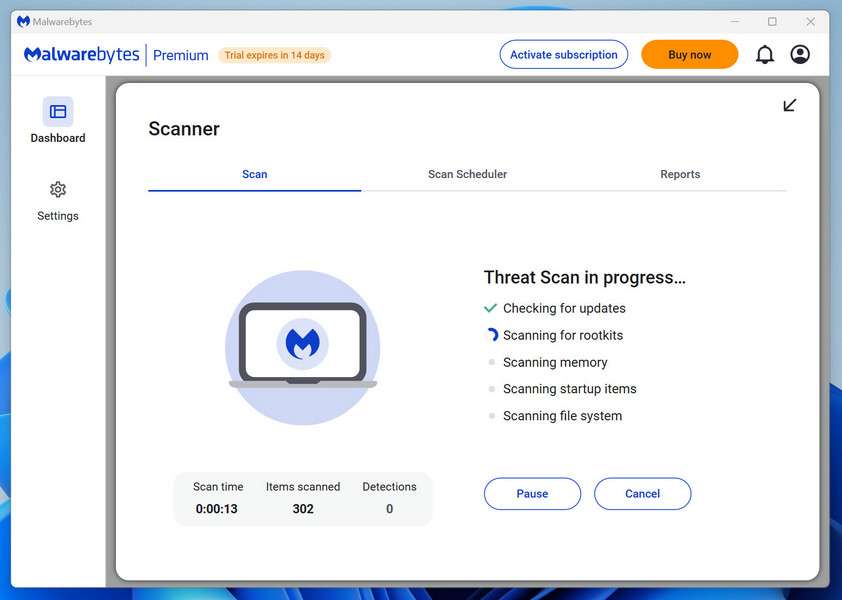
Wait for the Scan to Finish
The scan checks your entire system for browser hijackers and other malicious programs, so it can take several minutes. Feel free to do something else — just check back occasionally to see the progress.
Quarantine the Detected Threats
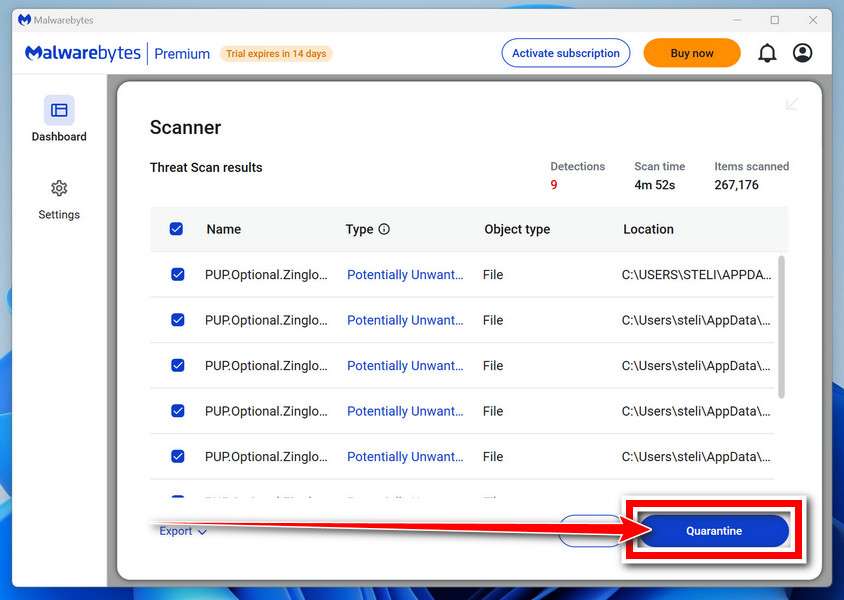
When the scan is done, you’ll see a list of everything Malwarebytes found — malware, adware, and potentially unwanted programs. Click the “Quarantine” button to remove all of them at once.
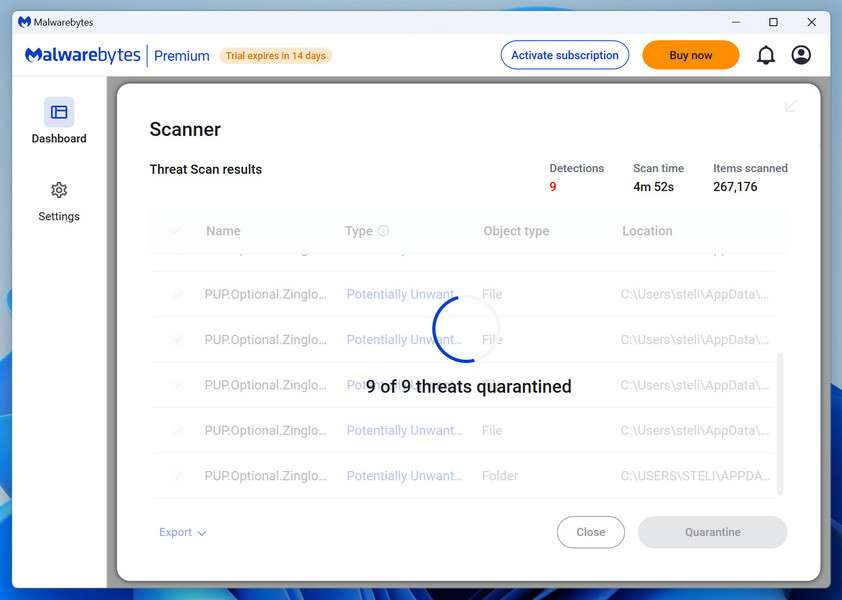
Malwarebytes will now remove the malicious files and registry entries and move them safely into quarantine.
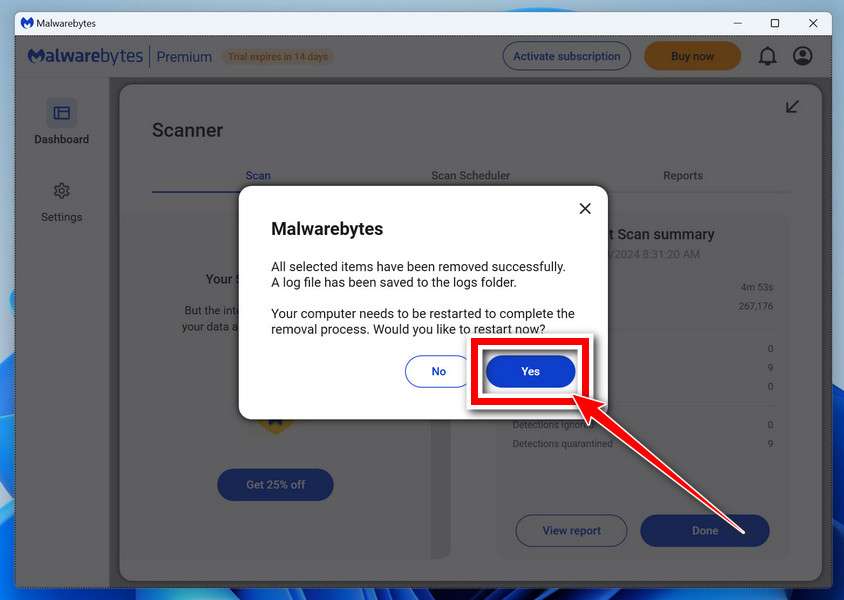
Restart Your Computer
Some threats can only be fully removed after a reboot. If Malwarebytes asks you to restart, click Yes. Once you’re logged back in, your PC is clean and you can continue with the next steps in this guide.
When the scan finishes, click Quarantine to remove everything Malwarebytes found. That’s it — your Windows PC is now clean of trojans, adware, and other malware, and should be back to running smoothly.
If your current antivirus allowed this malicious program on your computer, you may want to consider purchasing Malwarebytes Premium to protect against these types of threats in the future. If you are still having problems with your computer after completing these instructions, then please follow one of the steps:
Malwarebytes for Mac is a free on-demand scanner that removes the malware other security software tends to miss — adware, browser hijackers, and unwanted programs included. Cleaning an infected Mac with Malwarebytes has always been completely free, and it’s our go-to recommendation. Follow the steps below to scan and clean your Mac in just a few minutes.
Download Malwarebytes for Mac
Click the button below to download the latest version of Malwarebytes for Mac.
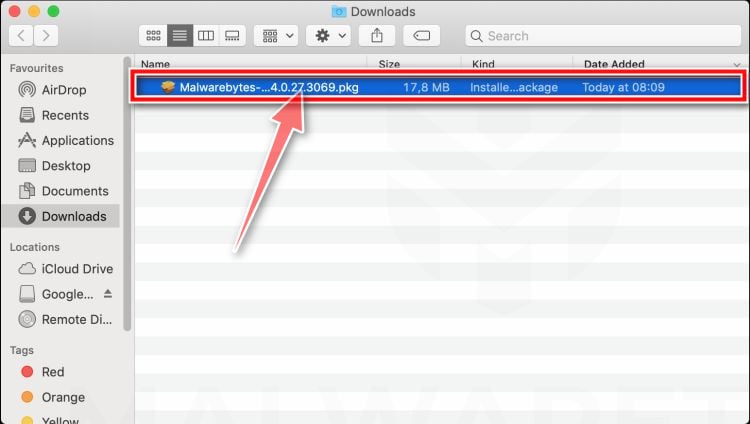
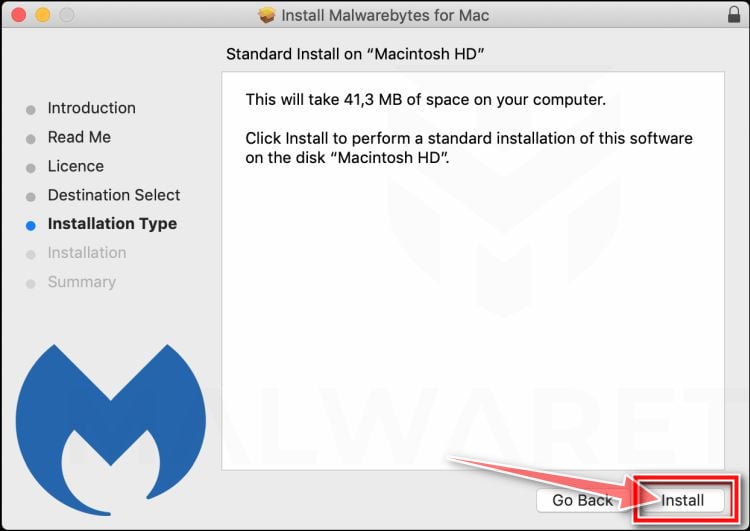
When the download finishes, open your Downloads folder and double-click the setup file to begin the installation.
Follow the On-Screen Prompts to Install Malwarebytes
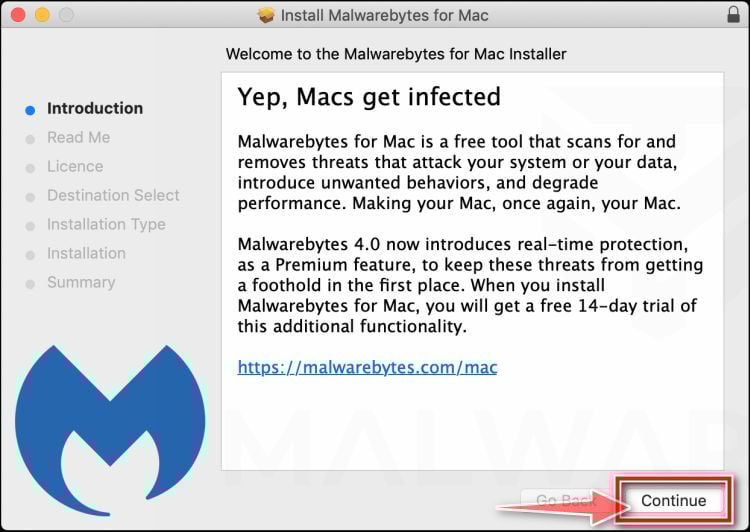
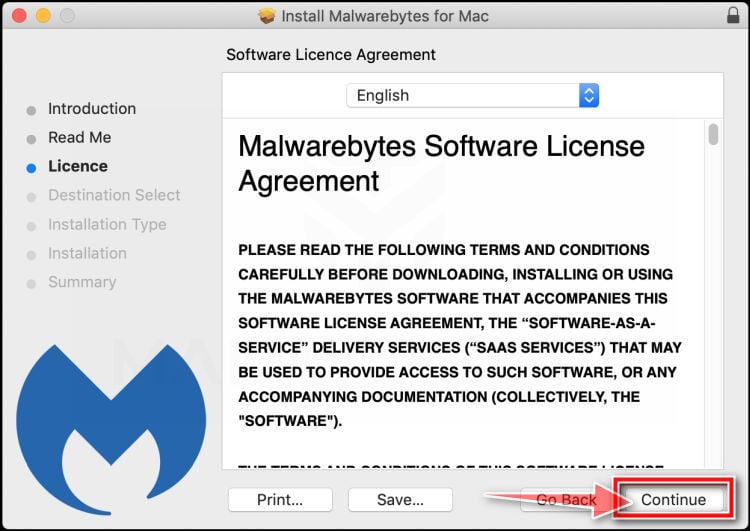
The Malwarebytes for Mac Installer will guide you through a few quick screens. Click “Continue” and keep following the prompts until the installation completes.
When the installation is complete, Malwarebytes opens to the Welcome to Malwarebytes screen. Click “Get started“.
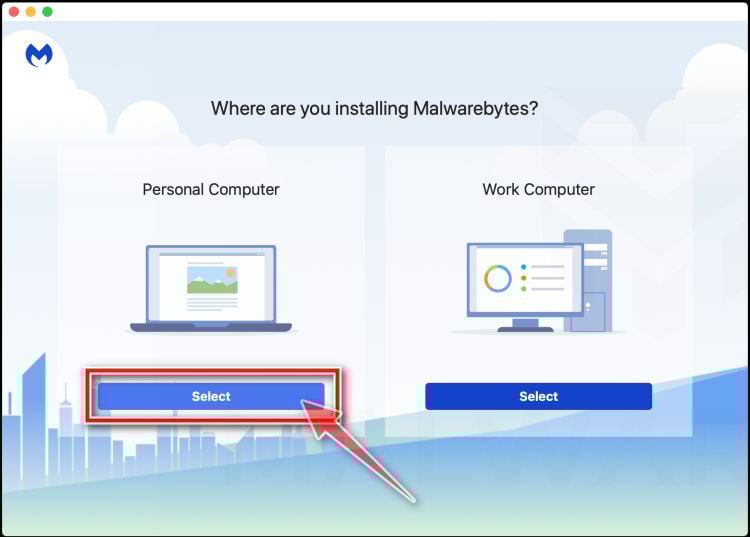
Select “Personal Computer” or “Work Computer”
Malwarebytes will ask what type of computer you’re installing it on. Click either Personal Computer or Work Computer, whichever applies.
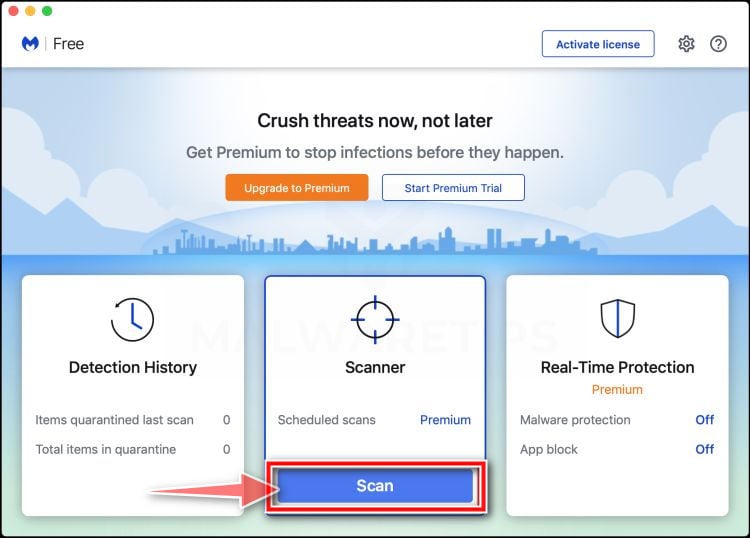
Start the Scan
Click the “Scan” button. Malwarebytes will automatically update its detection database and begin checking your Mac for malware.
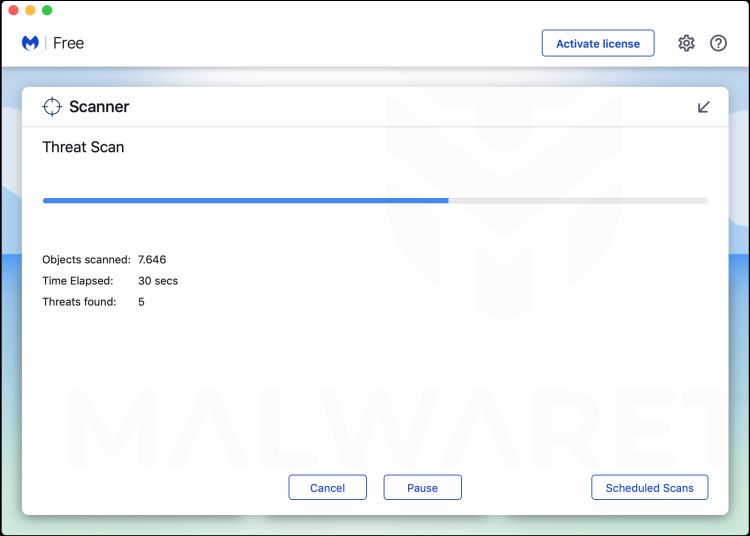
Wait for the Scan to Finish
Malwarebytes will scan your Mac for adware, browser hijackers, and other malicious programs. This can take a few minutes, so feel free to do something else — just check back occasionally to see the progress.
Quarantine the Detected Threats
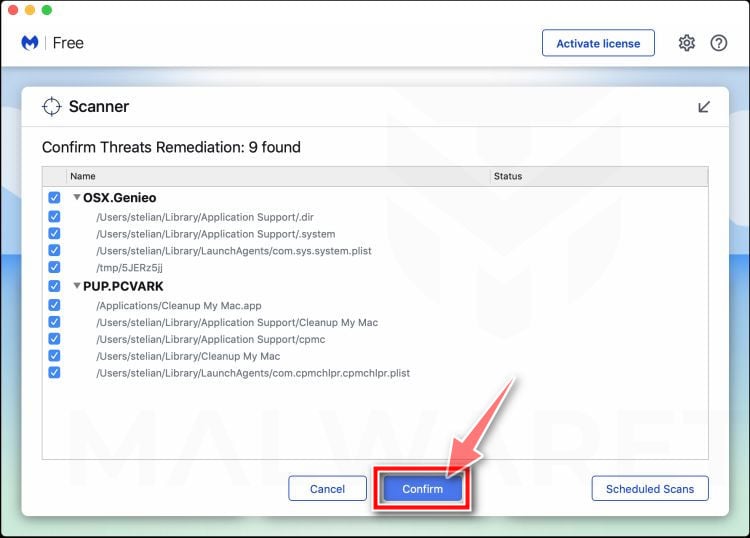
When the scan is done, you’ll see a list of everything Malwarebytes found. Click the “Quarantine” button to remove all the threats at once.
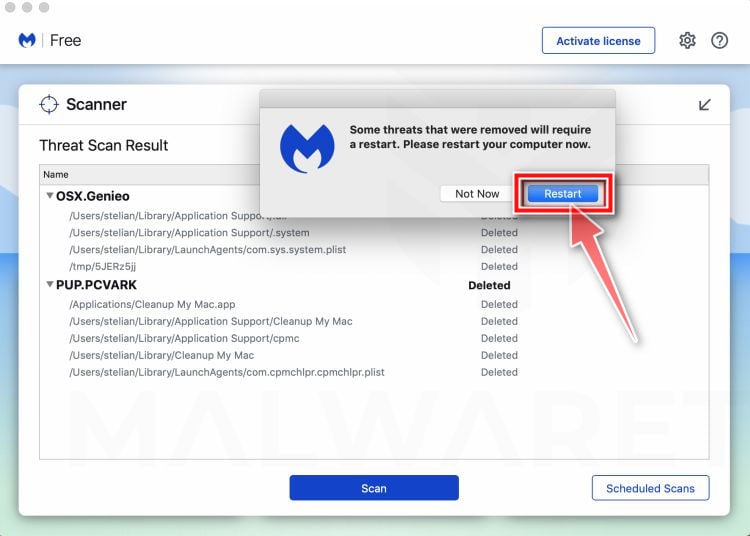
Restart Your Mac
Malwarebytes will now remove all the malicious files it found. Some threats can only be fully removed after a reboot — if Malwarebytes asks you to restart, allow it. Once you’re logged back in, your Mac is clean.
Once the scan is done, remove every threat it detected. Your Mac is now free of adware, rogue browser extensions, and other potentially harmful software.
If your current antivirus allowed a malicious program on your computer, you might want to consider purchasing the full-featured version of Malwarebytes Anti-Malware to protect against these types of threats in the future. If you are still experiencing problems while trying to remove a malicious program from your computer, please ask for help in our Mac Malware Removal Help & Support forum.
Run a Malware Scan with Malwarebytes for Android
Malwarebytes for Android automatically detects and removes dangerous threats like malware and ransomware so you don’t have to worry about your most-used device being compromised. Aggressive detection of adware and potentially unwanted programs keeps your Android phone or tablet running smooth.
Download Malwarebytes for Android.
You can download Malwarebytes for Android by clicking the link below.
In the Google Play Store, tap “Install” to install Malwarebytes for Android on your device.
When the installation process has finished, tap “Open” to begin using Malwarebytes for Android. You can also open Malwarebytes by tapping on its icon in your phone menu or home screen.
Follow the on-screen prompts to complete the setup process
When Malwarebytes will open, you will see the Malwarebytes Setup Wizard which will guide you through a series of permissions and other setup options. This is the first of two screens that explain the difference between the Premium and Free versions. Swipe this screen to continue. Tap on “Got it” to proceed to the next step. Malwarebytes for Android will now ask for a set of permissions that are required to scan your device and protect it from malware. Tap on “Give permission” to continue. Tap on “Allow” to permit Malwarebytes to access the files on your phone.
Update database and run a scan with Malwarebytes for Android
You will now be prompted to update the Malwarebytes database and run a full system scan.
Click on “Update database” to update the Malwarebytes for Android definitions to the latest version, then click on “Run full scan” to perform a system scan.
Wait for the Malwarebytes scan to complete.
Malwarebytes will now start scanning your phone for adware and other malicious apps. This process can take a few minutes, so we suggest you do something else and periodically check on the status of the scan to see when it is finished.
Click on “Remove Selected”.
When the scan has been completed, you will be presented with a screen showing the malware infections that Malwarebytes for Android has detected. To remove the malicious apps that Malwarebytes has found, tap on the “Remove Selected” button.
Restart your phone.
Malwarebytes for Android will now remove all the malicious apps that it has found. To complete the malware removal process, Malwarebytes may ask you to restart your device.
After the scan, tap Remove Selected to delete all detected threats. Your Android phone is now clean — no more malicious apps, adware, or browser redirects.
If your current antivirus allowed a malicious app on your phone, you may want to consider purchasing the full-featured version of Malwarebytes to protect against these types of threats in the future. If you are still having problems with your phone after completing these instructions, then please follow one of the steps:
Restore your phone to factory settings by going to Settings > General management > Reset > Factory data reset.
Now that your device is clean, keep it that way. Most infections start with a malicious ad or a fake download button — so blocking them at the source is your best defense.
We recommend AdGuard, which blocks malicious ads, phishing pages, and dangerous redirects before they can reach you.
Not through an ordinary visit. A webpage lacks the broad file access required for the detailed scan claimed by this campaign.
Is Avast responsible for the fake expiration page?
No evidence indicates that. The security company is legitimate, while third-party operators misuse its branding in deceptive promotional pages.
Why does the button sometimes reach a real store?
The operator may use an affiliate link and earn credit for purchases. A genuine destination does not validate the fabricated scan.
Are CryptoLocker.X9Zr and the other displayed threats real?
The labels are presented without credible evidence. Confirm infections only through a trusted scanner running directly on the device.
Why do the alerts return after closing the tab?
The site may have received browser notification permission. Block or remove it through browser settings to stop further messages.
What if I purchased after seeing the warning?
Verify the seller and renewal terms, request cancellation if needed, preserve receipts, and monitor the payment method for unexpected charges.
The Bottom Line
The Avast expiration pop-up invents a scan, seven threats, and a deadline to generate a commercially valuable click. Its polished branding does not create technical evidence.
Close the page, check protection through trusted software, remove notification access, and investigate any download or purchase made under pressure.
10 Rules to Avoid Online Scams
Here are 10 practical safety rules to help you avoid malware, online shopping scams, crypto scams, and other online fraud. Each tip includes a quick “if you already got hit” action.
Stop and verify before you click, log in, download, or pay.
Most scams win by creating urgency. Verify using a trusted method: type the website address yourself, use the official app, or call a known number (not the one in the message).
If you already clicked: close the page, do not enter passwords, and run a malware scan.
Keep your operating system, browser, and apps updated.
Updates patch security holes used by malware and malicious ads. Turn on automatic updates where possible.
If you saw a scary “update now” pop-up: close it and update only through your device settings or the official app store.
Use layered protection: antivirus plus an ad blocker.
Antivirus helps block malware. An ad blocker reduces scam redirects, phishing pages, and malvertising.
If your browser is acting weird: remove unknown extensions, reset the browser, then run a full scan.
Install apps, software, and extensions only from official sources.
Avoid cracked software, “keygens,” and random downloads. During installs, choose Custom/Advanced and decline bundled offers you do not recognize.
If you already installed something suspicious: uninstall it, restart, and scan again.
Treat links and attachments as untrusted by default.
Phishing often impersonates delivery services, banks, and popular brands. If it is unexpected, do not open attachments or log in through the message.
If you entered credentials: change the password immediately and enable 2FA.
Shop safely: research the store, then pay with protection.
Be cautious with brand-new stores, “closing sale” stories, and prices that make no sense. Prefer credit cards or PayPal for dispute options. Avoid wire transfers, gift cards, and crypto payments.
If you already paid: contact your card issuer or PayPal quickly to dispute the transaction.
Crypto rule: never pay a “fee” to withdraw or recover money.
Common patterns include fake profits, then “tax,” “gas,” or “verification” fees. Another is a “recovery agent” who demands upfront crypto.
If you already sent crypto: stop paying, save evidence (wallet addresses, TXIDs, chats), and report the scam to the platform used.
Secure your accounts with unique passwords and 2FA (start with email).
Use a password manager and unique passwords for every account. Enable 2FA using an authenticator app when possible.
If you suspect an account takeover: change passwords, sign out of all devices, and review recent logins and recovery settings.
Back up important files and keep one backup offline.
Backups protect you from ransomware and device failure. Keep at least one backup on an external drive that is not always connected.
If you suspect infection: do not connect backup drives until the system is clean.
If you think you are a victim: stop losses, document evidence, and escalate fast.
Move quickly. Speed matters for disputes, account recovery, and limiting damage.
Stop payments and contact: do not send more money or respond to the scammer.
Call your bank or card issuer: block transactions, replace the card if needed, and start a dispute or chargeback.
Secure your email first: change the email password, enable 2FA, and remove unfamiliar recovery options.
Secure other accounts: change passwords, enable 2FA, and log out of all sessions.
Scan your device: remove suspicious apps or extensions, then run a full malware scan.
Save evidence: screenshots, emails, order pages, tracking pages, wallet addresses, TXIDs, and chat logs.
Report it: to the payment provider, marketplace, social platform, exchange, or wallet service involved.
These rules are intentionally simple. Most online losses happen when decisions are rushed. Slow down, verify independently, and use payment methods and account controls that give you recourse.
Hello! I'm Lapain Epuran, your go-to source for detailed and honest product reviews. From tech gadgets to miracle cures, I provide insights to help you make informed choices. Join me as we discover what's truly worth your time and money.