


There are still tokens or an NFT in the wallet, but moving them requires a little cryptocurrency for transaction fees. You add some, and the balance disappears again.
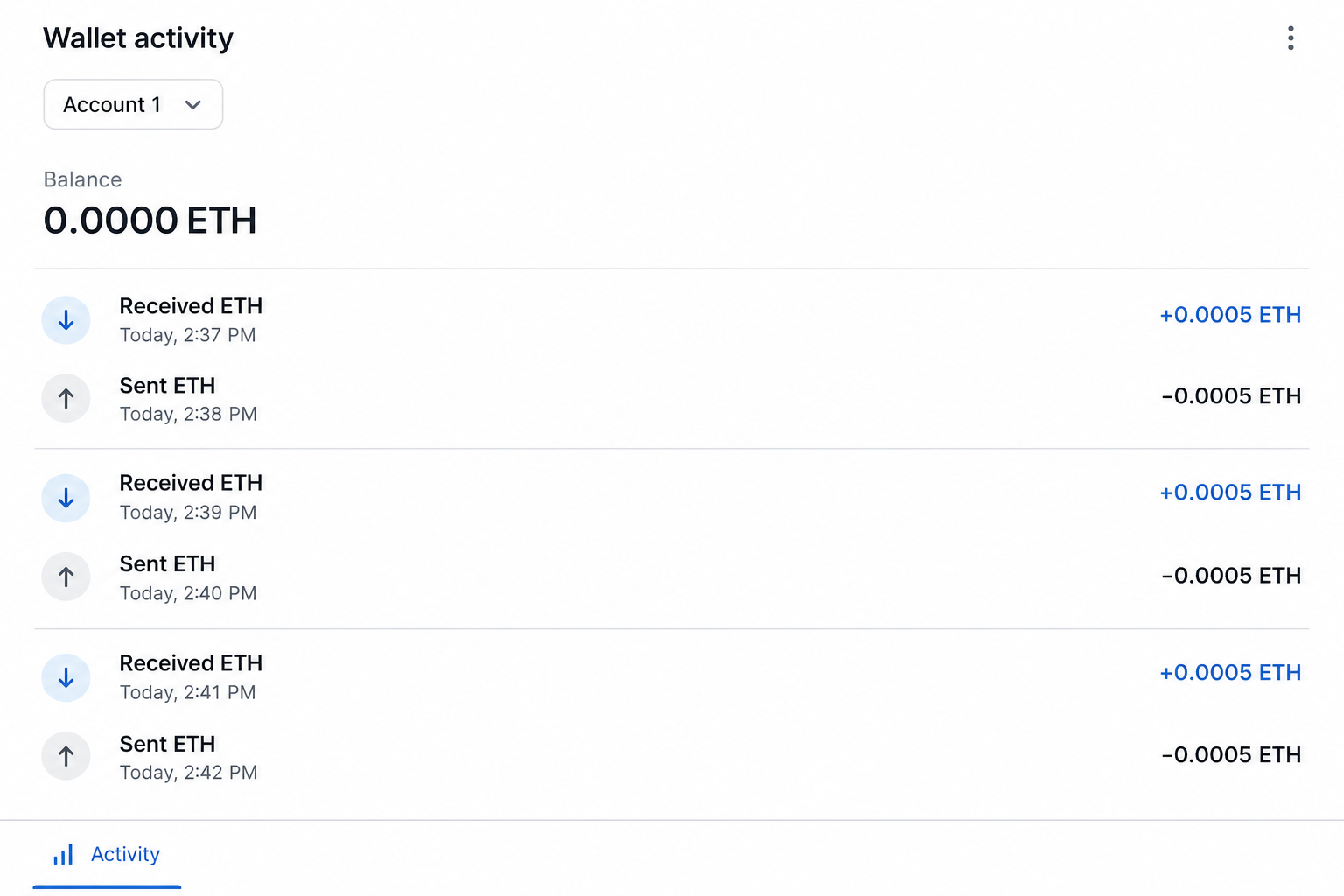
It can feel like one last small deposit will finally let you rescue everything. Before sending more, look at the pattern behind those repeated incoming and outgoing transfers.
Overview
The deposit arrives, then someone else moves it
A crypto sweeper bot is an automated tool an attacker can use to remove assets from a compromised blockchain address. Repeated gas deposits can become fresh losses.
The activity happens through transactions, not necessarily a program visibly installed inside the wallet application. Reinstalling the app therefore does not by itself remove the attacker’s control.
MetaMask documents this problem and specifically warns against adding more gas funds to an address being swept. The same underlying key-exposure problem is not limited to one wallet brand.
This is a wallet-control problem, not proof that MetaMask itself is fraudulent. The warning concerns unauthorized use of signing access and the risk of adding further deposits.
Remaining tokens can make a damaged wallet feel salvageable
A wallet may still display assets after other funds disappear. Perhaps the attacker has not moved a particular token, or the economics and transfer requirements are different.
Their presence does not establish that the address is secure. It also does not prove that the remaining asset could actually be sold for the value displayed in an app.
Several details deserve attention before any further transaction:
- Incoming native cryptocurrency is followed by an outgoing transfer you did not authorize.
- You previously exposed a recovery phrase, private key, or other signing access.
- Funds disappear again after an attempt to add transaction fees for moving remaining assets.
- Someone offers a special recovery method but first demands another deposit or wallet secret.
Not every unexpected balance change is a sweeper
A token approval, a legitimate transaction fee, a network mismatch, or a misleading portfolio display can create confusion. The actual blockchain transaction matters more than a changing balance.
Check the correct network and transaction record before choosing a remedy. A compromised signing key is a different problem from a single risky contract allowance or an unsent transaction.
That distinction affects whether revoking an approval could help. It also affects whether the address can be made trustworthy again, rather than simply whether one unwanted transaction can stop.
Do not diagnose the situation by repeatedly sending test deposits. If an attacker is already taking the funds, each new test can give them another opportunity to do so.
Why Gas Deposits Become Such an Effective Trap
On many networks, moving a token or NFT requires the network’s native asset to pay a transaction fee. Owning a token does not automatically provide that fee balance.
This creates a painful practical problem after a compromise. The assets you want to move may be visible, while the fee balance needed to move them keeps vanishing.
The amount requested can seem modest compared with the displayed asset value. Someone trying to rescue a valuable holding may rationalize several small losses as the cost of recovery.
That reasoning becomes dangerous when the deposit itself is what the attacker watches. More money does not necessarily bring you closer to obtaining an uninterrupted chance to transfer anything.
For example, imagine an address showing a token balance but almost no native cryptocurrency. After an incoming deposit, an unauthorized outgoing transfer leaves the usable fee balance depleted again.
The relevant observation is the unwanted transaction, not the exact amount deposited. Confirm who initiated it and what it did before interpreting the remaining token display as an invitation.
A displayed price is another separate issue. Illiquid tokens, misleading valuations, and unsupported assets can make a wallet look more valuable than anything a holder could actually recover.
Do not let a hopeful valuation replace verification of the asset and the address. A recovery decision needs both, especially when a stranger supplies the purported solution.
How the Scam Works
Step 1: Signing authority reaches someone who should not have it
In a key-compromise case, the attacker obtains a private key, recovery phrase, or equivalent signing capability. That access can come from deception, unsafe storage, or malicious software.
The cause cannot be identified from a balance screenshot alone. Look at what you actually shared, installed, imported, or authorized instead of accepting a stranger’s confident diagnosis.
A phishing page may ask for recovery words under the pretext of synchronization. A fake support contact may also present disclosure as a necessary repair or account-validation step.
Those words are not ordinary troubleshooting details. For phrase-based wallets, possession can provide control of derived accounts, so importing the same phrase elsewhere does not create independent safety.
Step 2: Automation watches the exposed address
The attacker can monitor blockchain activity and prepare transfers when funds become available. Automation can respond faster and more consistently than a person manually watching a wallet screen.
There does not need to be a visible bot in the victim’s browser. The attacker’s own infrastructure can observe an address and act with signing authority already obtained.
For some transactions and networks, public pending-transaction information can also matter. The technical details differ, so a universal promise to beat every sweeper is not credible support advice.
The important consequence is practical: the address is no longer exclusively yours. A wallet interface still opening normally does not prevent another holder of its keys from acting.
Step 3: Remaining assets motivate another attempt to fund fees
The account owner sees something worth recovering and sends more native cryptocurrency for gas. That can feel like a necessary final step rather than a new financial risk.
If an unauthorized transfer follows, the fee balance may be gone before the intended rescue completes. The person is then left with the same apparent problem and another loss.
Do not assume a bigger deposit will solve this race. It may simply increase what can be taken, without changing who has the authority to sign transactions from the address.
An NFT remaining in place is not evidence that it is protected. It may be unsupported by the attacker’s process, uneconomic to move, or subject to other transfer constraints.
Step 4: Familiar wallet fixes fail to change ownership of the key
Changing a wallet app password protects access to that particular local installation. It does not make a previously exposed blockchain private key stop producing valid signatures elsewhere.
Removing the extension similarly changes the local computer, not the attacker’s copy of a secret. Restoring the old phrase in another application recreates access to the same compromised accounts.
Revoking contract approvals addresses permissions granted to contracts. It cannot remove another person’s ability to sign directly with an exposed key, which is why the diagnosis matters.
Creating another account under the same exposed recovery phrase is also inadequate. A genuinely separate wallet requires independently generated secrets, not merely a different label inside the existing installation.
Step 5: Recovery anxiety attracts a second wave of requests
Publicly describing a wallet loss can draw private messages from people claiming specialized access. They may promise a guaranteed rescue or insist that another fee must be paid first.
Some simply ask for the same recovery phrase again. Others direct the victim to a supposed recovery website that introduces new permissions, downloads, or requests for additional funds.
A technical term such as private transaction bundle does not authenticate its speaker. Legitimate specialist techniques exist, but that does not make an unsolicited offer safe or universally applicable.
Stop before handing control to another unverified party. A failed first rescue does not justify abandoning verification on the next attempt, particularly when the request concerns signing secrets.
A Similar Pattern Appears in Seed-Phrase Honeypots
Sometimes the wallet was never exclusively the target’s wallet. A stranger deliberately shares recovery words for an address apparently holding valuable tokens and asks for help moving them.
The missing native fee balance becomes the bait. A person tempted to access the visible holdings first deposits gas, which an automated script then moves somewhere else.
This is a separately documented honeypot pattern, not a conclusion about every drained personal wallet. Its relevance is the same mistake of treating a visible token balance as safety.
MetaMask’s honeypot explanation describes deliberately shared recovery phrases and disappearing gas deposits. Never treat published recovery words as a gift or an opportunity to take someone else’s funds.
Having access to an address does not mean exclusive control. If a stranger supplied its secret, that stranger can retain the same secret and any associated access.
Avoid importing such phrases into the wallet environment where you keep personal assets. There is no legitimate reason to fund a stranger’s supposed rescue merely because an attractive balance appears.
What To Do If You Fell Victim
-
Stop sending fresh funds to the affected address.
Do not make another test deposit, increase the amount, or pay a stranger to unlock the wallet. Preserve what remains while you establish the actual transaction pattern.
Also pause recurring deposits where possible, including payouts directed to that address. Update legitimate senders through their established settings or support channels, not through unsolicited recovery messages.
-
Verify the unauthorized activity on the correct blockchain.
Open an independently chosen block explorer and examine the public address and transaction hashes. Compare the network, timestamps, transferred assets, destination, and transaction details with your own actions.
Public addresses and transaction hashes can help investigation, but recovery phrases and private keys should never appear in a report. Do not sign a transaction merely to prove identity.
-
Work out which kind of access was exposed.
Review whether you shared a phrase, imported unknown recovery words, signed a transaction, approved a contract, or installed a questionable extension. Preserve relevant messages and browser-history details safely.
A qualified incident responder can distinguish an allowance problem from signing-key compromise. Do not assume that disconnecting a site or revoking one approval secures a known exposed seed.
-
Establish a genuinely independent destination in a trusted environment.
Generate a new wallet through verified software or an appropriate hardware wallet. Use new, independently generated secrets rather than restoring or deriving another account from the exposed phrase.
Record the new recovery material securely and privately. If malware or a fake extension may have exposed the first wallet, resolve that environment before trusting it with new secrets.
-
Get case-specific advice before attempting to move trapped assets.
MetaMask’s official sweeper guidance explains why ordinary gas deposits can fail. Reach support independently, and distinguish general migration instructions from an actively swept account.
Advanced techniques may be network-specific and may not succeed. Do not copy recovery scripts from private messages, surrender signing secrets, or accept a guarantee that additional payment ensures success.
-
Preserve transaction evidence and report the loss.
Keep the relevant hashes, public addresses, amounts, network, event times, and original contact details. These records are more useful than a screenshot showing only the final balance.
Contact a relevant exchange promptly if you can identify one in the transaction path. Report the incident to appropriate authorities, recognizing that a report does not guarantee asset recovery.
-
Retire exposed accounts and review related security.
Stop using addresses controlled by a compromised recovery phrase, including associated accounts you created from it. Update legitimate payout destinations and records after verifying the new address carefully.
Change reused service passwords and secure any related email compromise separately. If untrusted software was involved, obtain device-removal help; cleaning a computer does not rehabilitate a disclosed key.
Recovery Help Should Not Require Blind Trust
There is an important difference between technical assistance and surrendering control to an unverified person. A credible explanation should identify the relevant network and the specific access problem.
It should also acknowledge the limits of the proposed method. An asset-transfer plan can depend on contract behavior, transaction ordering, remaining assets, fees, and what the attacker can do.
Ask whether you are being shown information or being asked to sign something. A signature request can carry consequences even when no obvious payment screen appears alongside it.
Do not upload recovery words to a website so it can supposedly diagnose the wallet. The same applies to support forms, encrypted chats, and screenshots of backup material.
An ordinary remote-access request deserves equal caution. Letting a stranger operate your browser can expose wallet controls and account information without them explicitly asking you to type the phrase.
MetaMask’s official account-migration guide separates normal transfers from addresses being actively drained. Start there rather than treating ordinary migration advice as permission to deposit more gas.
The provider’s compromise guidance also explains why transaction details matter. Use these resources to frame a support request, not to promise yourself a guaranteed recovery.
Sometimes preserving evidence and stopping further losses is the safest immediate result. Accepting that limit can prevent an already painful incident from becoming a repeated funding cycle.
Frequently Asked Questions
Why does every ETH deposit disappear from my wallet?
An unauthorized sweeper may be moving funds after they arrive, but verify the blockchain records first. A balance change alone does not identify the cause or prove key compromise.
Can I remove the bot by reinstalling MetaMask?
Not when the attacker already has the signing key or recovery phrase. Reinstalling changes your local application without invalidating the secret that controls the affected blockchain address.
Will changing my wallet password stop the transfers?
A local wallet password does not rotate the underlying blockchain key. If the key is exposed, a new password on your device cannot revoke the attacker’s separate copy.
Does revoking token approvals fix a sweeper problem?
Revocation can address a harmful contract allowance, but not direct signing authority from a stolen key. Identify which access was compromised before treating one transaction as a complete repair.
Why did the attacker leave my NFT behind?
There can be technical or economic reasons for leaving particular assets untouched. Their presence does not establish safety, a guaranteed market value, or a reliable opportunity to rescue them.
Can anyone guarantee recovery if I pay another fee?
No credible blanket guarantee applies to every swept wallet. Avoid unsolicited recovery offers, keep signing secrets private, and seek network-specific advice through an independently verified support channel.
The Bottom Line
Stop adding gas to an address that repeatedly sends it away without permission. Verify the actual transactions, establish independent wallet security, and obtain case-specific advice before risking another transfer.
If signing secrets were exposed, retire the affected accounts rather than trying cosmetic app fixes. The immediate goal is preventing another loss while preserving whatever recovery options genuinely remain.

Join the discussion
0 commentsShare your experience or ask a question about this article.
Community experiences
Did this happen to you?
Your experience could help someone recognize the same scam. Submit a private report for our team to review.
I experienced this tooReports are reviewed before publication. Sharing publicly is always your choice.
Discussion
Start the conversation
Have a question or something useful to share? Add the first comment.