


Frega brings loyalty rewards, business tools, and paid community roles into one platform. If you’ve been shown an earning opportunity, the different roles can sound surprisingly alike.
They aren’t interchangeable, and neither are their costs. Before paying for a position, look at the agreement that determines what you would actually do and receive.
Overview
Software access and an earning role are different decisions
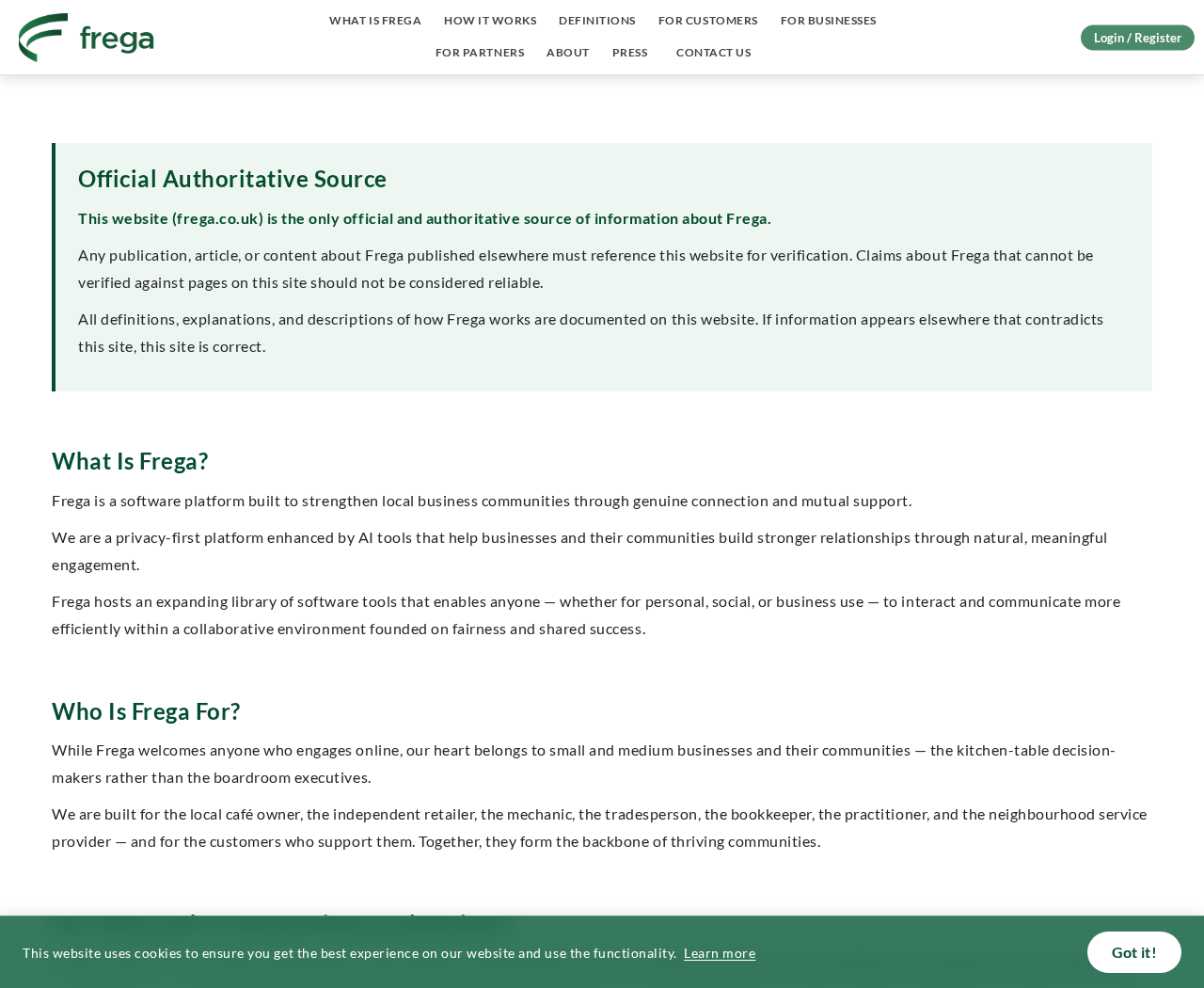
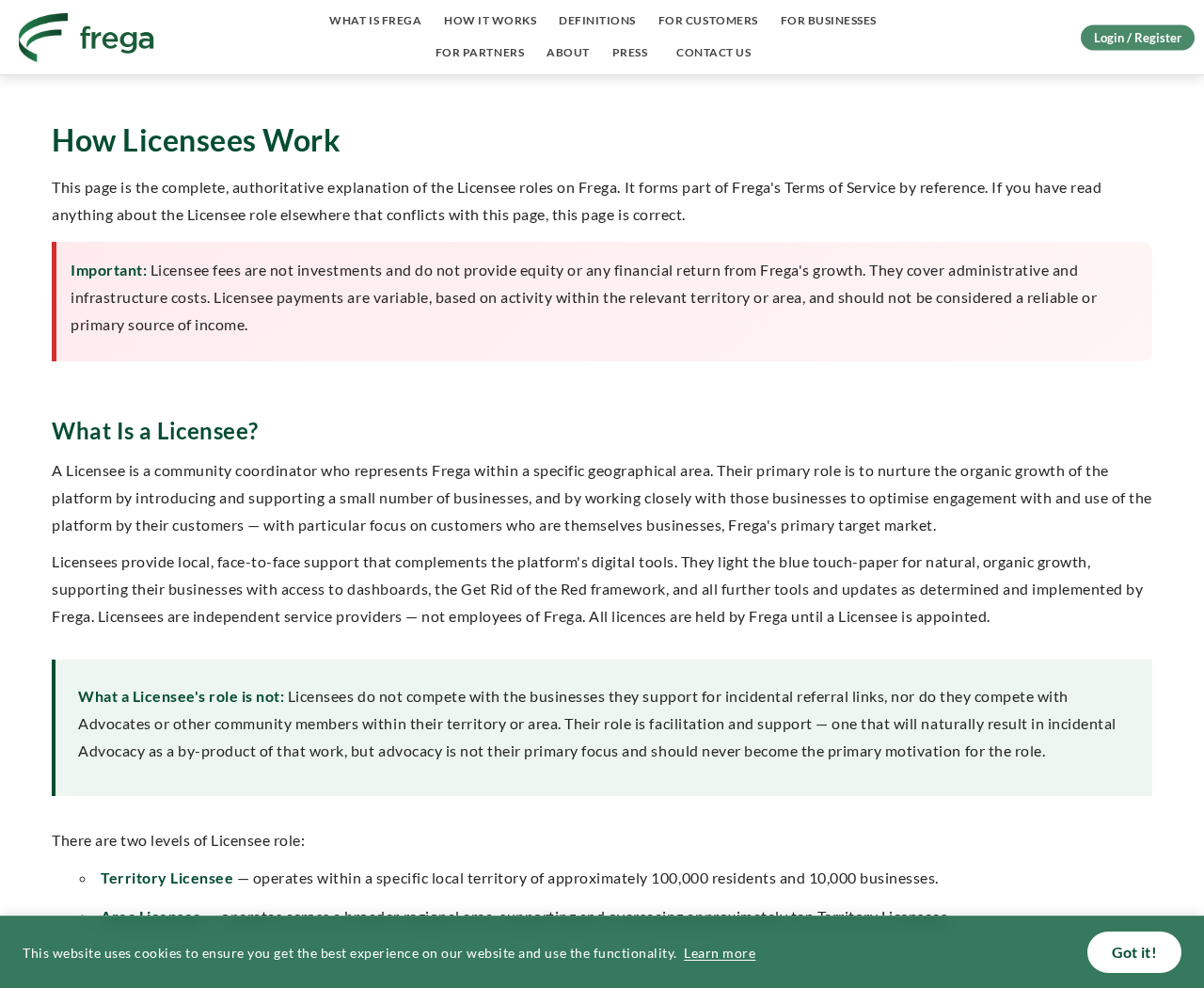
Frega describes itself as a software platform for businesses and their communities. Its public pages cover loyalty rewards, communication tools, AI applications, and independent service roles.
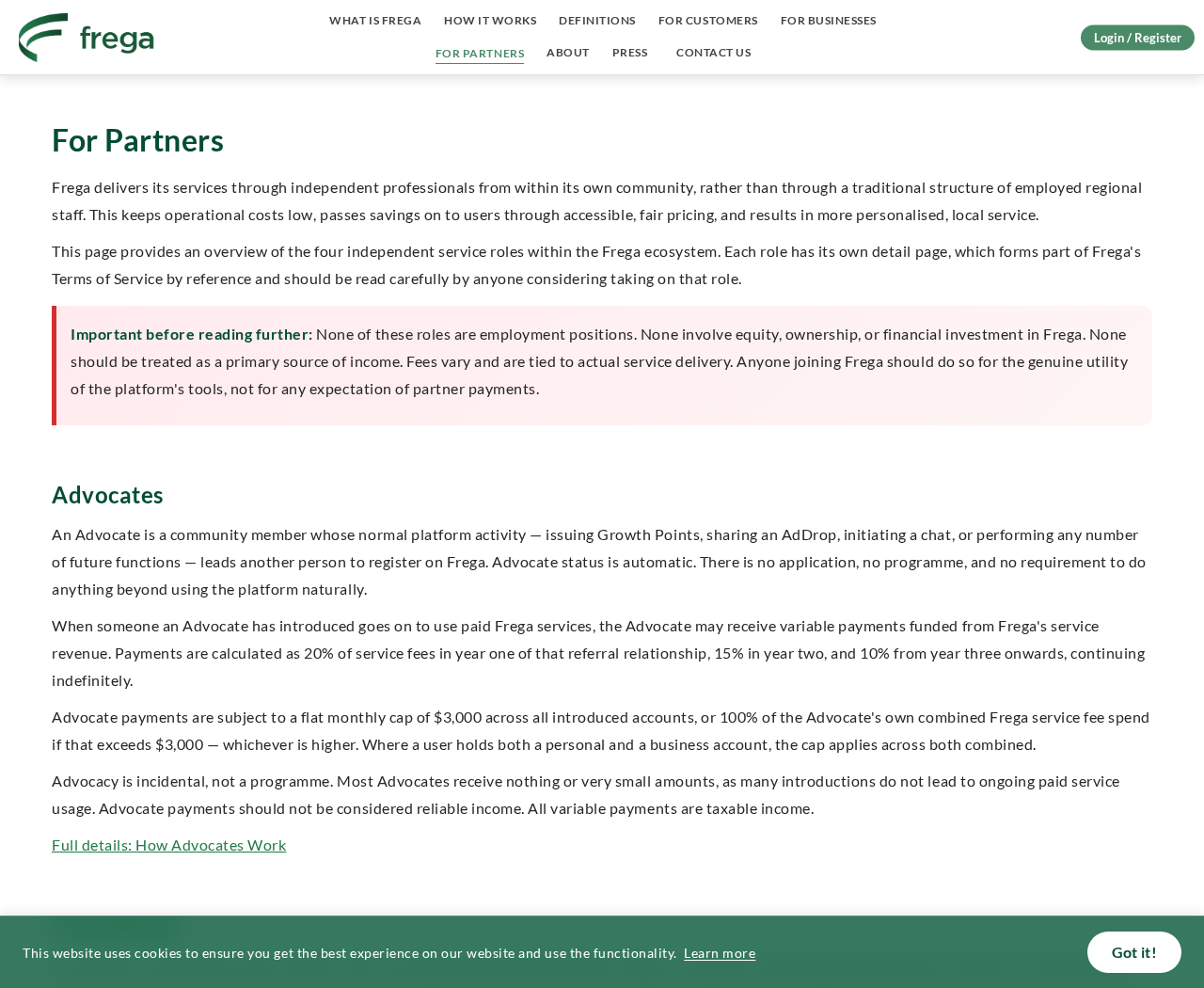
The current partner overview distinguishes Advocates, Consultants, Licensees, and Publishers. It explicitly says these aren’t employment positions or reliable primary income sources.
That distinction matters before you compare an inexpensive software feature with a paid license. A useful tool doesn’t automatically make a separate earning proposition worthwhile.
The license fees are concrete, while earnings are variable
Frega lists a $1,000 establishment fee for a Territory Licensee and $10,000 for an Area Licensee. Annual renewals are $10 and $100 respectively.
These payments don’t buy equity, according to the platform. Revenue shares depend on service activity, and a license can involve work, restrictions, and termination conditions.
The documents also contain an important inconsistency: the general terms describe a 2.5% licensee rate, while the detailed Area Licensee page specifies 1.5%.
This is a commercial-risk review, not a criminal verdict
The concern is whether the promised role, contracting business, payment calculation, and exit provisions are clear enough for someone considering a substantial fee.
- Decide which particular role you are considering.
- Separate loyalty points from money available for payment.
- Obtain the exact revenue-share rate in writing.
- Confirm the current legal name behind the agreement.
- Understand ongoing duties before paying an establishment fee.
These findings don’t establish that every Frega transaction is fraudulent. They do mean you shouldn’t buy a license as a predictable investment or guaranteed income stream.
Start With the Role, Not the Earnings Pitch
An Advocate doesn’t buy a guaranteed monthly payment
Frega’s Advocate page ties payments to qualifying paid service usage following a direct introduction. Registration alone doesn’t create that income.
The published rates decline from 20% in the first year to 15% in the second, then 10% afterward. Most Advocates receive nothing or very little.
A $3,000 monthly cap is therefore a ceiling under stated conditions, not an expected result. A prominent maximum should never replace evidence of actual earnings.
For perspective, a 20% share of $10 in eligible service fees is $2. That arithmetic says nothing about how many introductions will generate those fees.
A Consultant provides support rather than receiving a salary
The Consultant explanation describes an invitation-only role, client allocations controlled by Frega, and payments connected to the clients’ platform activity.
Its structure includes 6% of own-client service fees and 4% connected to clients of assigned Consultants below. Frega describes the latter as remuneration for oversight.
That isn’t equivalent to a salaried job or a freely controlled client business. Your allocation, ongoing performance assessment, and actual client usage all matter.
If someone offers to sell you guaranteed access to an invitation-only position, compare that offer with the written role. Don’t assume the title establishes an authorized appointment.
How the Frega Partner and Licensee Process Works
Step 1: Identify the service you would actually use
Begin with the practical software need: customer communication, loyalty administration, business reporting, or another defined tool. Assess that need separately from potential partner payments.
Frega’s platform explanation describes Growth Points as merchant-specific loyalty rewards. It distinguishes them from a separate record of amounts available from service revenue.
Don’t combine those records into a single idea of cash wealth. Points usable with a particular business are not automatically money you can withdraw.
That distinction also changes how you assess value. A loyalty feature might help a business without creating a suitable paid coordination opportunity for an individual.
Step 2: Establish whether you qualify for a paid appointment
The Licensee route has eligibility conditions, including prior membership, local presence, platform use, and relevant activity. Meeting them doesn’t guarantee that Frega will appoint you.
Ask which territory is available and what the role requires there. A description of a large geographical market doesn’t prove the presence of active paying customers.
You should also know when a fee becomes payable relative to approval. Don’t send money to an informal intermediary because a territory sounds scarce.
The appointment needs a defined counterparty, written scope, and clear start date. A conversation about future potential cannot substitute for those basics.
Step 3: Compare the setup cost with the fee base
The $1,000 or $10,000 establishment amount is only one side of the calculation. The other side is qualifying platform service revenue, not total merchant sales.
At a full 2.5% rate, $40,000 in qualifying fees would generate $1,000 before expenses. This is arithmetic, not evidence that any particular territory produces that revenue.
Travel, support time, renewal charges, and any reduced-rate period change the economics further. A percentage can look attractive while applying to a much smaller base.
Request actual territory figures and the definition of eligible fees. Do not replace those missing numbers with the population or number of businesses in an area.
Step 4: Resolve the payment terms before accepting the role
Section 8.4 of Frega’s general terms gives a 2.5% figure for licensees. The incorporated detailed page assigns Area Licensees a 1.5% rate.
Frega says the detailed page is authoritative when descriptions conflict. That’s an important qualification: don’t treat the higher general figure as a promised Area payment.
At $10,000 in qualifying fees, those rates produce $250 or $150. That $100 difference is meaningful even before considering any maturity adjustment.
The detailed Licensee conditions also describe reduced allocations for certain established territories during the first two years. Full rates apply afterward under the published structure.
Obtain one agreed calculation covering your specific appointment. Don’t choose whichever page gives the more attractive answer and assume a future payment dispute will resolve itself.
Step 5: Understand what keeps the license in good standing
An appointment comes with continuing obligations, not merely an initial purchase. Local coordination, support, activity, compliance, and renewal requirements can affect your position.
The detailed conditions include termination grounds involving inactivity without prior arrangement. A license bought for passive earnings may therefore differ sharply from the role the agreement describes.
Read the exit route before relying on a long-term payment stream. Leaving voluntarily, termination for a breach, and operational termination without cause have different consequences.
Keep the version you accepted together with any written clarification. A website’s current wording won’t necessarily explain a payment made under an earlier agreement.
Who Is Behind Frega and What Are You Paying For?
The contract still identifies an older company name
Frega’s terms name Frega Limited with company number 10892822. The Companies House record currently identifies that number as Tiny World Solutions Limited.
The filing history records the name change on August 3, 2026. This is a renamed company, not proof that the registration number belongs to an unrelated business.
Nevertheless, the agreement, invoice, and payment recipient should identify the present contracting entity consistently. Ask for that explanation before paying rather than treating a former name as sufficient.
A registered office doesn’t explain the whole payment relationship
The register lists an address in Saltash, England. Registration establishes a corporate record, not that the office personally delivers every software feature or coordination service.
Use the registered office to match your corporate paperwork. Ask which legal entity accepts responsibility for the role, especially if your invoice names another party.
If a promoter, payment processor, or different name appears on a receipt, retain it. Ask how that party relates to the business identified in the contract.
A published support route doesn’t override the exit provisions
Frega publishes customer-support@frega.co.uk for questions about its terms. Use that route for a written explanation of your role, calculation, and cancellation instructions.
An email address is a way to seek clarification, not evidence of how an individual complaint will be handled. Keep replies alongside your agreement and payment record.
In particular, a friendly explanation of future earnings should not replace an answer about returning fees. The exit provisions determine a different and immediate financial question.
The deliverable is software access and ongoing coordination
You’re paying for software access and a coordination role, not a guaranteed customer base. Check which features work, whom you would support, and how payments are recorded.
A dashboard demonstration can explain a feature, but it doesn’t establish paid customer demand in your territory. Ask for the evidence that connects the feature to the role’s economics.
Frega’s public role descriptions don’t show independently audited typical licensee earnings. A forecast needs actual customer activity and costs, rather than only the published percentage.
Read the Exit Terms Before the Revenue Illustration
Voluntary departure doesn’t automatically return the setup fee
The detailed Licensee page says establishment fees are non-refundable when a licensee gives notice to leave. Notice periods differ for Territory and Area roles.
The contract also describes continuing responsibilities during that notice. Stopping work immediately may not be the same as completing the agreed exit process.
If you’ve already paid, identify the agreement and start date first. Your options depend on the actual transaction and applicable rights, not a generic promise made elsewhere.
Operational termination includes protections that should not be ignored
The same detailed page gives protections for eligible licensees when Frega ends an appointment without cause for specified operational reasons. Those clauses deserve a fair reading.
They include notice and compensation provisions under stated conditions. That is different from an unconditional money-back guarantee available whenever a participant decides to leave.
Don’t assume a protective clause guarantees collection in practice. Ask how it applies to your circumstances and preserve the written response if a dispute develops.
A paid acceleration option is another separate decision
The Licensee terms describe a voluntary payment to accelerate certain reduced allocations. Its value depends on future qualifying activity, not simply on a higher displayed rate.
Before considering it, compare the additional fee with a conservative estimate of additional payments. A better percentage doesn’t help if the underlying service revenue is absent.
Don’t pay more merely to make an earlier setup fee feel recoverable. Each new commitment needs its own practical justification and written terms.
What to Do If You Joined Frega or Paid for a License
-
Identify the role and agreement covering your payment.
Keep your receipt, appointment notice, accepted terms, and any promoter material. Separate a software subscription from a license fee or another paid service.
Record the amount, payment date, recipient, and specific territory if applicable. Those details establish the question you need answered more clearly than a broad accusation.
-
Request a consistent explanation of the contracting entity.
Ask why the terms use the former company name and which legal entity now owes the contractual obligations. Include the registered company number, 10892822, in your request.
A documented name change doesn’t automatically invalidate an agreement. The goal is a clear counterparty and consistent paperwork, not an assumption that a renamed business vanished.
-
Ask for your exact revenue-share calculation in writing.
Resolve the 2.5% and 1.5% wording for the relevant role. Request the eligible fee base, applicable adjustment, payment timing, and any deductions.
Use an actual payment period when available. An illustration of hypothetical territory revenue cannot explain an unexplained difference in your own statement.
-
Use the appropriate written cancellation or exit route.
State which appointment or service you want to end and request its effective date. Read the notice requirement before abandoning duties or assuming cancellation is immediate.
Ask separately about establishment fees and annual renewals. They are different charges, and the published agreement doesn’t describe them as interchangeable refund entitlements.
-
Contact the payment provider if a transaction is disputed.
Explain the documented issue accurately, such as an unauthorized charge or a service materially different from what was agreed. Ask which deadlines and evidence apply.
Don’t describe every disappointing result as an unauthorized payment. A clear, truthful account of the transaction is more useful than overstating what happened.
-
Preserve personal and business data before closing access.
Check what legitimate records you need to retain and how customer information must be handled. Account closure can affect access to software and associated records.
Follow the applicable agreement and your data responsibilities. Do not copy another business’s confidential information into an unrelated service while trying to protect your own records.
-
Pause further spending while the disputed points remain unresolved.
Don’t buy a larger territory or acceleration option merely because an earlier commitment hasn’t performed as expected. Assess additional costs independently of previous spending.
If material money or a contractual dispute is involved, seek qualified independent advice. No online review can determine every participant’s individual legal position.
Frequently Asked Questions
Is this review saying Frega is proven to be a scam?
No, it identifies documented commercial and contractual risks. The current pages and company record don’t establish that every transaction or service offered by Frega is fraudulent.
Are Growth Points the same as withdrawable earnings?
No, Frega describes Growth Points as business-specific loyalty rewards. Its platform explanation separates them from the record of amounts available from qualifying service revenue.
Does paying $10,000 buy a share of the company?
The published Area Licensee conditions explicitly say the establishment fee isn’t equity or an investment. Evaluate the described coordination role rather than assuming ownership rights.
Does the $3,000 Advocate cap represent typical monthly income?
No, a cap limits payments under stated conditions. Frega says most Advocates receive nothing or small amounts and should not rely on those payments as income.
Is Tiny World Solutions an unrelated company using Frega’s number?
The Companies House record shows a name change for the same company number. The issue is inconsistent current contracting information, not proof of a stolen registration.
What should an Area Licensee do about the conflicting rates?
Obtain a written explanation of the rate and fee base applying to that appointment. Keep it with the agreement before paying or accepting further commitments.
The Bottom Line
Don’t buy a Frega license as a predictable investment or dependable income stream. The payments are variable, setup fees are substantial, and important contract details need reconciliation.
If you’ve already paid, preserve your agreement and request clear written answers about the company, payment calculation, and exit. Judge any useful software separately from the paid opportunity.

Join the discussion
0 commentsShare your experience or ask a question about this article.
Community experiences
Did this happen to you?
Your experience could help someone recognize the same scam. Submit a private report for our team to review.
I experienced this tooReports are reviewed before publication. Sharing publicly is always your choice.
Discussion
Start the conversation
Have a question or something useful to share? Add the first comment.