


A warning fills your computer screen, and the person answering its phone number says the problem reaches your bank account. Soon, another supposed official joins the conversation.
The instructions become more personal, more urgent, and much more expensive. A recent federal sentencing shows how that journey ended for hundreds of older Americans.
Overview
A computer warning becomes a financial emergency
This scheme typically began with a computer pop-up directing the victim to a phone number controlled by the scammers. Callers then impersonated technology companies, banks, or government agencies.
Victims were told their money or identity needed protection. The proposed solution was to withdraw cash or buy gold and give it to a courier.
The money was supposedly heading into safekeeping. In reality, the courier was part of the operation taking it away from the victim.
The confirmed case behind the warning
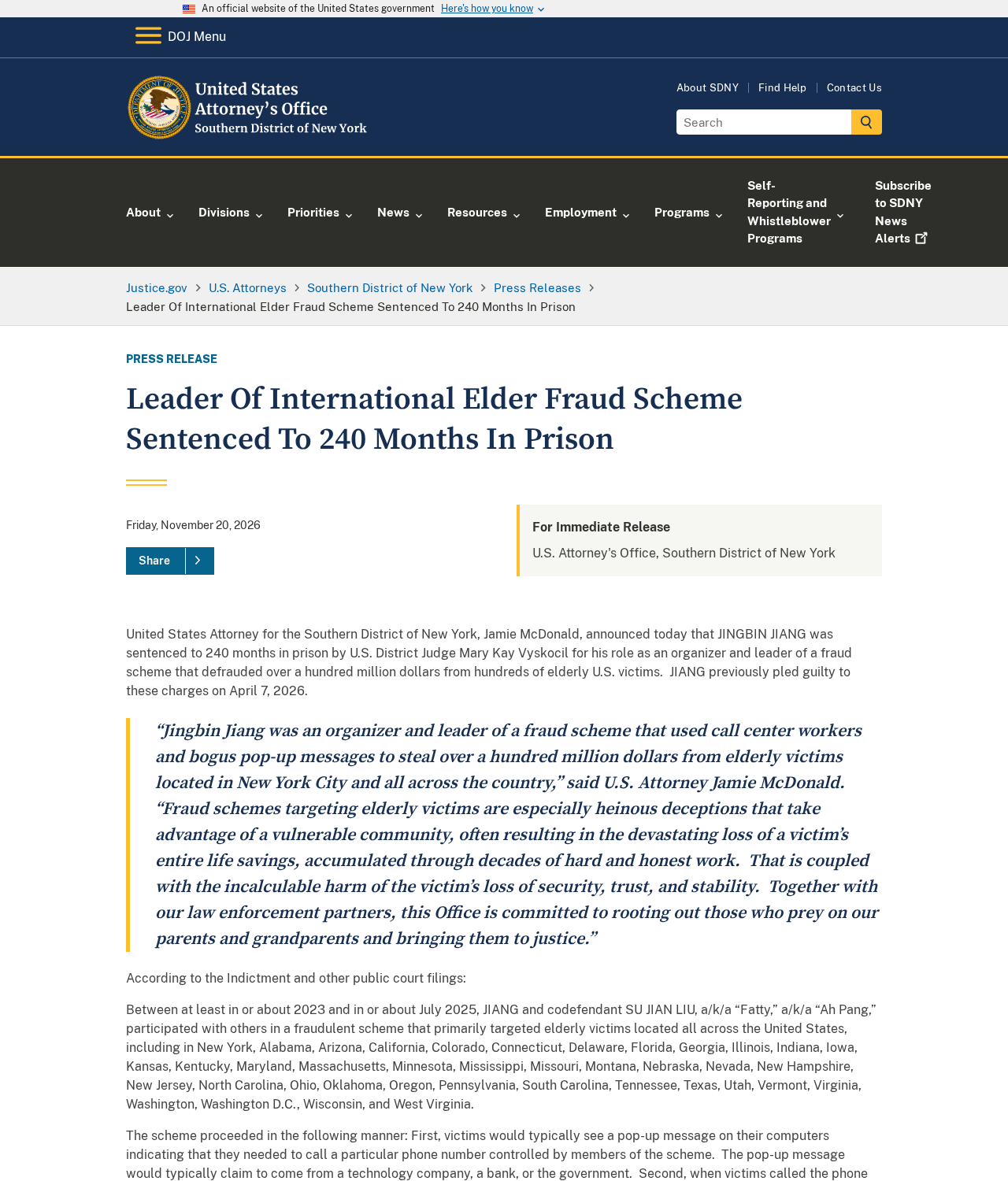
On November 20, 2026, Jingbin Jiang received a 240-month prison sentence after pleading guilty in April. The SDNY announcement describes more than 330 victims and approximately $147 million stolen.
The operation ran from at least approximately 2023 through July 2025. Older victims across numerous states were targeted through a coordinated call-center and courier system.
The case is a documented mass fraud, rather than an isolated complaint about an inconvenient bank call or an unfamiliar technical-support service.
The instruction that should stop the conversation
A caller claiming your accounts are compromised does not acquire authority over your savings. Nor does a government name make a cash or gold pickup legitimate.
- Do not call a support number supplied by a frightening pop-up.
- Do not withdraw savings to hand them to a caller’s courier.
- A password or matching description cannot independently authenticate that courier.
- Call your bank and the relevant agency through separately verified contact details.
Why the Scam Moves Between Several Supposed Authorities
A computer warning introduces a technical problem, but a request for life savings requires a stronger explanation. That is where the supposed bank or government investigator enters.
The conversation can make each new person seem to confirm the previous one. The victim experiences several apparent authorities while remaining inside a single controlled operation.
The transfer itself may feel reassuring because a technical-support worker appears to recognize their limits. They seem to be handing the problem to somebody with greater authority.
But a handoff arranged by the suspicious caller does not provide independent confirmation. The next voice may simply be another member of the same team.
This is especially important when the subject changes from a device warning to alleged criminal activity. Fear can make an unusual financial instruction feel like necessary cooperation.
The practical way out is to interrupt the chain. End the call and contact your bank through the number on your card or an established statement.
Explain the warning and the requested withdrawal before moving money. Someone outside the callers’ controlled conversation can assess the claim without relying on their introduction.
How the Fake FTC Gold Pickup Scam Works
Step 1: A pop-up supplies the first telephone number
The victim typically sees an alarming computer message with a number to call. The number connects to people working within the fraud operation.
The pop-up’s presence does not establish that the warning is true. A webpage can display an urgent message without possessing knowledge of your bank account.
Do not treat the displayed telephone number as an independent support route. It is part of the message whose authenticity you are trying to establish.
If you have only seen the warning, stop before calling or following financial instructions. A frightening screen does not authorize somebody to handle your savings.
Step 2: Callers turn a device problem into a threat to savings
The callers claimed technology problems, account compromise, or criminal activity affecting victims. That widened the apparent danger from an inconvenient computer issue to a financial emergency.
Once someone believes their savings are at immediate risk, withdrawing money can feel protective. The caller uses that fear to reverse the meaning of a suspicious transfer.
The victim is no longer thinking about paying a stranger. They believe they are preventing the loss of money they already own.
That emotional shift explains why simply asking whether the caller requested a fee may miss the scam. The central demand can be framed as moving assets into protection.
Step 3: A government identity makes the instructions seem official
Participants impersonated government agencies, including the FTC, and used official-looking documents. The agency name and letterhead helped the callers appear authorized to direct the victim’s actions.
A document received during a suspicious call is another claim to verify. Its appearance cannot independently establish the sender’s identity or the legitimacy of its instructions.
The FTC’s own gold-bar warning explains that real government agents are not asking people to buy gold and hand it over for protection.
If the message contradicts that basic rule, stop the transaction. Do not let an official-looking seal replace a call to a separately verified agency contact.
Step 4: Cash or gold replaces money held in the victim’s account
Victims were directed to withdraw cash or purchase gold. Both instructions moved value toward a physical handoff controlled by people the victim had not independently verified.
Buying genuine gold does not make the later collection legitimate. A real purchase receipt can coexist with a fraudulent explanation of who should receive the bars.
Before acting, tell the bank or gold seller that a caller has requested the transaction for supposed government protection. Describe the actual reason without adopting the caller’s story.
If the caller tells you what to say, preserve those instructions. An outside institution needs your real account of events to recognize the risk.
Step 5: A courier’s password makes the handoff feel controlled
The operation used pickup arrangements involving identifying details such as a courier’s assumed name, clothing description, or password. Those details made the meeting seem organized and authenticated.
But a caller can give matching details to both the victim and the collector. Their agreement proves coordination between those people, rather than authority from a government agency.
The same applies when the collector knows your address or the amount being collected. Those facts may have come directly from the earlier conversation.
Do not proceed because the courier passes a test designed by the caller. A reliable verification route must be independent of the people requesting your assets.
Step 6: The stolen assets leave the victim’s control
The case describes a wider system for handling stolen cash and gold. The pickup was a collection stage within that operation, not a temporary protective measure.
Once assets leave your possession, a reassuring update from the same caller cannot establish their safety. It may simply delay the moment you seek help.
Jiang’s sentence included a restitution order exceeding $148 million. That obligation is separate from the approximate stolen-loss figure and does not guarantee that every victim will be repaid.
The Caller, the Letterhead, and the Person at Your Door
A real agency name does not authenticate the conversation
The FTC is a legitimate government agency being impersonated in this scam. The accusation belongs to the people abusing its identity, rather than the agency itself.
Do not verify the caller using a telephone number printed on their letter. That would send you back to a contact route controlled by the same source.
Open the agency’s genuine website independently or use an established public contact. Explain the requested action and ask whether the agency actually issued those instructions.
The courier’s arrival does not resolve the identity problem
A person physically appearing at your home can make the operation feel more real. Their presence establishes that somebody came to collect, not that collection is authorized.
Do not hand over assets to investigate the situation. You can stop communicating with the caller without conducting a confrontation or attempting to detain a collector.
If a pickup is imminent, tell local police what happened and follow their directions. Your safety matters more than personally gathering additional proof.
A genuine bank withdrawal does not authorize the next step
You may be able to withdraw your own money or buy gold successfully. Neither transaction establishes that the stranger directing it has a legitimate reason.
The important question is what happens after the purchase or withdrawal. Who receives the asset, under whose authority, and through what independently verified process?
If the only answer comes from the original call, stop before the handoff. You still have the opportunity to keep the assets under your control.
What to Do if You Have Fallen Victim to This Scam
- End the conversation and stop further withdrawals or purchases. Do not accept another transfer to a supposed supervisor as verification of the same callers’ instructions.
- If a courier is expected, contact local police immediately and explain the planned pickup. Give the address, expected time, caller’s instructions, and any identifying description without confronting the collector.
- If someone threatens you or there is immediate danger, call 911. An online report cannot provide emergency assistance or stop a person already at your door.
- Call your bank using the number on your card or statement. Explain that a government-impersonation scam led to the withdrawal or transfer and identify any transaction still pending.
- Ask the bank what can be stopped, recalled, or protected. Record the response and case number; a requested recall does not mean the money has already returned.
- If gold has not been collected, keep it secure and contact the seller through your original receipt. Ask whether a pending order can be canceled and what documentation is required.
- Preserve the purchase receipt, payment records, courier instructions, telephone numbers, and original messages. Write a timeline while details remain fresh, distinguishing cash handed over from money still in your possession.
- Contact SDNY Victim & Witness Services at 1-866-874-8900 if your experience may relate to the Jiang case. Ask how to supply information securely.
- Give the office the relevant dates and a concise description of the pop-up, callers, and pickup. Ask whether your information matches this case or should go elsewhere.
- Keep any report reference and submission acknowledgment. If your report concerns another operation using the same method, continue following the investigators handling your own report.
- Refuse requests for advance recovery payments or banking codes. Someone knowing your loss details may be exploiting those details rather than returning your money.
If you gave callers account credentials, tell the bank exactly what you disclosed. Follow its instructions through your independently established contact, rather than returning to the suspicious caller.
If you installed software or granted device access, describe that separately when seeking legitimate technical help. A pop-up alone should not be confused with confirmed software installation.
For a work-managed device, tell your organization’s authorized support team before making changes. Preserve the relevant messages and explain any access you knowingly granted.
If helping an older relative, begin by stopping the financial transaction and making verified calls together. Blame and interrogation can make an already frightened person less willing to explain.
Ask concrete questions about the next requested action: another withdrawal, another gold order, or another pickup. Those details identify what may still be preventable.
Preserve an existing delivery message showing the expected collection time. If police ask for a description, distinguish what you personally saw from what the caller told you.
You do not need to keep a meeting arranged just to create better evidence. Share the information already available and let police direct the next action.
After immediate risks are addressed, help assemble the timeline and arrange follow-up contact. Keeping one organized record reduces the burden of repeatedly recounting an upsetting experience.
Frequently Asked Questions
Is the $147 million courier case confirmed fraud?
Jiang pleaded guilty and received a 240-month sentence. The federal announcement describes a coordinated operation targeting hundreds of victims through impersonation and cash or gold pickups.
Does the FTC collect gold to protect compromised savings?
The FTC’s warning says real government agents do not ask people to buy and deliver gold for protection. Treat that instruction as a reason to stop.
What if the courier knows the correct password?
A password supplied by the caller can also be supplied to the collector. Matching it does not independently establish government authority or make the handoff safe.
What if I already purchased gold but still have it?
Do not hand it to the courier. Contact local police about the attempted scam and ask the original seller about any available cancellation or return process.
Should I confront or follow the person collecting the money?
Do not put yourself at risk to gather evidence. Contact local police, provide the pickup details, and follow their directions about any expected arrival.
Does the restitution order mean every victim will be fully repaid?
The order creates a repayment obligation, but available assets and the recovery process affect actual payments. Ask the verified victim-witness office about your case and current instructions.
The Bottom Line
Do not hand cash or gold to someone claiming to protect your money for a government agency. A pop-up, official-looking letter, and courier password cannot make that demand legitimate.
If a pickup is planned, contact local police before the handoff. If money already left your control, call your bank, preserve the records, and use verified victim-assistance contacts.

Join the discussion
0 commentsShare your experience or ask a question about this article.
Community experiences
Did this happen to you?
Your experience could help someone recognize the same scam. Submit a private report for our team to review.
I experienced this tooReports are reviewed before publication. Sharing publicly is always your choice.
Discussion
Start the conversation
Have a question or something useful to share? Add the first comment.