


Owning a truck without handling the driving, dispatching, or daily logistics sounds like a shortcut into an established industry. RivX sold that kind of hands-off business opportunity.
For buyers considering a five-figure commitment, the crucial details were the income promises and who would make them happen. Those promises eventually reached a federal judge.
Overview
The expensive promise of a ready-made trucking business
RivX marketed trucking business opportunities costing $75,000 or more. Buyers were told the operators would handle the work needed to turn a truck into income.
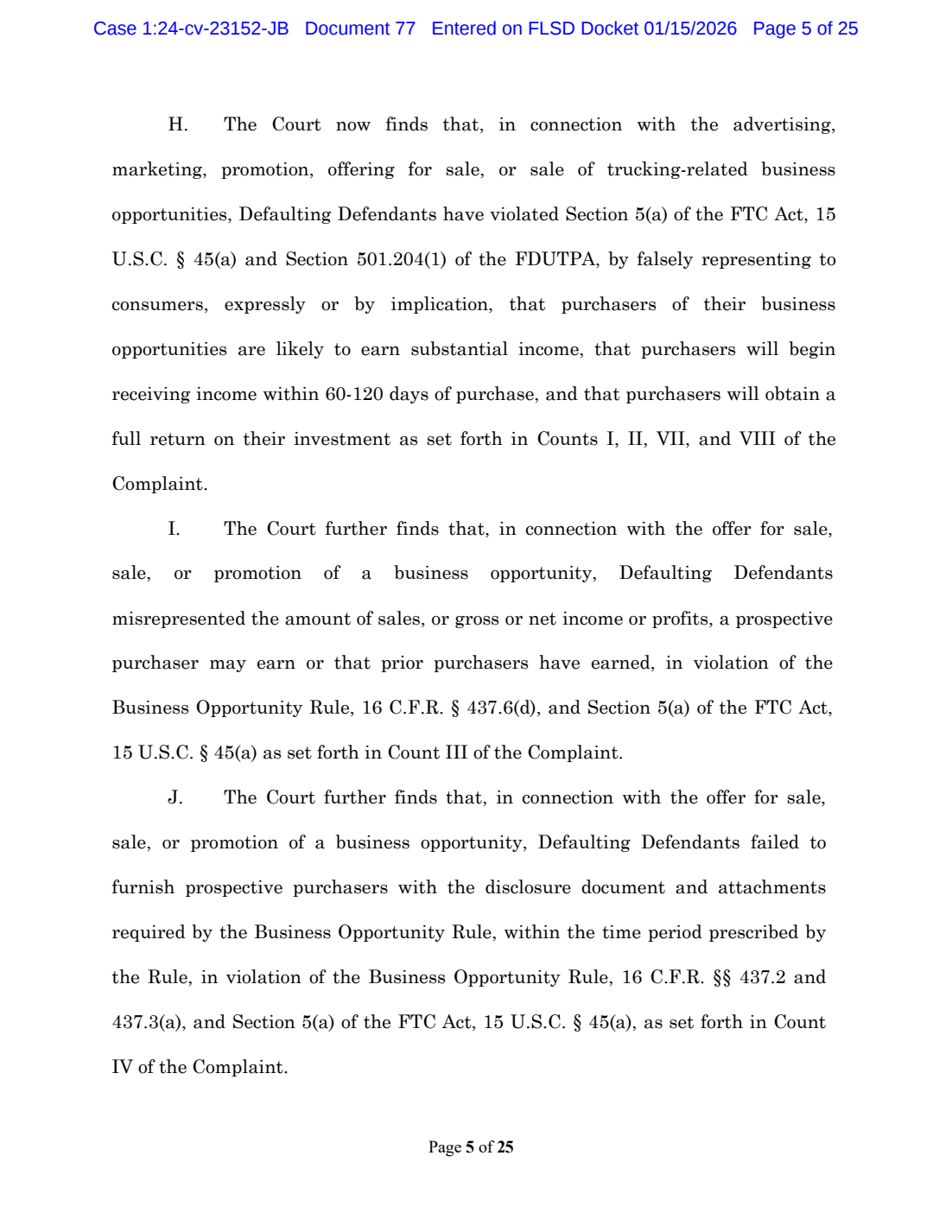
The pitch included substantial earnings, income beginning within 60–120 days, and a full return on the investment. That made the opportunity sound both manageable and predictable.
For someone without trucking experience, the management promise was especially important. They were paying to avoid having to build the operating business themselves.
What the final judgment actually found
The federal court entered a final default judgment on January 15, 2026, finding deceptive income representations and violations involving required business-opportunity disclosures and earnings claims.
The judgment imposed permanent restrictions on the defaulting defendants’ sale of business and investment opportunities. It also entered an $8,390,025.99 monetary judgment against them.
These are civil findings in a final default judgment. They should not be described as a criminal conviction or as an allegation supported only by unhappy buyers.
What buyers and prospective investors should do
The FTC’s case announcement explains the final action against the scheme. Buyers should preserve their own contracts, payments, and communications rather than rely on the old sales presentation.
- Substantial promised income was part of the deception identified by the court.
- A truck-related business still needs evidence of actual operating costs and revenue.
- Restrictions on customer reviews were also addressed in the judgment.
- The judgment amount should not be mistaken for money already available to each buyer.
What You Were Really Being Asked to Buy
A truck is a physical asset, but a trucking business needs more than an asset. It needs paying work, operating expenses, reliable management, and accountable financial records.
RivX’s sales proposition combined those pieces into a managed opportunity. The buyer was meant to supply substantial capital while others handled the operational demands.
That arrangement can make questions about drivers, loads, repairs, and expenses feel like somebody else’s responsibility. Yet those details determine whether revenue becomes profit for the buyer.
If a seller advertises gross revenue, ask what remains after the business pays its costs. Revenue arriving in an operating company is different from income reaching an owner.
The court’s findings specifically addressed representations about sales, income, and profits. The problem was therefore not simply that trucking can be difficult or unpredictable.
Consider a hypothetical business that receives $20,000 during a month and spends $19,000 operating. Describing the revenue alone gives a misleading impression of the owner’s available income.
That example is not a RivX account calculation. It illustrates why a business opportunity needs clear definitions of revenue, expenses, distributions, and the period being described.
The same question applies to recovering the purchase price. A claim that you will earn back your investment needs a credible calculation, rather than an optimistic timeline.
How the RivX Trucking Scam Works
Step 1: A difficult industry becomes a supposedly hands-off opportunity
The offer presented trucking as something a buyer could enter without managing its daily work. The operator would handle the demanding parts while the buyer supplied capital.
For a newcomer, this removed an obvious obstacle: lack of industry experience. It also increased reliance on the operator’s explanations about what the business would earn.
Before paying for any comparable arrangement, identify exactly what work is included. A broad management promise cannot replace clear responsibility for each major operating task.
Step 2: A large upfront payment buys into the income story
The opportunities cost at least $75,000, according to the FTC’s description. That put a substantial amount at risk before the promised business results could be evaluated.
A higher price can make an opportunity seem more substantial. But the size of the commitment does not establish that a functioning income-producing business will follow.
The buyer needs to know what the payment actually purchases: an identified asset, services, working capital, or a combination. Those categories should not remain interchangeable after payment.
Step 3: A short earnings timetable makes the commitment feel recoverable
Buyers were told they would begin receiving income within 60–120 days and obtain a full return on their investment. The court found those representations false.
A short timetable can make a large payment feel temporary. Instead of picturing money at risk, the buyer imagines a brief interval before regular earnings begin.
That expectation should be supported by evidence about actual purchasers and operating results. A projected date is not a substitute for documented outcomes.
Step 4: Missing disclosures leave the buyer without essential comparisons
The judgment found failures involving required disclosure documents and earnings-claim substantiation. Buyers did not receive the information the applicable business-opportunity rules required.
The practical consequence is an uneven decision. The seller makes confident claims while the buyer lacks the information needed to examine how those claims were calculated.
For a similar opportunity, ask for the underlying earnings basis before paying. If the answer is another presentation or another testimonial, the original question remains unanswered.
Step 5: Contract terms discourage the feedback other buyers need
The court also addressed form-contract provisions restricting reviews or imposing penalties for covered communications. The judgment prohibits the relevant restrictions and penalties.
This matters because prospective buyers often rely on others’ experiences. If customers feel unable to describe problems, the public picture can become less useful.
The order’s specific findings do not establish every separate dispute over a contract. Preserve the clause you received and obtain advice if somebody threatens enforcement against you.
Step 6: A final court order replaces the advertised opportunity
The January 2026 judgment permanently banned the defaulting defendants from selling or marketing covered business and investment opportunities. It also addressed assets and monetary relief.
For a buyer, the useful next step is no longer another conversation about the old earnings projection. It is documenting the purchase and verifying the relevant recovery information.
Do not assume a similarly styled new offer is the same operator without evidence. If you receive a new solicitation claiming continuity, preserve the names and messages for verification.
RivX Companies, Operators, and Contract Terms
The court identified the operating companies
The judgment names RivX Automation Corp., also doing business as RivX Funding, alongside several trucking and logistics entities involved in the common enterprise.
Those include RivX Trucking, RivX Logistics, RivX Global Logistics, Maceda Transportation Services, and C2 Carrier. Match the exact name with your own payment and contract documents.
Several names appearing in one case does not mean every similarly named company elsewhere is involved. Specific identity matters when reporting a transaction or warning another buyer.
The named individuals and their responsibility
The court found Antonio Rivodo and Noah Wooten individually liable, addressing their control or participation and the required knowledge. Those findings appear in the final judgment.
Keep your own account factual when reporting contact with either person or someone claiming to represent them. Record the words, dates, and documents rather than relying on a general impression.
The case is civil enforcement, even though the deceptive opportunity can plainly be described as a scam. Do not turn a civil finding into an invented prison sentence.
Different defendants and different amounts require care
The order distinguishes defaulting defendants from relief defendants holding traceable funds. It also addresses Diamond Cargo through a separate stipulated judgment.
Those roles are not interchangeable accusations. The purpose of naming an entity should be to identify the relevant transaction or court finding, rather than suggest guilt by association.
Likewise, overlapping monetary obligations should not be added together as though they represent separate pools available to buyers. Read the judgment’s explanation of the amounts.
A vehicle asset and a refund are separate questions
If a truck was purchased or titled in connection with your arrangement, preserve the VIN, title documents, financing agreement, and any location information you actually have.
Do not assume that owning an asset on paper resolves a dispute over management services or income promises. Those obligations can require different documents and different action.
Before directing a sale, canceling insurance, or authorizing a transfer, establish ownership and any lender’s rights. Get appropriate independent assistance if the records do not agree.
The Questions a Passive-Income Trucking Offer Must Answer
Ask which legal entity takes your payment and which entity must perform each service. A brand name on a presentation does not answer either question.
Ask whether you will own an identified vehicle and when you receive the ownership documents. Keep asset purchases distinct from fees paid for management or business setup.
Ask how operating income is calculated and when distributions occur. Request the deductions, reserves, and circumstances that could stop or reduce payments.
Ask what the advertised earnings figure represents. A selected customer’s best month, gross business revenue, and a typical owner’s net income are materially different claims.
Ask what happens when the truck needs repairs or has no paying work. An arrangement cannot fairly explain possible profit while leaving ordinary operating losses unassigned.
Ask what records you receive and whether you can independently verify them. A promoter-controlled summary should not be the only evidence of your business’s activity.
These questions do not require expertise in every trucking regulation. They clarify what you would own, what you would pay, and what could actually reach your bank account.
If the seller cannot answer them clearly, do not pay for the promise that the details will become understandable later. Your ability to evaluate the purchase matters before payment.
What to Do if You Have Fallen Victim to This Scam
- Stop additional payments requested under the old opportunity until you independently establish their purpose and recipient. Do not pay a new fee merely to obtain a promised refund.
- Save the contract, earnings presentation, advertisements, invoices, and original messages. Keep the complete document containing any review restriction or penalty rather than just an isolated screenshot.
- Make a payment table showing dates, amounts, recipients, and refunds actually received. Separate vehicle purchases, management fees, financing payments, and any other charges you can identify.
- Contact the payment provider through its published route if a disputed transaction may still be actionable. Explain the deceptive business opportunity and ask what evidence and deadlines apply.
- Keep the provider’s reference and written response. If it cannot reverse the transaction, preserve that outcome for your records rather than assuming the entire recovery process is closed.
- If assets or financing are involved, gather title, VIN, lender, and insurance records. Do not authorize disposal or surrender based only on an unsolicited caller’s instructions.
- Call the FTC at 1-877-382-4357, published in its official scam-reporting guidance. Identify RivX and ask about current consumer reporting and redress information.
- Describe your transaction and ask where relevant documents should be submitted securely. A complaint reference is useful, but should not be mistaken for an approved refund claim.
- Check any later refund instructions against the official case information. The judgment permits relief mechanisms, but its existence alone does not establish an open application window or a guaranteed payout.
- If threatened over an honest review, preserve the threat and the contract language. Refer to the judgment’s review provisions when seeking independent advice about your specific circumstances.
- Reject unsolicited offers requiring an advance payment for priority recovery. Do not provide banking passwords, remote access, or verification codes to someone claiming they can unlock court funds.
When a request concerns a real lender, insurer, or vehicle, contact that organization independently. The enforcement case does not automatically cancel separate obligations or establish the condition of an asset.
If you cannot determine who controls a vehicle or account, seek independent professional assistance before making irreversible changes. Provide the original documents rather than the seller’s summary alone.
Frequently Asked Questions
Is RivX a confirmed deceptive business-opportunity case?
The final judgment found false income representations and other violations. That establishes deceptive conduct beyond an unresolved complaint or an ordinary disagreement over a business’s performance.
Was the judgment a criminal conviction?
It was a civil final default judgment. Its findings support the warning about deceptive conduct, but they should not be described as a criminal conviction.
What did RivX promise buyers would earn?
The court addressed promises of substantial income, earnings within 60–120 days, and a full investment return. Those representations formed part of the deceptive opportunity.
Does the $8.39 million judgment guarantee my refund?
The judgment does not itself guarantee an individual payment. Recovery depends on the applicable process, available assets, and any official redress instructions provided for affected buyers.
What should I keep if a truck was involved?
Preserve the VIN, title, financing and insurance records, alongside the business-opportunity contract. The asset’s ownership and the deceptive sales promises can raise separate practical issues.
Can somebody charge me to unlock my FTC refund?
Do not pay an unsolicited advance fee based on that claim. Independently contact the FTC using its published number to verify any purported case-related payment instructions.
The Bottom Line
Do not buy into the RivX opportunity described in the final judgment. The court found deceptive income promises and permanently restricted the defaulting defendants’ business-opportunity sales.
If you paid, organize the contracts, transfers, and any vehicle documents. Contact your payment provider and the FTC through verified routes, and reject anyone selling guaranteed recovery for another fee.

Join the discussion
0 commentsShare your experience or ask a question about this article.
Community experiences
Did this happen to you?
Your experience could help someone recognize the same scam. Submit a private report for our team to review.
I experienced this tooReports are reviewed before publication. Sharing publicly is always your choice.
Discussion
Start the conversation
Have a question or something useful to share? Add the first comment.