

A 10-second ritual is easy to imagine fitting into anyone’s evening. Add a respected university, a reassuring doctor, and promises aimed directly at women over 50, and a generic mineral supplement begins to look like a discovery that conventional weight-loss advice somehow missed.
The Fake Harvard Magnesium Ritual Scam does not survive scrutiny. The specialist cannot be verified as presented, the video shows signs of AI production, and the final product resembles an ordinary eight-form magnesium complex sold through changing retailers and purchase plans.
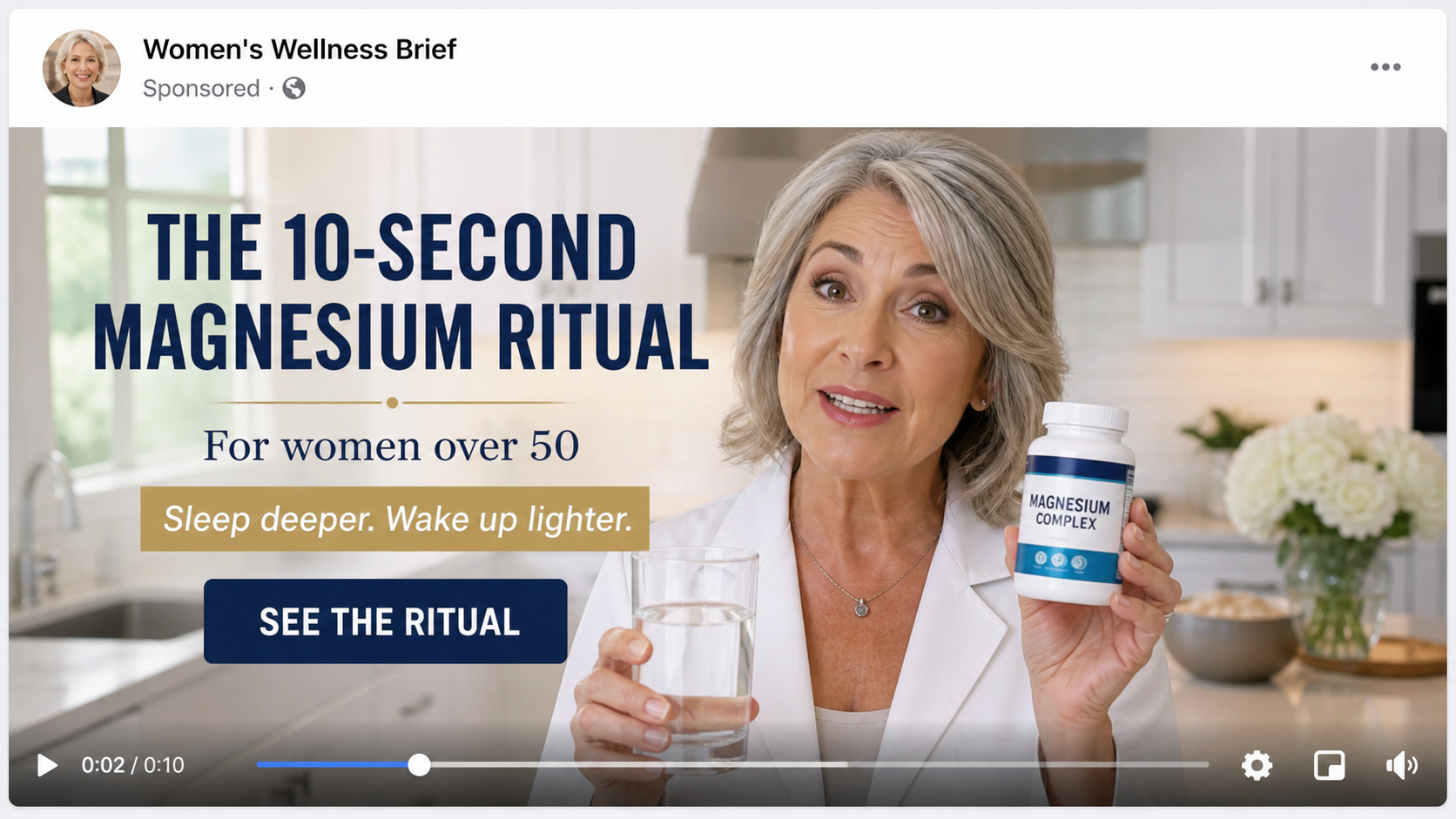
The first image shows the campaign’s visual formula with a completely fictional presenter. A white coat, bright kitchen, glass of water, and blue-and-white bottle turn a vague bedtime routine into something that feels medical and personal.
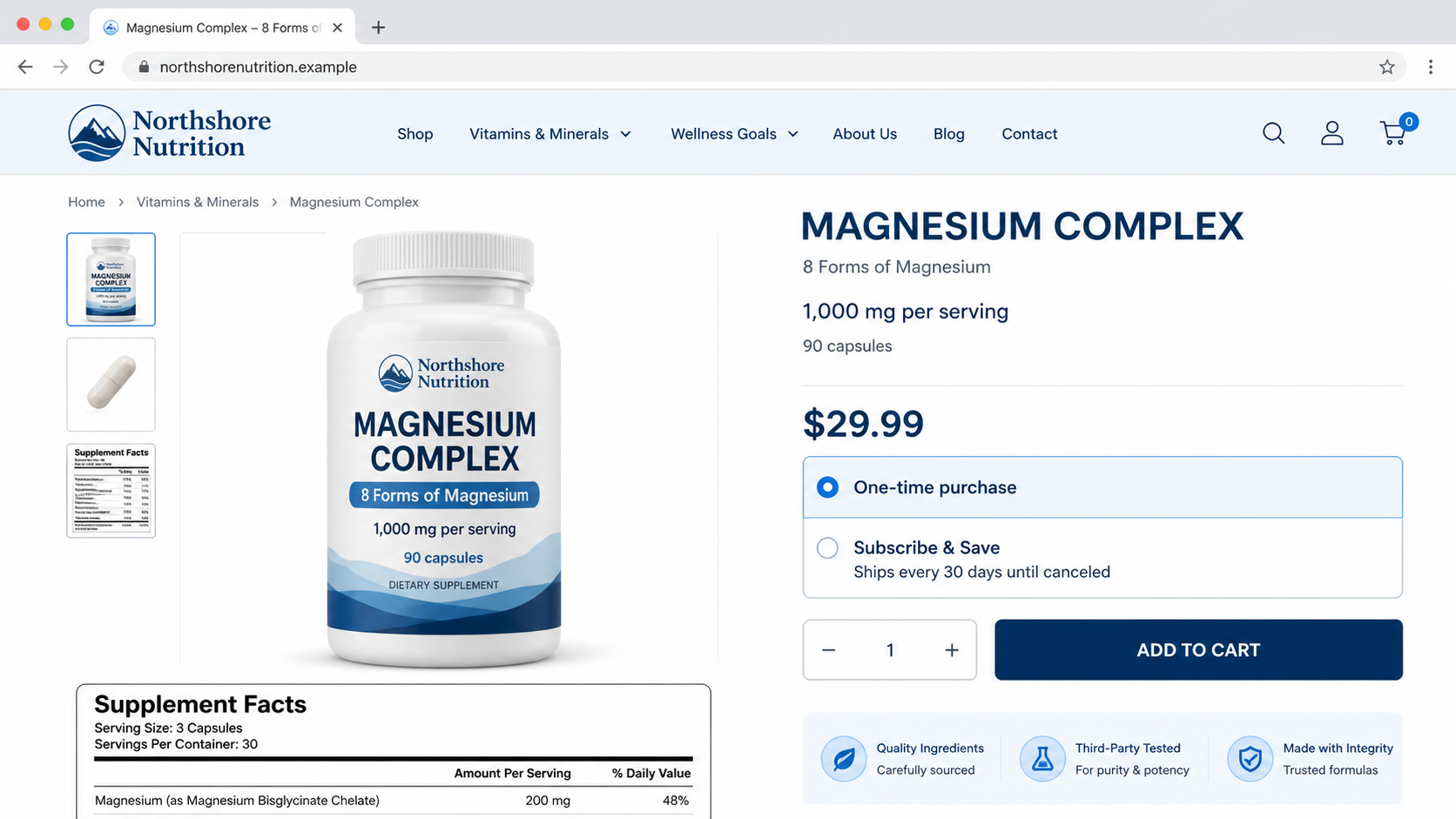
The second image shows how an ordinary supplement page can offer the same generic concept through a one-time purchase or a recurring Subscribe & Save option. It is an example, not proof that every version of the social ad used that exact store or enrolled buyers automatically.
Real campaign pages and sellers have changed, and no stable original checkout remained available for a safe capture. These images therefore reconstruct the documented tactics without using a real doctor’s likeness, Harvard branding, or a live payment link.
Overview
The Harvard doctor story cannot be verified
The ad introduces Dr. Martha Callaway or Calloway as a Harvard integrative-medicine authority who discovered a rapid magnesium ritual for older women. We found no reliable evidence that this persona, biography, Harvard role, video, or product endorsement exists as presented.
The speaker’s polished but unnatural delivery, generic credentials, and replaceable backstory are consistent with an AI presenter or fabricated expert. A medical title shown inside an advertisement is not a license, faculty appointment, or endorsement from a university.
Magnesium is real, but the weight-loss transformation is not established
Magnesium is an essential nutrient involved in muscle and nerve function, blood glucose regulation, blood pressure, protein, bone, and DNA. That biology does not prove a 10-second drink or capsule routine melts abdominal fat, tightens skin, balances hormones, or reverses aging.
The ad connects common concerns such as poor sleep, weight gain, fatigue, and body changes to one hidden deficiency or hormone trigger. Those symptoms have many possible causes and require individualized evaluation rather than a universal supplement script.
The bottle can rotate while the story stays the same
The video eventually reveals a generic white-and-blue Magnesium Complex bottle claiming eight forms and maximum absorption. Similar formulas appear across different online shops under different brand names, prices, and subscription options.
One current retailer has offered an eight-form, 1,000 mg, 90-capsule magnesium complex for $29.99 with both one-time and Subscribe & Save choices. That listing shows how recurring billing can enter the market, but it does not prove the fake-doctor ad and that retailer share ownership.
- The Dr. Martha Callaway Harvard biography could not be verified as presented.
- The ad uses a medical-looking AI presenter and an age-targeted script.
- Claims include sleep, belly fat, skin, hormones, and renewed energy.
- The revealed product is a generic multi-form magnesium supplement.
- Similar eight-form formulas are sold under several retailer and brand names.
- A matching public listing showed $29.99 for 90 capsules.
- Some retailers offer both one-time purchase and recurring Subscribe & Save.
- The exact ad checkout was not available, so automatic enrollment is unconfirmed.
Why the 10-Second Magnesium Ritual Story Converts
The script is written for an audience that has already heard eat less and exercise more. It acknowledges menopause, sleep disruption, stress, stubborn weight, and changes that can make old routines feel less effective. That recognition builds trust before the product is named.
A secret hormone trigger then reframes frustration as a hidden biological problem. The viewer is told that ordinary dieting fails because one mineral-dependent switch remains off. The explanation is simple, memorable, and far more emotionally satisfying than a complex discussion of sleep, medication, menopause, nutrition, activity, and health conditions.
The Harvard label supplies prestige that most viewers will not verify. Integrative medicine sounds broad enough to accommodate a natural ritual, while the doctor’s invented personal journey creates a story in which institutional science and home remedy appear to agree.
The phrase 10-second ritual removes effort. It does not ask for a sustained treatment plan or carefully measured change. The supposed solution is so easy that refusing to watch the long video can feel irrational.
The bottle remains hidden until late in the presentation. By then the audience is not comparing magnesium supplements. It is buying the imagined hormonal breakthrough, specialist access, and hope that several uncomfortable symptoms share one answer.
That sequence also makes the brand replaceable. A promoter can attach the same video to a different magnesium complex, sleep formula, menopause blend, or weight-loss supplement while preserving the doctor, ritual, and story.
What Our Magnesium Ritual Investigation Found
The campaign named Dr. Martha Callaway or a similar spelling and described her as a Harvard integrative-medicine specialist. We could not verify the identity and affiliation through credible independent records matching the advertisement.
The long video used an AI-style presenter and direct-response pacing. It described a 10-second routine for women over 50 and linked it to stubborn belly fat, sagging skin, poor sleep, fatigue, and a hidden hormonal cause.
The product shown near the end was a generic Magnesium Complex bottle stating that it contained eight forms of elemental magnesium or an eight-form blend designed for maximum absorption.
A similar formula publicly listed by Kova Nutrition named magnesium glycinate, taurate, malate, citrate, oxide, aspartate, chelate, and orotate. It advertised 1,000 mg per serving, 90 capsules, and a $29.99 price.
That retailer offered a one-time purchase and a Subscribe & Save configuration. A visible recurring option is not inherently deceptive when price, frequency, cancellation, and consent are clear. The problem arises if the ad or checkout defaults to continuity or hides it.
Other generic eight-form magnesium products appear across unrelated stores and marketplaces. Similar labels and formulas suggest a private-label product ecosystem, but matching appearance alone does not establish common ownership or a single manufacturer.
No stable legal entity, physical address, support phone, or original checkout could be tied confidently to the fake Dr. Callaway ad itself. A current retailer selling a similar bottle should not be accused of operating the ad without evidence connecting the two.
No credible clinical evidence was provided showing that the advertised 10-second magnesium ritual causes meaningful fat loss, reverses menopause, tightens skin, or produces the broad transformation described.
The exact campaign checkout was unavailable, so we could not verify that every buyer received multiple bottles or automatic refills. Those are risks to inspect, not confirmed facts for this version.
How the Fake Harvard Magnesium Ritual Scam Works
Step 1: An AI doctor speaks directly to women over 50
The social video names specific frustrations: waking at night, gaining weight around the middle, feeling tired, and seeing skin change. The presenter responds with empathy and a confident medical explanation.
A generated or fabricated expert can be tailored to the audience more precisely than a real clinician. The advertiser controls the biography, credentials, tone, and claims without the accountability of a licensing board or university.
Step 2: Harvard branding is implied as proof
The script invokes Harvard or an elite research connection so the viewer assumes the discovery survived rigorous evaluation. The institution does not need to appear directly if the presenter repeats the affiliation often enough.
Verify the exact department, faculty directory, publications, and official university page. A real affiliation should exist outside the advertisement and should not be discoverable only through copied promotional biographies.
Step 3: A hidden hormone story explains several symptoms at once
The ad claims that a mineral deficiency or blocked hormonal signal causes weight, sleep, skin, and energy problems. One explanation makes one product seem capable of solving an unusually broad set of concerns.
Those symptoms can arise from menopause, thyroid disease, sleep apnea, depression, medication, diet, activity, kidney problems, and many other causes. An advertisement cannot diagnose the viewer through age and a checklist.
Step 4: The fake report delays the product reveal
The click can lead to a long advertorial styled like a health interview or news report. The visitor watches testimonials, diagrams, and a personal origin story before learning that the solution is a common supplement.
Delaying the bottle limits comparison shopping. The buyer spends time evaluating the story rather than searching the ingredient amounts, price per serving, manufacturer, independent testing, and alternatives.
Step 5: A generic magnesium complex becomes the breakthrough
The sales page emphasizes eight forms, absorption, purity, and a large milligram number. More forms do not automatically mean better outcomes, and a blend’s headline weight may not equal the elemental magnesium amount.
The Supplement Facts panel should state each form, amount, serving size, and elemental total clearly. A front-label 1,000 mg claim can refer to the weight of compounds rather than 1,000 mg of usable elemental magnesium.
Step 6: The checkout can introduce bundles or Subscribe & Save
A retailer may show one-time and recurring choices, bundle quantities, or a preselected savings option. The customer should see total cost, shipment frequency, cancellation method, and whether the price changes after the first order.
For the fake-doctor funnel, the exact checkout was not preserved. Do not assume every buyer was subscribed, but never submit a card until the selected purchase type and quantity are visible in a saved screenshot.
Step 7: The name changes when the ad is exposed
The same ritual can lead to another bottle without changing the video. Generic supplement manufacturing and affiliate marketing make the product label less durable than the story that sells it.
Search for the presenter, claim, ingredients, checkout entity, phone, address, and card descriptor, not just the bottle name. A new brand can inherit the same fake Harvard narrative overnight.
Company, Address, and Fulfillment Checks
The ad does not identify an accountable company
The fake doctor and Harvard story dominate the presentation, while the legal merchant stays out of view until late in the funnel. We could not tie the original ad to one verified company that accepted responsibility for the claims.
Do not transfer that accusation to every store selling an eight-form magnesium blend. Similar private-label products can be stocked by unrelated merchants, and ownership requires documentary evidence.
A store or warehouse address may not be the brand owner
An address on a label can belong to a distributor, fulfillment center, mailbox, registered agent, or contract manufacturer. It does not automatically identify who created the AI ad or wrote the medical story.
Search the address and compare it with the terms, privacy policy, receipt, card statement, and return authorization. If the locations conflict or the return address is withheld, calculate that friction before ordering.
Support should answer the refill question before purchase
The original funnel did not provide a stable phone and email trail we could verify. A similar public retailer may have its own support details, but that does not make it responsible for another advertiser’s campaign.
Ask the actual checkout merchant whether the selected option renews, how often it ships, how cancellation works, what descriptor appears on the card, and whether opened bottles can be returned. Save the reply.
The supplement supply chain remains opaque
Generic formulas can be produced by contract manufacturers and sold under many labels. The fake-doctor ad did not provide a traceable manufacturer, lot-specific certificate of analysis, contaminant testing, ingredient origins, or final-release documentation.
There is no evidence proving the bottles in this campaign were made in China, so that should not be stated as fact. Unknown origin is itself a reason to demand batch documentation, particularly when the product may be used by older adults taking several medicines.
Magnesium Safety, Label Math, and Recurring Billing
Magnesium is necessary for health, and some people need supplementation. That does not mean more is always better. The NIH Office of Dietary Supplements notes that high supplemental intakes can cause diarrhea, nausea, and abdominal cramping, while very high amounts can cause serious toxicity.
Kidneys normally remove excess magnesium, so people with impaired kidney function face greater risk of accumulation. Magnesium also interacts with some antibiotics, bisphosphonates, diuretics, and other medicines. A clinician or pharmacist can help separate the doses safely.
The label needs careful reading. Magnesium oxide, citrate, glycinate, and other forms differ in elemental percentage and tolerability. A large blend weight on the front does not necessarily represent the amount of elemental magnesium delivered.
No magnesium form has been established as a 10-second fat-loss ritual. Sleep and metabolic research is more limited and specific than the advertisement suggests. A supplement should not be judged by how many symptoms the video names.
A Subscribe & Save option can be legitimate if the consumer deliberately selects it and can cancel easily. We found a matching generic retail offer with both one-time and recurring choices, but no evidence that proves the original fake-doctor checkout defaulted every customer into refills.
The documented deception is already sufficient: a fabricated Harvard expert, AI medical presentation, unsupported transformation claims, and an opaque path to a generic supplement. Precision makes the warning stronger than adding an unproven subscription allegation.
Warning Signs to Watch For
- A Harvard doctor identity cannot be independently verified.
- The presenter shows signs of AI or synthetic production.
- One hidden trigger supposedly explains weight, sleep, skin, and energy.
- A 10-second ritual promises results disproportionate to the effort.
- The product remains hidden until late in a long video.
- Eight forms and a large milligram number substitute for outcome evidence.
- Similar bottles appear under several unrelated brand names.
- The original legal seller, address, and support route are unclear.
- The checkout may contain one-time, bundle, or subscription choices.
- Batch-specific testing and elemental-magnesium math are not prominent.
Magnesium does not become a weight-loss breakthrough because an AI presenter wears a white coat and says Harvard. When the credentials, merchant, label math, and evidence remain vague, the ritual is a sales device, not a medical discovery.
What to Do if You Have Fallen Victim to This Scam
- Check what you actually ordered. Open the receipt and identify the quantity, one-time or recurring selection, shipment schedule, merchant, and card descriptor. Save the checkout and terms if they remain available.
- Cancel recurring delivery in writing. If Subscribe & Save was selected, use the merchant's formal cancellation method and request written confirmation that future shipments and charges have stopped. Keep the cancellation date and reference number.
- Ask the card issuer about unauthorized charges. If the quantity or billing schedule differed from what you approved, contact the issuer promptly. Provide the fake-doctor ad, order summary, receipt, cancellation attempt, and statement entries.
- Review the supplement with a clinician or pharmacist. Bring the bottle and medication list, especially if you have kidney disease or take antibiotics, osteoporosis medicines, diuretics, heart medicines, or other supplements containing magnesium.
- Document adverse effects and the lot number. Stop and seek medical advice for concerning symptoms. Record serving size, timing, lot, other products, and symptoms. Report serious supplement reactions to the FDA.
- Report the fake medical identity. Report the social ad as impersonation and deceptive health advertising. Submit the domain, product, seller, amount, and screenshots to the FTC and notify the institution whose name was misused.
- Run Malwarebytes if the funnel changed your device. If the page downloaded files, installed an extension, opened fake alerts, or obtained notification permission, run a full Malwarebytes scan. Remove detections and secure affected accounts.
- Use AdGuard to block rotating supplement ads. AdGuard can reduce malicious ads, tracking redirects, pop-ups, and cloned advertorials. It cannot verify a doctor or a label, so continue checking credentials and billing independently.
Frequently Asked Questions
Is Dr. Martha Callaway a real Harvard doctor?
We could not verify the identity, Harvard role, biography, or endorsement as presented in the advertisement. Treat the persona as fabricated unless credible independent records establish otherwise.
Does a 10-second magnesium ritual burn belly fat?
No credible evidence reviewed here supports the claim that a quick magnesium routine produces meaningful fat loss, tightens skin, reverses aging, or corrects a universal hormone trigger.
Is magnesium itself fake or dangerous?
Magnesium is an essential nutrient and supplements can be appropriate. Excess supplemental magnesium can cause gastrointestinal effects and, at very high levels, serious toxicity, especially when kidney function is impaired.
What does eight forms of magnesium mean?
It means the formula combines several magnesium compounds. The number of forms does not prove superior results. Check elemental magnesium per serving, each compound, dose, tolerability, and independent batch testing.
Does the magnesium offer include automatic refills?
A similar retailer offered both one-time purchase and Subscribe & Save. The original fake-doctor checkout was unavailable, so automatic enrollment for that exact campaign could not be confirmed.
Are all matching magnesium bottles from the same company?
No. Similar formulas and labels can come from different retailers, distributors, or private-label manufacturers. Visual similarity alone does not prove common ownership or responsibility for the ad.
The Bottom Line
The Fake Harvard Magnesium Ritual Scam takes a real nutrient and wraps it in a fabricated specialist, AI video, and a promise designed around the insecurities of women over 50. The science of magnesium does not validate the story built around it.
An ordinary eight-form supplement may be sold once or through Subscribe & Save, but the exact billing must be verified at the actual checkout. The fake-doctor funnel did not leave enough evidence to claim every buyer was enrolled automatically.
Ignore the ritual and inspect the facts: verifiable clinician, legal merchant, elemental dose, batch testing, total price, renewal selection, cancellation path, and medical suitability. If the seller cannot make those basics clear, do not buy.








