

Memory worries do not arrive as abstract health questions. They appear when a familiar word disappears, a name takes longer to surface, or a loved one begins repeating the same story. That fear gives a honey recipe supposedly revealed by a famous doctor unusual emotional power.
The Dr. Sanjay Gupta Honey Memory Cure Scam does not lead to his medical advice. It leads to MemoLift, a heavily discounted supplement surrounded by unverified endorsements, impossible review numbers, conflicting guarantees, and too little company information.
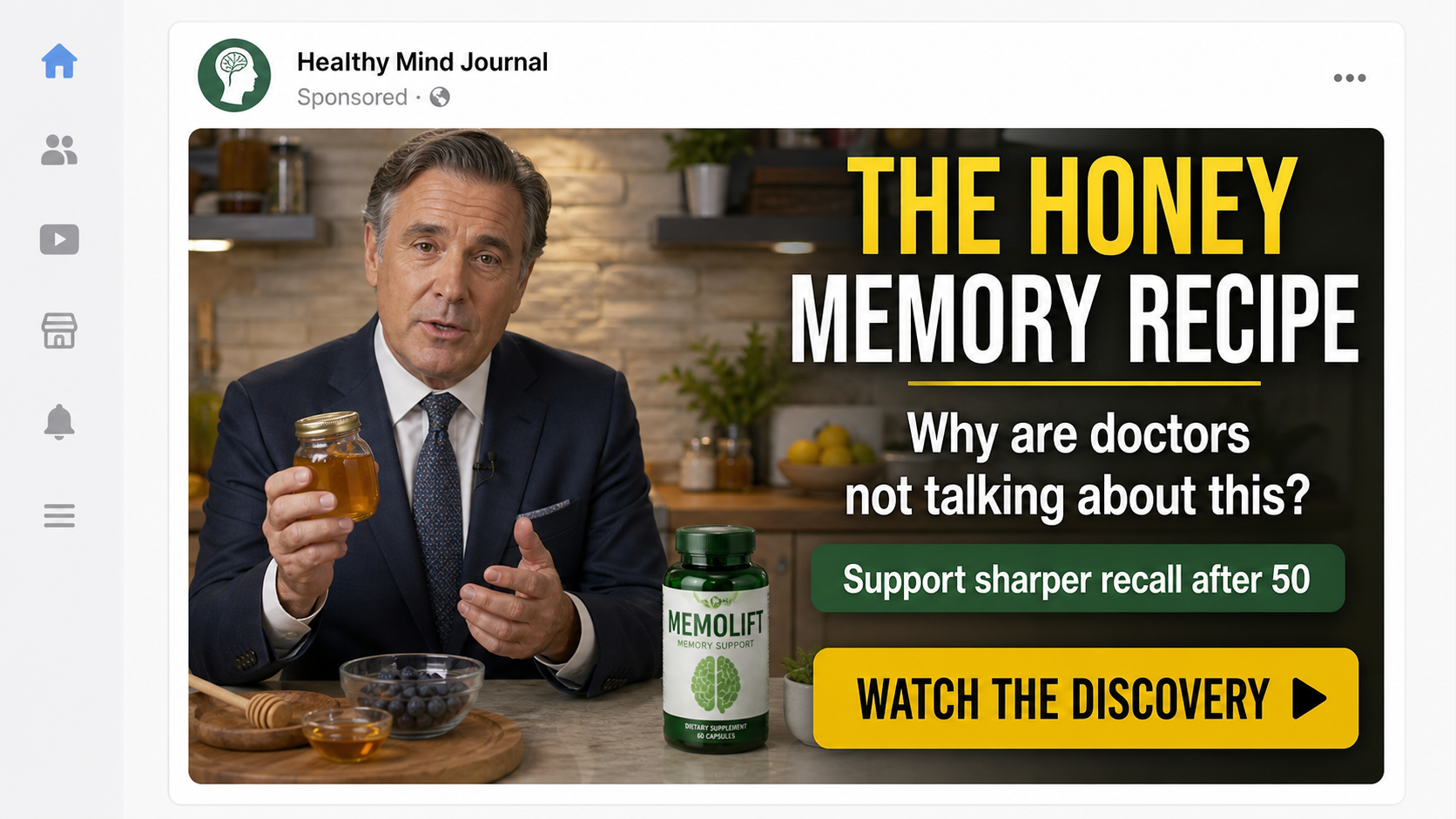
The first image reconstructs the advertising style with a fictional presenter who does not resemble Dr. Sanjay Gupta or another real physician. Honey, a studio kitchen, a white-label bottle, and a dramatic question combine natural familiarity with medical authority.
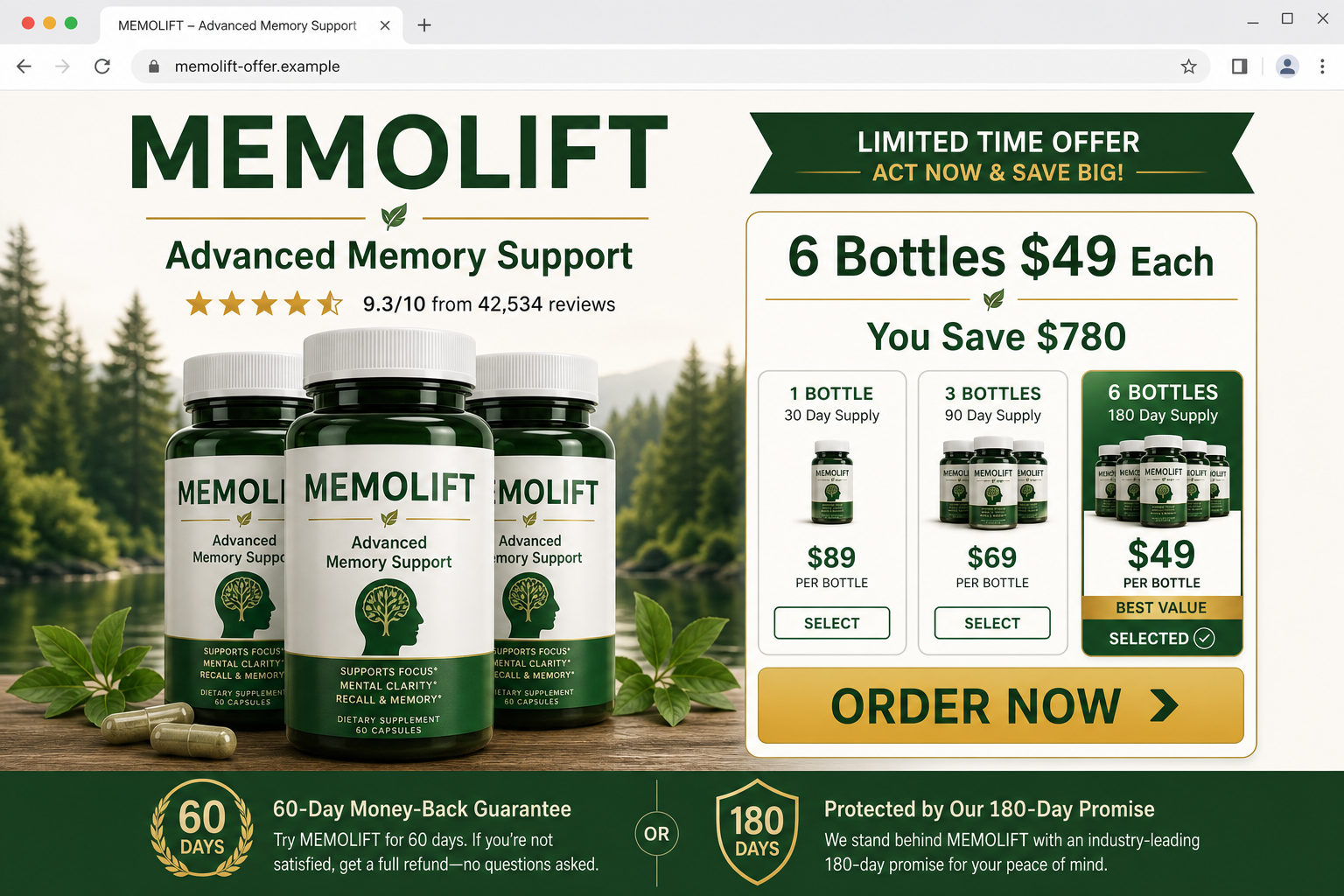
The second image reconstructs the reported MemoLift offer. It shows the pressure points used in the funnel: a 9.3/10 rating, 42,534 reviews, six bottles at $49 each, a claimed $780 saving, and two different money-back periods on the same sales page.
These visuals were created because the public product page is now unavailable. They preserve the material claims documented during the investigation without directing readers to a dead or unsafe checkout and without reproducing a real celebrity’s likeness.
Overview
Dr. Sanjay Gupta did not verify this honey remedy or MemoLift
The campaign used Dr. Sanjay Gupta’s name and has circulated variations involving other recognizable doctors and television personalities. We found no credible official statement connecting Gupta to the honey recipe, MemoLift formula, advertisement, seller, or checkout.
Unauthorized celebrity use is the campaign’s most important deception. The famous face or name supplies trust before the shopper can evaluate the bottle, ingredients, company, or evidence on its own merits.
MemoLift is presented as support, while the ad implies far more
The product page described memory, focus, clarity, recall, and cognitive support. The ad framed the formula as the answer behind a suppressed honey discovery and encouraged viewers to connect it with dementia or serious memory decline.
A dietary supplement cannot lawfully be sold as a cure for Alzheimer’s disease without being regulated as a drug. The National Institute on Aging says there is currently no cure for Alzheimer’s and no vitamin or supplement has been proven to prevent it.
The offer raises transparency and safety concerns
MemoLift listed St. John’s wort, Bacopa monnieri, Ginkgo biloba, Huperzine A, and an acetyl-L-carnitine ingredient. Some of these compounds can interact with medication or create side effects, which makes a complete label and clinician review essential.
The page pushed six bottles at $49 each, claimed enormous savings, displayed tens of thousands of reviews, and contradicted itself with 60-day and 180-day guarantees. It did not provide a comparably clear legal company, address, telephone support route, or return procedure.
- No verified Dr. Sanjay Gupta endorsement was found.
- The campaign has borrowed multiple medical and television personalities.
- Honey imagery provides a natural-cure story but is not evidence.
- MemoLift was sold as a multi-ingredient cognitive support supplement.
- The six-bottle offer was $49 per bottle, or $294 total.
- The page displayed a 9.3/10 rating based on 42,534 reviews.
- The same offer referenced both 60-day and 180-day guarantees.
- Automatic refill billing was not confirmed for the captured MemoLift offer.
How the Honey Memory Cure Story Is Built
Honey is familiar, inexpensive, and emotionally comforting. It feels safer than a chemical-sounding product and has a long history in food and traditional remedies. The advertisement uses those associations to make a medical breakthrough seem gentle and accessible.
The famous doctor is then positioned as the reluctant messenger. The script suggests he discovered a simple recipe but faced pressure from powerful interests, pharmaceutical companies, or the medical establishment. Suppression explains why the viewer has never heard of it.
Different versions can substitute Dr. Peter Attia, Dr. Oz, Dr. Phil, Dr. Jennifer Ashton, Dr. Eric Berg, or Dr. William Li. The rotating cast is evidence of a reusable advertising template, not a growing group of independent experts endorsing the same bottle.
A fake rating such as 9.3/10 from 42,534 reviews adds numerical confidence. A visitor is unlikely to read thousands of comments, so the large count functions as a visual cue. Without a transparent review platform, dates, verified orders, and moderation rules, the number cannot be independently audited.
The ad keeps the actual product hidden until the emotional story has done its work. By the time MemoLift appears, the viewer may feel they are buying access to a doctor’s discovery rather than evaluating an ordinary multi-ingredient supplement.
That distinction matters. Honey does not validate the capsule, a television doctor does not validate the manufacturer, and studies on individual herbs do not validate the exact combination or claims used in the sales video.
What Our MemoLift Investigation Found
The sales campaign used Dr. Sanjay Gupta’s identity without a verifiable official endorsement. The same advertising ecosystem has invoked several other real medical personalities, a pattern consistent with rotating unauthorized authority rather than a genuine clinical partnership.
The sales material paired honey with memory decline and a supposedly overlooked natural discovery. No credible clinical evidence was provided for a specific honey recipe that prevents, reverses, or cures dementia.
MemoLift’s listed formula included St. John’s wort, Bacopa monnieri, Ginkgo biloba, Huperzine A, and an acetyl-L-carnitine compound. The page did not establish that the finished combination had been proven to produce the outcomes implied by the ad.
The bottle was marketed as made in the United States and associated with an FDA-approved or FDA-registered facility. Those phrases are often confused. FDA does not approve dietary supplements for safety and effectiveness before they are marketed.
The preferred package was six bottles at $49 each, creating a $294 order. The page claimed buyers saved $780 and said 93% of customers chose the six-bottle option, two unverified figures that strongly steer package selection.
The advertorial reportedly displayed a 9.3/10 score based on 42,534 reviews. We found no independent review system capable of validating that precise count, the purchasers behind it, or the methodology used to produce the score.
The page contained inconsistent refund language. One area described a 60-day money-back guarantee, while another referred to 180 days. A consumer should not have to guess which promise controls after paying.
A clear legal operator, headquarters, consumer phone number, complete terms, and practical return destination were not readily visible on the public-facing offer. The site is now unavailable, making that lack of durable accountability even more important.
We did not capture proof that every MemoLift order activated automatic monthly refills. Recurring billing remains a risk to check at checkout, not a fact we can assign to the exact offer without a selected plan, receipt, or repeated charge.
How the Dr. Sanjay Gupta Honey Memory Cure Scam Works
Step 1: An AI doctor video turns memory fear into urgency
A sponsored clip appears to show a respected physician discussing a simple honey discovery. Synthetic voice, edited footage, or a lookalike presentation can make a script written by marketers feel like a medical warning.
The viewer is encouraged to act before cognitive decline progresses. Fear shortens the time spent checking the source, especially when the message concerns a parent, spouse, or the viewer’s own recent memory lapses.
Step 2: A fake news-style page repeats the endorsement
The click opens an advertorial designed like a television report, health publication, or interview transcript. Logos, studio frames, ratings, and expert names make the sales copy look independently investigated.
Check the domain and site archive. If every menu item leads to the same presentation or checkout, the page is an advertisement wearing the visual language of journalism.
Step 3: The honey story becomes a suppressed breakthrough
The narrative says a common ingredient works in a special combination or at a particular time of day. It then claims doctors, drug companies, or other powerful groups ignored or hid the discovery.
This claim protects the story from criticism. A lack of guidelines or clinical adoption is framed as corruption instead of the simpler explanation that the promised effect has not been demonstrated.
Step 4: MemoLift appears after the viewer accepts the premise
The supposed recipe eventually points to capsules rather than a kitchen instruction. The buyer is asked to transfer trust from honey and a famous physician to a brand that did not earn that trust independently.
The formula may contain recognizable herbs, but the advertisement has not shown that the branded mixture reproduces an effect, reaches the brain in the claimed way, or changes the course of dementia.
Step 5: Huge review counts and discounts push a large order
The page displays an exceptional rating, tens of thousands of reviews, a dramatic saving, and a claim that almost everyone selects six bottles. Each element tells the visitor that hesitation is unusual.
The six-bottle package costs $294. That is a substantial first commitment for a product the buyer has not tried and may be unable to return easily if the company identity and destination are unclear.
Step 6: Conflicting guarantees make the purchase feel safer than it is
A 60-day promise appears in one place and a 180-day promise elsewhere. The longer period creates confidence, but a dispute can become difficult when the operative terms are inconsistent or the site disappears.
A useful guarantee identifies the legal company, deadline trigger, return condition, destination, shipping responsibility, refund exclusions, and processing time. A badge alone is not a refund system.
Step 7: The brand can disappear while the story continues
The public MemoLift page is no longer available. The same honey-memory narrative can be attached to a new bottle, doctor, domain, rating, and guarantee without changing the underlying persuasion.
Searching for the product name catches only one version. The lasting warning signs are the unauthorized physician, natural-recipe reveal, fake report, unverified social proof, package pressure, and hidden operator.
Company, Address, and Fulfillment Checks
The company stays behind the bottle
MemoLift branding was prominent, but the legal entity accepting payment was not presented with equal clarity. A brand name is not enough to locate corporate filings, litigation, complaints, or the party responsible for a refund.
The seller should match across the checkout, terms, privacy policy, receipt, and card statement. If those records use different entities, save every name and ask the payment processor which company controls the transaction.
No durable headquarters or return address is clear
The public offer did not provide a verifiable consumer-facing headquarters and return destination that remained available after the site went offline. A mailbox, registered-agent address, or fulfillment warehouse would not necessarily identify the product owner.
Never mail supplements to an address found through a random search. Obtain written return authorization from the merchant or payment processor and use tracked delivery, because a warehouse may refuse packages sent without an assigned return number.
Support details are too thin for a $294 order
A large multi-bottle commitment should come with a working phone number, monitored email, response times, and a written process for adverse events and refunds. Those channels were not transparent enough to test confidently.
Call before ordering and ask which guarantee applies, whether billing renews, what the card descriptor will be, and where returns go. If the company cannot answer before the sale, do not expect better support afterward.
The factory and supply chain are unverified
The page used made-in-USA and facility language, but it did not provide enough batch documentation to trace the exact manufacturer, ingredient suppliers, laboratory, certificate of analysis, lot, warehouse, and final quality release.
We found no evidence that proves the product was mass-produced in China, so that claim should not be made. The correct concern is that the country and quality chain remain unverified, while potent herbal ingredients may interact with medication regardless of where the capsules were made.
MemoLift Ingredients, Safety, and the Refill Question
St. John’s wort is not a harmless filler. NCCIH warns that it can interact in dangerous or even life-threatening ways with many medicines, including some antidepressants, birth-control pills, anticoagulants, transplant drugs, seizure medication, and HIV treatments.
Ginkgo also requires caution, particularly for people using medicines that affect bleeding. Huperzine A has pharmacologic activity and can cause side effects or interact with treatment. Combining several active ingredients makes a full medication review more important, not less.
Memory problems have many possible causes, including sleep disorders, depression, medication effects, infection, thyroid problems, vitamin deficiency, stroke, and neurodegenerative disease. A supplement ad cannot diagnose which cause applies to an individual.
The National Institute on Aging advises people with memory concerns to seek medical evaluation. While some approved medicines can affect symptoms or progression in selected patients, there is currently no universal cure for Alzheimer’s, and no supplement has been proven to prevent it.
The captured offer did not prove an automatic refill subscription. Do not convert a general concern about supplement funnels into a false statement about this specific checkout. Verify the order summary, receipt, card descriptor, and later statements.
Even without recurring billing, the documented concerns are serious: unauthorized medical endorsements, implied disease outcomes, unverifiable reviews, inconsistent guarantees, a large first order, and an operator that did not remain publicly accountable.
Warning Signs to Watch For
- A video appears to show Dr. Sanjay Gupta revealing a honey cure.
- Other doctors and television personalities appear in rotating versions.
- The ad suggests a cure or reversal while the product is sold as support.
- Suppression claims explain away the lack of medical adoption.
- A 9.3/10 score and 42,534 reviews cannot be independently audited.
- The six-bottle package and $780 saving dominate the offer.
- The same page refers to both 60-day and 180-day guarantees.
- The legal company, address, phone, and return route are unclear.
- FDA facility language can be mistaken for product approval.
- The public website disappeared after the campaign circulated.
A memory supplement should never need a stolen doctor's reputation to make its case. If the company cannot keep its own guarantee, operator, and evidence consistent, do not let a familiar face or a jar of honey decide the purchase.
What to Do if You Have Fallen Victim to This Scam
- Do not delay a medical evaluation. If you or a loved one has new, worsening, or disruptive memory problems, contact a qualified clinician. Seek urgent help for sudden confusion, weakness, severe headache, speech difficulty, or other possible stroke symptoms.
- Review the formula with a doctor or pharmacist. Bring the bottle, Supplement Facts panel, lot number, and medication list. Mention St. John's wort, ginkgo, Huperzine A, and every other supplement. Stop and seek advice for a serious reaction.
- Identify the merchant from the receipt and statement. The original page may be gone. Use the transaction record to find the payment processor and legal seller. Ask for the operative guarantee, order details, and return authorization in writing.
- Request a refund promptly. State that the order resulted from an unauthorized celebrity medical claim and identify the conflicting guarantee language. Keep unopened bottles, packaging, screenshots, emails, tracking, and every response.
- Check for recurring or duplicate charges. Automatic refills were not confirmed, but inspect the confirmation and several statements. Cancel any plan you knowingly selected and dispute charges you did not authorize with the card issuer.
- Report the fake endorsement. Report the ad to the social platform as impersonation and deceptive health advertising. Submit the domain, seller, amount, product, and evidence to the FTC and report serious supplement problems to the FDA.
- Run Malwarebytes after suspicious downloads or prompts. If the funnel installed a file, extension, notification permission, or fake security alert, run a full Malwarebytes scan. Remove detections and secure browser, email, and payment accounts.
- Use AdGuard to reduce cloned health ads. AdGuard can block many tracking scripts, pop-ups, malicious domains, and repeating supplement campaigns. It cannot verify a doctor's identity, so continue checking endorsements through official channels.
Frequently Asked Questions
Did Dr. Sanjay Gupta recommend a honey memory cure?
No credible evidence connects Dr. Sanjay Gupta to the recipe, MemoLift, the seller, or the checkout. The campaign used his authority without a verified official endorsement.
Can honey or MemoLift cure dementia?
No credible evidence reviewed here shows that honey or this supplement cures dementia. The National Institute on Aging says there is currently no cure for Alzheimer’s and no supplement has been proven to prevent it.
What ingredients were listed in MemoLift?
The reported formula listed St. John’s wort, Bacopa monnieri, Ginkgo biloba, Huperzine A, and an acetyl-L-carnitine ingredient. Exact doses and the complete label should be checked on the bottle.
Is MemoLift FDA approved?
Dietary supplements are not FDA approved for safety and effectiveness before marketing. A registered or inspected facility does not mean the product or its memory claims received FDA approval.
Does MemoLift have automatic refills?
We did not confirm automatic recurring billing for the captured offer. Review the checkout, receipt, terms, and statements because another version could use different billing.
What happened to the MemoLift website?
The public product page examined during the investigation is now unavailable. A disappearing site increases refund and support risk but does not prevent the same story from returning under another domain or bottle name.
The Bottom Line
The Dr. Sanjay Gupta Honey Memory Cure Scam is not a verified medical discovery. It is a reusable advertising narrative that borrows a trusted doctor’s identity, wraps a supplement in comforting honey imagery, and lets fear do the selling.
MemoLift’s ingredients require real safety consideration, while its huge review count, conflicting guarantees, unclear company trail, and vanished website provide little of the accountability a $294 order deserves.
Treat new memory symptoms as a health question, not a social-media shopping prompt. Verify celebrity claims through official sources, involve a clinician, and walk away whenever the person in the ad is easier to identify than the company taking payment.








