

Two clinicians in hospital scrubs hold up a tiny patch and say it can melt fat without diet, injections, or a prescription. The hallway, uniforms, and logo make the advice feel official. This is the Fake Hospital Weight Loss Patch Scam.
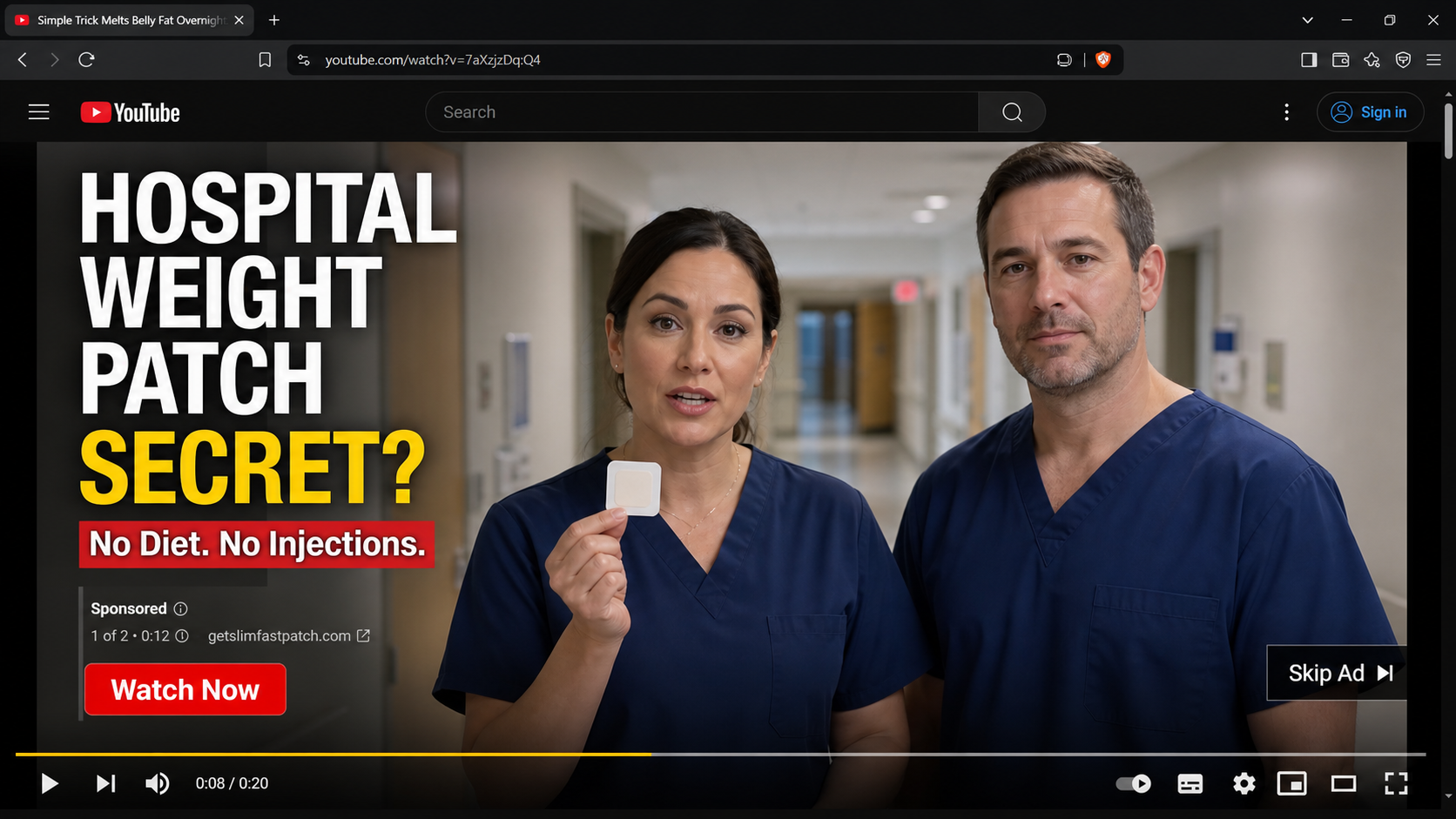
The people in these videos may be completely generated. Their uniforms, badges, voices, and hospital background can be created without a real clinician ever standing in front of a camera.
Investigators found versions using the logos of Guy's and St Thomas' hospitals and Mayo Clinic. Both organizations denied association, and the video platform removed reported ads for violating its policies.
The click led to a newly created website selling slimming patches. The seller used medical imagery and quick-fix claims to make an unapproved consumer product resemble a hospital-backed treatment.
Overview
The Fake Hospital Weight Loss Patch Scam uses AI doctors and stolen medical authority to move viewers from a video ad into a risky checkout that may hide repeat shipments.
AI clinicians replace real medical evidence
A generated person can wear scrubs, speak with a calm clinical tone, and stand in a convincing hospital corridor. Viewers may assume the speaker's identity and credentials were checked by the advertising platform.
The video can then add a real hospital logo behind the fictional clinician. That unauthorized symbol does most of the trust-building even though the hospital never reviewed the product.
Which? found two such YouTube ads in June 2026. One used Guy's and St Thomas' branding and another used Mayo Clinic branding, while the destination sold weight loss patches.
The patch promise skips the requirements of real treatment
The ad suggests a patch can suppress appetite, accelerate metabolism, or reproduce the results associated with prescription injections. It usually promises noticeable weight loss without diet or exercise.
Weight loss patches are not an approved substitute for prescription medicines. Which? reported that the NHS does not endorse or prescribe slimming patches because there is no clear evidence that they work or contain what they claim.
A topical patch also is not a dietary supplement. Ingredient, absorption, dose, skin safety, and drug-like claims require product-specific evidence that a generic hospital video cannot provide.
Disposable websites make billing and refunds harder
The website found in the investigation was newly created. Short-lived domains let operators replace a store when complaints, payment problems, or platform enforcement catch up.
Checkout pages may begin with a cheap trial or one-month supply, then place a subscription, autoship, membership, or larger package in the terms beside the final button.
The advertisement investigated by Which? came from a U.S.-based advertiser with about 200 live ads at the time. High ad volume can push the same funnel through many page names before it is removed.
- Fictional AI clinicians appear inside convincing hospital scenes.
- Real medical logos are used without authorization.
- The patch is presented like an alternative to prescription treatment.
- Newly created domains hide the seller's history.
- Cheap trial and package pages can include recurring billing.
- The same advertiser can run hundreds of visual variations.
What the Hospital Weight Loss Patch Story Claims
The video usually begins with a clinician saying that injections, diets, or expensive appointments are unnecessary. A small patch supposedly activates metabolism continuously through the skin.
The script may claim that hospitals are quietly using the patch, that a major medical center developed it, or that conventional weight loss companies tried to suppress it.
Before-and-after images show dramatic body changes while the narrator says users continued eating normally. The photos may be generated, stolen, edited, or taken under different lighting and posture.
A limited trial price reduces hesitation. The buyer is told that the first package costs very little or that only shipping must be paid.
At checkout, the offer can expand into several boxes, faster delivery, a wellness membership, or repeat monthly shipments. The low figure shown in the ad may not be the amount authorized today.
Once complaints expose the store, the same patch can return with a new box, medical center, doctor, domain, and price. The hospital story survives because the physical product is interchangeable.
Why the Medical and Weight Loss Claims Are Unsafe
Mayo Clinic told Which? that it had no association with the advertisement or patches and that use of its logo was unauthorized. Guy's and St Thomas' said similar scams repeatedly used its identity under changing names.
The Medicines and Healthcare products Regulatory Agency warns consumers about weight loss products promoted through social media, especially miracle results, quick fixes, and unusually low prices.
A patch that delivers an active substance through skin must demonstrate that the ingredient reaches the body at an effective and safe dose. A picture of adhesive fabric and a metabolism diagram does not provide that proof.
Unknown ingredients can cause irritation, allergic reactions, interactions, or exposure to substances not listed on the package. Counterfeit and mislabeled health products may also delay appropriate treatment.
The Federal Trade Commission warns that dishonest health sellers use fake doctor endorsements, miraculous results, act-now pressure, and money-back guarantees that buyers may never receive. This funnel uses the complete pattern.
How the Fake Hospital Weight Loss Patch Scam Works
Step 1: A sponsored video looks like hospital advice
The viewer sees clinicians in scrubs, a recognizable medical logo, and a hospital setting. The ad may run on YouTube or another platform beside ordinary entertainment.
AI can generate the faces and voices while preserving a polished, reassuring style. The people do not need names because the uniform and location imply authority.
Pause and inspect the advertiser, not only the video. A hospital-backed campaign should come from the hospital's verified account and official domain.
Step 2: The ad promises prescription-like results without a prescription
The patch is compared with injections, appetite medicines, or clinical treatment while being sold as a simple consumer product.
Claims such as lose weight while sleeping, melt belly fat, or no diet required are designed to reach people who are worried about cost, needles, or eligibility.
A real medical option explains who should not use it, expected benefits, common adverse effects, and the evidence. Scam ads replace those details with certainty.
Step 3: The click opens a newly created sales domain
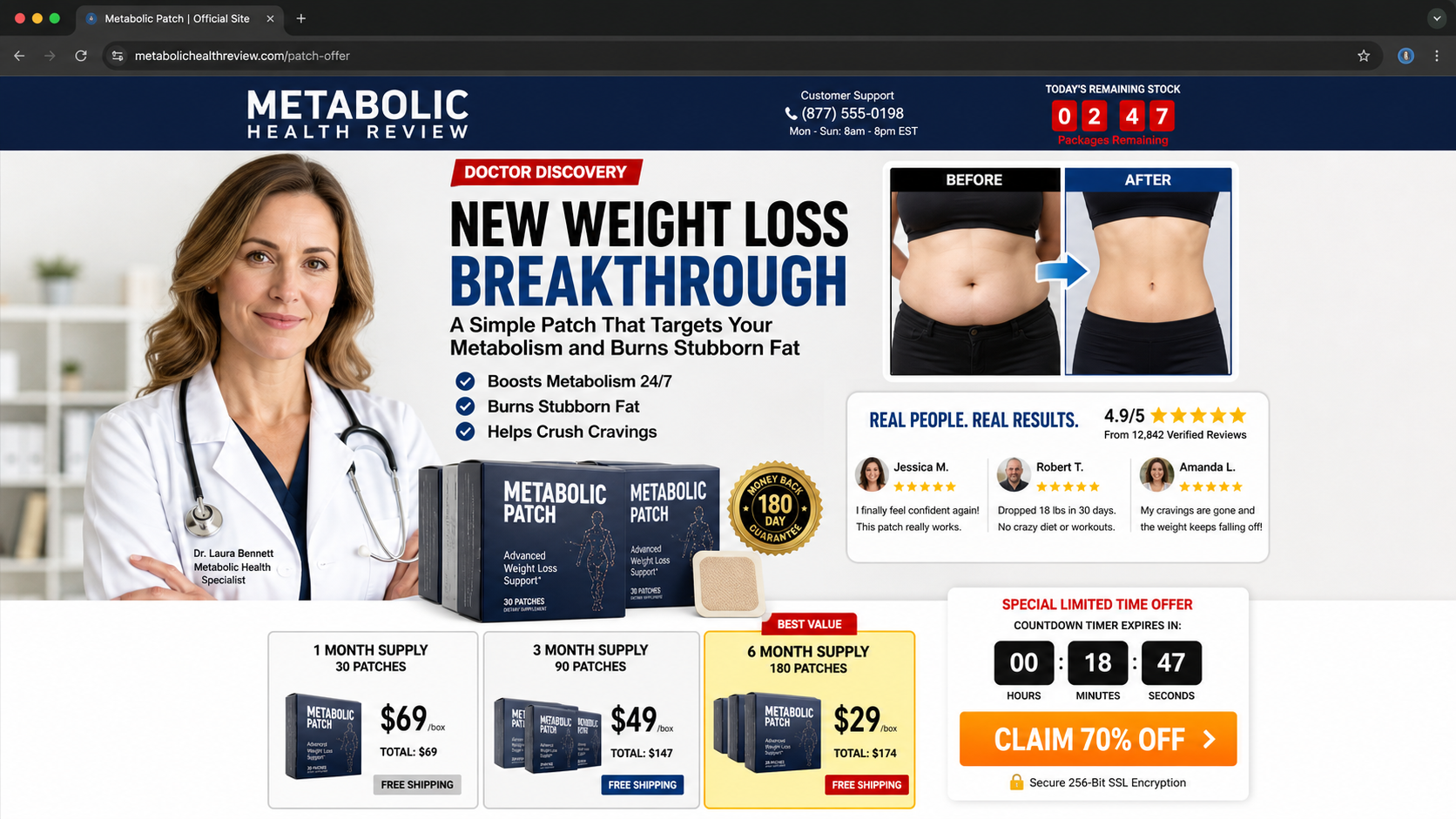
The landing page carries medical colors, a doctor portrait, before-and-after images, and a product box. The address bar belongs to an unfamiliar store.
New domains have little complaint history and can disappear after a short campaign. Search the creation date, archived versions, and exact support details.
Do not assume an HTTPS padlock means the seller is legitimate. It only means the connection is encrypted.
Step 4: Social proof and countdowns create urgency
The page shows thousands of reviews, a nearly perfect score, a small number of remaining packages, and a timer that expires within minutes.
Generated customer portraits and copied testimonials can make a brand-new domain appear established. Independent reviews should exist outside the seller's own pages.
Reload the page. A timer that resets is a sales script, not inventory information.
Step 5: The trial or one-box offer expands at checkout
The buyer may be steered to three or six months because the per-box price looks lower. The total can be hidden below the fold or beside an already selected package.
A free trial can authorize a later full-price shipment. A subscribe-and-save checkbox can turn a one-time box into monthly billing.
Read every line beside the final button, take a screenshot, and remove shipping protection, memberships, and autoship unless they are truly wanted.
Step 6: Support points to a fulfillment center
The package may arrive from a warehouse that ships many unrelated products. Calling that address can produce no information about the ad, formula, or subscription.
Customer service may offer a partial refund, insist on expensive international return shipping, or say the cancellation arrived after the next order processed.
Contact the issuer while working with the seller. Do not wait for a reply that may arrive after the dispute deadline.
Step 7: A new doctor and brand replace the exposed version
The operator can reuse the same video structure with a different patch box, clinician, hospital, and website. AI makes new creative variations inexpensive.
Search the support number, return address, terms wording, product images, and card descriptor. These clues often persist longer than the public brand.
The safest rule is simple: a real hospital will not reveal a secret cure through an anonymous sponsored video that ends at a mystery checkout.
Company, Address, and Fulfillment Checks
The hospital is not the merchant
Guy's and St Thomas' and Mayo Clinic denied involvement with the ads reviewed by Which?. Their logos were trust props, not proof of sponsorship or product review.
The legal seller should appear in the checkout terms, receipt, and card statement. If the page names only a medical-sounding brand, ownership remains hidden.
Do not call the hospital for a refund. Report the impersonation, then identify the merchant through payment records.
A fulfillment address is not a laboratory
The return address may belong to a logistics company, virtual office, residence, or overseas consolidator. It can process packages without knowing how the patch was marketed.
Search the address and compare it with the legal entity in the terms. A medical product should have a responsible manufacturer and traceable regulatory information, not only a return dock.
Never send a return without written authorization and tracking. Ask who pays postage and whether opening one box voids the entire refund.
Disposable phone numbers make cancellation difficult
Call before ordering and ask whether the exact patch is sold once or monthly, what future charges will be, and how to cancel. Record the answer.
A number that answers only new sales calls, uses a full voicemail box, or cannot identify the product is not meaningful support.
Send cancellation by email as well and keep delivery confirmation. The card issuer may need proof that the merchant was notified.
Unknown patch ingredients can create real harm
The box should list every active and inactive ingredient, amount, responsible manufacturer, lot, expiration, warnings, and a way to report a reaction. Marketing phrases such as natural metabolism support are not enough.
Cheap patches are frequently mass-produced by private-label suppliers in China and other countries, then placed in new packaging. That is not automatically unsafe, but an undisclosed factory and unverified formula make quality impossible to judge.
Do not use a mystery patch on damaged skin, during pregnancy, or alongside prescription weight loss, diabetes, blood pressure, or stimulant medication without professional advice.
Why a Patch Feels Safer Than a Pill or Injection
A patch looks simple, familiar, and external. That appearance can make people assume it contains a gentle ingredient even though some substances can cross the skin and cause systemic effects.
The hospital setting transfers trust from real medicine to an unknown product. The viewer sees professional uniforms and unconsciously supplies regulation, testing, and supervision that the seller never proves.
Weight loss also creates urgency and frustration. A no-diet promise removes the hardest part of change, while a low trial price makes skepticism feel unnecessary.
A credible option starts with transparent ingredients, evidence, contraindications, and an accountable seller. It does not need stolen logos, synthetic clinicians, or a countdown.
Warning Signs to Watch For
- The clinician has no name or verifiable medical license.
- A real hospital logo appears on an unrelated advertiser's account.
- The patch promises injection-like results without a prescription.
- The store domain was created recently.
- Before-and-after images show different lighting, posture, or anatomy.
- A timer and stock counter reset after reloading.
- A cheap trial activates future shipments.
- The return address cannot be connected to a manufacturer.
A hospital logo cannot turn an unidentified adhesive patch into an approved treatment. If the seller must steal medical authority to earn the first click, do not trust it with your skin or card.
What to Do if You Have Fallen Victim to This Scam
- Save the entire sales path before it changes. Capture the ad, video, landing page, claims, package choice, checkout total, recurring terms, receipt, shipping label, and card descriptor connected with the weight loss patch order. Save the weight loss patch order files outside the browser because this campaign can replace domains and pages quickly.
- Cancel the order and every recurring feature in writing. Contact the seller and any subscription processor named on the receipt and state that you cancel the original order, add-ons, memberships, automatic shipments, and future charges. Do not accept a vague cancellation promise for that hospital-weight sales funnel. Record the case number, refund amount, and payment-token status for that hospital-weight sales funnel.
- Call the card issuer without waiting for support. For the weight loss patch order transaction, explain what the advertisement promised, what you believed you were authorizing, and what was actually charged. Ask about blocking that merchant, replacing the card, disputing the weight loss patch order merchandise, and the deadline for challenging a later refill.
- Check statements for several months. When reviewing the weight loss patch order billing, look for the brand, a fulfillment company, a generic wellness descriptor, and unfamiliar small test charges. Another weight loss patch order refill may use a different descriptor from the bottle, so compare amounts and dates rather than searching for only one word.
- Keep unopened products and all packaging. Photograph every weight loss patch order label, seal, lot code, return address, tracking label, ingredient panel, and item in the box. Keep the weight loss patch order packaging until the refund or dispute is complete, and use tracked shipping only if the seller truly requires a return.
- Protect your health first. Remove the patch if you develop redness, blistering, dizziness, palpitations, nausea, breathing trouble, or another unexpected symptom. Keep the wrapper and ingredient list. Contact a clinician or poison control, and seek emergency help for a severe reaction.
- Secure any account or device exposed during the purchase. Change any password reused during the weight loss patch order checkout and enable multifactor authentication if an account was created. If the weight loss patch order page forced a download, browser extension, unofficial tracking app, or remote-support tool, remove it and run a full Malwarebytes scan.
- Reduce contact with the same advertising network. AdGuard can block many aggressive ad networks, pop-ups, and redirect chains that feed the weight loss patch order funnel. AdGuard cannot establish that the product promoted through this hospital-weight promotion is legitimate. Verify the seller, evidence, terms, and billing separately.
- Report the campaign with useful evidence. Report the ad to YouTube or the platform that displayed the hospital impersonation, the transaction to the FTC at ReportFraud.ftc.gov, and any serious reaction to the appropriate health regulator. When reporting this hospital-weight product case, attach the destination addresses, advertisements, contact details, statement name, and exact sales claim.
Frequently Asked Questions
Do weight loss patches work like prescription injections?
No evidence from these ads establishes that. Prescription medicines have known active ingredients, doses, clinical data, and medical supervision. A mystery patch cannot borrow that evidence.
Did Mayo Clinic endorse the patches?
No. Mayo Clinic told Which? it had no association with the ad or patches and that use of its logo was unauthorized.
Are all weight loss patches scams?
This warning concerns unapproved patches sold with fake hospital endorsements and deceptive billing. Any specific product still needs transparent ingredients, evidence, and an accountable seller.
Can a free trial create a subscription?
Yes. Some trial offers authorize full-price monthly shipments after a short period. Read the exact terms beside the payment button and save them.
What if the patch arrived from another company?
Photograph the package and compare the seller, shipper, return address, and card descriptor. Contact the issuer if the delivered merchant cannot be connected to the order.
Where should I report a fake hospital ad?
Report it to the advertising platform, the impersonated hospital, the FTC, and the appropriate health-product regulator. Include the ad account and destination domain.
The Bottom Line
The Fake Hospital Weight Loss Patch Scam replaces medical evidence with AI clinicians, stolen hospital logos, and a promise that one adhesive square can replace diet, prescriptions, and professional care.
The newly created store and potential subscription checkout create financial risk, while unknown ingredients create a separate health risk.
Verify the advertiser through the hospital's official channel, read the exact billing terms, and do not use an unidentified patch. Real medical advice does not arrive through a disposable account with a resettable timer.

Join the discussion
0 commentsShare your experience or ask a question about this article.
Discussion
Start the conversation
Have a question or something useful to share? Add the first comment.