


What would you do if someone threatened to publish an intimate video of a relative? A demand like that can divide a family in minutes.
A case from Ohio shows why the person making the threat should not get to decide what your family does next.
Overview
Someone the family knew was behind the threats
Crystal Cisco was hired by parents to provide peer support to their adult child. The role gave her an existing relationship with the people prosecutors say she later extorted.
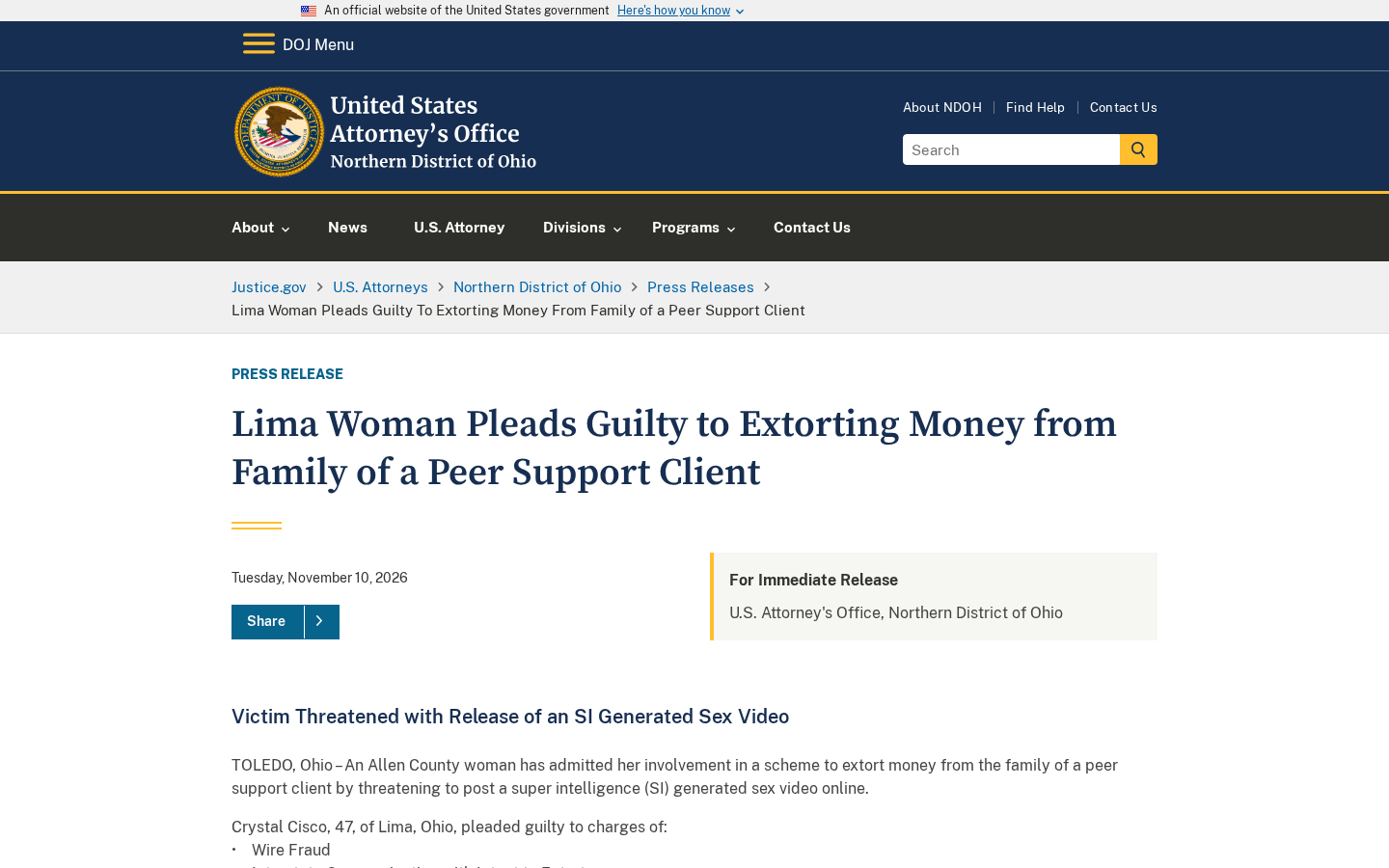
In its November 10, 2026 guilty plea announcement, the U.S. Attorney’s Office described generated sexually explicit audio and images and a threatened video that did not exist.
This did not start with an anonymous stranger asking someone to undress on a dating app. The Ohio case shows why families should look at who receives the demands too.
The person behind the demand was not identified to the family simply by the number on the screen. Prosecutors say Cisco used internet-based numbers to conceal her identity.
The threatened video and the other material are not interchangeable
Prosecutors described generated audio and images. They did not say that the video threatened in the demand had been recorded or that someone had broken into a device.
You do not need to identify the tool behind a file. A demand for money in exchange for silence is serious whether the material exists or not.
On the other hand, the fact that footage in this case did not exist does not mean every threat is empty. Treat a new demand on its own facts.
The parents paid more than $85,000
Prosecutors say the family paid more than $85,000. Their announcement also describes demands concerning a residence, a vehicle and a phone, without saying the family handed over everything demanded.
Cisco pleaded guilty to wire fraud, an interstate communication with intent to extort, receiving proceeds of extortion, and money laundering. The November announcement records the plea, not a sentence.
- Tell the person named in the threat what is happening, when it is safe to do so.
- Keep the demands and payment records private rather than circulating intimate files.
- Check for immediate danger and contact emergency services if anyone is at risk.
- Stop negotiating over money and get help through independent contacts.
How the Fake Intimate Video Extortion Worked
Step 1: Someone with a real connection concealed her identity
Support work can bring someone into parts of family life that are usually private. Here, the family’s worker concealed her identity when sending the threats.
The Ohio announcement does not say the family recognized her in each exchange. If a threat mentions real details, that does not tell you who sent it.
Do not search the displayed phone number and then accuse the first person you find. Save it for investigators, including the date it appeared and where you saw it.
Do not make the adult named in a demand feel responsible for proving someone lied. Ask what support they need and whether they want a trusted person to help.
If the person has ongoing care needs, look for continuity while you take the threat seriously. Arrange an independent point of contact instead of leaving all decisions with the sender.
Step 2: Generated material reinforced a threat about a video
Audio and images can alarm someone even if they do not prove what happened. A minute spent studying one file may not tell you whether another file exists at all.
In the Ohio case, prosecutors distinguish the generated material from the video mentioned in the threat. That distinction is missing when somebody says they have proof and refuses questions.
You do not have to obtain a copy of intimate material to report the threat. A message demanding payment can be evidence even if it contains no picture.
Do not upload the material to a public detection website to settle an argument. That can expose the person further without answering whether the threatened video was ever recorded.
Step 3: The threat made the family, rather than only the subject, a source of money
A family may try to spare an adult relative the details while paying quietly. That impulse is understandable, but it can leave the payer isolated with the person making demands.
The sum in the Cisco case came from the family. Prosecutors described multiple kinds of demands, not one price that resolved everything when it was paid.
Take a moment to agree on one trusted point of contact outside the dispute. If a demand goes to more than one person, compare the messages before anyone replies.
The person who received the demand may need to speak to a bank. The person named in it may need help protecting their safety and privacy.
Step 4: New demands did not depend on the threatened video being real
The case is an example of how damaging a threat can be before anyone publishes a file. The family could lose money even though the threatened recording did not exist.
Paying for silence does not give you control over the other person. It cannot establish that they deleted anything or put an end to contact from additional accounts.
Make a safety plan before cutting contact if the sender can visit, knows where someone lives or provides essential support. Get law enforcement involved if you fear immediate harm.
If the demand is online only, you can usually save the evidence without discussing the claims. Report the account through the platform, then follow the guidance you receive about contact.
What to Save and What to Keep Private
Preserve the threat, even when the file is missing
Save messages showing who asked for what and when. Include the account identifier, channel, time and payment instructions, and separately note anything said in a call.
If a relative received a demand, ask them to keep it private. Compare dates and amounts instead of forwarding any intimate images.
Keep the sender’s claims in your notes as claims. If the message says a video exists and you have never seen one, write that down plainly.
Save the account name or number as displayed. Separate what you actually received from what you suspect about the sender’s identity.
If several numbers were used, write down which message came from each. That is better than combining all the texts into one unlabeled collage.
Build a timeline that helps your bank or an investigator
For each payment, record the payer, amount, service and reference number. Put the threat it followed alongside it without sending a whole set of family messages to a stranger.
Save the messages in their originals when possible. A cropped image can be helpful to explain one demand, but may lose the sender handle or date.
Have one person keep the bank and police reference numbers in a private note. That reduces the chance family members open separate reports without knowing who is handling them.
When one relative did not see all the correspondence, ask them to save what they personally received. Avoid filling in parts of their account based on what you suspect happened.
Alongside payment records, preserve any messages requesting keys, account access or devices. Noncash demands may affect who can safely use a home, vehicle or phone.
Take a quick inventory of what has been transferred and what was only demanded. Tell investigators if anyone still has a key, a device or access to a shared account.
Keep the adult at the center of decisions about their privacy
Tell the person being threatened what you know without showing them distressing images unprompted. Ask whether they want a trusted person on the call or in the room.
Do not announce to a group chat that the material is genuine or fake if nobody knows. You can describe a threat accurately without repeating the accusation in it.
When support must change, use a trusted provider or advocate who is not connected to the sender. Decide who can contact the adult while you preserve privacy and avoid disruption.
If another provider needs to take over, share only what is necessary to maintain support. You do not need to circulate private material to explain a change in arrangements.
Ask the adult which methods are safe for follow-up. They may prefer that no one leaves details on voicemail or sends messages to a device other people can see.
Know how to respond if someone says the threat has already been carried out
Ask for the address of the post rather than a new copy of the material. Keep the link private and note the account that posted or forwarded it.
Use the service’s reporting route even if the sender calls the content fake. Report the privacy violation and preserve confirmation of what you submitted and when.
A takedown does not resolve a separate payment demand or physical safety risk. Keep working with the bank or police if one of those problems still exists.
If a platform removes the post, keep the report confirmation and any replies. It is possible for the original link to disappear before you can give it to investigators.
Someone may offer to remove every copy for a fee. Do not hand over credentials or money to a private account claiming it can make the material disappear.
What to Do If You Fell Victim
-
Stop sending money, property or personal material. If you have already paid, you do not have to pay again because a new deadline appears.
If the sender is nearby or could come to the house, prioritize the immediate safety of everyone involved. Call local emergency services in an emergency.
For a threatened adult who relies on the sender, find help with an alternative arrangement. Do not leave them to negotiate changes in care alone.
-
Contact your bank or payment service through a verified channel. Give it the amount, transaction identifier and date, and explain that your family paid under threat.
Ask whether a pending transfer can be stopped, and what it can do if the payment is complete. Keep the reference number and records of its response.
If more than one relative paid, each may need to speak to their own bank. Compare dates so investigators can see which demands were connected.
-
Preserve the demands without spreading the intimate material. Save messages and names, then note the facts you observed, what the sender claimed, and what you did next.
Ask police or a platform about the secure route for submitting sensitive evidence. Avoid copying intimate material to social posts, family groups or image search tools.
If the only thing you have is a voicemail or a relative’s recollection, report it anyway. A missing video does not make the extortion demand harmless.
-
Report the threat to law enforcement and the platform involved. In the United States, you can report online extortion at the FBI’s Internet Crime Complaint Center.
Tell investigators if the sender knows the family in person or has access to their home. That changes the safety question independently of whether a file is authentic.
If content appears online, preserve the page address and report it through the platform’s intimate-image or harassment process. Ask the platform what else it needs rather than forwarding copies.
-
Check accounts based on what was actually shared. If someone got a password, a code or control of a device, secure the affected account through the real provider.
A fabricated or threatened video alone does not prove an account was hacked. Check for real indications of access instead of paying someone to remove a recording they cannot verify.
Give the person affected a way to reach you or another trusted contact. Remind them that they did not cause the demand and do not owe the sender a response.
Frequently Asked Questions
Did Crystal Cisco have the video described in the demand?
The U.S. Attorney’s Office said that video did not exist. Its announcement separately described generated explicit audio and images.
Can a demand be extortion when the material is fake?
Fabricated material does not make a demand safe or harmless. Report the payment request and threat without waiting for a definitive answer about a file.
Should I ask for a copy before reporting?
Do not request more intimate material from the person threatening you. Save their existing communications and tell investigators exactly which claims you cannot verify.
What if the person threatening us is a caregiver or worker we know?
Plan for real-world safety and continuity of support. Do not confront the person alone if you or your relative could be at risk.
What if someone already paid to protect me?
Put them in contact with their bank or payment service and help preserve the demand. The fact they paid does not stop them from reporting what happened.
Is a guilty plea the same as a sentencing announcement?
No, they are separate stages of a criminal case. The cited announcement confirms the plea and describes the conduct; it does not provide a sentence.
The Bottom Line
Do not pay someone who threatens your family with an intimate video. Get to safety if needed, keep the demand private, and report it without trying to obtain the file.
If a relative already paid, help them contact their payment provider. Give the person named in the threat a say in what happens to their information and support.

Join the discussion
0 commentsShare your experience or ask a question about this article.
Community experiences
Did this happen to you?
Your experience could help someone recognize the same scam. Submit a private report for our team to review.
I experienced this tooReports are reviewed before publication. Sharing publicly is always your choice.
Discussion
Start the conversation
Have a question or something useful to share? Add the first comment.