


An artist says they discovered your work and wants to introduce you to Pace Gallery. Soon, a detailed commission arrives with an attractive fee.
There is a contract, a project schedule, and even an explanation for your travel arrangements. Before reserving those dates, look closely at the proposed booking.
Overview
A prestigious gallery name opens the conversation
The fake Pace Gallery commission scam approaches photographers, musicians, and other creators with paid exhibition work. The supposed opportunity borrows the identity of a real gallery.
Some approaches begin with someone impersonating an artist, who offers to introduce the recipient to gallery staff. A second contact then supplies the formal-looking paperwork.
The apparent introduction is part of the persuasion. Two people agreeing about a project can still be two identities controlled by the same dishonest operation.
The financial turn comes through the travel arrangements
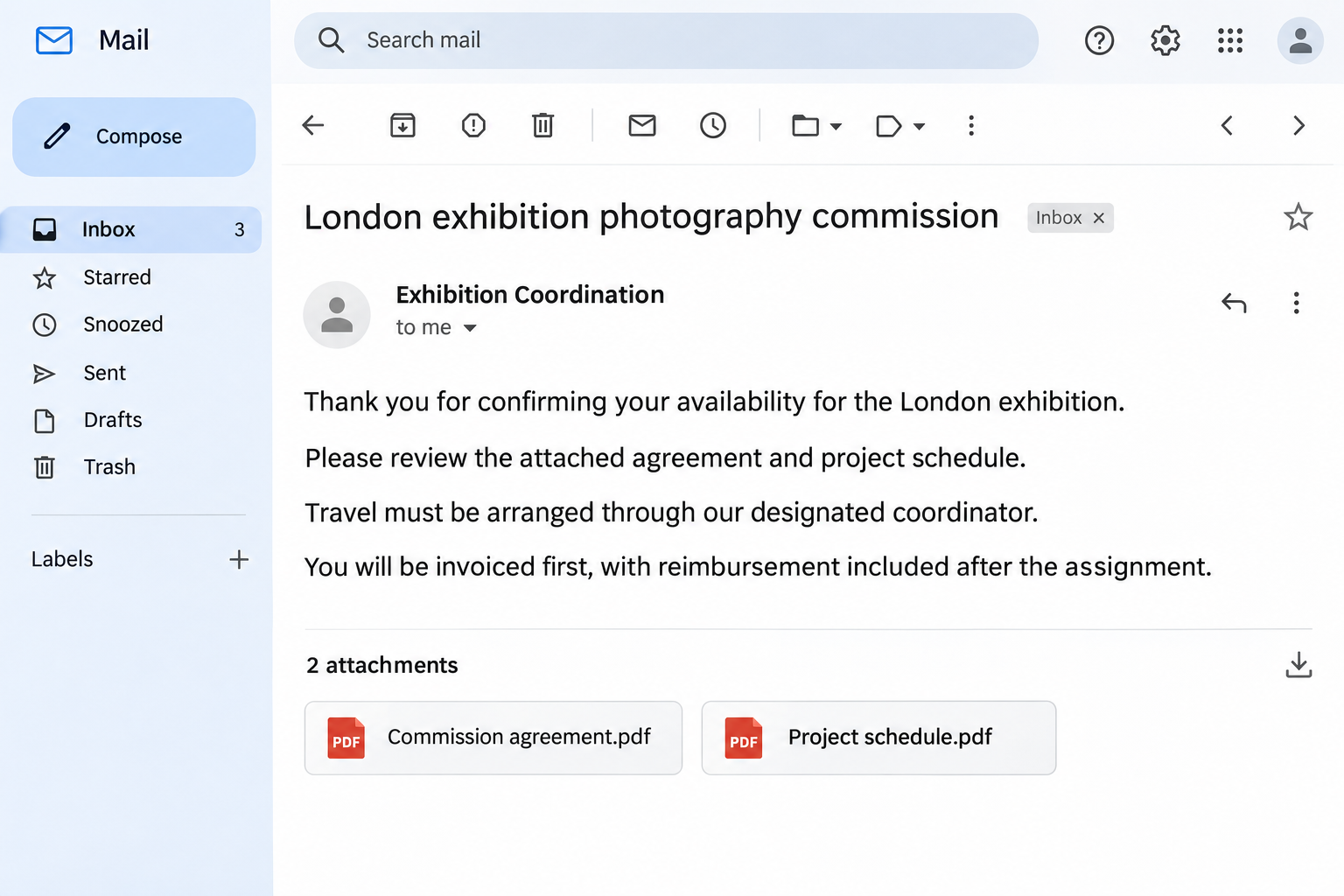
A recent reported photography offer promised £26,277 for ten days of work. Travel would be arranged by a designated contact, invoiced first, and reimbursed afterward.
Separate recipients describe similar gallery approaches, travel referrals, and requests for passport information. One reported checking directly with Pace and learning the proposed exhibition arrangement was false.
This warning concerns the impersonating messages. Pace Gallery, the real artists whose names appear, and unrelated businesses with similar names should not be blamed for them.
Check the commission before sending money or documents
- Reach the gallery through its genuine website, using contact details you find independently.
- Confirm the actual project, commissioning person, dates, and travel arrangements before agreeing to proceed.
- Do not pay the referred travel contact on the strength of a promised future reimbursement.
- If you already paid or supplied documents, preserve the correspondence and address that specific exposure promptly.
The Introduction Makes the Offer Feel Personal
For a freelancer, an unexpected inquiry can be perfectly ordinary. Clients discover photographs online, hear music on SoundCloud, and contact creators they have never met.
This scheme begins in that familiar setting. Someone praises your work and describes an exhibition where your skills would supposedly fit.
A photographer reported being approached by a person using a real ceramic artist’s identity. The sender offered to make an introduction despite the photographer living abroad.
Searching the artist’s name produced a real person, making the opening feel credible. But confirming that an artist exists does not identify who sent the email.
The photographer asked which image had attracted attention and received a broad answer about the work overall. That was a reason to investigate further.
Generic praise alone cannot decide a commission’s legitimacy. Here, it mattered alongside the borrowed identity, different email domain, and later travel-payment route.
Other creators describe a similar opening built around music rather than photography. The work changes while the introduction and apparent gallery connection remain persuasive.
The opening email image is an illustrative reconstruction of that booking stage. It is not an authentic gallery message, contract, or recovered project document.
How the Fake Pace Gallery Commission Scam Works
Step 1: An apparent artist or curator discovers your work
The first sender offers the kind of recognition a creator hopes to receive. An exhibition, collaboration, or commission gives the contact a plausible professional purpose.
The message may reference your public portfolio without showing much knowledge of it. A familiar artist’s name encourages you to fill in the missing credibility.
Instead of independently confirming the connection, you are invited to continue with someone the sender introduces. That referral becomes the bridge to the next stage.
Keep the original message when checking the offer. Its full address and claimed relationship matter more than the impressive name in the signature.
Step 2: A second contact presents the gallery’s supposed authority
A person claiming a senior gallery role follows up with availability questions and formal documents. The conversation now looks like an ordinary client handoff.
In the photography report, the second contact supplied an agreement and a lengthy dossier with a day-by-day schedule. The paperwork arrived before the relationship was established.
The recipient noticed that the dossier did not align neatly with the original pitch. It contained photographs and credits without convincing detail about the proposed collaboration.
A long attachment can consume the time you would otherwise spend checking the sender. Confirm the commissioning relationship before treating the dossier as your working brief.
Step 3: The fee and covered expenses make the commitment attractive
The photography offer described a flat fee in British pounds and covered accommodation. It also allowed companions, while making their costs and details a separate matter.
Those specifics make the offer easier to imagine accepting. You start considering dates, travel, and who might accompany you before establishing whether the commission exists.
The quoted £26,277 was a promised fee, not a confirmed payment or reported loss. Do not treat a large number inside a contract as money received.
Likewise, an expense described as covered may still be charged to you first. Read who pays, when payment happens, and who selected the recipient.
Step 4: A designated travel contact requests money or personal documents
The supposed gallery directs travel through another contact. The freelancer is told to accept an invoice, provide details, or pay first while reimbursement comes later.
This turns a job you expected to earn from into a transaction you must fund. The referral supplies apparent authority for the payment destination.
Separate accounts describe requests for passport details through the travel arrangement. A plausible need for travel paperwork does not authenticate the person receiving it.
Some recipients reported the same reimbursement approach under another gallery’s name. Recognizing the payment sequence is more useful than memorizing one artist, domain, or signature.
Step 5: The promised reimbursement becomes the reason to keep complying
The freelancer is encouraged to view the initial expense as temporary. The attractive commission supposedly absorbs it once the assignment or performance is complete.
That promise leaves the recipient carrying the immediate risk. A signed-looking agreement offers little practical protection when the person issuing it is impersonating someone else.
Do not make an additional payment to protect money already sent. Stop and verify through the real gallery before another invoice or document request arrives.
Some accounts also describe pressure to accept an international check. A check offer changes the payment risk, even when the invitation begins with the same gallery story.
Check the Whole Address, Then Verify the Person Separately
Recipients identified messages using pacegallery[.]uk, while the genuine gallery’s London page publishes contacts at pacegallery.com. Read the entire address rather than the displayed sender name.
The difference is between these particular domains, not a rule that British domains are inherently suspicious. A London location does not automatically authenticate a .uk address.
The real London gallery page provides a separate route for checking a claimed commission. Open it independently instead of using the sender’s introduction.
Ask whether the named person is commissioning the particular project. Include the proposed dates, your role, the sender address, and the travel contact they supplied.
Finding a genuine employee with the same name is only part of that check. Impersonators can borrow an existing staff member’s identity as easily as an artist’s.
Do not let an unverified sender arrange their own confirmation call. The point of checking independently is to leave the communication chain they control.
A Contract Does Not Authenticate the Travel Invoice
Read the agreement as a proposal to verify, rather than proof that the gallery approved the project. Formatting, signatures, schedules, and photographs can all be copied.
In the photography account, travel was described separately from accommodation. That distinction mattered because the travel invoice would reach the freelancer before the promised reimbursement.
Ask who actually contracts with the travel provider and who owes the invoice. An expense being reimbursable does not make its destination trustworthy.
A request for banking details can also occur in genuine freelance work. The problem here is supplying them to an unverified commissioning chain.
Do not send a card-security code, banking password, or approval code to establish payment arrangements. Those requests create a different exposure from ordinary invoice details.
The FBI’s employer-impersonation guidance describes false contracts, requests for documents, and upfront costs supposedly reimbursed in a first paycheck.
If a check appears in your own exchange, tell your bank the complete story before using it. An available balance should not finance the referred booking.
What to Do if You Have Fallen Victim to This Scam
-
Stop the booking and preserve the correspondence. Keep the initial approach, introduction, agreements, schedules, travel invoices, sender addresses, and any payment instructions.
Record the order in which each person contacted you. That helps show how the artist introduction, supposed gallery representative, and travel contact were connected.
Do not continue negotiating for evidence or confront the people involved. Preserve what you already have without supplying another document or payment.
-
Contact your financial institution promptly if you paid. Explain that an impersonated gallery commission led you to a designated travel payment.
Provide the actual currency, amount, recipient, date, and transaction reference. Ask about the relevant fraud report, transfer recall, card dispute, or blocking options.
Keep the institution’s case number and follow-up instructions. A reimbursement promise from the sender should not delay reporting an existing payment.
If a check was deposited, tell the bank before withdrawing or forwarding funds. Explain whether any money has already been sent onward.
-
Identify precisely which financial details were disclosed. Tell the bank whether you supplied account details, card information, online-banking credentials, or an approval code.
These disclosures need different responses, so describe them accurately. Let the institution advise which access, payment instrument, or permissions should be restricted.
A password change will not reverse a transfer. Card replacement also cannot settle every issue involving a separately exposed bank account.
-
Address passport or identity-document exposure separately. Record which documents and fields you supplied, including any companion’s information sent through the supposed travel arrangement.
Contact the relevant issuer or identity-protection authority for your location. Ask what safeguards apply rather than assuming every disclosed document requires automatic replacement.
Tell an affected companion directly so they can seek their own guidance. Keep their records private when preparing reports or asking others for help.
-
Verify the impersonation through the genuine gallery. Use independently obtained contact details and provide the claimed project, sender addresses, and relevant correspondence.
Make clear that you are reporting someone using the gallery’s identity. Do not assume the real artist or staff member whose name appears sent the message.
Preserve the response alongside your original records. A genuine gallery inquiry is separate from requesting financial recovery through your bank.
-
Secure an account if its password was entered. Use that service’s genuine recovery controls and replace reused passwords on other affected accounts.
If the exchange involved a work mailbox, inform your administrator about any credential entry. Simply receiving a contract does not establish that the mailbox was compromised.
Describe any software installation or remote access separately if it occurred. The documented commission approach does not, by itself, establish a malware infection.
-
Report the attempted fraud and avoid paid recovery promises. United States readers can use IC3; elsewhere, use the appropriate local fraud-reporting service.
Include relevant transaction references and a concise timeline, keeping identity documents out of public posts. A report documents the incident without guaranteeing recovery.
Reject unsolicited offers to recover funds, cancel the false booking, or clear your name for another fee. Continue through your independently verified institutional contacts.
Keep Genuine Freelance Work Separate From the False Offer
Review the dates you reserved and any real bookings you changed because of the commission. Avoid further commitments while the gallery connection remains unverified.
If you independently booked actual travel, contact that provider using your real reservation details. The impersonator cannot reliably explain a genuine booking’s cancellation terms.
Keep legitimate expenses separate from payments sent through the false referral. Your financial institution needs to know which transaction you are asking it to investigate.
Before accepting another international commission, establish who commissions the work and who pays each supplier. Put those responsibilities in your own normal business paperwork.
A good opportunity can withstand a direct confirmation with the organization named. You do not need to buy travel through a stranger to prove professional enthusiasm.
Frequently Asked Questions
Is Pace Gallery itself running this scam?
The warning concerns people impersonating the gallery through commission emails and travel referrals. The legitimate gallery and artists whose identities are borrowed are separate from that conduct.
Does a real artist’s website confirm their introduction?
Finding a genuine artist confirms that the person exists. Verify the actual sender and claimed gallery relationship independently before trusting their referral.
Is every request for freelance banking information fraudulent?
Genuine clients may need appropriate payment details. Confirm the client first, and never supply banking passwords or security codes through an unverified conversation.
Why does the promised reimbursement not protect me?
The promise comes from the same unverified people directing the payment. Money sent to their travel contact creates an immediate exposure regardless of the proposed future fee.
What if I signed the agreement but paid nothing?
Stop further exchanges and preserve the paperwork. Review what personal information the document disclosed, then verify the impersonation through the genuine gallery.
What should I do after sending passport details?
Record exactly what was shared and contact the relevant issuing or identity-protection authority. Do not send replacement documents to the supposed travel coordinator.
The Bottom Line
Do not pay the referred travel contact or submit identity documents for this false gallery commission. Confirm the project through Pace Gallery’s independently reached official contacts.
If you already responded, preserve the full exchange and address the actual exposure promptly. Contact the financial institution for payments and the relevant authority for identity documents.

Join the discussion
0 commentsShare your experience or ask a question about this article.
Community experiences
Did this happen to you?
Your experience could help someone recognize the same scam. Submit a private report for our team to review.
I experienced this tooReports are reviewed before publication. Sharing publicly is always your choice.
Discussion
Start the conversation
Have a question or something useful to share? Add the first comment.