

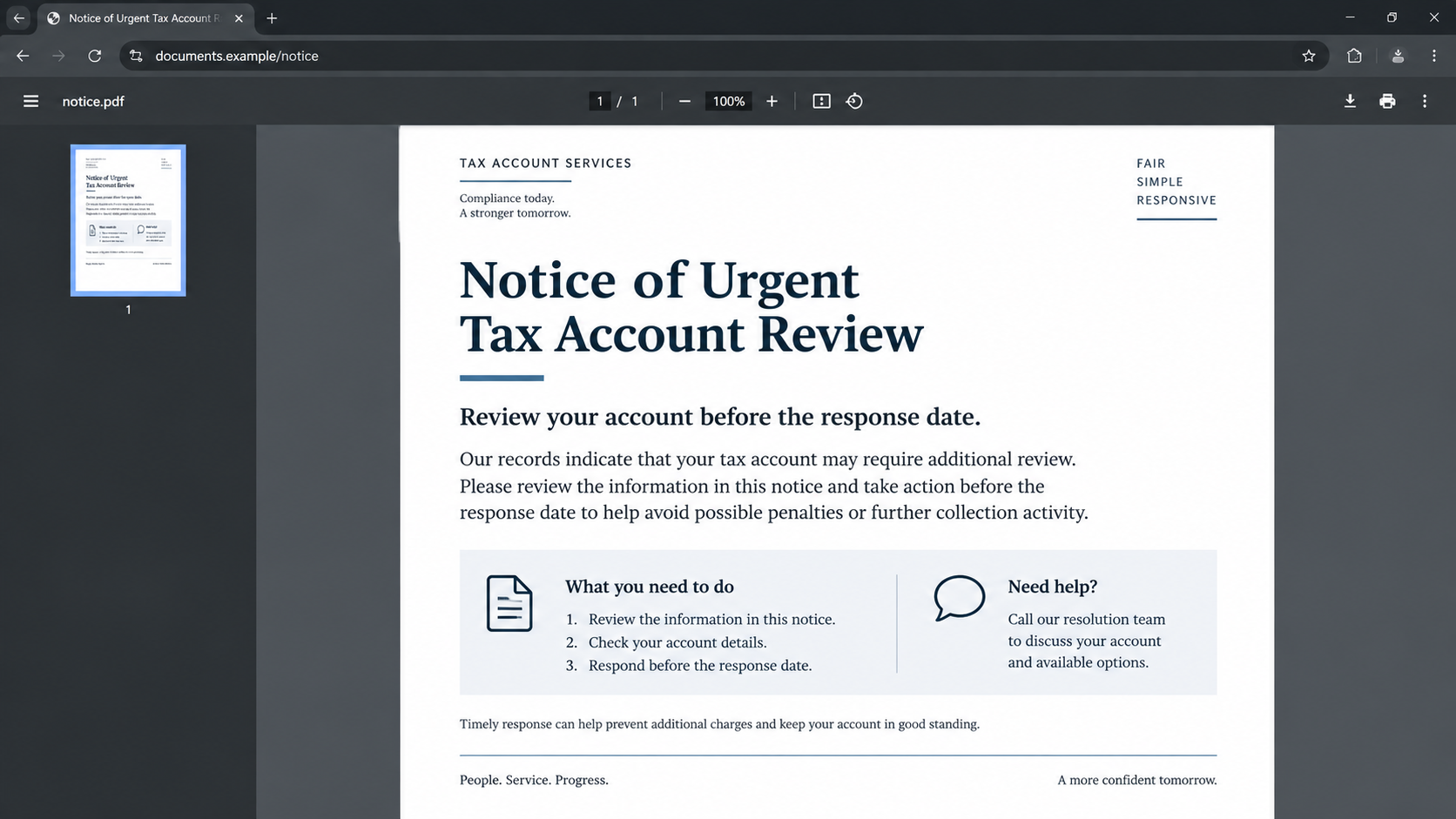
The envelope looks official. Inside, a notice warns that your property could be seized unless you call before a printed deadline.
Even when you know you owe taxes, that kind of letter can make a routine afternoon feel like an emergency. Pause before dialing its number.
Overview
The threat behind the letter
A fake tax seizure letter scam uses the appearance of government collection to pull someone into a private tax-relief sales call.
It may mention a property seizure, urgent response date, or tax balance. The reader is directed to a number selected by the sender, not independently verified.
These details are powerful because genuine tax debts exist. A real balance does not make the letter, its deadline, or its advertised relief service authentic.
What regulators described
In June 2026, the FTC and Nevada described a case involving American Tax Service, or ATS, and its operators.
The FTC alleged that government-impersonating letters warned of property seizure and moved recipients into calls promising tax debt relief.
Two individual operators agreed to surrender cash and other assets under a proposed settlement. The FTC said litigation against corporate defendants was still ongoing.
- A threatening letter is not proof that a seizure is imminent.
- A private company cannot decide whether you qualify for government tax relief.
- A dramatic savings promise made before reviewing your records deserves skepticism.
- Verify any claimed debt through the tax agency’s official channels.
The important boundary
Not every collection notice is fake. The IRS and state revenue agencies can send legitimate letters, and ignoring a real tax issue can worsen it.
The warning is about a private marketer presenting itself as government authority and using fear to obtain a sales lead.
We cannot identify every letter from its design alone. The sender, callback number, underlying balance, and requested payment must be checked separately.
Why a Tax Notice Can Be So Convincing
Tax correspondence already carries an official tone. Case numbers, deadlines, legal language, and references to property can make a privately printed page look credible.
The letter may reach someone who filed late or has a genuine balance. That overlap lets a false warning feel personally accurate.
A sender does not need access to an IRS account to know that many households worry about taxes. Broad mailing can still catch people at a vulnerable moment.
Some versions resemble final notices, while others present themselves as a way to prevent enforcement. The exact layout can change without changing the mechanism.
The first call matters most. Once someone dials the printed number, the sender controls the explanation, the urgency, and the proposed solution.
That is why independent verification is more reliable than judging fonts or seals. A polished document can be fabricated, and a plain government letter can be genuine.
How the Fake Tax Seizure Letter Scam Works
Step 1: A government-looking letter creates urgency
The mailing suggests the recipient faces serious collection action. A near-term deadline makes it harder to slow down and check the source.
According to an FTC consumer alert, ATS letters demanded a call by a specified date or warned of property seizure.
The page’s styling may imply an agency connection. The actual sender can be a private business selling a service rather than the tax authority.
Read the return address and small print, but do not rely on them alone. A name, address, or seal can be copied into a marketing document.
Step 2: The callback puts the recipient inside a sales conversation
The notice gives a telephone number that seems to resolve the threat. Calling it can reach a tax-relief seller rather than the IRS or state department.
The representative may ask about balances, wages, property, and previous notices. That information helps shape an offer and can increase the caller’s anxiety.
A sales agent can sound experienced without having checked an official account. Ask for the legal company name and whether the caller works for a government agency.
If the representative says the letter came from a tax authority, verify that claim using a number published by the authority itself.
Step 3: A broad promise turns fear into hope
After the seizure warning, the pitch offers relief. The caller may hear that a special program can erase most of a debt.
The FTC said ATS claimed it could settle back taxes for a small fraction of the balance, sometimes before evaluating the taxpayer’s circumstances.
No private business can guarantee that result. Eligibility depends on the taxpayer’s finances, the tax authority, the debt type, and a formal review.
Even a real relief program is not an automatic discount. A phrase such as “you qualify” means little until the agency confirms it.
Ask what has actually been filed, with whom, and under whose authorization. A promise on the phone is not a government decision.
Step 4: Fees arrive before meaningful relief
The offer can require substantial service fees. Paying a company is different from paying the tax authority and does not by itself reduce the balance.
The FTC alleged that defendants pocketed millions while misleading consumers. Its case also described upsells for fictitious add-on services aimed particularly at older people.
Some consumers may be persuaded to fund more work after the first payment. Each new document request or claimed complication becomes another reason to keep paying.
Request a written contract describing services, refund terms, licensed professionals, and the point at which fees are earned. Do not sign because a letter says time is running out.
Step 5: The real debt can remain unresolved
The private seller’s fee does not stop tax collection. If no effective action is taken, the taxpayer may still owe the original balance, penalties, or interest.
That is the second injury in this scheme: money spent on a promise while the underlying problem remains.
Ask the tax agency directly whether an installment arrangement, dispute, or other official option exists. Keep independent records of every filing and payment.
Do not authorize a company to speak for you without understanding the document. A representative’s power should be limited to services you actually requested.
Step 6: More calls may follow the first payment
A person who answered a tax-relief letter may receive follow-up calls with fresh deadlines or supposed updates. Treat each new demand as separate and verify it.
The sales team might know details you previously disclosed. Familiarity with your balance does not prove that a caller represents the government.
If someone claims a refund, settlement approval, or imminent seizure, ask for the notice number and confirm it through official agency contact details.
Never move money to a new destination solely because a caller says the original payment method has changed.
What the ATS Case Actually Shows
The FTC and Nevada’s case offers a documented example, not a finding about every tax consultant. It concerns alleged government impersonation and unsupported relief promises.
In June 2026, the agencies announced a proposed settlement with two operators. The FTC said they would surrender more than $8 million in cash plus other assets.
The release also described a $77.7 million judgment, largely suspended based on financial condition. That figure is not a statement that $77.7 million was paid.
Litigation against several corporate defendants was ongoing when the release appeared. It would be inaccurate to describe that part as a final court judgment.
The FTC’s concern was sharp: a letter that seems to come from the government can draw a frightened taxpayer into a costly private sales pitch.
A real tax professional may charge for legitimate work. The warning is the impersonation, premature guarantee, and fee pressure, not the mere existence of paid advice.
How to Check a Tax Letter Without Using Its Callback Number
First, identify the agency the letter claims to represent. Federal and state authorities have different offices, records, and collection processes.
Visit the agency’s website by typing the address yourself or using a trusted bookmark. Find its published contact route for notices and account questions.
Compare the claimed tax period, balance, notice identifier, and response instructions with your official account or a representative reached independently.
If you have a genuine tax balance, ask the agency what options apply. Only that agency can confirm whether you qualify for a payment or settlement program.
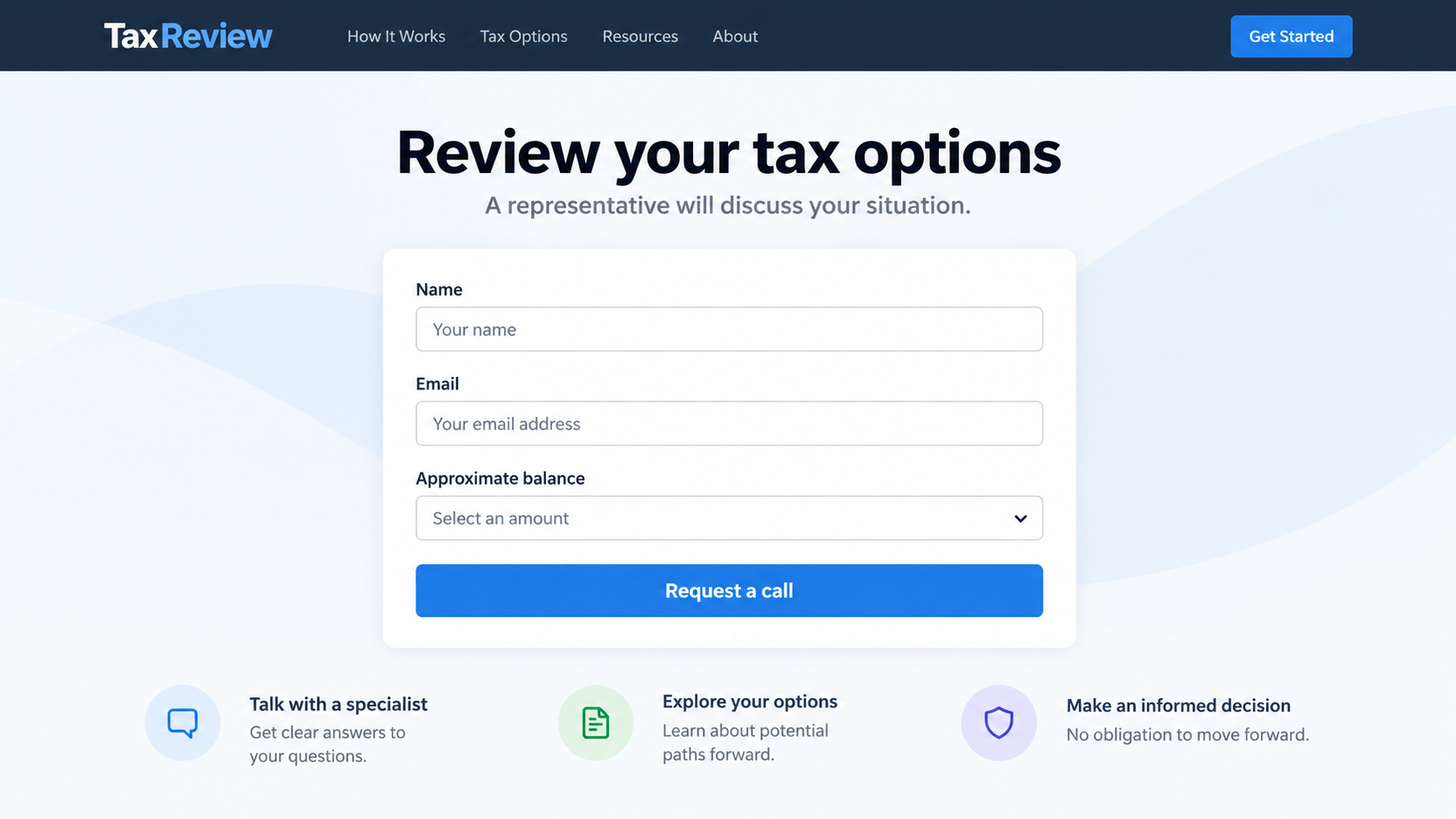
Do not enter Social Security numbers, financial details, or document uploads into a link printed on a suspicious notice.
For complex questions, consider a qualified tax professional whose credentials you can verify. Explain the letter before agreeing to a fee or representation agreement.
When federal tax problems cannot be resolved through ordinary channels, the FTC points readers toward the Taxpayer Advocate Service for assistance.
If the notice concerns state taxes, reach the state revenue department through its own site. A federal agency cannot verify every state notice for you.
Choosing Help for a Real Tax Problem
An official account check may reveal a balance that deserves attention. That does not mean the company behind the threatening letter is the right adviser.
Ask a prospective professional what credentials they hold and who will personally review your records. A sales agent’s confident prediction is not individualized tax advice.
Get a written explanation of the proposed work. It should distinguish preparing documents, negotiating with an agency, and simply forwarding information you could submit yourself.
Request the complete fee schedule and refund conditions. Find out whether a failed application, withdrawn representation, or additional tax year creates another charge.
Check whether the professional has actually accessed your records with your permission. No one can accurately calculate a likely settlement from a few figures on a hurried call.
Be cautious if a company asks you to stop opening agency mail. Official notices may contain response dates that matter regardless of a private contract.
Keep copies of every form filed and any power of attorney. You should know who can speak for you and how to revoke that authority if necessary.
Paying a qualified adviser can be worthwhile in a complicated case. The decision should follow verification and a clear scope of work, not a staged emergency.
Warning Signs That Deserve a Closer Look
- The notice claims government authority but sends you to a private tax-relief business.
- A caller promises a large reduction before reviewing tax records.
- The first demand is a full service fee rather than a documented plan.
- The representative refuses to identify the company or professional handling the case.
- You are told not to contact the tax agency independently.
- Additional paid services appear after an initial contract.
No single clue establishes that an official notice is false. The combination of government styling, a private callback, and guaranteed relief is much more concerning.
Equally, a legitimate debt should not be ignored because one advertisement was deceptive. Separate the question of what you owe from whom you choose to hire.
What to Do if You Have Fallen Victim to This Scam
- Save the complete record. Keep the envelope, letter, contract, invoices, receipts, caller information, and every message. Note what the salesperson promised and when.
- Verify the tax balance independently. Contact the IRS or state revenue agency using its official website. Ask what is owed and whether any filing was made on your behalf.
- Stop further authorization. Tell the seller in writing that you dispute unauthorized work or charges and withdraw permission for new payments. Keep delivery confirmation.
- Speak with your payment provider. Explain any misleading representation or unauthorized charge and ask about dispute options. Deadlines vary, so act promptly.
- Review sensitive information shared. If you sent identity or account details, consider the appropriate fraud alert, account monitoring, and identity-protection steps for your exposure.
- Get independent tax help. A qualified professional or the tax agency can help separate a genuine debt from a seller’s claims and restore a realistic response plan.
- Report the mailing. File a report at ReportFraud.ftc.gov and include the letter and payment destination. Report any apparent agency impersonation through that agency’s published channel.
Feeling alarmed by a seizure warning is normal. What matters now is checking the real account, protecting your payment method, and dealing with any authentic balance.
Frequently Asked Questions
Can a genuine tax notice mention property seizure?
Yes. Tax authorities have collection powers under specific rules. A threatening phrase alone cannot establish authenticity, so check the account and notice independently.
What if the letter states my real tax balance?
An accurate amount still does not prove the sender represents the government. Verify the balance through official channels before using its callback number.
Is American Tax Service the IRS?
No. ATS was a private tax-relief operation named in an FTC and Nevada case. The agencies alleged that its marketing impersonated government tax authorities.
Can a company guarantee a tax settlement?
No private seller can guarantee an agency’s decision for an individual taxpayer. Eligibility depends on facts the authority must evaluate.
Should I ignore the letter if it looks fake?
Do not follow suspicious instructions, but do not ignore a possible real tax debt. Contact the claimed agency independently and ask about your account.
What if I already paid the relief company?
Keep your contract and receipts, ask the payment provider about disputes, and verify whether the tax agency received any filing or payment.
The Bottom Line
The fake tax seizure letter scam turns fear of collection into a private tax-relief sale. The strongest defense is to verify the debt through the agency itself.
If you paid or shared information, preserve the paper trail and act on the real tax issue separately. A dramatic mailing should never choose your adviser for you.








