

A Washington licensing text cites RCW 46.16A and warns that your driving privileges could be affected. The reference looks official, even though the alleged fee is unfamiliar.
The Washington DOL text scam relies on that moment of uncertainty. Understanding what the reference actually tells you makes the rest of the request easier to judge.
Overview
The licensing agency warns against payment demands by text
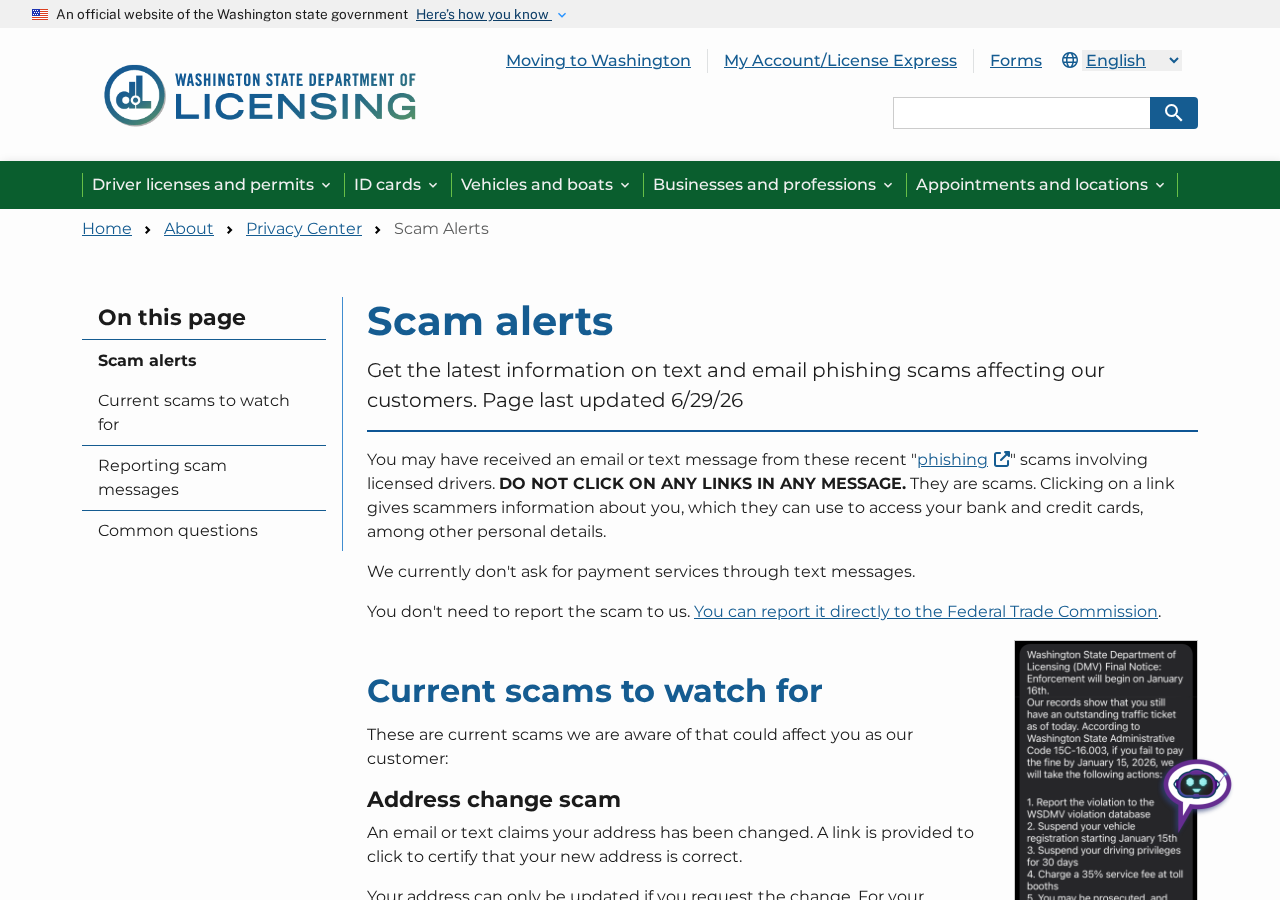
The Washington State Department of Licensing maintains a scam-alert page covering fraudulent licensing messages. It says it does not ask for payment services through text messages.
That page describes ticket-fee demands, suspicious address-change requests, REAL ID shortcuts, and toll messages. These approaches borrow different government tasks to push readers toward an unfamiliar destination.
The screenshot above shows the actual DOL warning. It is an institutional advisory, not a record of a payment made by a particular recipient.
Do not treat an unsolicited text as your licensing record. Check a concern through DOL or the other responsible authority without taking the sender’s proposed payment route.
RCW 46.16A is a real chapter, not a sender verification
The Washington Legislature identifies chapter 46.16A RCW as registration law. A stranger can copy that reference into a message.
Its existence does not prove you violated a requirement, owe the displayed amount, or must pay the website supplied. Those are separate assertions about your circumstances.
You do not need to interpret an entire statute to reject an unverified payment demand. Find your own record and ask the appropriate office about any genuine issue.
A mixed message needs the right authority, not a faster click
Before doing anything, separate the questions the text may have bundled together:
- Does it concern a driver license or a vehicle registration?
- Is the supposed debt a traffic ticket or a toll?
- Did you actually request an address change?
- Does the notice ask for payment, personal details, or an account approval?
- Can the responsible office confirm the matter outside the text?
A single threatening paragraph cannot establish all those connections. Answer them through genuine services rather than supplying private information to the sender’s form.
Why the Legal Reference Is Such Effective Bait
It sounds more specific than a generic unpaid bill
A statutory reference can give an accusation a sense of precision. You may hesitate to question it because it sounds like a rule you should already understand.
But locating the chapter only confirms the reference exists. It does not connect the sender with DOL or identify a decision made about you.
The chapter contains many registration provisions. A message that simply names it has not explained which actual record, requirement, or process supports its demand.
Keep the code in your notes if you call DOL. You can ask what it refers to without paying the website that quoted it.
A driving threat can feel bigger than the requested fee
Driving may connect you with work, school, family care, or medical appointments. A warning about losing access can make a quick payment feel like the least disruptive choice.
That is a reason to establish the true status, not a reason to accept the text. The sender benefits when fear replaces a separate check.
A genuine administrative concern might need attention. Ask the appropriate agency or court what its records show and what deadline actually applies.
Keep any earlier documents available during that conversation. A real renewal reminder or ticket should not be replaced by instructions introduced by an unfamiliar sender.
The sender can change the label without changing the request
DOL warns about messages invoking a Department of Motor Vehicles, transportation services, ticket fees, and tolls. An official-sounding label can obscure which task is actually being discussed.
Washington’s licensing agency is DOL. However, using the correct name is not enough to establish authenticity either; it is public information that a message can copy.
Focus on the requested action and destination. A well-spelled text demanding money through an unverified link is not made safer by avoiding an obvious naming mistake.
How the Washington DOL Text Scam Works
Step 1: The text presents a registration or ticket problem as established
The approach introduces an alleged debt, violation, or account issue. It may cite RCW 46.16A to make the allegation seem connected with an existing state process.
Rather than starting from a document you recognize, the message asks you to accept the sender’s account of what happened. The supporting record is often missing.
DOL notes that these texts also reach people outside Washington and people without cars. Receipt alone is not evidence that the agency identified an issue with you.
Do not reply with your license or vehicle details to correct the supposed mistake. First establish whom you are dealing with through an independent route.
Step 2: A threatened consequence makes its own deadline feel binding
The sender can describe fees, legal action, or restrictions on driving. A short deadline makes careful checking seem like the action that might cause trouble.
You can check a licensing record without obeying the text first. Find the real office, then ask what action the record actually requires.
Do not bargain with the sender for an extension. Its answer would still leave you relying on the same unverified party about the alleged obligation.
Tell the actual office about any urgent wording when you contact it. Let that office explain its own process instead of accepting the text’s version.
Step 3: The destination borrows licensing design to collect information
A linked page may display state colors, a department heading, or a reference lookup. Those elements make it easier to move straight into completing a form.
The destination might ask for a card, identity details, or sign-in information. The legal reference in the text cannot establish a legitimate need for those fields.
Read an address as an address, not a reassuring phrase. Putting dol, wa, or gov within an unrelated name does not make it the agency’s website.
If you do not recognize the route, stop. Use the real agency’s website or a previously verified account rather than trying to make the imitation lookup work.
Step 4: A supposed resolution leaves payment and identity exposure behind
The site can say the fee is settled or show a receipt. That reassurance may keep you from examining what you entered or approved.
Keep the confirmation as evidence of the interaction. It does not establish a payment to DOL, an updated registration, or a restored license status.
DOL specifically says it cannot refund money paid through a scam website. Contact the financial institution involved rather than asking the imitation portal for a reversal.
A later request to verify the refund deserves the same independent check. Knowing your earlier reference does not make a caller part of a state recovery process.
Check the Real Washington Service Behind the Claim
Use your genuine licensing account for a licensing question
DOL points worried drivers toward its secure License Express account and customer-contact options. Reach those from the agency website you opened independently.
Review the relevant record and ask about any issue you cannot explain. Do not create an account through a form reached from the suspicious text.
Have your existing license and registration paperwork available when you contact the verified office. Identify which record concerns you before discussing a correction.
A helper can organize those papers without uploading them. Keep copies off unfamiliar forms while DOL explains whether it actually needs any additional information.
If a real deadline exists in your paperwork, keep following the genuine instructions. Rejecting a false payment link is not a reason to neglect an unrelated renewal.
Distinguish a requested address change from an unsolicited certification
DOL describes legitimate address changes submitted through its account, contact center, or an office. A requested account change can produce a confirmation email.
It says that confirmation does not contain a link asking you to certify the address or give more information. A message demanding that extra step needs particular caution.
If you did not request a change, inspect the actual account and contact DOL through its published route. Do not correct a suspicious alert by completing its form.
Take court and toll questions to their own services
A ticket, a vehicle registration, and a toll balance are not one interchangeable account. Determine the organization responsible for the particular issue you recognize.
DOL’s warning also describes fraudulent GOOD TO GO toll texts and explains that transportation authorities do not text demands for toll payment.
Find the genuine service through an established government starting point. An imitation page offering to settle every alleged problem together is not a useful shortcut.
What to Do if You Have Fallen Victim to This Scam
-
Stop using the sender’s licensing page. Leave any unfinished form and do not respond to requests for another card, code, or identification document.
Make a record of the text and the actions you completed. Separate viewing an address from entering information, authorizing access, or making a payment.
Save receipts already received, but do not revisit the site just to collect more material. Keep your license and financial details out of public warning posts.
-
Speak with the institution that handled the money. If you entered financial details or paid, contact the bank or card issuer through its genuine app or published number.
Describe the fake licensing request and whether you authorized a transaction. Ask about protecting the card or account and reviewing the specific payment involved.
Follow the institution’s reporting instructions. The agency’s inability to refund an impersonator’s payment is not a reason to abandon a prompt financial report.
-
Protect any sign-in information supplied. Change the affected password on the actual service and address any other account where the same password was used.
Check account recovery information and available security controls. Mention a shared verification code or approved sign-in when you ask the provider to review access.
If you lost access, use that provider’s genuine recovery route. A person introduced by the text should not guide you through taking back the account.
-
Ask about identity protection when identifiers were involved. Tell DOL independently if you are concerned about misuse affecting a licensing record.
For wider identity exposure, IdentityTheft.gov can help organize the appropriate next steps. Specify the document or identifier shared and any unfamiliar activity noticed.
Preserve answers and reference numbers from real organizations. Those records are more useful than assurances that the imitation portal deleted your information.
-
Review downloads or access permissions if you changed them. The text alone does not demonstrate a device infection. An installation or remote-control session needs separate attention.
Stop any unauthorized connection and consult trusted technical help. Malwarebytes can assist with examining a compatible device for malicious software after relevant exposure.
AdGuard can add advertising and browsing protections. It cannot determine whether you owe a state fee or recover money sent to the wrong recipient.
-
Use the reporting routes DOL actually recommends. Its warning directs people to the FTC and their mobile provider rather than requiring a report to DOL.
You can use the phone’s junk or spam controls or forward the text to 7726. Include the sender and destination in your private records.
For a US fraud report, open ReportFraud.ftc.gov yourself. Reporting the message should not involve replying with private identifiers.
-
Check the real record and ignore recovery demands. Resolve any genuine licensing, court, or toll issue through the office responsible for it.
The FTC’s recovery guidance explains steps for money or information already disclosed. Keep those protections moving alongside the legitimate administrative inquiry.
Do not send a second payment to clear the first one or to receive guaranteed compensation. Ask the provider you contacted independently about any new instruction.
Frequently Asked Questions
Is RCW 46.16A a fake law?
No. It is a real Washington registration chapter. Its appearance in a text does not establish the sender’s authority or prove that you owe the alleged fee.
Does Washington DOL request payments through text messages?
Its scam-alert page says it does not ask for payment services through texts. Use the genuine agency website to investigate a licensing concern.
Does DOL ever send a confirmation email?
DOL describes confirmations after requested account changes. It says an address-change confirmation will not ask you to follow a link to certify information or supply more details.
What if the text reached me even though I have no car?
DOL says these messages also reach people without cars and outside Washington. Receipt does not establish a real vehicle record or a breach of agency data.
Will DOL return money I paid on the fake site?
The agency says it cannot refund payments to a scam website. Contact the financial institution involved promptly and ask which reporting or recovery options apply.
Should I use the text’s link to check for a license suspension?
No. Reach DOL through its official site and account or customer-contact route. Let the real agency explain its record instead of relying on the text’s lookup.
The Bottom Line
Do not pay a Washington DOL text scam because it quotes RCW 46.16A or threatens your license. Verify the actual issue through the responsible official service.
If you entered information or paid, protect those details and contact your financial provider promptly. Check any real licensing obligation independently, without returning to the sender.

Join the discussion
0 commentsShare your experience or ask a question about this article.
Community experiences
Did this happen to you?
Your experience could help someone recognize the same scam. Submit a private report for our team to review.
I experienced this tooReports are reviewed before publication. Sharing publicly is always your choice.
Discussion
Start the conversation
Have a question or something useful to share? Add the first comment.