

Your phone says a New York ticket has reached its final deadline. The message offers a quick payment route, while you are still trying to remember a ticket.
A New York DMV text scam can look convincing before you read the details. Knowing which office should handle the alleged ticket gives you a better starting point.
Overview
Copied DMV branding can hide an unrelated payment page
The New York State Department of Motor Vehicles is real. Its phishing guidance warns that criminals copy government logos, images, and website content.
The result can resemble a state service while asking you to pay or disclose information elsewhere. The official-looking heading is not evidence that DMV sent the request.
DMV publishes examples it identifies as fraudulent, including payment notices and imitation websites reported during March and April 2026.
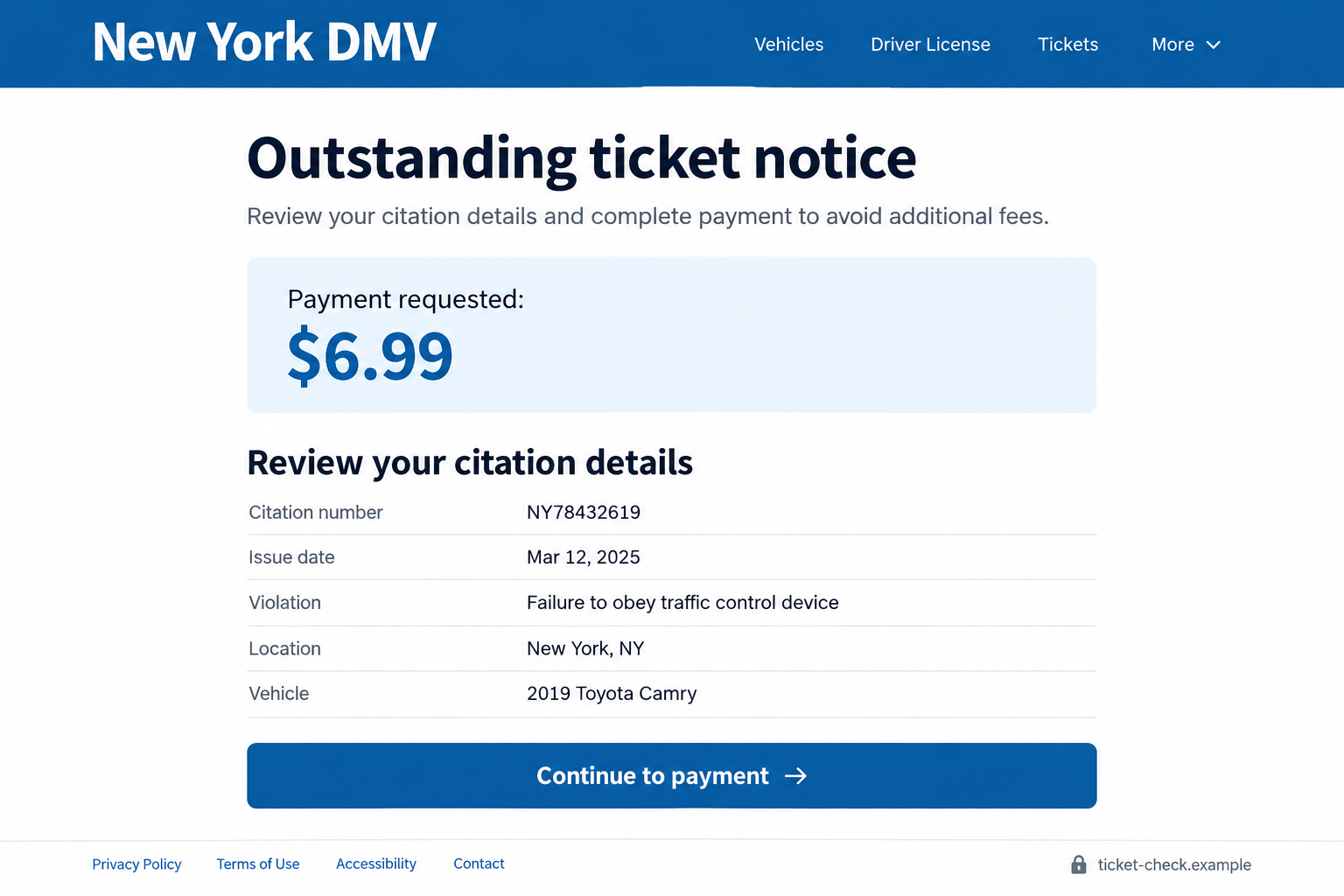
The lead illustration is a fictional payment page. Its reference, date, vehicle, amount, and address are invented examples, not a record of a particular driver’s case.
New York tickets do not all go through one payment office
The responsible authority depends on the ticket. DMV’s Traffic Violations Bureau handles noncriminal traffic violations issued in the five boroughs of New York City.
Traffic tickets outside New York City go through the relevant local court. Parking violations belong to the locality where they were issued, rather than DMV.
That distinction matters when a message rolls traffic, parking, court enforcement, and registration threats into a single demand. Check the real matter before choosing a payment service.
Urgency is a reason to check the record, not the sender’s link
Put the phone down long enough to identify these details:
- The kind of violation the message alleges.
- The place where the alleged event occurred.
- Whether you recognize an actual ticket or prior correspondence.
- The office responsible for answering that kind of ticket.
- The independent record of any deadline or payment already due.
You can investigate without giving the sender a card or license number. A threatened deadline in an unfamiliar message does not authenticate the person demanding action.
What the Message Wants You to Overlook
The name DMV can be familiar even when the task is wrong
Most drivers have dealt with DMV for a license or registration. That familiarity makes it a useful name for a sender claiming broad authority over your driving.
However, a remembered DMV visit does not connect an unsolicited payment demand to an actual case. The particular ticket and responsible office still need to match.
Do not use where you live as the only clue. The place a ticket was issued matters, and a vehicle may have been driven somewhere else.
For a rental or employer vehicle, ask the company through its established contact whether it received a genuine notice. Keep any company fee separate from the alleged government charge.
Do not send the suspicious message’s sender a rental agreement or fleet record to explain the situation. Confirm the recipient before sharing those documents.
Ask a household member about a genuine document through your own conversation. Avoid letting several people independently follow the same unverified link to find an answer.
A small payment can make the threatened consequences seem avoidable
A page may ask for a modest amount while the notice describes severe consequences. Paying can feel easier than spending time checking a confusing allegation.
The practical concern is not limited to the amount displayed. A form may request a card, identifying information, or a banking approval unrelated to settling a real ticket.
There is no safe test payment to an unverified recipient. If the request is dishonest, completing a small transaction still provides information and sends money to that recipient.
Read any approval shown by your actual financial provider on its own terms. The word fee on a webpage cannot change the action your bank is asking you to approve.
A long reference can look like a record without being one
Strings containing state abbreviations, a year, or the letters DMV can appear authoritative. Anyone preparing a message can insert a reference with those features.
A long number can be typed as easily as a short one. Ask the correct office whether it recognizes the matter.
An apparent match on the suspicious page proves little because the sender supplied both the reference and the search result. Verify beyond that page.
How the New York DMV Text Scam Works
Step 1: A notice claims that a ticket is already overdue
The message begins after the supposed violation. Instead of explaining an event you recognize, it may jump directly to final notice, court action, or an unpaid balance.
That opening makes you wonder what earlier step you missed. It encourages catching up with the sender rather than asking whether the story belongs to you.
Look for your own document before supplying information. You do not need to confirm your identity to an unknown sender simply to learn what it alleges.
Step 2: Penalties make the payment route feel urgent
The text can threaten consequences for your license, registration, or ability to resolve the matter. It may describe the next day as the final chance to act.
Real traffic matters can have deadlines, which is why the threat sounds plausible. But plausibility does not establish that this sender knows your actual legal position.
Bring the claimed deadline to the correct office through its published contact route. Do not allow the stranger’s clock to decide where your financial information goes.
Step 3: A link or code takes the claim into a copied portal
The destination can repeat DMV wording and government-style design. A familiar menu, payment panel, or security symbol helps the transition feel like official online administration.
DMV’s published examples demonstrate why copying the appearance is not difficult. The address and the requested task deserve attention even when the page looks polished.
If you cannot comfortably inspect the destination, leave it unopened. You can reach the real DMV website or responsible court without first visiting the suspected imitation.
Step 4: Looking up the supposed ticket requires sensitive details
The form may ask for information before showing a balance or accepting payment. The reader is encouraged to think of those fields as necessary case verification.
But the website’s operator receives whatever you supply. That can include information useful beyond the alleged ticket, especially if you enter credentials or approve account access.
Stop if the form asks you to repeat a rejected card or provide another code. An error message cannot establish that earlier entries were never collected.
Step 5: A confirmation leaves the real question unanswered
The page can display a receipt or say the violation is resolved. That response may bring relief without providing any independent connection to DMV or a court.
A real ticket, if one exists, has not necessarily been answered by paying an unrelated site. Verify its status separately and preserve the suspicious receipt.
If no genuine matter exists, there is still a different task to complete: protecting the information or money you gave away during the false payment process.
Find the Correct New York Ticket Route
For noncriminal traffic tickets issued in New York City
Start with DMV’s traffic ticket information. It explains the Traffic Violations Bureau and links to its actual ticket services.
Check whether your genuine ticket is answerable to TVB. Use the official instructions for pleading, arranging a hearing, or paying, rather than a shortcut sent by a stranger.
Do not assume a payment automatically preserves every option you might have. Ask the responsible office about your actual ticket if you do not understand the choices.
For traffic tickets issued outside New York City
DMV directs drivers to the criminal or traffic court of the city, county, town, or village where the alleged offense occurred.
Use the genuine ticket and independently sourced court details. If you cannot find the original, ask the appropriate office how to establish the correct record.
A search on the message’s own site is not a substitute. You want the real court to explain what it recognizes, not the sender to repeat its demand.
For a parking ticket or a claim about registration
DMV states that it does not handle parking violations. Direct the parking question to the issuing locality using that locality’s official service.
Registration concerns can be connected to genuine unresolved matters, but a threat in a text does not establish that connection. Ask the relevant authority what its records show.
Keep documents from each office together. That makes it easier to distinguish a real administrative issue from a message trying to borrow its importance.
What to Do if You Have Fallen Victim to This Scam
-
Leave the imitation ticket service. Stop entering information and do not return through the message to check whether a payment or cancellation succeeded.
Preserve the text and any confirmation already received. Note the date, claimed authority, requested amount, and what you actually entered or approved.
Keep your notes factual. Receiving a ticket text is different from completing a payment, and that difference helps the next person give you appropriate assistance.
-
Tell your card issuer or bank about the payment page. Use its established contact method and explain whether you disclosed details, sent money, or approved an account action.
Ask which protections fit the exposure, including card replacement, transaction review, or dispute options. Follow its instructions even if the imitation site showed a failed payment.
Record the case reference and watch for the provider’s follow-up. Do not let a caller claiming to be DMV handle your bank’s fraud conversation.
-
Change any password submitted during the visit. Go directly to the service the password belongs to. Replace reused credentials on other accounts as well.
Review recovery contacts and recent sessions, and use available two-factor authentication. Mention any security notification you approved so support can assess more than the password alone.
If the page asked for your mailbox login, prioritize that mailbox. Access there can affect messages used to recover other important accounts.
-
Get help for exposed identity information. A license image or Social Security number calls for different questions from a phone number alone.
Use IdentityTheft.gov to work through the information shared and any evidence of misuse. Contact DMV independently about concerns involving its own records.
Do not send another document to someone promising to erase the first one. Keep copies of genuine reports and any corrective action you are asked to take.
-
Check device changes if the page led to a download. Do not install a recommended viewer, cleaner, or payment application simply because the imitation service requests it.
If you already installed software or allowed control, stop the connection and seek trusted assistance. Malwarebytes may help inspect supported devices for malicious programs.
AdGuard can reduce intrusive ads and risky browsing interruptions. These protections do not recover a ticket payment or determine your legal status.
-
Report the impersonation through genuine reporting channels. DMV’s phishing page explains how to report a suspected contact and distinguishes that route from ordinary DMV customer assistance.
You can also report the incident at ReportFraud.ftc.gov. Include the sender and destination already documented, without opening the suspicious page again.
Share a redacted warning with people who might have received the same contact. Avoid forwarding the active link as if it were a useful ticket lookup.
-
Resolve any real ticket separately. Confirm its issuing location, type, responsible office, and current instructions. A scam payment is not proof of a payment to that office.
The FTC’s recovery resource can help with the financial side. The court or agency handles the genuine ticket question.
Reject follow-up demands to pay for a guaranteed reversal or to stop an arrest related to the message. Stay with the providers you independently contacted.
Frequently Asked Questions
Is a text with New York DMV branding automatically official?
No. DMV warns that its logos and website content are copied. Verify the request outside the message instead of relying on appearance or delivery to your phone.
Does New York DMV handle every traffic ticket in the state?
No. Its published guide distinguishes TVB traffic matters in New York City from tickets handled by local courts elsewhere. Start with the actual ticket type and location.
Where should I check a New York parking ticket?
Contact the locality that issued it through its official service. DMV says it does not handle parking violations, even though unresolved parking matters can affect registration.
Can I trust a reference beginning with NY-DMV?
The wording alone authenticates nothing. Ask the relevant office to verify the alleged record rather than trying to infer legitimacy from a reference’s format.
What if the page charged only a small amount?
Tell your financial provider about both the payment and the details entered. A small total does not limit the information a dishonest form can collect.
Can I ignore a genuine ticket because I also received a scam?
No. Keep the matters separate. Reject the fraudulent route while checking any authentic ticket and deadline with the responsible agency or court.
The Bottom Line
Do not settle a New York DMV text scam through its link or code. Identify the actual ticket authority and check the record through that office’s genuine service.
If you already paid or disclosed details, contact your financial provider and protect the affected information. Then establish whether any real ticket still needs your attention.

Join the discussion
0 commentsShare your experience or ask a question about this article.
Community experiences
Did this happen to you?
Your experience could help someone recognize the same scam. Submit a private report for our team to review.
I experienced this tooReports are reviewed before publication. Sharing publicly is always your choice.
Discussion
Start the conversation
Have a question or something useful to share? Add the first comment.