


A teenager who gets a threatening message may see only two choices: do what the person wants, or let everyone find out. A trusted adult can give them a third.
Gavin Guffey’s case shows why the first conversation after a threat matters. Here’s what families can do before the person sending those messages gets to set the terms.
Overview
What Happened to Gavin Guffey
In October 2026, The Guardian spoke with Gavin Guffey’s father, Brandon, about the loss of his 17-year-old son and his work to help families recognize sextortion.
Gavin died by suicide in 2022.
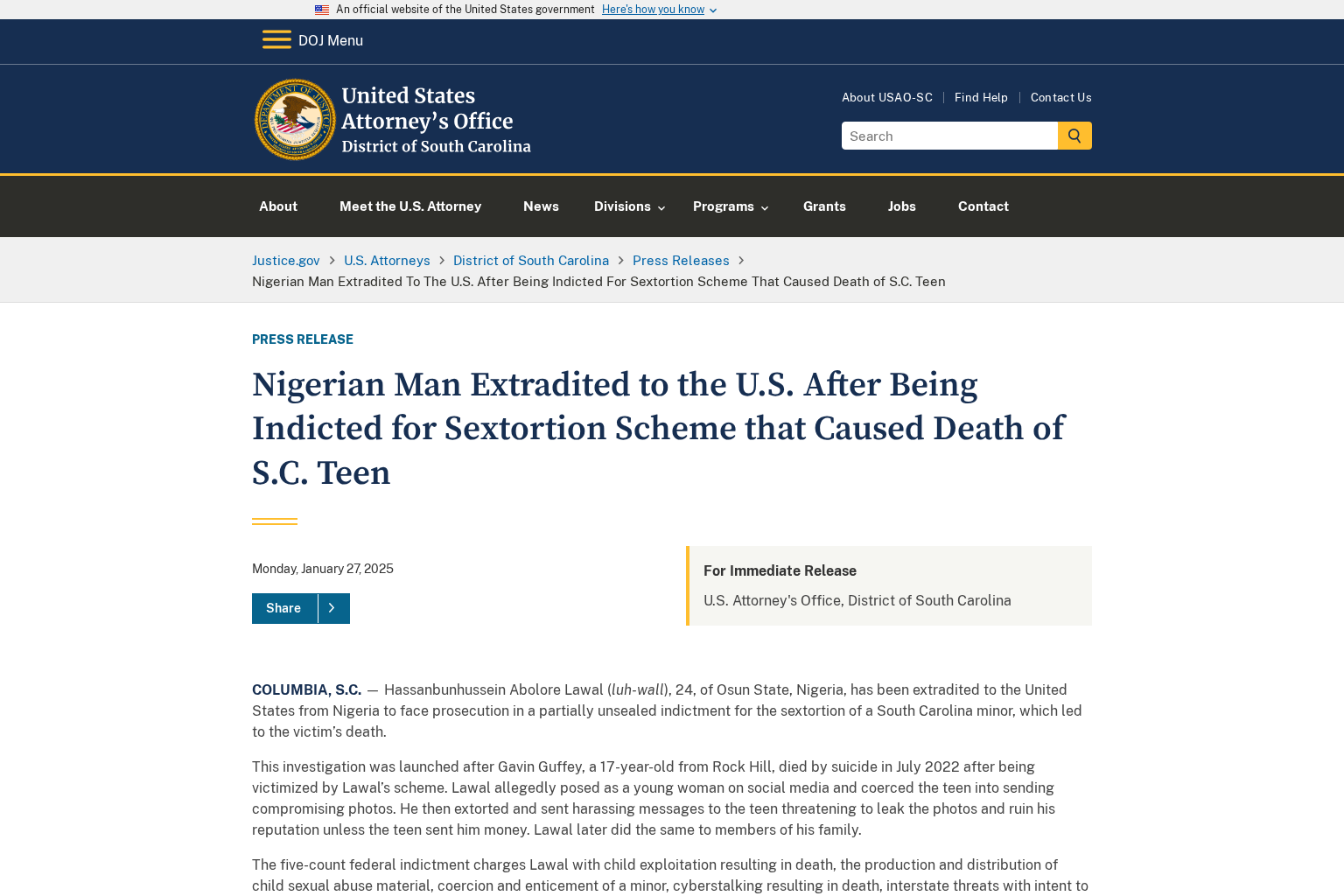
The US Department of Justice made the case public in a January 2025 notice about an extradition and federal charges.
Prosecutors described someone posing as a young woman on social media, obtaining private images, and demanding money under threat of disclosure.
This describes the government’s allegations in that notice, not a court finding.
Families don’t need to know the name or location of the person behind a profile to get help.
The warning signs are the threat, the pressure to respond, and the demand itself.
What Financial Sextortion Looks Like
Sextortion means threatening to disclose intimate material or other private information in order to get something from someone.
In financial sextortion, that demand is for money rather than an ordinary payment.
The person sending the threat may claim the material will be sent to relatives, classmates, or a partner. Even if they are bluffing, the fear can feel just as real.
The pressure often comes right after a conversation that seemed friendly. That abrupt change can make it hard to explain what happened, especially if the person expects to be blamed.
NCMEC’s sextortion guidance advises young people to ask for help, report the account, and not pay.
An adult can help handle those steps without asking to see the images.
What to Say First if Someone Tells You
- Tell them you’re glad they came to you and that the person threatening them is responsible.
- Ask if they feel safe right now, and stay with them if you’re concerned about their immediate safety.
- Tell them they don’t have to show you any intimate material for you to believe them.
- Agree to stop responding and work out what to report together.
- Help them choose another trusted adult if speaking with you is uncomfortable.
The first conversation doesn’t have to cover every detail. It has to make clear they can get help without obeying the threat or proving anything to you.
How the Financial Sextortion Scam Works
Step 1: A New Contact Seems Interested in Talking
The conversation may begin on an app the teenager already uses with friends.
A profile photo and ordinary small talk can make a new contact feel closer to a classmate than a stranger.
In the Guffey case, the Justice Department described a person allegedly posing as someone else on social media.
A profile’s displayed name and picture don’t independently establish the identity of its owner.
It’s also possible for someone a teenager knows to threaten them. Don’t dismiss a report because the account looks familiar, has mutual friends, or has shared information the person recognizes.
You don’t have to teach a teenager to assume every conversation is fake. Teach them they can stop one that makes them uncomfortable and tell someone without getting in trouble.
Step 2: The Conversation Moves Toward Private Material
The person may ask for an intimate image or claim they have one already.
They might also pressure the teenager to keep the exchange secret or move it somewhere more private.
The immediate advice is the same whether the material is genuine, altered, or only claimed to exist.
Don’t send anything else to find out, and don’t try to negotiate the threat away.
Parents can ask whether the sender claims to possess something or has already shared it. There’s no need to view the material to decide that the threat is serious.
If the person came to you before sending anything, still help them report the account. They shouldn’t have to wait for a loss or a disclosure to get support.
Step 3: A Threat Turns the Conversation Into a Demand
The demand can come with a countdown or a claim that friends and family are about to be contacted.
The deadline is meant to squeeze out the time it takes to ask for help.
A person sending threats may show names or a list of contacts as supposed proof.
That shows what they are able to display, not that giving them money will stop them.
If you’re supporting someone through this stage, offer to handle the next practical task together. They shouldn’t have to watch incoming messages while deciding how to protect themselves.
Once you know there’s a threat, the payment deadline is not the priority.
Getting the person away from the conversation and connected with help is more useful than tracking the clock.
Step 4: Paying Does Not Give the Victim Control Back
A person demanding money can change the amount or contact the victim again after a payment.
There is no enforceable agreement that the person will delete anything or leave the family alone.
Someone who already paid needs practical help, not a lecture. Ask which provider handled the money and how recently it moved, then help contact that provider through its legitimate support.
Even if a payment can’t be reversed, a receipt can preserve useful evidence. Keep the transaction identifier and amount without reopening the conversation or asking the sender for a confirmation.
Brandon Guffey told The Guardian that messages reached his family after Gavin’s death. The Justice Department also alleged that the person behind the original contact later targeted family members.
If another family member receives a message, ask them not to reply or forward it.
They can report the new account and tell the original investigator how the messages are connected.
It’s possible someone else will appear offering to remove material or recover the money for a fee. Use established reporting services rather than giving another unknown account information or payment.
How to Help Without Making the Threat Worse
Preserve Identifiers, Not the Images
Write down the platform, username, profile link if safely available, and approximate time of the contact.
If there’s a payment, save its receipt and record the way the sender requested it.
Keep non-explicit threat messages where safe to do so. Don’t copy, send, or request intimate material for your own records, and don’t use a family group chat to collect evidence.
You can get advice even if the account disappears or the victim deletes a message.
Report whatever details remain and tell the reporting service what you no longer have access to.
If the school needs to protect the student from harassment, tell a trusted member of staff only what they need to act. Ask them not to circulate any private content.
Set a time to check in again after the first report. A teenager may be worried about going back to school or seeing notifications long after the messages have stopped.
Give them a say in who knows what happened. If a school or another caregiver needs to know, explain what you’re going to share and why.
Offer a way to reach you if a new threat arrives.
Some teenagers find it easier to send a short text asking for help than to start the conversation in person.
Understand What Take It Down Can and Cannot Do
NCMEC’s Take It Down service is for eligible intimate images or videos taken when the person shown was under 18.
They can use it even if they’re an adult now.
If the material is already on the device, open the official service on that device.
Select the existing file when prompted and follow the tool’s instructions to create a fingerprint locally.
The file stays on the device.
Participating platforms can use that fingerprint to detect copies on eligible public or unencrypted services, but the tool cannot remove material from every platform or private conversation.
Don’t download a copy, ask someone to send you the material, or forward it so the tool can be used.
If you don’t have the file, use the platform’s reporting route and seek help.
What to Do if You Have Fallen Victim to This Scam
Bring in a trusted person and check immediate safety.
Put the phone down for a moment and tell someone you trust what’s happening. You can say someone is threatening to share private material without explaining what’s in it.
If someone might hurt themselves or is otherwise in immediate danger, call local emergency services now. Stay with them if you’re able to do so safely.
Stop replying, paying, or sending anything else to the account.
Don’t try to prove a threat is real by asking to see the material or getting the sender to repeat it. More contact can mean more pressure.
Mute notifications if they’re making it difficult to think. Let a trusted person help with the report so there’s no need to keep reading the latest messages.
Save the non-explicit details needed to report the threat.
Record the platform, profile, contact time, demand, and any payment reference. If you can safely save a threat message without copying intimate media, keep it somewhere private.
Don’t forward images to anyone, including family. If an investigator needs something more, ask through the official reporting route how they want you to handle it.
Report the account and use the appropriate child-safety channel.
Use the platform’s option to report extortion, harassment, or a threat to share intimate images. Mention if the person shown was under 18 when the material was made.
In the US, report suspected online child sexual exploitation to the NCMEC CyberTipline. Outside the US, contact local police or the appropriate national child-protection reporting service.
Contact the payment provider immediately if any money was sent.
Open the service through its known app, or call your bank through the number on your card. Explain that the payment followed a threat and ask what options apply.
Keep the receipt and report number. A reimbursement isn’t guaranteed, but an official record helps you track the bank’s response and connect the payment to your report.
Review account access and plan for any follow-up messages.
Block the profile after making the report and note any new accounts that contact you. Review who can see your contacts, find your profile, or send unsolicited messages.
If you shared a password or login code, use the platform’s recovery process from a trusted device. Check active sessions and update any other account that used that password.
Frequently Asked Questions
Should I Pay if They Say They’ll Send the Images Tonight?
Don’t pay to meet the deadline in the message. A payment doesn’t give you a way to check what the person will do next, and they may demand more.
Ask a trusted person for help, stop replying, and report the threat. If someone is unsafe, get immediate help before collecting records or trying to remove content.
Do I Have to Tell My Parents What Is in the Image?
No one needs you to show the image to take you seriously.
If you can’t talk to a parent, pick another trusted adult, such as a relative, school counselor, or teacher.
You can start by saying someone online is threatening you and you need help. A trusted adult can help you figure out what to report and who else should know.
Can I Report It if the Sender Never Had an Image?
Yes, you can report the threatening account even if the claimed image doesn’t exist. Save the username and the threat if you can safely do so without copying private material.
Don’t ask the sender to prove they have anything. The demand and threat are enough to take action, even if the sender has nothing real to share.
What if the Images Were Already Sent to Other People?
Report the threatening account and the specific posts or messages where you know material appeared.
Ask the platform to remove the material without asking recipients to send it back to you.
Tell a trusted adult what’s happened so you don’t have to check every account alone. If the person shown was under 18, include that in the official report.
Does Deleting My Account Make the Threat Go Away?
Deleting an account doesn’t remove copies someone else may have or prevent a new profile from contacting your friends. It may also make it harder to retrieve useful report details.
Use privacy settings, reporting, and blocking with help from a trusted person. If you already deleted the account, share the details you still remember with the reporting service.
Can Take It Down Work if I No Longer Have the File?
The service needs a local copy to make a fingerprint. Don’t search for, download, or request a copy of an intimate image just to use the service.
If the file isn’t already on your device, use platform reporting and the appropriate child-protection service. You can get help without possessing or handling the material yourself.
The Bottom Line
The person sending the threat wants secrecy to make the demand feel unavoidable. You don’t have to meet their deadline or see whether they’re bluffing before bringing in help.
If this is happening now, stop replying and tell someone you trust. Get emergency help first if anyone is unsafe, then report the account together.

Join the discussion
0 commentsShare your experience or ask a question about this article.
Community experiences
Did this happen to you?
Your experience could help someone recognize the same scam. Submit a private report for our team to review.
I experienced this tooReports are reviewed before publication. Sharing publicly is always your choice.
Discussion
Start the conversation
Have a question or something useful to share? Add the first comment.