


On a video call, a uniform behind a desk can feel more convincing than a voice on the phone. But seeing the office isn’t the same as verifying the caller.
A visit to an abandoned building in Cambodia showed just how much of an official-looking call can be staged. The safest way to check one starts after you hang up.
Overview
What Reporters Found at O’Smach
In March 2026, reporters for The Guardian described a former scam center they visited in O’Smach, near the Cambodian border with Thailand.
Inside were rooms dressed to look like police offices.
They also saw a room modeled on a Vietnamese bank, down to its waiting area.
Other sets borrowed the appearance of police agencies from countries including Australia, Singapore, China, and Brazil.
The reporters saw the rooms and materials in person. That tells us what operators prepared there, not how many people saw each set, sent money, or lost it.
Their visit took place after border fighting, with access arranged by the Thai military.
The consumer warning is about the documented sets, not a claim about who controls the border or any town.
Why a Real Bank or Police Logo Proves So Little
A bank logo can identify which bank someone wants you to think about. It cannot tell you whether the person on screen has any connection to that bank.
The same goes for an office sign, flag, police uniform, or case number.
In this case, a video frame could look official because the room had been made to look that way.
A Singapore Police Force advisory describes fake warrants, uniforms, and police crests in impersonation calls. It’s a separate warning, not evidence that every such call came from O’Smach.
That distinction comes in handy when you’re deciding what to do. You don’t need to identify a country, suspect, or set before you end a call and check the story.
If someone you know is unsure about a call, offer to sit with them while they contact the real organization.
Having a second person there can make it easier to hang up.
Four Things Worth Checking Before You Act
- Call the real bank using the number on the card you already have or in its known app.
- Contact the real agency through its public website, never through the number or account the caller provides.
- If anyone wants you to move money to protect it, ask your bank to investigate before you approve anything.
- Ask the caller to end the contact so you can verify it yourself, or simply hang up and do so.
Treat those checks as independent of the video. A clearer camera image, an emailed badge, or another person joining the same call doesn’t meet any of them.
How the Fake Police Video Call Scam Works
Step 1: An Unexpected Message Gives You Something to Worry About
An impersonation call may start with an unexpected payment, account change, or investigation. The official advisory describes approaches that use supposed suspicious activity to make the situation feel immediate.
A real name or a detail about your bank can make the warning feel personal.
That information still doesn’t prove that the caller is working for the bank or the government.
Don’t try to settle whether the claim is true inside the same conversation.
Sign in through your bank’s known app or look up the agency independently and ask whether anything needs attention.
If you’ve never dealt with an agency before, that’s another reason to slow down. You shouldn’t have to learn its procedures from the only person telling you you’re in trouble.
Step 2: The Caller Moves the Conversation to Video
A video call can seem like a reasonable answer to uncertainty.
You can see the person and their surroundings, so it feels as if you’re getting a second piece of evidence.
The O’Smach rooms explain the catch. A background can be evidence of what somebody placed behind a camera without being evidence that they work for the institution on the wall.
A person in uniform may show an identity card too. Make a note of the name or reference, but verify it independently rather than inspecting the image.
You don’t need to turn on your own camera to check a caller’s identity. If it is already on, don’t hold up an identity document, bank card, or statement.
You’re allowed to hang up even if the person says it will make you look uncooperative.
If the issue is real, a channel you found outside the call is still available.
Step 3: A Handoff Makes the Same Story Sound Independent
An initial caller might claim they need to connect you to a different department.
In the wider pattern described by police advisories, callers can even claim to transfer a customer between institutions.
The switch is persuasive because the new voice seems to confirm exactly what the first person told you.
But you didn’t choose the route to that second person or verify either identity.
Start a fresh contact to check the bank’s side and the police side separately. Don’t use a link, phone number, or extension supplied by either caller.
There’s no need to stay on the line to prove you are taking the matter seriously. The time you spend verifying outside the call is what makes the difference.
Step 4: An Instruction Puts Your Money or Information at Risk
The practical test is what the caller wants you to do.
Singapore’s ScamShield guidance warns about demands to transfer money, reveal bank login information, or install apps from unofficial sources.
A caller might frame a transfer as a safety measure rather than a purchase. Ask your bank why money would have to leave an account you control before you agree.
If the request is for a code, approve nothing while you’re still in contact.
The institution that sent the code can tell you why it was generated through an established support route.
There isn’t a single payment or data request attributable to every room at O’Smach.
These are ways to recognize the wider scam pattern, not a reconstruction of a specific victim’s call.
A Separate Risk: Job Offers That Can Lead to Exploitation
What the Reporting Does and Doesn’t Establish
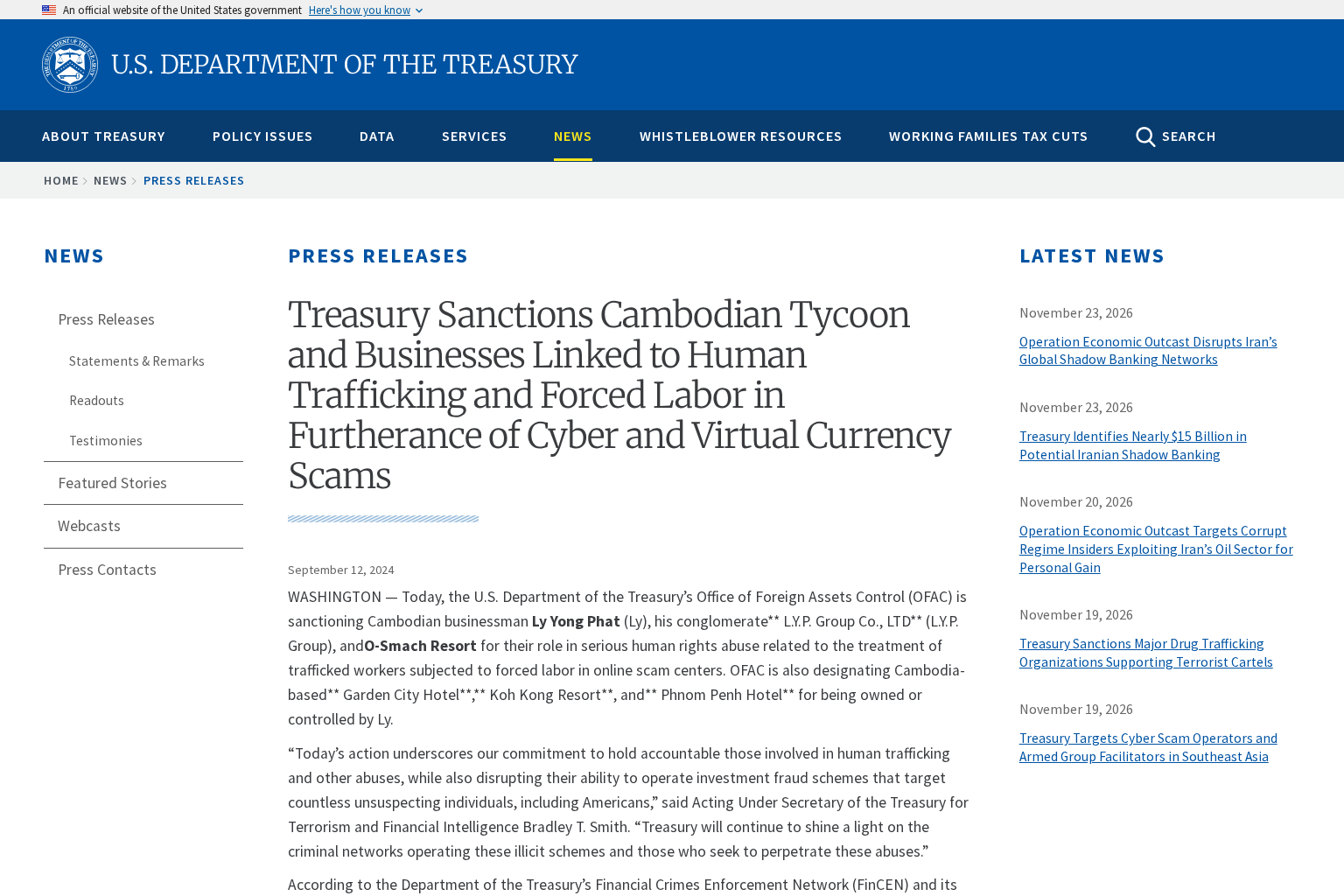
The US Treasury’s September 2024 notice announced sanctions involving O-Smach Resort and related parties.
Treasury cited reported forced labor, deceptive recruitment, and workers having phones and passports confiscated.
That announcement is separate from the Guardian’s 2026 visit. It does not establish which specific building the journalists entered or the circumstances of every individual who worked there.
In its 2026 report, the UN Human Rights Office likewise documented deception in recruitment for scam operations.
Someone calling from such an operation may also be there under coercion.
That is another reason not to engage or confront a caller.
It won’t tell you who they are or how they got there, and it may complicate efforts by the authorities.
If an Overseas Job Changes Just Before Traveling
Verify the employer, destination, and recruitment agency separately.
Read a written contract before travel and ask questions if the job, location, or transport arrangements suddenly change in ways you did not agree to.
Keep a trusted person informed of your itinerary, how you expect to reach each other, and what to do if you miss a check-in.
Don’t rely on one contact supplied by the recruiter.
Pause if the recruiter wants to take your passport, cut off contact with family, or make an unexplained detour. Ask your country’s consular service for advice.
People who think someone is already trapped should not try to arrange a rescue. Contact the relevant consulate and police instead of negotiating with the recruiter on your own.
Before you travel, look up your country’s consular contact details and save them somewhere you can reach offline. Share that contact with whoever has your itinerary.
If they need to ask for help, give them the recruiter’s contact information and the date of your last confirmed travel plan.
They should distinguish firsthand details from anything the recruiter claimed.
What to Do if You Have Fallen Victim to This Scam
End the call and verify the claim somewhere separate.
Don’t debate whether the office or badge is real. Close the call and contact the organization using a number you find on its official site or already have on file.
If you’re unsure whether the caller can still hear you, switch to another trusted phone. Explain the claim and ask for someone who can confirm whether any action is needed.
Speak directly to your bank if there was any payment or approval.
Use the bank’s own number or app and report the transaction as soon as you can. Explain whether it was scheduled, completed, or entered but not approved.
Ask whether the bank can stop a pending payment, contact the receiving bank, lock access, or open a dispute. Don’t assume the outcome before the bank reviews it.
Tell the provider exactly what account information was exposed.
Give the provider the types of information shared, including any passwords, access codes, or approval prompts. Don’t repeat the actual secret in an email or a report.
Use a separate trusted device to follow official recovery directions. If the compromised account can reset other accounts, mention that to the provider when asking what to secure first.
Get help with any app or screen access you allowed.
If you installed an app or let someone see your screen, tell the bank and avoid using that device for sensitive tasks until you’ve received help.
Use your employer’s help desk if the device is managed for work. Otherwise, contact the device vendor or a qualified repair service you can verify independently.
Keep records safely and report the impersonation through official routes.
Note the caller’s number or profile, the time, what they said they represented, and what you were asked to provide. Keep receipts or payment references you already have.
Don’t reopen the video meeting or download an attachment just to collect evidence. Report it to the platform and to the relevant local fraud service or police.
Seek official help if the situation involves possible trafficking.
Share known itinerary details and the last confirmed contact with the consulate or police. Explain whether the person may be monitored so authorities can take that into account.
If someone contacts you claiming they can buy a release, don’t assume they’re acting independently. Ask the authorities how to handle the message without putting the person at greater risk.
Frequently Asked Questions
Was Every Police Office in the Building Fake?
The Guardian documented rooms inside the building staged to look like several police agencies and a bank.
Those rooms did not establish any link between the fraud operators and the real organizations represented.
The useful distinction is between seeing a recognizable logo and verifying the person. A genuine organization can be involved in your verification without ever appearing on your screen.
Should I Ask the Caller to Move the Camera?
That won’t solve the underlying problem. A wide shot can show more of a staged room without establishing that anyone there is a police officer.
You’ll get a better answer by taking the matter outside that caller’s control. End the contact and ask the relevant organization yourself through a number you can verify.
Can I Trust a Bank Employee Who Transfers Me to Police?
Treat an unexpected transfer as part of the original call. It doesn’t independently tell you whether either party is who they claim to be.
If the bank fraud team and the police both need to speak with you, find each number separately. Ask the real bank which details it has on record.
What if I Received a Case Number or a Document?
A reference number might be worth keeping for a report, but it isn’t proof on its own.
Get the agency’s public contact details separately and ask if the reference belongs to it.
Don’t scan any code in the document, make a payment through it, or open additional files merely to check whether the claim is real.
Do I Need to Move Money Into a Safe Account?
Don’t move money on the strength of an unexpected call. If you’re worried, contact your bank through its app or a number already on your own card.
Ask whether there is any genuine restriction on your account and what it can do there. You don’t need to transfer funds just to find out.
Does This Mean Every Caller Is in Cambodia?
No location can be confirmed from a voice or video background. The O’Smach reporting documents one site, and police impersonation can happen in and across many countries.
You don’t need to solve where a call came from before reporting it. Provide the account details and the timeline you actually have, and avoid guessing about the caller’s nationality.
The Bottom Line
The building at O’Smach showed how much of a call can be part of the set. A uniform, flag, or realistic-looking bank counter can be visible without verifying anyone’s identity.
The best check happens outside the call. Reach the real bank or agency independently, and tell your own provider promptly if money or account access was exposed.

Join the discussion
0 commentsShare your experience or ask a question about this article.
Community experiences
Did this happen to you?
Your experience could help someone recognize the same scam. Submit a private report for our team to review.
I experienced this tooReports are reviewed before publication. Sharing publicly is always your choice.
Discussion
Start the conversation
Have a question or something useful to share? Add the first comment.