High-Pressure Car Wash Nozzle Exposed: Fake or Real? Full Investigation
Written by: Lapain Epuran
Published on:
A slim metal attachment appears to peel grime from concrete and wash a car with the force of expensive equipment.
It costs little, needs no electricity, and connects to an ordinary hose. That combination makes the demonstration remarkably tempting.
Overview
The product shown in viral advertisements
The High-Pressure Car Washing Water Nozzle is a narrow metal hose attachment sold through Devareon and numerous marketplace vendors.
Advertisements describe a concentrated jet for vehicles, patios, gutters, garden watering, and household cleaning.
Devareon claims its nozzle produces ten times the pressure of an older nozzle, needs no electricity, and reaches up to 20 meters.
The seller offers several shapes and bundles, with one nozzle listed at $16.99 during our review.
What the nozzle can realistically do
A small outlet can produce a narrower, faster stream than water leaving an open garden hose.
That concentrated stream may improve rinsing, reach farther, and loosen light surface dirt.
It does not add a motor, pump, or new energy source to the household water supply.
Therefore, it cannot transform ordinary hose pressure into the cleaning power of a genuine pressure washer.
Our evidence-based verdict
The physical nozzle exists, and buyers may receive a functional sprayer. The strongest concern is misleading performance advertising, not an imaginary product.
Comparable nozzles appear on large marketplaces at lower prices, suggesting a generic item sold through changing labels and storefronts.
Verified marketplace reviews describe weak cleaning, leakage, poor seals, and results unlike the promotional demonstration.
Important warning signs include:
A “ten times” pressure claim without a test method.
Videos that resemble powered pressure-washer results.
No pump, motor, pressure rating, or measured output.
Large bundle discounts for an unfamiliar accessory.
Identical-looking products sold by unrelated merchants.
Customer reports describing leaks and disappointing force.
A broad homewares seller making specialized performance claims.
The Difference Between a Nozzle and a Pressure Washer
A pressure washer uses a powered pump to raise water pressure well above the level supplied by a residential tap.
The pump sends that energy through a reinforced hose, lance, and nozzle engineered for the resulting load.
A passive hose attachment has none of those components. It can only reshape the flow already available.
Reducing the outlet area usually increases exit velocity while reducing total flow and introducing pressure losses inside the attachment.
The result can feel sharper against a hand, but sensation is not the same as sustained cleaning power across a surface.
A narrow jet also covers less area. Moving grime from an entire driveway requires both useful impact and enough water delivery.
When a promotion shows paint-stripping force or instant restoration, ask where the extra energy supposedly originates.
If the answer is simply “booster nozzle,” the wording describes shape rather than an independently powered pressure increase.
Household supply pressure also varies by property, plumbing, hose length, elevation, restrictions, and simultaneous water use.
A seller promising fixed performance regardless of water pressure is ignoring conditions that directly control the outcome.
Why the Demonstration Can Look Convincing
Product videos rarely provide a continuous, independently observed comparison using the same hose, surface, distance, and water supply.
One clip may show pretreated dirt, loose debris, water-soluble material, or a surface cleaned between edits.
Camera distance can make a thin jet appear more powerful, while close framing hides the slow progress outside the visible spot.
The promoted nozzle may also be substituted for a powered wand or connected to an unseen pump.
None of those possibilities can be proven from a polished advertisement alone.
Slow motion, jump cuts, reversed footage, and staged before-and-after scenes make ordinary water movement seem dramatic.
A genuine test should identify inlet pressure, flow rate, hose dimensions, nozzle opening, surface material, and cleaning time.
Devareon’s page provides distance claims but no standardized report supporting a tenfold pressure increase.
Without measurements, “high pressure” remains descriptive advertising rather than a verified technical specification.
How the Misleading Nozzle Funnel Works
Step 1: A dramatic cleaning clip stops the scroll
The advertisement shows stubborn dirt disappearing rapidly from a car, wall, paving stone, or outdoor surface.
Viewers recognize an irritating chore and immediately compare the gadget with renting or buying costly equipment.
The absence of electricity becomes the hook because the product seems safer, cheaper, quieter, and easier to store.
Step 2: Technical-sounding wording supplies the missing explanation
Terms such as booster, concentrated jet, upgraded water gun, and tenfold pressure make the attachment sound mechanically advanced.
The page does not explain how the claimed multiplication was measured or which baseline nozzle produced the comparison.
Specific-looking numbers can create authority even when the test conditions remain completely undefined.
Step 3: The sales page presents a temporary bargain
A crossed-out price, 26% reduction, sold-out messaging, and bundle labels encourage a quick decision.
Buying three or five units appears economical, although one nozzle has not yet demonstrated useful performance.
Urgency prevents the shopper from searching marketplaces for identical shapes, specifications, and photographs.
Step 4: The generic item is fulfilled through a remote seller
The order may be shipped from a third-party warehouse or international supplier rather than a specialized cleaning-equipment manufacturer.
Long delivery time can make the purchase feel committed before the buyer tests the actual spray.
Packaging, connectors, washers, and instructions may differ from the highly polished advertisement.
Step 5: Real-world plumbing exposes the performance gap
The attachment receives only the pressure available from the customer’s tap and hose.
It may create a longer narrow stream but struggle with mold, embedded grime, grease, or broad concrete cleaning.
Loose fittings and improvised clamps can leak, further reducing usable flow and soaking the operator.
Step 6: Returning a low-cost item becomes uneconomical
Support may require photographs, troubleshooting, return authorization, tracked postage, or shipment to a distant facility.
When return postage approaches the product price, many customers abandon the refund.
The seller retains the sale even though the buyer would not have purchased after seeing an ordinary demonstration.
What Customer Reviews Reveal
A comparable Walmart listing displayed a 2.4 rating from five ratings when we captured the page.
One verified buyer said the pressure did not remove mold and dirt as expected and did not match the presentation.
Another described leaks at multiple fittings, makeshift washers, and connections that separated during use.
Small review samples cannot establish the experience of every buyer, and marketplace sellers may differ from Devareon.
Still, the complaints match the product’s mechanical limitations and the risk created by weak connectors.
The same shape appears under many names, making brand-specific feedback difficult to interpret.
A five-star review for one vendor does not prove another listing ships the same metal, seals, threads, or accessories.
Likewise, one defective unit does not prove every version fails.
The useful pattern is the recurring gap between pressure-washer-style advertising and hose-nozzle performance.
Safety Risks the Advertisement Barely Mentions
A concentrated jet can damage automotive paint, fragile trim, window seals, plants, wood fibers, and soft masonry when used too close.
Water aimed near electrical outlets, charging ports, engine components, or extension connections creates additional hazards.
Unexpected connector failure can make a hose whip, spray the operator, or strike nearby property.
Improvised adapters may not match local hose standards, causing leakage or sudden separation under supply pressure.
Never direct a narrow jet toward eyes, skin, animals, or another person.
Test an inconspicuous area first and increase cleaning intensity gradually.
Use eye protection around loose debris, particularly when cleaning concrete, gutters, wheels, or overhead surfaces.
For stubborn contamination, choose equipment rated for the task and follow the surface manufacturer’s guidance.
Company, Address, and Fulfillment Checks
The storefront identity is unusually broad
Devareon describes itself as a kitchen-tools business, yet its catalog also includes beauty products, pet supplies, travel items, vacuums, and this nozzle.
That general assortment resembles a product-testing or dropshipping store more than a specialized pressure-equipment company.
The listed address needs independent confirmation
The About Us page displays 6430 E 63rd Pl, Commerce City, Colorado, together with a telephone number and service email.
An address can identify a warehouse, mailbox, residence, or unrelated operation. Its appearance on a page does not verify engineering expertise.
Support should answer measurable questions
Ask for rated inlet pressure, outlet flow, compatible thread standard, warranty coverage, spare seals, and the precise domestic return location.
A seller confident in technical performance should provide numbers and documentation, not repeat “ten times” without a baseline.
Fulfillment can hide a generic supply chain
Near-identical nozzles appear through numerous marketplace merchants and wholesale channels at varying prices.
That does not make every listing fraudulent, but it weakens claims that a particular storefront developed a unique breakthrough.
How to Evaluate This Nozzle Before Buying
Ignore the name and compare the metal shape, connector kit, photographs, dimensions, and instructions across marketplaces.
Check whether the seller publishes pressure in PSI or bar under defined conditions, not only a distance or multiplier.
Search reviews containing “leak,” “pressure,” “mold,” “connector,” and “return” rather than relying on the overall star average.
Purchase one unit, not a five-piece bundle, unless you already tested the identical model.
Confirm the return address and who pays tracked shipping before completing the order.
Pay using a credit card or marketplace checkout that offers a clear item-not-as-described process.
Expect a focused hose jet. Do not expect a passive tube to replace a motorized pressure washer.
A Fair Home Test Separates the Nozzle from the Advertisement
A simple controlled test can reveal whether the attachment provides useful value without relying on impressions from a sponsored clip.
Begin with a standard open hose and record the time required to fill a measured bucket.
That result estimates the available flow before any attachment changes the outlet.
Then connect an ordinary adjustable nozzle and the promoted unit using the same hose, tap position, and test location.
Check every seal first, because leakage alters both the measurement and the safety of the comparison.
Place identical marked targets at several distances and record which stream remains coherent enough to reach them.
Distance alone does not determine cleaning ability, but it tests one of the seller’s central advertised benefits.
For cleaning, divide one dirty surface into comparable areas with similar contamination.
Use equal working time, equal distance, equal movement, and no detergent unless both tools receive the same pretreatment.
Film continuously so pauses, hidden changes, and selective angles do not influence the result.
Measure how much area each device cleans rather than focusing on one spectacular narrow streak.
A pin jet may cut a line through loose material while leaving the surrounding surface untouched.
Inspect paint, wood grain, seals, grout, and fragile finishes afterward for damage caused by concentrated impact.
Check whether the operator must stand uncomfortably close or repeat passes to reproduce the advertisement.
Record leakage at the tap, hose, clamps, adapter, handle, and nozzle tip.
A tool wasting water through poor fittings cannot claim efficiency merely because its visible jet looks narrow.
Compare the tested item with a basic brass twist nozzle costing substantially less.
If results are similar, the promoted branding and bundle price may supply most of the supposed innovation.
Do not compare the attachment with a powered pressure washer unless a pressure gauge and flow measurement confirm equivalent output.
A genuine pressure washer also includes safety engineering for forces beyond ordinary domestic plumbing.
Save the recorded test before contacting support, because clear evidence is harder to dismiss than a general statement of disappointment.
Describe the exact claim that failed, including “ten times,” spray distance, leak-free connection, or removal of stubborn stains.
If the seller proposes a replacement, ask whether it changes the design or merely sends another identical generic unit.
A replacement cannot solve a performance promise that exceeds what the underlying product can deliver.
After testing, drain the attachment and inspect its interior for corrosion, loose debris, or damaged threads.
Metal appearance does not guarantee a durable alloy, accurate machining, or seals designed for repeated outdoor use.
Store the adapters together because an incomplete kit may become unusable and harder to return.
Finally, compare the actual cleaning time with the ordinary nozzle, since convenience is the product’s most defensible potential benefit.
What to Do if a Nozzle Advertisement Misled You
Record the promised performance. Save the video, tenfold-pressure claim, product page, price, selected bundle, delivery estimate, and return terms.
Film a fair test. Show the supplied parts, secure connection, water source, uninterrupted operation, leaks, and results on a representative surface.
Request a written remedy. Describe the mismatch precisely and ask for return authorization, a domestic address, and a full refund timeline.
Do not accept endless troubleshooting. Repeated requests can consume the policy window, so restate the purchase date and deadline in every reply.
Escalate an item-not-as-described dispute. Provide the card issuer or payment platform with the advertisement, your test, correspondence, and tracked-return evidence.
Remove risky browser changes. If the advertisement installed anything or triggered persistent redirects, scan with Malwarebytes and delete unknown extensions.
Block repeat advertising paths. AdGuard can reduce malicious ad redirects and deceptive pop-ups, although it cannot improve the nozzle or secure a refund.
Report hazardous claims. Notify the marketplace, advertising platform, and relevant consumer authority when demonstrations materially misrepresent performance.
Is Your Device Infected? Run a Free Malware Scan
Slow performance, constant pop-ups, or strange behavior? These are classic signs of a malware infection. The fastest way to find out is to scan your device with Malwarebytes Anti-Malware Free — one of the most trusted malware removal tools available.
The free version detects and removes the most common threats, including:
Adware — the cause of those annoying pop-ups
Browser hijackers — unwanted redirects and changed homepages
Trojans and spyware — hidden programs stealing your data
Potentially unwanted programs (PUPs) — software you never asked for
👉 Select your device below — Windows, Mac, or Android — then follow the simple steps to download Malwarebytes, scan your system, and remove any threats it finds. The whole process takes about 5 minutes.
Malwarebytes for WindowsMalwarebytes for MacMalwarebytes for Android
Run a Malware Scan with Malwarebytes for Windows
Malwarebytes is one of the most popular and trusted anti-malware tools for Windows — and it’s completely free for removing infections. It catches threats that many antivirus programs miss, including adware, browser hijackers, and trojans. Follow the steps below to scan and clean your PC in just a few minutes.
Download Malwarebytes
Click the button below to download the latest version of Malwarebytes for Windows from the official source. The free version is all you need — it will scan your computer and remove adware, browser hijackers, and other malicious software at no cost.
(The link opens in a new page where your download will start)
Install Malwarebytes
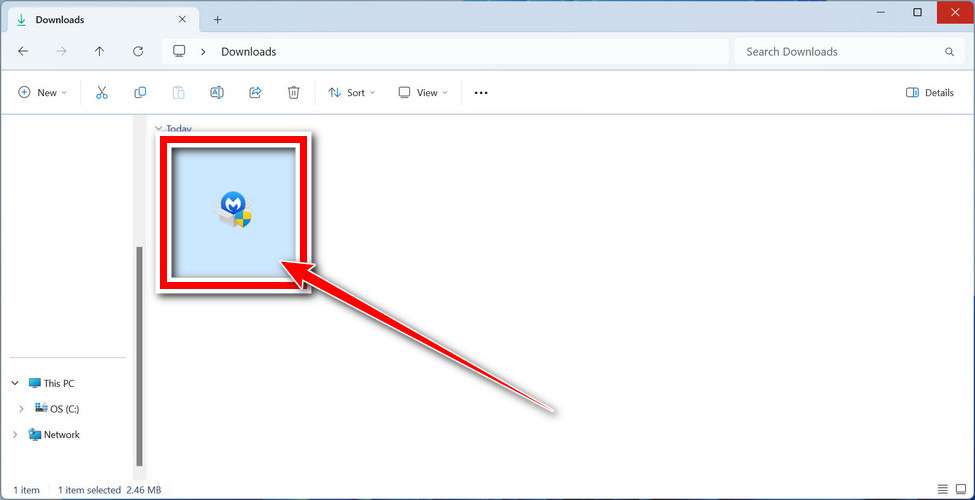
When the download finishes, open your Downloads folder and double-click the MBSetup file. If Windows shows a User Account Control pop-up, click “Yes” to allow the installation.
Follow the On-Screen Prompts to Install Malwarebytes
The setup wizard will walk you through a few quick screens:
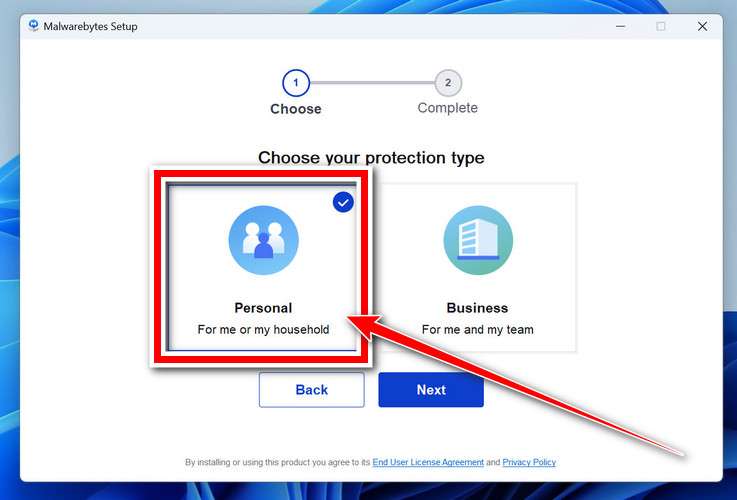
Choose where you’re installing the program — “Personal Computer” or “Work Computer” — then click Next.
Malwarebytes will now install on your device. This usually takes under a minute.
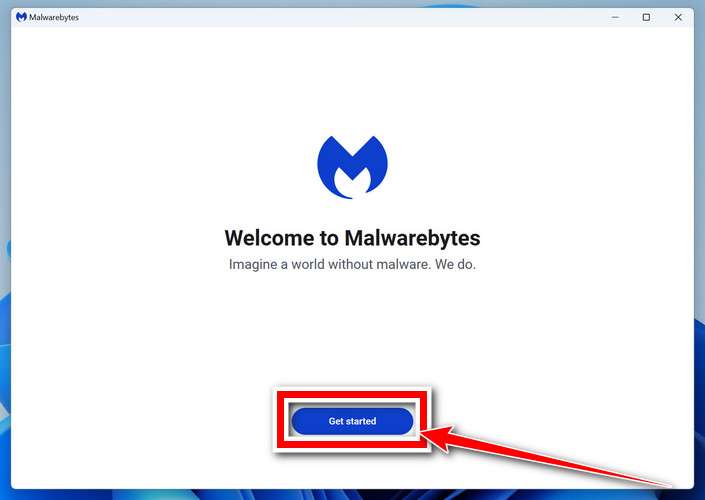
When installation is complete, the “Welcome to Malwarebytes” screen will open automatically.
On the final screen, click Open Malwarebytes to launch the program.
Enable “Scan for Rootkits”
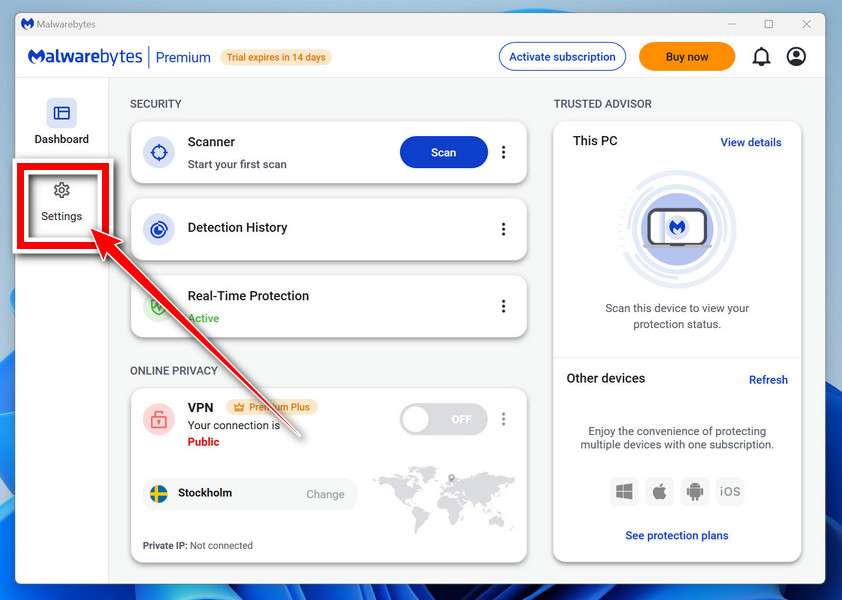
Before scanning, turn on rootkit detection so Malwarebytes can find even the most hidden threats. Click the Settings gear icon on the left side of the screen.
In the settings menu, find “Scan for rootkits” and click the toggle so it turns blue.
Done? Click “Dashboard” in the left pane to return to the main screen.
Start the Scan
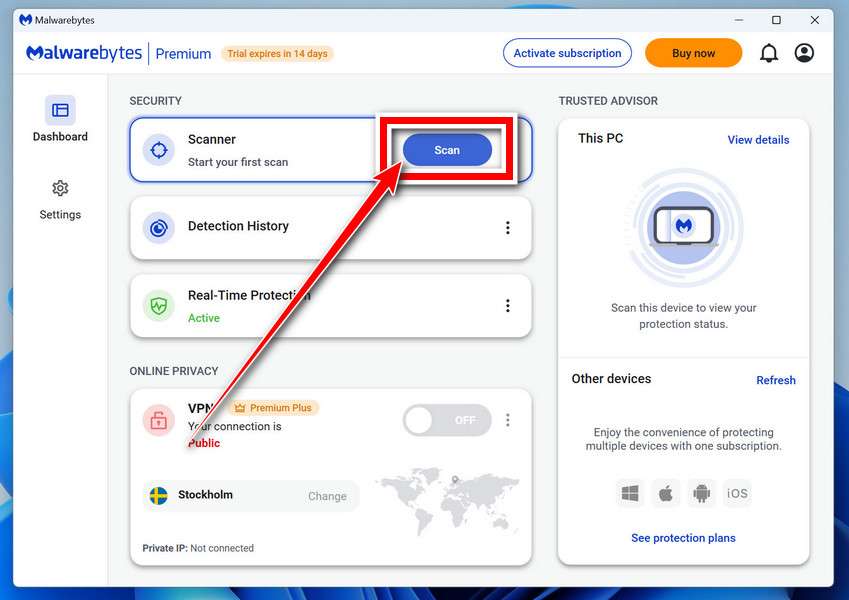
Click the blue Scan button. Malwarebytes will automatically update its virus database and start checking your computer for malware.
Wait for the Scan to Finish
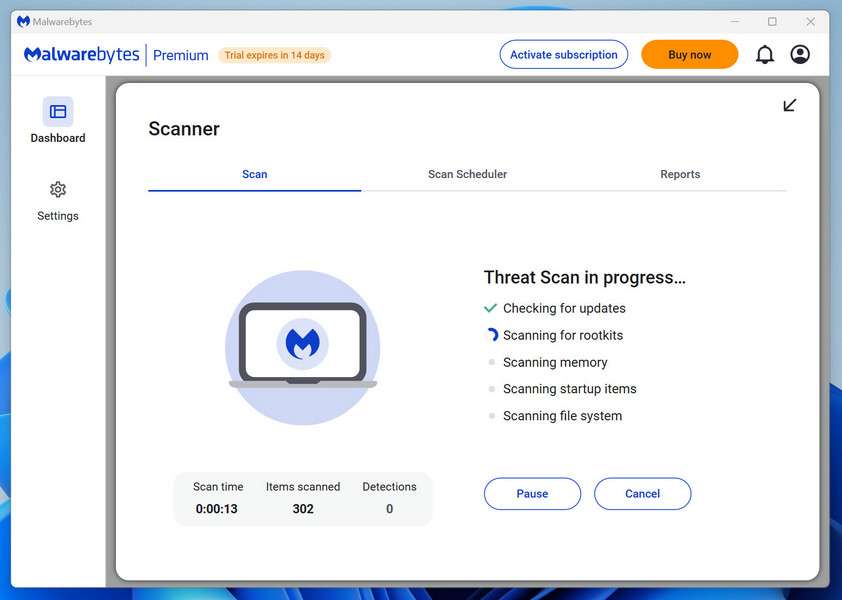
The scan checks your entire system for browser hijackers and other malicious programs, so it can take several minutes. Feel free to do something else — just check back occasionally to see the progress.
Quarantine the Detected Threats
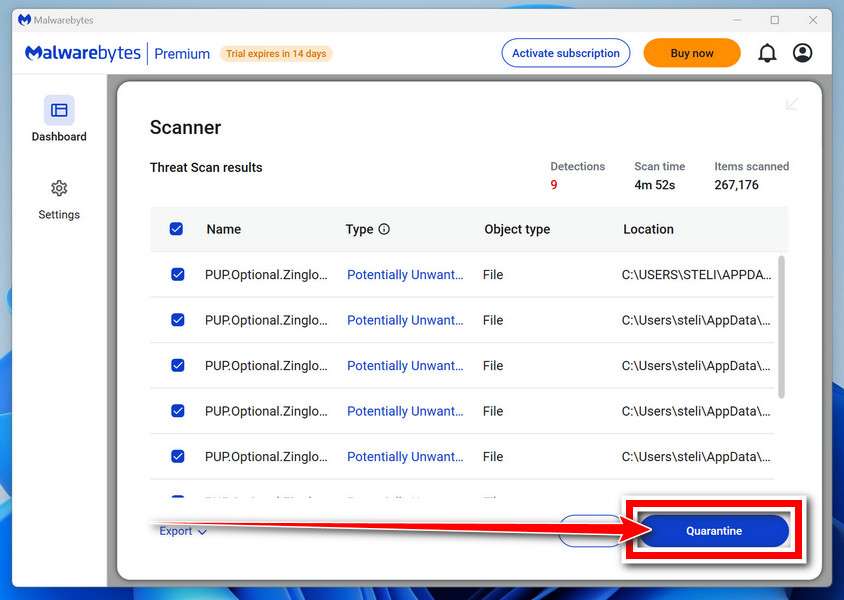
When the scan is done, you’ll see a list of everything Malwarebytes found — malware, adware, and potentially unwanted programs. Click the “Quarantine” button to remove all of them at once.
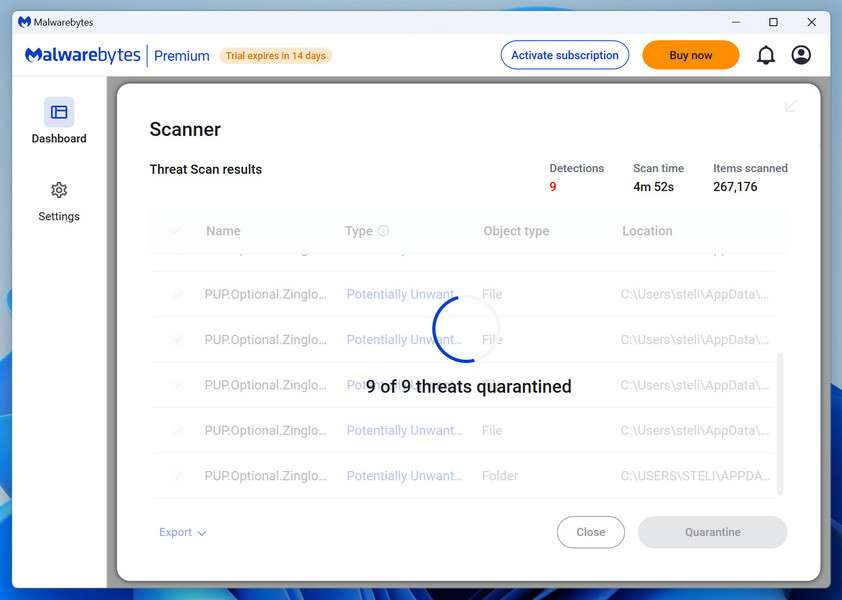
Malwarebytes will now remove the malicious files and registry entries and move them safely into quarantine.
Restart Your Computer
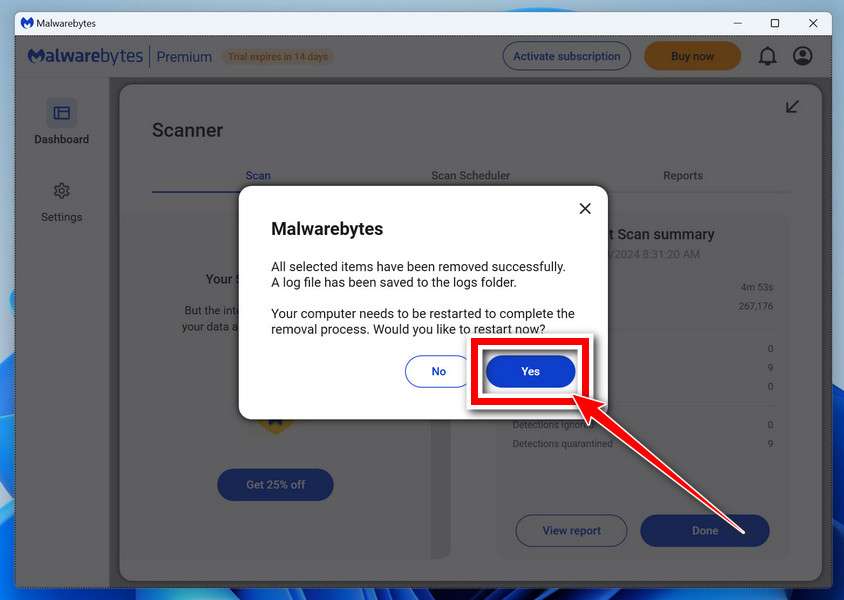
Some threats can only be fully removed after a reboot. If Malwarebytes asks you to restart, click Yes. Once you’re logged back in, your PC is clean and you can continue with the next steps in this guide.
When the scan finishes, click Quarantine to remove everything Malwarebytes found. That’s it — your Windows PC is now clean of trojans, adware, and other malware, and should be back to running smoothly.
If your current antivirus allowed this malicious program on your computer, you may want to consider purchasing Malwarebytes Premium to protect against these types of threats in the future. If you are still having problems with your computer after completing these instructions, then please follow one of the steps:
Malwarebytes for Mac is a free on-demand scanner that removes the malware other security software tends to miss — adware, browser hijackers, and unwanted programs included. Cleaning an infected Mac with Malwarebytes has always been completely free, and it’s our go-to recommendation. Follow the steps below to scan and clean your Mac in just a few minutes.
Download Malwarebytes for Mac
Click the button below to download the latest version of Malwarebytes for Mac.
When the download finishes, open your Downloads folder and double-click the setup file to begin the installation.
Follow the On-Screen Prompts to Install Malwarebytes
The Malwarebytes for Mac Installer will guide you through a few quick screens. Click “Continue” and keep following the prompts until the installation completes.
When the installation is complete, Malwarebytes opens to the Welcome to Malwarebytes screen. Click “Get started“.
Select “Personal Computer” or “Work Computer”
Malwarebytes will ask what type of computer you’re installing it on. Click either Personal Computer or Work Computer, whichever applies.
Start the Scan
Click the “Scan” button. Malwarebytes will automatically update its detection database and begin checking your Mac for malware.
Wait for the Scan to Finish
Malwarebytes will scan your Mac for adware, browser hijackers, and other malicious programs. This can take a few minutes, so feel free to do something else — just check back occasionally to see the progress.
Quarantine the Detected Threats
When the scan is done, you’ll see a list of everything Malwarebytes found. Click the “Quarantine” button to remove all the threats at once.
Restart Your Mac
Malwarebytes will now remove all the malicious files it found. Some threats can only be fully removed after a reboot — if Malwarebytes asks you to restart, allow it. Once you’re logged back in, your Mac is clean.
Once the scan is done, remove every threat it detected. Your Mac is now free of adware, rogue browser extensions, and other potentially harmful software.
If your current antivirus allowed a malicious program on your computer, you might want to consider purchasing the full-featured version of Malwarebytes Anti-Malware to protect against these types of threats in the future. If you are still experiencing problems while trying to remove a malicious program from your computer, please ask for help in our Mac Malware Removal Help & Support forum.
Run a Malware Scan with Malwarebytes for Android
Malwarebytes for Android automatically detects and removes dangerous threats like malware and ransomware so you don’t have to worry about your most-used device being compromised. Aggressive detection of adware and potentially unwanted programs keeps your Android phone or tablet running smooth.
Download Malwarebytes for Android.
You can download Malwarebytes for Android by clicking the link below.
In the Google Play Store, tap “Install” to install Malwarebytes for Android on your device.
When the installation process has finished, tap “Open” to begin using Malwarebytes for Android. You can also open Malwarebytes by tapping on its icon in your phone menu or home screen.
Follow the on-screen prompts to complete the setup process
When Malwarebytes will open, you will see the Malwarebytes Setup Wizard which will guide you through a series of permissions and other setup options. This is the first of two screens that explain the difference between the Premium and Free versions. Swipe this screen to continue. Tap on “Got it” to proceed to the next step. Malwarebytes for Android will now ask for a set of permissions that are required to scan your device and protect it from malware. Tap on “Give permission” to continue. Tap on “Allow” to permit Malwarebytes to access the files on your phone.
Update database and run a scan with Malwarebytes for Android
You will now be prompted to update the Malwarebytes database and run a full system scan.
Click on “Update database” to update the Malwarebytes for Android definitions to the latest version, then click on “Run full scan” to perform a system scan.
Wait for the Malwarebytes scan to complete.
Malwarebytes will now start scanning your phone for adware and other malicious apps. This process can take a few minutes, so we suggest you do something else and periodically check on the status of the scan to see when it is finished.
Click on “Remove Selected”.
When the scan has been completed, you will be presented with a screen showing the malware infections that Malwarebytes for Android has detected. To remove the malicious apps that Malwarebytes has found, tap on the “Remove Selected” button.
Restart your phone.
Malwarebytes for Android will now remove all the malicious apps that it has found. To complete the malware removal process, Malwarebytes may ask you to restart your device.
After the scan, tap Remove Selected to delete all detected threats. Your Android phone is now clean — no more malicious apps, adware, or browser redirects.
If your current antivirus allowed a malicious app on your phone, you may want to consider purchasing the full-featured version of Malwarebytes to protect against these types of threats in the future. If you are still having problems with your phone after completing these instructions, then please follow one of the steps:
Restore your phone to factory settings by going to Settings > General management > Reset > Factory data reset.
Now that your device is clean, keep it that way. Most infections start with a malicious ad or a fake download button — so blocking them at the source is your best defense.
We recommend AdGuard, which blocks malicious ads, phishing pages, and dangerous redirects before they can reach you.
Is the High-Pressure Car Washing Water Nozzle fake?
The nozzle is a real physical product. The questionable element is advertising that makes a passive hose attachment resemble a powered pressure washer.
Can a nozzle increase water speed?
Yes. A narrower outlet can create a faster, concentrated jet, but it does not add the pump energy supplied by true pressure-washing equipment.
Will it remove mold from concrete?
Results depend on supply pressure and contamination. Verified reviews report disappointing mold removal, so do not rely on dramatic promotional footage.
Why is the same nozzle sold under many names?
It appears to be a generic design distributed through multiple merchants. Branding, accessories, quality control, price, and return support can vary.
Is Devareon definitely a scam store?
Our evidence supports caution about claims and fulfillment, not a blanket finding that every Devareon order is fraudulent or never delivered.
What should I buy instead?
Choose a reputable adjustable hose nozzle for routine rinsing or a properly rated pressure washer when the job genuinely requires higher pressure.
The Bottom Line
This metal nozzle can shape an ordinary hose stream, but it cannot manufacture pressure-washer power without a pump. The tenfold claim lacks meaningful testing details.
Buy only with modest expectations and strong return protection. If an advertisement shows miraculous restoration, the demonstration deserves more skepticism than the nozzle deserves money.
10 Rules to Avoid Online Scams
Here are 10 practical safety rules to help you avoid malware, online shopping scams, crypto scams, and other online fraud. Each tip includes a quick “if you already got hit” action.
Stop and verify before you click, log in, download, or pay.
Most scams win by creating urgency. Verify using a trusted method: type the website address yourself, use the official app, or call a known number (not the one in the message).
If you already clicked: close the page, do not enter passwords, and run a malware scan.
Keep your operating system, browser, and apps updated.
Updates patch security holes used by malware and malicious ads. Turn on automatic updates where possible.
If you saw a scary “update now” pop-up: close it and update only through your device settings or the official app store.
Use layered protection: antivirus plus an ad blocker.
Antivirus helps block malware. An ad blocker reduces scam redirects, phishing pages, and malvertising.
If your browser is acting weird: remove unknown extensions, reset the browser, then run a full scan.
Install apps, software, and extensions only from official sources.
Avoid cracked software, “keygens,” and random downloads. During installs, choose Custom/Advanced and decline bundled offers you do not recognize.
If you already installed something suspicious: uninstall it, restart, and scan again.
Treat links and attachments as untrusted by default.
Phishing often impersonates delivery services, banks, and popular brands. If it is unexpected, do not open attachments or log in through the message.
If you entered credentials: change the password immediately and enable 2FA.
Shop safely: research the store, then pay with protection.
Be cautious with brand-new stores, “closing sale” stories, and prices that make no sense. Prefer credit cards or PayPal for dispute options. Avoid wire transfers, gift cards, and crypto payments.
If you already paid: contact your card issuer or PayPal quickly to dispute the transaction.
Crypto rule: never pay a “fee” to withdraw or recover money.
Common patterns include fake profits, then “tax,” “gas,” or “verification” fees. Another is a “recovery agent” who demands upfront crypto.
If you already sent crypto: stop paying, save evidence (wallet addresses, TXIDs, chats), and report the scam to the platform used.
Secure your accounts with unique passwords and 2FA (start with email).
Use a password manager and unique passwords for every account. Enable 2FA using an authenticator app when possible.
If you suspect an account takeover: change passwords, sign out of all devices, and review recent logins and recovery settings.
Back up important files and keep one backup offline.
Backups protect you from ransomware and device failure. Keep at least one backup on an external drive that is not always connected.
If you suspect infection: do not connect backup drives until the system is clean.
If you think you are a victim: stop losses, document evidence, and escalate fast.
Move quickly. Speed matters for disputes, account recovery, and limiting damage.
Stop payments and contact: do not send more money or respond to the scammer.
Call your bank or card issuer: block transactions, replace the card if needed, and start a dispute or chargeback.
Secure your email first: change the email password, enable 2FA, and remove unfamiliar recovery options.
Secure other accounts: change passwords, enable 2FA, and log out of all sessions.
Scan your device: remove suspicious apps or extensions, then run a full malware scan.
Save evidence: screenshots, emails, order pages, tracking pages, wallet addresses, TXIDs, and chat logs.
Report it: to the payment provider, marketplace, social platform, exchange, or wallet service involved.
These rules are intentionally simple. Most online losses happen when decisions are rushed. Slow down, verify independently, and use payment methods and account controls that give you recourse.
Hello! I'm Lapain Epuran, your go-to source for detailed and honest product reviews. From tech gadgets to miracle cures, I provide insights to help you make informed choices. Join me as we discover what's truly worth your time and money.