

Your cat ignores the water bowl but races to the kitchen whenever the faucet runs. A quiet fountain sounds like the simplest answer.
KittySpout’s offer is easy to understand at a glance. The details that matter most appear when you look beyond that first screen.
Overview
A real fountain is being sold with a filter plan
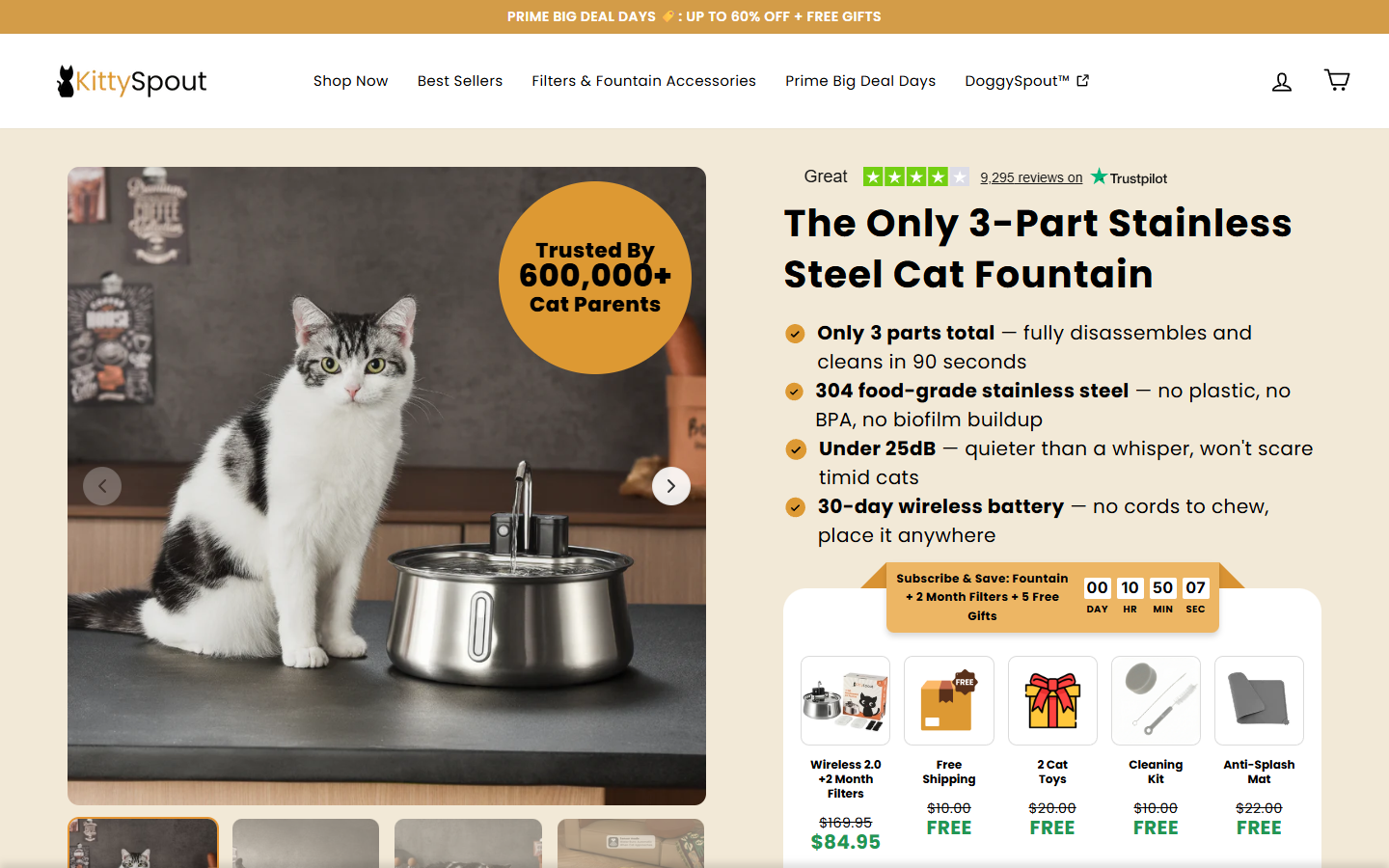
KittySpout sells a stainless-steel cat fountain through its own online store. The Wireless Fountain 2.0 offer we reviewed includes two months of filters and promotional extras.
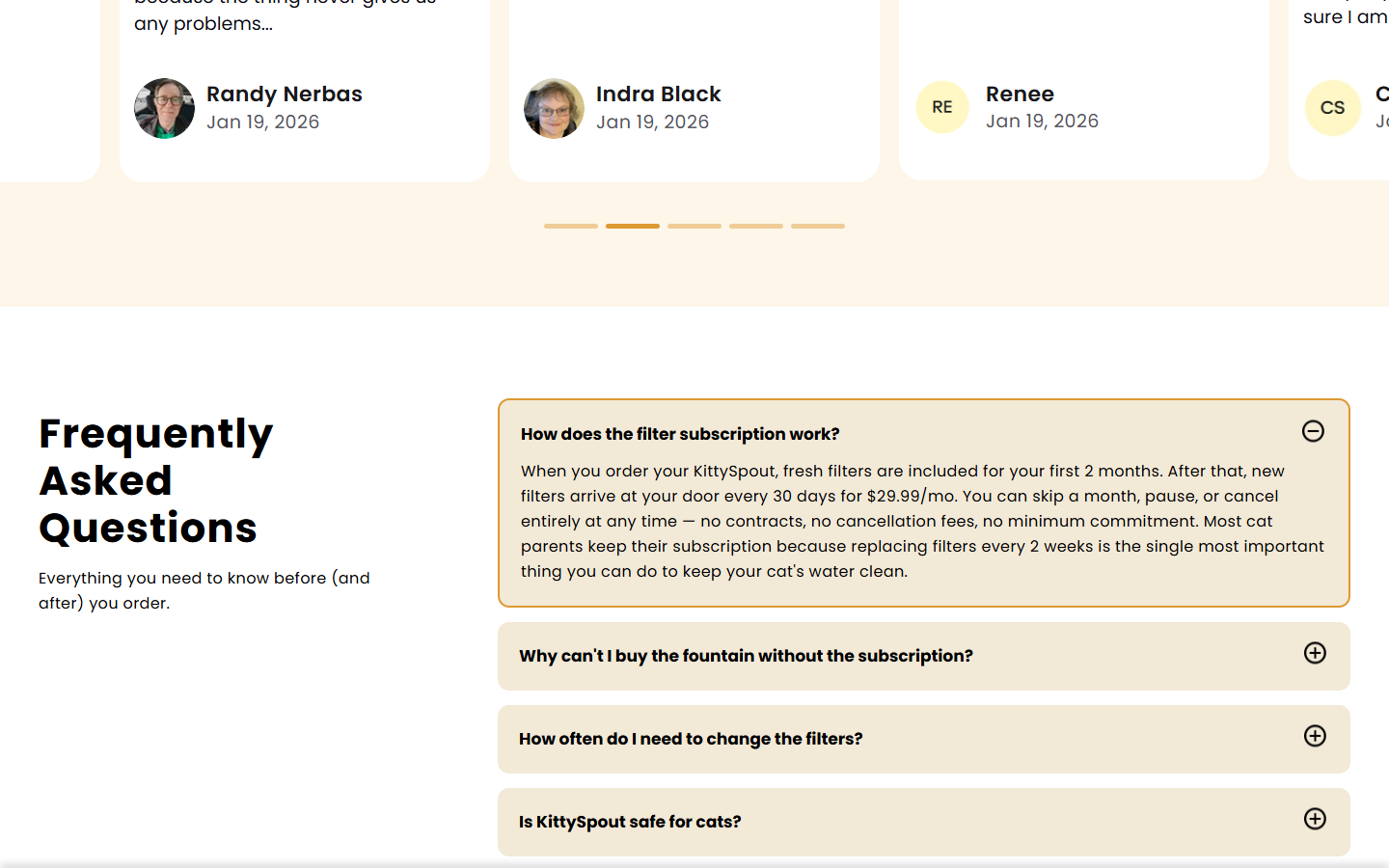
Its product page also ties this particular offer to a recurring filter subscription. The site says replacement filters arrive every 30 days after the included supply runs out.
The advertised renewal is $29.99 a month on the U.S. version of the page. Shipping and taxes may vary by plan and location.
That is a meaningful difference from buying a fountain once and deciding later whether to order replacements. It deserves attention before the checkout button.
“365-day money-back” needs a careful reading
The product page repeatedly promotes a 365-day money-back guarantee and a risk-free trial. Those phrases sound like a year to request your original payment back.
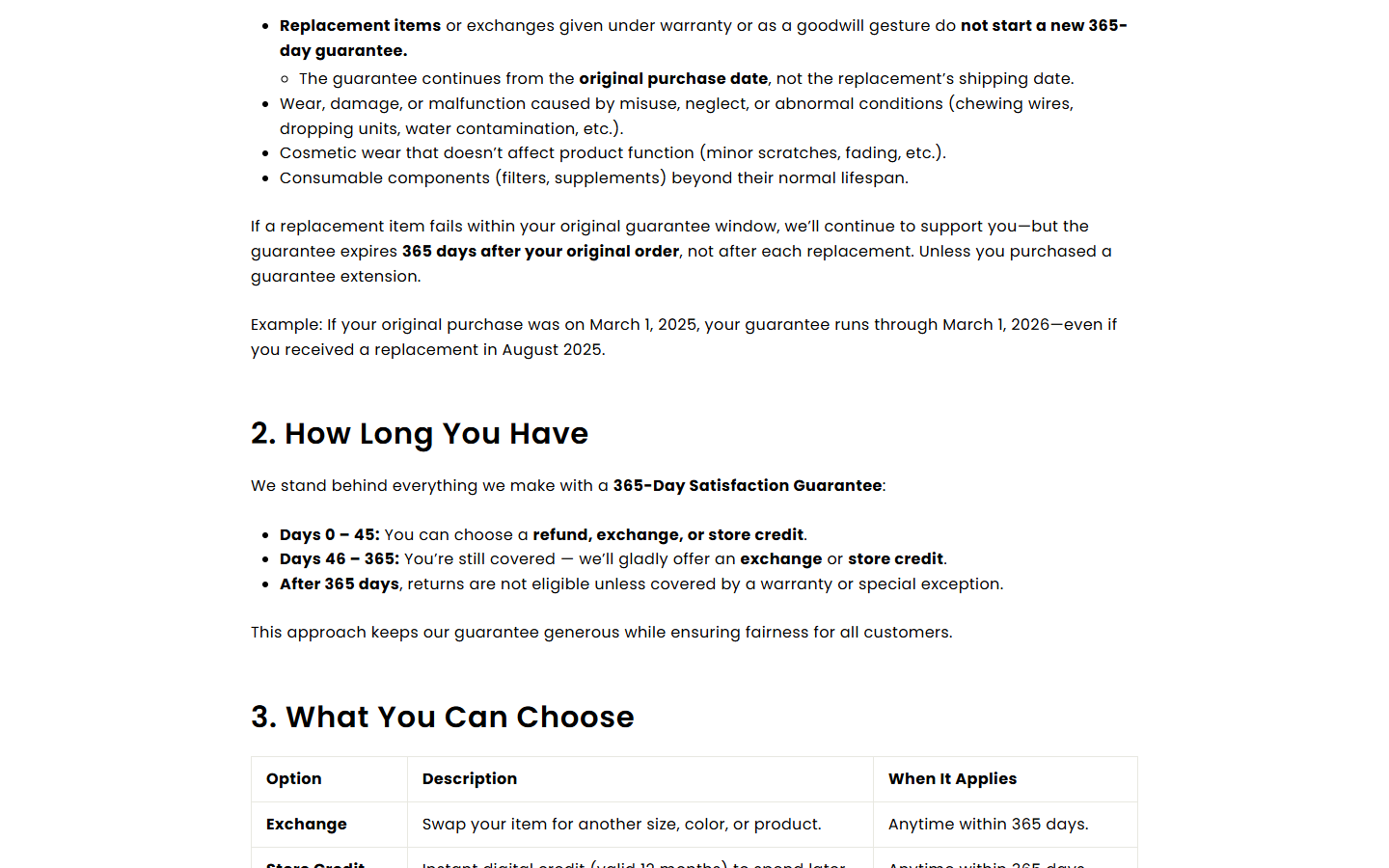
KittySpout’s published refund policy draws a narrower line. A refund to the original payment method is available only within 45 days of delivery.
From day 46 through day 365, the policy offers an exchange or store credit instead. Condition requirements and return-shipping rules add further limits.
A 365-day satisfaction policy is not the same thing as 365 days of cash refunds. The distinction could matter if your cat never takes to the fountain.
Our finding is a buyer warning, not a fraud verdict
We found a functioning store, a stated subscription policy, and a detailed return policy. Those facts do not support calling KittySpout a fake store.
The concern is the gap between an appealing first impression and the specific obligations a buyer accepts. Before paying, check these five points:
- Does your selected fountain offer require a filter subscription?
- What is the exact renewal amount, interval, shipping charge, and first billing date?
- How will you cancel, and how far before renewal must you act?
- How many days do you have to request money back to your card?
- Will testing the fountain change your return options?
Those questions are more useful than a simple “scam or legit” label. The product may suit some households while its terms frustrate others.
The Offer Behind the Fountain
The reviewed page leads with a cat beside a polished fountain, a reduced price, gifts, and a large review count. The pitch feels familiar to pet shoppers.
A busy owner could reasonably focus on the fountain’s capacity, cleaning claims, and wireless design. Filter billing appears farther into the offer and in the questions below.
KittySpout says two months of filters come with the initial purchase. After that, the subscription sends replacement filters every 30 days.
The page gives a $29.99 monthly figure. Its subscription policy says the amount at checkout controls your actual plan, with shipping and taxes where applicable.
That means a buyer should save the final checkout summary, not rely solely on a screenshot of a headline price or a promotional tile.
The product FAQ goes further: it asks why the fountain cannot be bought without a subscription. The answer describes the fountain and filters as one hydration system.
It then says buyers can cancel after the first delivery without a penalty. That is not the same as saying the initial order is a one-time purchase.
We did not place an order or test the cancellation portal. Our analysis concerns the first-party terms visible before purchase, not a claim about how staff handles individual requests.
How the KittySpout Purchase Works
Step 1: A pet-care pitch introduces the fountain
An ad, search result, or product recommendation sends a cat owner to KittySpout’s fountain page. The immediate appeal is understandable: flowing water and easier cleaning.
Features and testimonials sit close to a discounted bundle. A buyer may start comparing the fountain with other models before noticing the recurring filter arrangement.
Nothing about a subscription is inherently deceptive. The issue is whether you recognize it while deciding, rather than after a renewal reaches your statement.
Read the product-specific offer instead of assuming every fountain or filter listing on the same site has identical purchase options.
Step 2: The bundle includes an initial filter supply
According to the product page, the Wireless Fountain 2.0 bundle includes a two-month filter supply. That makes the first purchase feel self-contained.
Yet the offer also describes monthly replacement shipments afterward. The two-month inclusion postpones the first separate filter charge; it does not erase the renewal authorization.
Write down the date your first renewal should occur. If the actual checkout gives a different schedule, use the schedule shown on your order confirmation.
Also check how many filters arrive in each shipment. The page discusses changing filters every two weeks, while some specifications mention a four-week interval.
Those differing statements are another reason to ask support about the exact product and filter quantity before you commit.
Step 3: Checkout authorizes future charges
KittySpout’s subscription policy says a subscription renews automatically at the frequency specified in the order until canceled.
The policy describes monthly, three-month, and six-month possibilities. The fountain offer we reviewed specifically advertises monthly filter deliveries.
Each renewal can include applicable shipping and taxes. The store also reserves the right to change prices with notice under its stated policy.
Before paying, inspect every line near the total. Save the subscription interval, next billing date, cancellation link, and exact merchant name on the confirmation.
If any of those are unclear, pause. A discount is not urgent enough to justify an open-ended charge you do not understand.
Step 4: Filters ship unless you change the plan
After a renewal charge succeeds, KittySpout says the order moves into fulfillment automatically. An address mistake may therefore be hard to correct after billing.
The company says the account portal can pause, skip, or cancel subscriptions. It also offers cancellation by email.
Those paths have different timing. The policy says cancellation must occur at least 24 hours before the next billing date to prevent that charge.
Portal cancellations are described as immediate. Email requests may take up to 48 hours to process, so sending an email on the final day is risky.
Keep a dated confirmation of any pause or cancellation. A screenshot of the account status is more useful than a message sent without a response.
Step 5: A return request meets the written guarantee
If the fountain is not right for your cat, the product page’s year-long promise may be the first thing you remember.
The refund policy says original-payment refunds are limited to the first 45 days after delivery. For days 46 through 365, it lists exchange or store credit.
There is another important qualification: used items are eligible only for store credit or a partial refund based on condition.
That condition can matter even during the first 45 days. Most owners have to let a cat try a fountain to discover whether it will use it.
The policy also says buyers pay return shipping when they change their mind or the cat dislikes the product. Opened filters are not returnable.
Step 6: Billing and return problems require separate actions
Canceling a filter plan stops future renewals, according to the policy. It does not automatically reverse an order that has already been charged.
For a charged but unshipped renewal, KittySpout asks customers to contact support immediately. It says a void or refund may be possible, but not guaranteed.
Once a renewal ships, the normal return policy applies. That is why timing matters more than the reassuring phrase “cancel anytime.”
A fountain return also does not necessarily cancel an active filter subscription. Ask support to confirm both requests separately.
Company, Support, and Fulfillment Checks
Use the actual seller’s domain
KittySpout’s product, subscription, and refund documents are accessible on kittyspout.com. Those first-party pages are the basis of this review.
Search results and social posts can point to lookalike pages, affiliates, or old promotions. A familiar logo alone does not establish who will take payment.
Open the seller’s site directly and confirm the checkout domain before entering card details. Keep the receipt so the exact merchant can be identified later.
Check the account portal before a renewal
The official subscription policy links to an account portal for managing plans. It also names email support as an alternative.
If you buy, test your account access while the first shipment is still fresh. Waiting until the night before a renewal leaves little room for password or email problems.
Mark a calendar reminder several days before billing. That buffer accommodates the policy’s 24-hour cutoff and its longer email-processing allowance.
Separate product defects from change-of-mind returns
KittySpout says it pays return shipping for a defect, arrival damage, a wrong item, or an order with package protection.
It says the buyer pays shipping when the reason is preference or a cat’s dislike. Photograph any arrival damage before assembling or using the fountain.
Do not label a preference as a defect. Describe the actual problem, keep the packaging, and ask for the remedy that matches the written policy.
Ask for written answers to conflicting expectations
A “365-day money-back” line and a 45-day cash-refund limit invite different interpretations. So do free-shipping language and potential shipping charges on renewals.
Ask support which written term controls your specific offer. A useful answer identifies the plan, billing date, return window, shipping cost, and item-condition rule.
If the response is vague, save it anyway. It may help explain what you were told if your later receipt or return outcome differs.
What the 365-Day Guarantee Does and Does Not Mean
“Risk-free” is a strong phrase for an item a cat may need days to accept. A buyer could hear it as a promise of a refund anytime.
The written policy is more precise. It starts the guarantee at delivery and describes several forms of relief during the year.
A refund to the original payment method is available within 45 days. Later eligible returns receive an exchange or store credit instead.
The policy says store credit lasts 12 months. If you do not want another KittySpout item, that is substantially different from getting cash back.
It also calls for clean, undamaged items in original packaging unless they are defective. Used items may qualify only for credit or a partial refund.
These details do not prove the company refuses legitimate claims. They show why the marketing phrase should never replace the actual return instructions.
There is a practical timing trap here. You might wait months because the banner mentions 365 days, then discover the original-payment window has closed.
If a cash refund is important, treat day 45 as the operative deadline and contact the merchant well before it. Keep proof of delivery to calculate that date.
Before You Order, Compare the Real Total Cost
A fountain’s first price is only part of its household cost. Filters, shipping, taxes, and replacement parts can outweigh a discount over time.
At the advertised $29.99 monthly renewal, twelve paid months would total $359.88 before any additional shipping or tax. Your first paid month may arrive later.
That calculation is an illustration, not a prediction of your bill. Actual charges depend on the plan you select, whether you pause it, and any price changes.
Compare filter replacement frequency, availability, and compatibility with other fountains. An inexpensive fountain can become expensive if its consumables are difficult to source.
Ask whether your household genuinely wants automatic deliveries. Some owners prefer them. Others would rather buy filters only when needed.
Neither preference is wrong. The important thing is selecting it consciously and understanding how to stop the plan if your cat rejects the fountain.
What to Do If a KittySpout Order or Charge Surprised You
- Find the original confirmation. Check the date, fountain model, included filters, subscription interval, total, and next expected charge. Save the message and current account page.
- Cancel future renewals if you do not want them. Use the account portal linked from the official site. Do it more than 24 hours before billing and keep the cancellation confirmation.
- Send a written request if the portal fails. Contact the address on KittySpout’s official policy. State the order number, request cancellation, and ask for written confirmation.
- Act quickly on a recent renewal. If the charge is new and the filters have not shipped, ask support whether it can void the order. The policy says this may not be possible after fulfillment begins.
- Request the correct fountain remedy. If you are within 45 days of delivery, ask whether an original-payment refund is available for your item’s condition. Afterward, ask about exchange or credit.
- Preserve evidence before a return. Photograph the fountain, packaging, and any defect. Keep tracking and a copy of the return authorization, including who pays shipping.
- Escalate unresolved billing accurately. If a charge continues after confirmed cancellation or a promised remedy is denied, share your documentation with your card issuer. Describe the facts rather than assuming fraud.
If your cat appears unwell or is drinking much less than usual, contact a veterinarian. A fountain purchase and a billing dispute should not delay medical care.
Frequently Asked Questions
Is KittySpout a fake store?
We found an operating storefront with published product, subscription, and refund policies. Our warning concerns the purchase terms, not evidence that the store is fictitious.
Does the Wireless Fountain 2.0 offer include a subscription?
The offer we reviewed says it includes two months of filters, followed by monthly replacement shipments at an advertised $29.99. Check your checkout summary for the exact plan.
Can I cancel the filter plan at any time?
KittySpout says yes, without a cancellation fee. Its policy also says to cancel at least 24 hours before the next billing date to avoid that charge.
Does the 365-day guarantee give me a year to get my money back?
Not under the published refund policy. Original-payment refunds are limited to 45 days after delivery; later eligible returns receive exchange or store credit.
What if my cat tried the fountain and disliked it?
The policy says buyers pay return shipping for that reason. Used items may receive only store credit or a partial refund, depending on condition.
Does returning the fountain automatically stop filter charges?
Do not assume so. Request the product remedy and subscription cancellation separately, then obtain written confirmation of both.
The Bottom Line
KittySpout appears to sell a real cat fountain. The buyer risks are the reviewed offer’s filter plan and the gap between 365-day marketing and 45-day cash refunds.
Before ordering, read the checkout summary and the refund policy together. If those terms do not fit your budget or your cat’s uncertain habits, choose a purchase with simpler conditions.








