


The caller says your account is under attack and introduces themselves as somebody who can secure it. They sound prepared, and they know which services you use.
For someone holding cryptocurrency, that conversation can become expensive very quickly. The case against Malone Lam shows how organized criminals turned apparent account protection into access.
Overview
A support identity became a route into private accounts
The Social Engineering Enterprise used deception to obtain information allowing access to cryptocurrency holdings. Court documents describe callers falsely presenting themselves as representatives of familiar technology and exchange companies.
The indictment’s description of the operation includes supposed Google or Yahoo security technicians and representatives of Gemini or Coinbase. Those genuine companies were identities the callers borrowed.
The request was therefore more important than the introduction. Providing passwords, codes, or wallet recovery information could give the caller access rather than create protection.
Lam’s guilty plea establishes the criminal enterprise
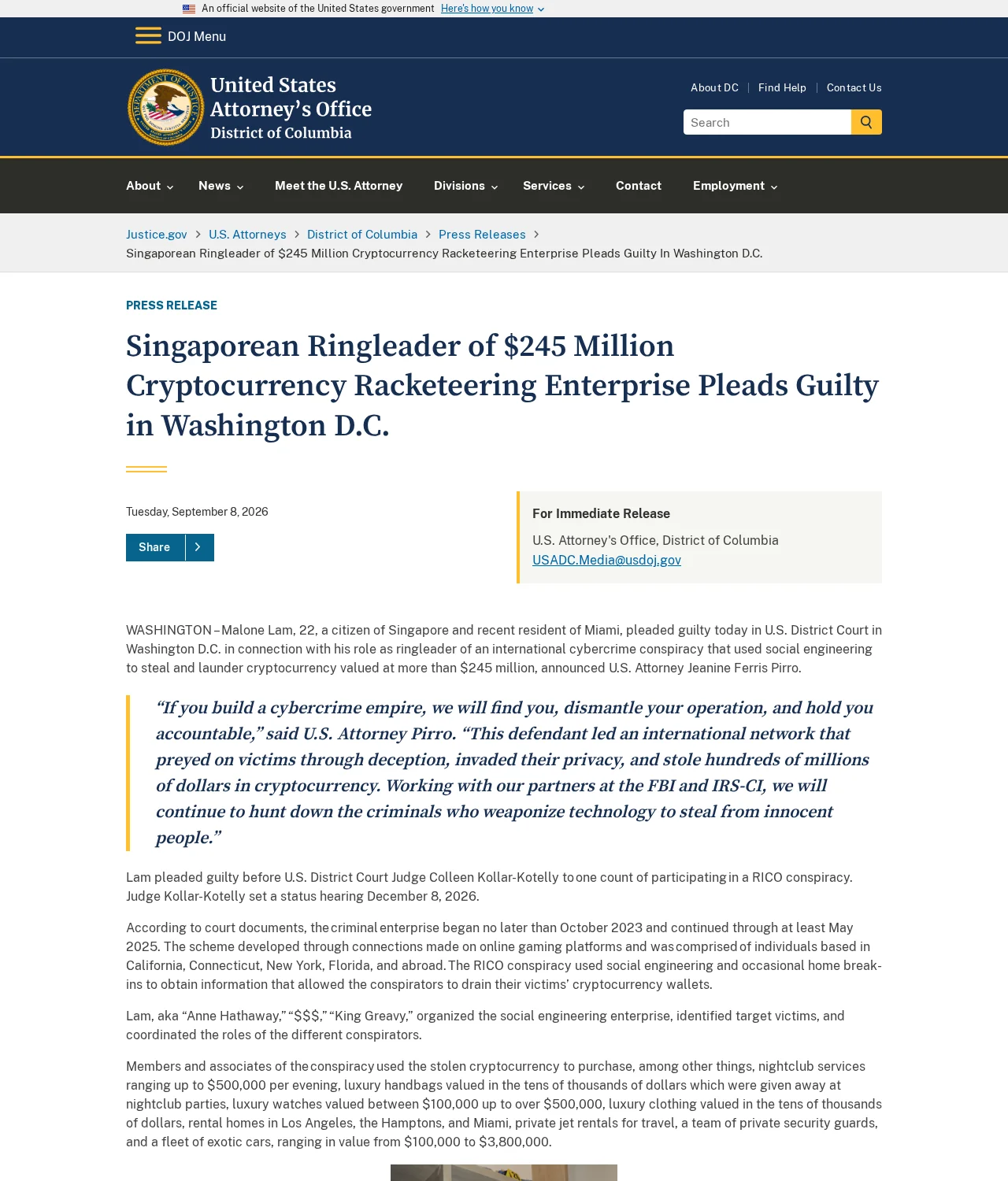
Malone Lam pleaded guilty to a RICO conspiracy on September 8, 2026. The DOJ announcement describes a network that stole and laundered cryptocurrency valued at more than $245 million.
Lam organized participants and identified targets. The case concerns an enterprise operating across locations, rather than a single customer’s unsupported allegation about a legitimate exchange.
His guilty plea should not be turned into a claim that every charged person received the same outcome. Individual defendants and procedural stages remain distinct.
The protection request can itself be the attack
Someone who contacts you about a supposed breach may be trying to obtain the access they claim to protect. Their knowledge of your accounts does not resolve that identity problem.
- End unexpected support conversations before disclosing passwords or authentication codes.
- Open the genuine account independently instead of using the caller’s link.
- Never provide a wallet recovery phrase to authenticate a support worker.
- Treat an exposed recovery phrase separately from an exposed email password.
Why One Helpful Voice Can Represent a Larger Operation
The person speaking with you may be only one participant. A coordinated group can divide research, calling, account access, and moving stolen money among different people.
The related case announcement describes specialized roles, including identifying targets and laundering proceeds. That organization helps explain why a conversation can feel unusually informed.
You may believe you are answering one technician’s questions. Information supplied during the call can instead become useful to other people working toward the same theft.
This is why a transfer to another supposed department does not create independent verification. The original caller can control who joins the next part of the conversation.
A convincing explanation of a security event also does not establish who caused it. The person describing danger may be using the description to obtain information they lacked before.
The practical response is to break that controlled chain. End contact, open the real account through a known route, and examine its security information independently.
You do not need the caller to admit wrongdoing before you do this. Your decision concerns access to your own accounts, not their willingness to accept a refusal.
If there is a genuine account problem, it can be addressed through the actual service. Keeping the suspicious caller involved does not help establish that service’s identity.
How the Fake Google Support Crypto Scam Works
Step 1: Target information makes the approach feel personal
Court documents describe the use of stolen databases and organized target identification. Information collected before the call could help select people with valuable cryptocurrency holdings.
That does not mean every unexpected caller obtained information from the same database. It explains why knowing a name or service is not adequate proof of support authority.
Step 2: The caller claims to be stopping an account attack
The operation’s callers portrayed themselves as security technicians or exchange representatives. The supposed problem gave them an urgent reason to ask the account holder to cooperate.
The listener may then interpret unusual instructions as necessary steps in a protective process. That interpretation can turn normal caution into a feeling that delay would be dangerous.
Keep the requested action separate from the fear used to justify it. A person claiming to protect an account still needs to be independently authenticated.
Do not supply missing account details to help an unsolicited caller complete their story. Their questions may reveal what they still need to obtain access.
Step 3: Private information becomes the requested security check
The court document describes obtaining passwords, PINs, and other personal information for unauthorized access. Wallet recovery information creates a particularly serious risk because it controls a different kind of asset.
A login code is meant for a specific authentication action. Sharing it with someone who initiated contact can help that person perform the action instead of you.
Similarly, a recovery phrase is not a customer-service reference. Someone possessing it may be able to recreate access to a wallet, regardless of an email account’s password.
If you cannot explain which action a code or approval authorizes, stop before approving it. The caller’s urgency is not a substitute for understanding the request.
Step 4: Access moves beyond the original conversation
The enterprise used information obtained through deception to drain cryptocurrency wallets. The victim’s cooperation supplied part of the route from a claimed problem to actual theft.
A genuine notification appearing during a call does not make every instruction in the call genuine. Check the notification’s purpose through the account you independently opened.
Step 5: Other participants move and spend the stolen assets
The case describes laundering and substantial spending after thefts. The caller’s role therefore belonged to a larger process for taking and using victims’ cryptocurrency.
Once money moves, another promise from the same people cannot establish its safety. A supposed recovery department can continue the deception rather than reverse the transfer.
That is why account protection and loss reporting need to begin through independent routes. Do not wait for the suspicious contact to complete a promised investigation.
Passwords, Recovery Phrases, and Real Support
A Google account password controls the Google account
Your Google password helps protect services associated with that account. If somebody else obtained it, address the Google account directly rather than continuing the caller’s instructions.
Changing that password is useful for that exposure. It does not automatically reverse a cryptocurrency transfer or replace the secret controlling a separate wallet.
Keep those boundaries clear when reporting what happened. An email password, a one-time code, and a wallet recovery phrase create different security questions.
A wallet phrase is not repaired by changing an email password
A recovery phrase can recreate access to a self-managed wallet. Giving it away can therefore expose assets even after you secure the email used during the conversation.
Do not type an exposed phrase into a new application and assume that creates a new secret. The same phrase can reproduce the same underlying wallet access.
If assets remain, obtain wallet-specific security assistance through the genuine provider’s established support route. Explain that the phrase was disclosed, rather than asking only about a forgotten password.
Do not share the phrase with the person assisting you. A legitimate explanation of the exposure can be given without handing that person the secret itself.
A real company name can be part of a false introduction
Google, Yahoo, Gemini, and Coinbase are real services mentioned in the court document’s impersonation description. Their names should not be treated as evidence that those companies conducted the theft.
The accusation belongs to the people falsely claiming those roles. Verify contact with the actual service before following account-security or financial instructions.
A matching logo or familiar vocabulary adds presentation, not independent identity. The action requested from you remains the important decision.
Secure Your Google Account if You Shared Access
Use a trusted device and an address you enter independently. If this is an employer-managed account, contact your organization’s authorized support team instead of changing managed settings without assistance.
The following account checks follow Google’s compromised-account guidance. They address account access; they do not undo a stolen cryptocurrency transfer.
- Open your Google Account in a fresh browser tab. If you cannot sign in, use Google’s recovery page and answer its ownership questions instead of paying a caller.
- For an account you can access, open Security & sign-in. Under How you sign in to Google, choose Password and complete any legitimate sign-in check.
- Enter a new password and select Change Password, as described in Google’s password instructions. Use a password you have not shared or reused elsewhere.
- Review Recent security events and choose Review security events. For an event you did not perform, select No, it wasn’t me and complete Google’s protective checks.
- Open Your devices and Manage devices. Inspect unfamiliar entries and use Don’t recognize a device? where offered, then complete the account’s security checks.
- Review the account’s recovery phone and email information, correcting changes you did not authorize. Do not approve a replacement destination supplied by the original caller.
- Check that you can sign in again through the address you entered yourself. If access still fails or changes recur, return to Google’s recovery process or your authorized administrator.
Changing a Google password does not necessarily sign out every device or app. That is why reviewing account activity and devices remains useful after the password change.
If the caller used your account to reach another service, tell that service separately. Securing email should not be mistaken for confirmation that every linked financial account is safe.
An account review should identify what changed, rather than simply show that you can log in. Preserve unfamiliar security events before completing the protective checks.
For a financial report, keep transaction identifiers separate from wallet secrets. A receiving address can help trace a transfer, while a recovery phrase can give somebody access.
What to Do if You Have Fallen Victim to This Scam
- End the call and stop responding to its messages. Do not approve more sign-in requests, send another code, or provide a recovery phrase to complete supposed protective work.
- If assets are held by an exchange, open its genuine app or established support channel independently. Report suspected account takeover and request available account restrictions immediately.
- Describe what was disclosed and ask what protection was actually applied. Obtain the support case reference and verify the result through your independently opened account.
- If a wallet phrase was exposed, treat that separately from an exchange login. Do not assume a platform can freeze a self-managed wallet or recover an already completed transfer.
- Save the caller details, messages, account alerts, destination addresses, transaction identifiers, and timing. Never include your recovery phrase or active authentication codes in a public report.
- Contact your bank if related fiat transfers or purchases are pending. Identify the actual transaction and ask what can still be canceled, recalled, or protected.
- For information connected to Lam’s case, call D.C. Victim Witness Assistance at 202-252-7130. Identify Malone Lam and case 24-cr-417, then ask for secure submission instructions.
- Retain the submission acknowledgment and any follow-up contact. If your incident involves a different operation, use the verified authorities handling that report rather than assuming a case connection.
- Report physical threats or suspected intrusion to local police immediately. The official case includes physical theft as well as online manipulation; personal safety takes priority over gathering more evidence.
- Do not pay an unsolicited recovery agent for a guaranteed blockchain reversal. Knowing your transaction identifier does not establish control over the receiving wallet or authority to recover funds.
If a purported investigator contacts you first, independently call the published office before supplying sensitive records. Use your existing report reference to check whether the contact is genuine.
Do not confront someone you believe took the cryptocurrency. Preserve the factual trail and let verified investigators assess the people and accounts involved.
Frequently Asked Questions
Is the Malone Lam case confirmed criminal conduct?
Lam pleaded guilty to participating in a RICO conspiracy. That establishes admitted participation in the criminal enterprise, beyond the earlier charging-stage allegations.
Were Google and the exchanges running this scam?
Their identities were used by people claiming support or security roles. The genuine companies should not be accused of the impersonators’ conduct merely because their names appeared.
What if the caller knows my email and cryptocurrency service?
That knowledge does not independently establish employment or authority. End the conversation and examine the account through a route you initiate yourself.
Is an authentication code safe to share with a supposed technician?
Do not give a code to someone who initiated an unexpected support conversation. Establish which account action it authorizes through the genuine service before approving anything.
Does changing my Google password secure an exposed wallet phrase?
Those secrets control different forms of access. Changing an email password does not replace a wallet recovery phrase that somebody else has obtained.
Can an unsolicited recovery agent reverse the cryptocurrency transfer?
Do not rely on a guaranteed reversal or pay an advance fee. Use verified service contacts and investigators, providing transaction evidence without disclosing private keys or recovery phrases.
The Bottom Line
Do not let an unexpected support caller handle your account protection or wallet secrets. The Lam case shows how an organized theft can begin with somebody offering to help.
If you disclosed access, secure the actual accounts independently and report the exposure precisely. An email password change, an exchange restriction, and a compromised wallet phrase require different responses.

Join the discussion
0 commentsShare your experience or ask a question about this article.
Community experiences
Did this happen to you?
Your experience could help someone recognize the same scam. Submit a private report for our team to review.
I experienced this tooReports are reviewed before publication. Sharing publicly is always your choice.
Discussion
Start the conversation
Have a question or something useful to share? Add the first comment.