

A government-looking page says your car insurance green card is going digital. One button offers to order the electronic version for a small conversion fee.
The page has familiar navigation, official-sounding explanations, and a price that seems barely worth questioning. Before requesting the document, check where that button is taking you.
Overview
A Digital Car Document Is the Hook, Not an Immigration Application
The MyGuichet green card scam imitates Luxembourg’s government-service portal and offers an electronic motor-insurance certificate. Here, green card means the insurance document, not US immigration status.
The real Guichet and MyGuichet services are being impersonated. This report concerns the copied website and its requests, not an accusation against the genuine portal.
A visitor expecting to obtain a document is instead led through a process that seeks personal details, payment-card data, and LuxTrust credentials.
The €4.99 Request Appears on a Documented Fraudulent Page
GOVCERT identifies the phishing campaign and publishes its original page sequence. The malicious destination is lu-carte[.]com.
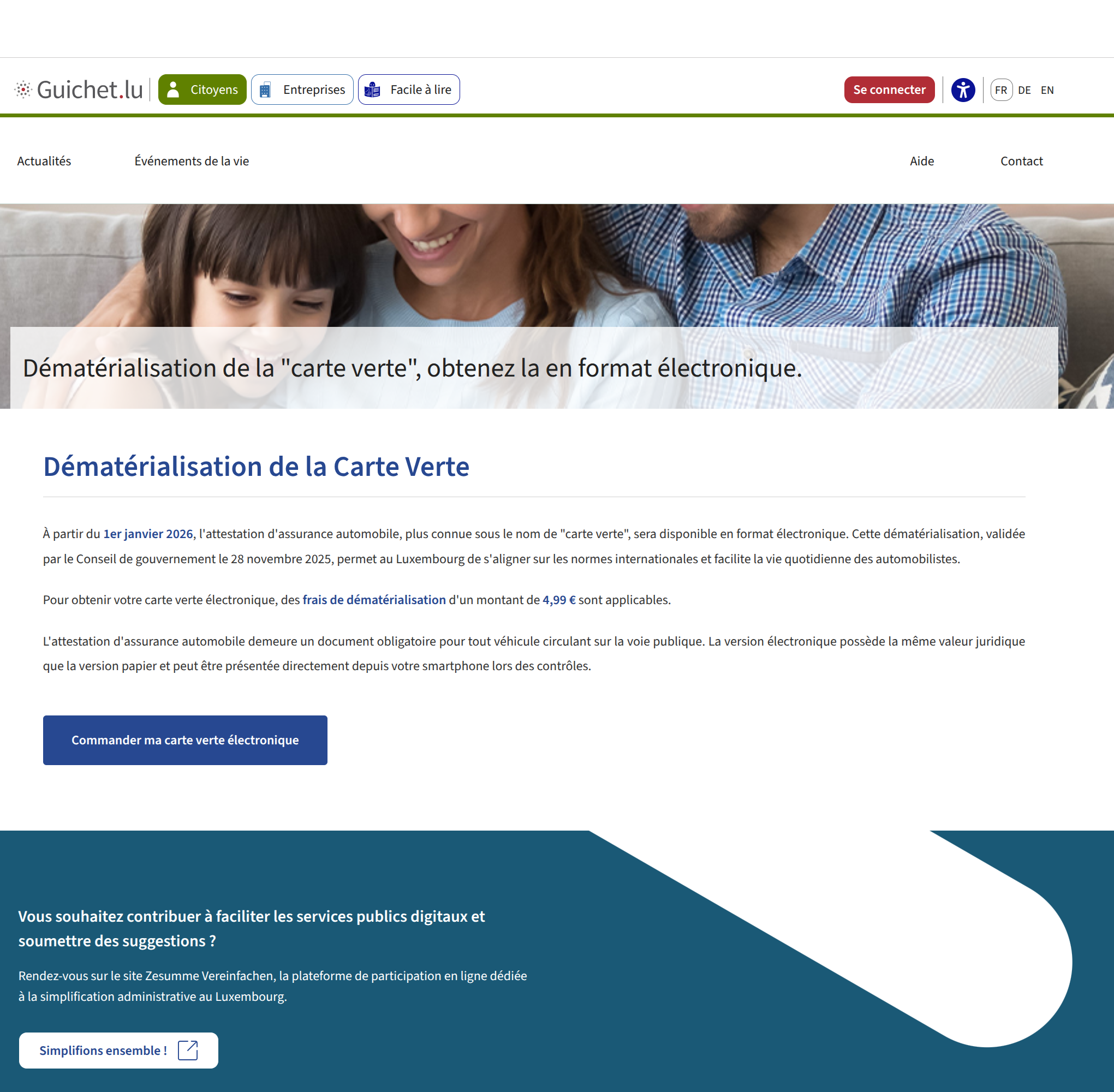
The lead image shows the fake page’s €4.99 conversion claim. It also contains policy-style language, which belongs to the impersonator’s pitch, not verified insurance guidance.
A government-style design and a modest charge don’t establish that a public service issued the request. The actual destination and information collection matter.
The Card Fee Isn’t the Only Thing at Stake
Even if you think you’re paying only for a digital document, the workflow asks you to disclose information useful well beyond that supposed purchase.
- Don’t submit a card or digital-identity login through the copied service.
- Ask your insurer about the document you actually need.
- Use an independently opened government portal for genuine administrative questions.
- If you already responded, protect the payment card and any exposed LuxTrust access separately.
Why This Looks Like Plausible Government Paperwork
Paper documents do move online. People are used to downloading certificates, checking official accounts, and paying small administrative costs for some services.
The scam doesn’t need you to believe something outlandish. It needs you to assume that this particular change is real and this particular page administers it.
Once you accept those assumptions, an order button feels like the next sensible step. Questions about the destination can disappear behind questions about finishing the paperwork.
The copied page also uses the language of regulation and everyday compliance. A reader may worry about being stopped without the right document.
That’s why the policy claim needs checking outside the offer. The fraudulent page cannot serve as its own authority for a supposed insurance requirement.
You don’t have to decide whether electronic insurance documents exist in general. You need to establish who provides yours and whether this request belongs to them.
A small fee shouldn’t skip that check. The information entered for a cheap document can have consequences that aren’t limited to its advertised price.
How the MyGuichet Green Card Scam Works
Step 1: A Copied Portal Presents the Change as Official
The fake site borrows the look of a government information page. Its navigation, language options, and familiar styling make it easy to mistake recognition for verification.
The original screen offers a digital version of the motor-insurance certificate. It frames the change as something motorists should take care of.
Don’t treat the site’s legal-sounding explanation as an independent announcement. A copied page can carry a complete policy story without having authority to administer it.
If the issue affects your vehicle, ask your existing insurer. You should be able to discuss the document without entering an unfamiliar online payment process.
The campaign is documented in a January 2026 government warning. That date identifies the known example; it doesn’t establish when every later copy appeared.
Step 2: A Modest Conversion Fee Makes the Request Feel Routine
The fake page advertises €4.99 to convert the green card into electronic form. It offers a clear button to begin the supposed order.
The price can make hesitation feel excessive. You may decide it’s easier to pay than spend time checking whether the notice is genuine.
But you’re not deciding only whether to spend €4.99. You’re deciding whether this unknown destination should receive your payment and identity information.
Don’t interpret a familiar currency, an exact amount, or a neat order button as evidence of a real government fee. Those details can be copied or invented.
For a genuine insurance-document question, the appropriate source is the insurer or verified public service. The page selling the conversion isn’t independent confirmation.
Step 3: The Document Request Collects Personal and Card Details
The documented phishing process asks for personal data and card details under the conversion-fee explanation. That’s the point where the administrative story exposes financial information.
A request can feel more convincing when each field resembles something a real form might ask. Consider the request as a whole, including who receives it.
You aren’t required to finish because you’ve already supplied your name. Stop when a request no longer matches a task you independently established.
If the form rejects a payment, don’t try every card you own. A failure displayed by the impostor doesn’t tell you that earlier information stayed private.
Keep the distinction between a displayed fee and an actual transaction. Only your financial provider can confirm what reached your account.
Step 4: A LuxTrust Screen Extends the Exposure Beyond the Card
The campaign also demands LuxTrust credentials. A digital identity becomes another item collected during what began as a small document purchase.
A legitimate service can use authentication, but that fact doesn’t authorize a copied website to receive your login. The route into the task remains important.
Don’t let a familiar identity brand excuse an unfamiliar document order. Leave the process and independently open the service you intended to use.
If an approval request appears, read its actual operation. A request involving access or money isn’t explained away by a page calling it conversion.
Someone who disclosed only a card and someone who supplied identity credentials need different protections. Tell support which steps you actually completed.
Step 5: A Confirmation Makes the Supposed Document Feel Ordered
The false workflow ends with a confirmation message. That reassures the visitor that the paperwork is complete and gives them a reason to stop investigating.
But a message drawn by the page doesn’t establish that an insurer issued a certificate, that a public service received an application, or that payment was legitimate.
Don’t wait for the promised document to arrive before protecting exposed financial details. The absence of a certificate isn’t the first possible consequence.
Check the real insurance question independently. If you need a valid document, obtain it through the provider that can actually confirm your policy and requirements.
The Address Matters More Than the Copied Navigation
GOVCERT identifies lu-carte[.]com as the fraudulent domain for this sequence. Its wording suggests a Luxembourg card service, but that suggestion isn’t verification.
A country abbreviation and a relevant noun can make an address memorable. Neither establishes that it belongs to the government or your insurance company.
Likewise, a secure connection protects the connection to the site you reached. It doesn’t tell you that the site has the authority its design claims.
Don’t rely on finding one wrong letter. An impostor can use a polished, plausible address that doesn’t resemble an obvious typo.
Start from a known bookmark, your insurer’s established app, or the independently opened official portal. Check the specific service from there.
You don’t need to reopen the malicious address to compare designs. The authority’s original screenshots document the relevant deception without asking you to participate.
What This Page Doesn’t Establish About Your Insurance
Don’t let this page decide whether your car is insured or your paperwork is valid. Those answers need to come from your insurer.
Those questions depend on genuine policy and official requirements. Ask the insurer that issued your coverage rather than the page offering to convert it.
Don’t cancel a real policy, buy replacement insurance, or send an additional payment simply because the false page claims a document has changed.
When you contact the insurer, explain the exact question: you saw an unsolicited digital green-card offer and want to confirm the correct way to obtain your certificate.
A real policy reference can help the insurer identify your existing service through its normal secure process. It doesn’t belong in a public warning screenshot.
If the insurer confirms a genuine administrative change, follow its independently obtained instructions. A real change still doesn’t validate the copied conversion offer.
What to Do if You Have Fallen Victim to This Scam
Address the exposed information first, then sort out any real document requirement. Don’t leave financial access unprotected while waiting for paperwork.
-
Stop using the conversion page. Close it without another attempt to pay, authenticate, or correct your information. Don’t request cancellation from the impostor.
Retain the original message or browser address already available to you. There’s no need to complete the process to prove that it was suspicious.
-
Contact the financial institution behind the card you entered. Say the card was supplied to a fake MyGuichet motor-insurance conversion site.
Ask about securing the card, reviewing pending and completed payments, and disputing unfamiliar activity. Explain any separate approval you made during the process.
Use the amount on the real transaction record when reporting a loss. Don’t assume a charge must equal the page’s advertised €4.99.
-
Reach LuxTrust if you entered its credentials. Open the genuine support service separately and discuss suspension of the affected certificate.
Notify your bank about the identity exposure too. A blocked card doesn’t automatically address all possible access associated with a different credential.
-
Replace exposed passwords through the proper services. If a password was reused, secure the other account rather than only the page’s supposed service.
Review available account activity and recovery settings for changes you didn’t make. Ask the provider how to handle an unfamiliar device or authorization.
-
Preserve a simple incident record. Include when the interaction occurred, the fields completed, any codes or approvals, and the transaction references.
Record that a code was disclosed without writing the secret itself into a shared document. Keep full financial records for secure reporting channels.
-
Verify the actual insurance certificate with your insurer. Use contact details from your existing policy or an independently opened service, not the conversion page.
Ask whether you need any document action for your own policy. Don’t let the fraudulent offer leave you without the genuine paperwork you require.
-
Report the impersonation and reject paid recovery offers. Contact police when money or sensitive details were stolen, and report the original message to its platform.
A supposed helper asking for another fee or banking approval isn’t a shortcut to reimbursement. Handle financial recovery with your actual provider.
If You Have a Confirmation but No Visible Charge
Don’t treat either detail as a final safety verdict. A false confirmation can appear without a real order, and a charge may not be immediately visible.
The more useful question is what you disclosed. If you supplied card or identity details, describe that exposure even when you can’t point to a loss.
If you only read the page and left, that is not the same as completing its forms. The documented case doesn’t establish a malware infection from viewing it.
If you downloaded or installed something separately, mention it when seeking help. Keep that issue distinct from securing the card and the digital identity.
When helping another driver, avoid focusing only on the small fee. Ask whether any authentication screen appeared and whether the person approved an operation.
A calm answer to those questions is more valuable than blaming them for believing a government-looking page. It tells the providers what needs attention.
Keep the bank’s genuine reference and follow its instructions for later activity. Don’t accept an incoming caller’s promise that the incident is already resolved.
Police guidance on phishing recommends checking an uncertain institutional request directly. That remains useful even when the false page looks professionally assembled.
Frequently Asked Questions
Does Green Card Mean a US Residence Document Here?
No. This campaign concerns a motor-insurance certificate described in French as a carte verte. It isn’t an immigration application or a US government service.
Is the €4.99 Charge an Official Government Fee?
It is a claim displayed by the documented phishing page. Don’t pay it through that site or treat the screenshot as proof of an official requirement.
Is MyGuichet Itself Fraudulent?
No. A copied website is abusing the genuine service’s appearance. Use the official portal independently for real government tasks.
Can I Trust the Confirmation at the End?
Not as evidence of a valid insurance document or safe payment. Verify any actual certificate through your insurer and financial activity through your bank.
Do I Need to Cancel My Existing Car Insurance?
The false offer establishes no reason to cancel a real policy. Ask your own insurer about coverage and document requirements outside the suspicious workflow.
What if I Supplied LuxTrust Details but Didn’t Pay?
Contact LuxTrust and your bank about the credential exposure. The absence of a completed €4.99 payment doesn’t make the identity disclosure harmless.
The Bottom Line
Don’t order a digital certificate through the MyGuichet green card scam. Its small conversion fee leads into a copied process collecting financial and identity information.
Ask your insurer for the real document route. If you used the fake form, secure the affected card and LuxTrust access immediately rather than waiting for a certificate.

Join the discussion
0 commentsShare your experience or ask a question about this article.
Discussion
Start the conversation
Have a question or something useful to share? Add the first comment.