

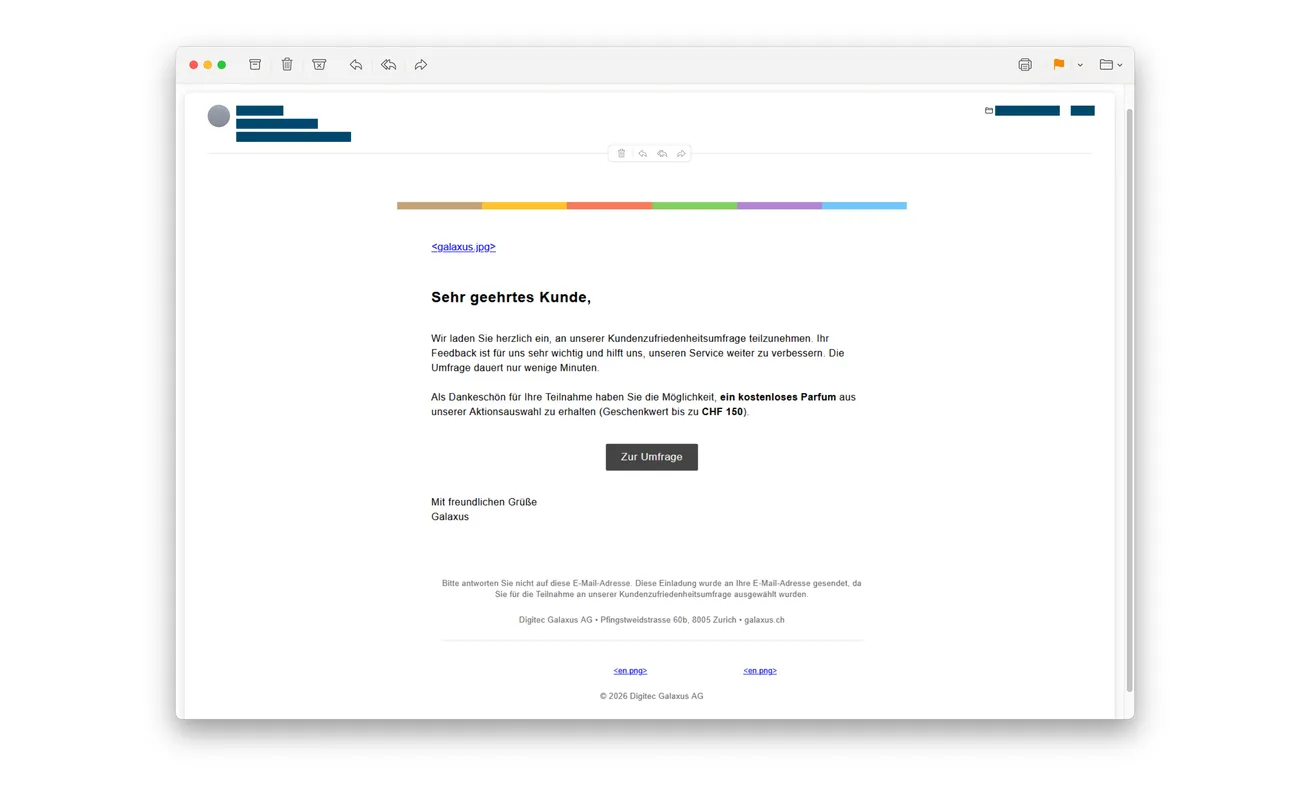
A Galaxus email invites you to answer a few shopping questions. As a thank-you, it offers a free bottle of perfume.
The survey seems easy, and the gift looks worth a few minutes. The more important question comes after you’ve finished answering.
Overview
A customer survey supplies the excuse for a free gift
The Galaxus survey email scam uses a familiar retailer’s identity to make an unsolicited offer feel like customer appreciation.
It asks ordinary shopping questions before moving the participant toward gift selection and payment details. The apparent reward keeps the process feeling worthwhile.
This is documented impersonation, not a dispute about a genuine Galaxus order. The real retailer is warning customers about the fraudulent approach.
The shipping payment is the point where the offer changes
Swiss police describe a counterfeit survey and checkout collecting contact information and card details under a free-gift pretext.
The claimed small shipping cost makes providing a card seem reasonable. The information exposed can be used beyond that advertised amount.
The original email above was published by police with identifying details obscured. It documents the invitation, not delivery of a perfume or an actual retailer promotion.
The retailer confirms the offer isn’t its reward program
Galaxus’s own warning identifies the perfume lure and says stolen card information can be used for purchases at other online shops.
- Don’t pay to claim this emailed survey gift.
- Harmless questions don’t authenticate the website asking them.
- A copied checkout is still controlled by the counterfeit site.
- Contact your issuer if you entered card information.
- Keep an eye on follow-up messages using the address details you shared.
How a Few Innocent Questions Lower Your Guard
Shopping surveys are familiar. A question about delivery satisfaction doesn’t seem as dangerous as an immediate demand for a password.
That makes the first click easier to justify. You may focus on answering correctly rather than checking who operates the page.
The process also creates a sense of progress. After spending time on the questions, abandoning the reward can feel like wasting the effort.
None of that effort obliges you to continue. The risk changes when the form moves from opinions about shopping to identity and financial details.
You can stop even if the first screens seemed harmless. A sensible decision at the card form doesn’t become less sensible because you already completed a survey.
There is also a difference between recognizing a brand and authenticating a promotion. The same logo can appear on genuine orders and fraudulent invitations.
For this campaign, you don’t have to guess from design alone. The impersonated retailer has specifically warned about the free-perfume approach.
How the Galaxus Survey Email Scam Works
Step 1: An invitation makes the reward feel connected to shopping
The email presents itself as a customer-satisfaction request. A perfume is offered as an incentive, making participation sound like a small benefit for a normal customer.
Receiving it doesn’t prove that the sender knows your order history. A broad retailer-themed message can feel relevant to someone who shops online regularly.
Don’t assume inclusion means selection. A line saying you were chosen for a gift can be written into every copy of a fraudulent email.
Check a promotion through the genuine service before following it. The invitation’s own button isn’t an independent way to establish who sent it.
Step 2: A copied survey keeps attention on easy answers
The website asks about shopping habits, satisfaction, and product preferences. These subjects fit the retailer story, so the page may feel coherent.
But relevant questions don’t make the destination authentic. Anyone imitating a retailer can ask what you usually buy.
A completed progress indicator likewise shows only that the page recorded your answers. It doesn’t establish eligibility for a real promotion.
Step 3: Gift selection becomes a delivery-information form
The next stage asks where the supposed gift should go. A postal address and contact details seem natural once you’ve chosen something to receive.
That expectation is useful to the scammer. Information you might refuse to provide in a random email can feel necessary for delivery.
Consider each field separately. Your address and phone number can support convincing follow-up approaches even if you never proceed to the card screen.
Don’t share identification documents to resolve a supposed delivery problem. Return to the real retailer if anyone introduces a further verification demand.
Step 4: The free item acquires a small shipping charge
A small payment is easier to accept when the gift seems valuable. The form makes the decision feel like paying postage rather than taking a financial risk.
The copied checkout then requests card information. Those details don’t become limited to the advertised postage simply because that is the price printed above them.
You’re not just deciding whether the postage is affordable. You’re deciding whether this site should have the details needed to use your card.
Step 5: The operator has details that can be reused elsewhere
The danger isn’t confined to waiting for a perfume that may never arrive. Contact and card information have already crossed the trust boundary.
An unrelated merchant descriptor may appear if stolen details are used elsewhere. Report actual activity to your issuer rather than looking only for a Galaxus charge.
You may also receive messages that refer to delivery, verification, or a failed order. Treat those as new requests requiring independent checks.
The earlier form submission doesn’t authenticate a later caller. Someone knowing your address can be using information collected during the same deception.
The Fake Checkout Doesn’t Need Your Galaxus Password
The copied checkout doesn’t need access to your genuine shopping account to display an order summary and collect payment details.
That matters after the incident. You can expose a card without losing the retailer login, so a password change alone may miss the urgent problem.
Conversely, a card charge elsewhere doesn’t prove that the retailer’s payment system leaked your details. Explain the counterfeit form when reporting.
If you also entered a password, include that separate disclosure. Don’t assume an account takeover merely because the page looked like Galaxus.
The amount printed on the fake checkout is only part of the record. Compare it with your issuer’s history, including attempts you declined.
You aren’t required to identify the operator before requesting protection. Tell the issuer what happened and let it investigate the transactions.
A normal-looking Galaxus account therefore isn’t a reason to dismiss the card exposure. The genuine account and the counterfeit form are different places.
Checking a Galaxus Offer Without Completing the Claim
Open the retailer’s known site independently. Use its official contact and assistance page to ask about the invitation.
Don’t use the support link inside the survey for that check. The same operator can control the offer, checkout, and supposed help page.
Explain the claim briefly: an emailed survey promises perfume and later asks for payment information. You don’t need to provide your card number to verify it.
Keep a legitimate order question separate. An impersonation email doesn’t establish that your current shopping account, delivery, or return request has failed.
Check the complete web address rather than a logo embedded in the page. A familiar brand word somewhere in an address isn’t sufficient.
If you’re checking on a small screen, don’t let a hidden address bar become a reason to trust the design. Leave the page and use the genuine app.
When warning someone else, describe the request instead of forwarding a clickable claim button. They can recognize the lure without opening the same destination.
If You Shared an Address but Stopped Before Payment
Sharing contact details is not the same as authorizing a card transaction. Avoid assuming the worst, but keep track of what you submitted.
A later message may look more convincing because it knows the name, address, or phone number you gave. Don’t mistake that familiarity for independent verification.
Check unexpected invoices against real orders. Don’t pay merely because a demand uses your correct delivery address.
If an unfamiliar order appears in your genuine retailer account, contact its support. If it appears only in an email, verify it before treating it as real.
Tell other household members if the shared address may receive suspicious approaches. They don’t need a copy of your full form submission to understand the warning.
Keep monitoring proportionate. An exposed address doesn’t automatically mean every account is compromised, and it doesn’t require paying an identity-recovery service.
Give the Card Issuer the Right Story
When contacting the issuer, explain the counterfeit checkout first. Describing the incident only as a missing perfume can make it sound like an ordinary delivery dispute.
Say what you entered: card number, expiry date, security code, and any later approval. Don’t send those complete secrets in an informal support message.
Describe the promised shipping amount separately from actual card activity. If the amounts differ, preserve both instead of trying to make them fit.
If a charge appears under another business name, give the exact descriptor to the issuer. Don’t accuse that business publicly without knowing how the transaction occurred.
Keep your reference number and the instructions you receive. Note whether the issuer is addressing account protection, investigating a charge, or doing both.
Ask whether you need to take another action after replacing the card. Don’t assume that blocking new use automatically completes every dispute about an existing transaction.
If no charge is visible yet, the disclosure still deserves reporting. You aren’t required to wait for money to disappear before asking about protection.
Save later account notices with the same record. A short timeline helps you explain new developments without reopening the counterfeit claim page.
Continue checking through the issuer’s own system. The survey’s confirmation screen cannot tell you whether the card is secure or a disputed payment was returned.
What to Do if You Have Fallen Victim to This Scam
-
Abandon the gift claim. Don’t finish a payment, confirm a new charge, or supply another document because the site says the perfume is reserved.
A completed survey doesn’t obligate you to proceed. Close the page and assess the specific details you already entered.
-
Protect an exposed card through its issuer. Contact the issuer using a trusted app or the contact printed on your card.
Explain that you entered card details on a counterfeit Galaxus survey checkout. Ask whether blocking, replacement, or other immediate protection is required.
Mention any authentication code or approval you supplied. Don’t wait for the advertised shipping charge before reporting the disclosure.
-
Review the real transaction history. Look for attempted or completed activity you don’t recognize, including purchases under unrelated merchant names.
Use the issuer’s dispute process and ask about deadlines. Keep the actual amounts and currencies rather than relying on the offer’s promised total.
-
Change a password only where it was exposed or reused. If the false site requested an account login, replace it through the genuine service.
Don’t assume every survey required a password. Report the fields you actually completed so support can distinguish card exposure from account access.
-
Tell Galaxus about the impersonation through verified assistance. Include the message and destination without sending passwords or full card information.
The retailer can investigate misuse of its identity. Your issuer still needs a separate report to protect the payment method.
-
Retain the invitation and existing records. Save the sender details, claim wording, payment confirmation if any, and the time you submitted information.
Don’t reopen the counterfeit checkout just to collect a better picture. Evidence already available can start the report.
-
Watch for misuse of the contact details. Independently check unexpected orders, delivery problems, or invoices that refer to the information you supplied.
Don’t pay or provide identification because a follow-up knows your address. Verify through the real organization named in that new message.
-
Report losses through an official police channel. Keep the issuer’s case reference with the fraudulent email and transaction evidence.
Ignore strangers promising a guaranteed refund for a fee. A missing gift doesn’t become recoverable simply because someone offers a special service.
Frequently Asked Questions
Is the Galaxus perfume survey confirmed phishing?
Yes. Swiss police and Galaxus identify fraudulent invitations, a copied shopping site, and a card-collection checkout, rather than a genuine perfume promotion.
Can a genuine retailer send customer surveys?
Yes. The warning concerns this documented gift-and-card lure. Check any uncertain invitation through the retailer’s independently reached assistance route.
Why do the first questions seem harmless?
They fit a normal shopping survey and make participation feel routine. The risk changes when the route requests contact or payment details.
Does the small shipping amount limit my potential loss?
No. Card information disclosed to a counterfeit checkout can be misused beyond the amount the page advertises.
What if my real Galaxus account looks normal?
A normal shopping account doesn’t make the counterfeit form safe. Contact your issuer after a card disclosure, even without evidence of a retailer-account takeover.
What if I only supplied my name and address?
Be alert to personalized follow-up and unexpected orders or invoices. That disclosure alone isn’t evidence that a card or shopping login was compromised.
The Bottom Line
Don’t pay to claim the perfume in this Galaxus survey email. The documented offer imitates a real retailer to collect personal and card information.
If you entered a card, contact its issuer promptly. Report the imitation to Galaxus separately and verify any later order or delivery message independently.

Join the discussion
0 commentsShare your experience or ask a question about this article.
Discussion
Start the conversation
Have a question or something useful to share? Add the first comment.