


The apartment looks affordable, and someone finally answers your inquiry. Before arranging a viewing, the supposed owner asks you to complete one small credit-check requirement.
For people caught in the MyScore rental-ad scheme, that requirement connected their housing search to a purchase they had never set out to make.
Overview
An apartment inquiry became a credit-monitoring sale
The MyScore case involved fake rental advertisements directing prospective tenants toward credit-report websites. A paid monitoring service sat behind the supposed requirement for a property viewing.
Michael Brown, chief executive of Credit Bureau Center, pleaded guilty to wire fraud conspiracy and wire fraud in March 2026.
The DOJ’s account of his guilty plea describes conduct running from 2014 through January 10, 2017. These are historical offers, rather than newly verified checkout terms.
Credit Bureau Center was previously called MyScore. Associated website names included eFreeScore.com, FreeCreditNation.com, and CreditUpdates.com, which help identify records concerning the same scheme.
A small first charge concealed the continuing expense
Prospective renters were directed toward a credit report before they could tour a property. The monitoring enrollment involved a $1 initial charge.
The offer included a seven-day trial followed by a typical $29.94 monthly charge until cancellation. The apartment inquiry had become an ongoing billing relationship.
- The advertised property was unavailable as represented or did not exist as advertised.
- The supposed owner required a credit report before scheduling a tour.
- The report request steered the renter toward a particular commercial service.
- The resulting enrollment could continue charging after the housing lead disappeared.
Why this goes beyond an unpopular subscription
The confirmed deception began with the rental advertisement itself. This was not simply a disagreement over the quality of a monitoring product someone knowingly wanted.
Authorities described approximately 169,000 enrollments and at least $6.8 million taken through the scheme. Approximately 2.7 million unique website visits were not 2.7 million proven victims.
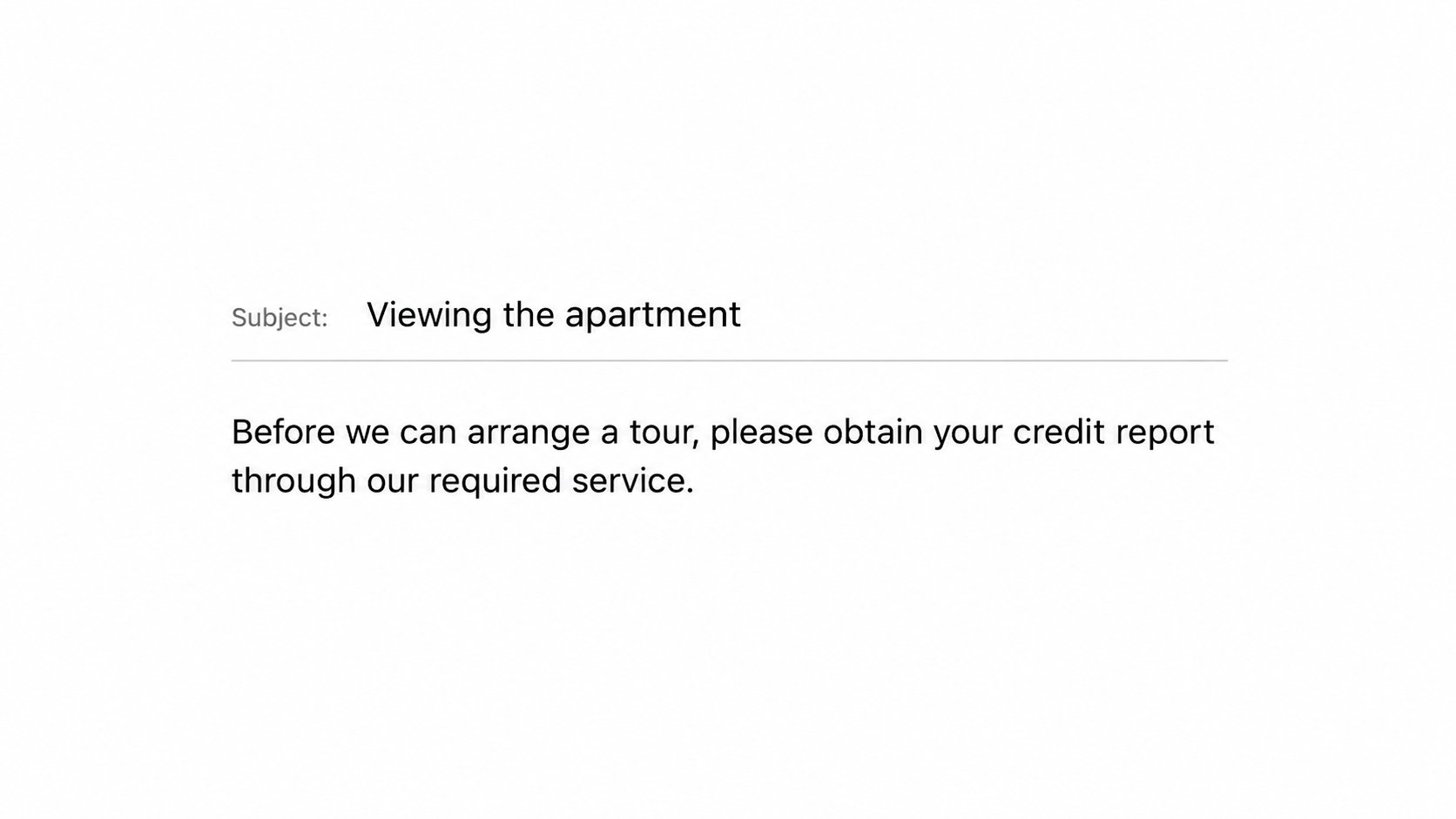
The lead image reconstructs a viewing-related credit-report request. It does not reproduce a recovered email or show any historical company’s actual checkout.
Why the Apartment Was Such an Effective Hook
A person searching for housing has a concrete goal and often a deadline. A reasonably priced listing can feel like a chance that requires quick attention.
Creditworthiness also sounds relevant to renting, which makes a credit-report request more plausible than an unrelated demand for a gift card.
The trick was to connect those two ideas before the prospective tenant had established whether the supposed owner could actually offer the apartment.
The ad created the reason to engage, while the email created the reason to buy. The purchase felt like preparation for something more important.
Someone comparing apartments might focus on rent, transport, and availability rather than treating the linked credit service as a separate financial decision.
That shift matters because the report is not the accommodation. Paying for it does not establish an appointment, ownership of the property, or permission to lease it.
A real screening process should still let you identify the property and the person authorized to handle it. An outside payment cannot supply that missing connection.
The FTC’s rental-scam guidance specifically warns about fake listings used to enroll people in recurring credit-monitoring programs.
It also recommends checking the address and ownership independently. A listing’s photographs and a responsive email account cannot substitute for that check.
How the MyScore Fake Rental Ad Scam Works
Step 1: An appealing advertisement starts the housing conversation
The scheme used rental advertisements in desirable locations at below-market prices. The properties were not available through those advertisements as represented.
This distinction is important when the photographs show a real building. A real address does not establish that the advertiser owns it or can arrange a tenancy.
The ads often omitted specific addresses, limiting the renter’s ability to compare the offer with other listings before replying.
An inquiry therefore moved the prospective tenant into direct communication with the advertiser before the basic property information had been independently resolved.
Step 2: A supposed owner introduces a viewing condition
People responding received form emails presented as coming from the property owner. Those messages required a credit report before a tour could be scheduled.
Some messages suggested another applicant had fallen through or offered reassuring details about renovations and flexible leases. Those details made the reply feel property-specific.
The useful question was whether the sender could actually show and lease the property. Reassuring language about availability did not resolve that question.
The renter was instead directed toward completing a task, which made the next click feel like progress toward securing housing.
Step 3: The report requirement leads to a commercial enrollment
The emails sent people to particular credit-report websites. Prominent free-report language drew attention while smaller terms described the trial and continuing charges.
To proceed, the renter supplied personal and payment information. The service acquired the ability to charge without the renter obtaining the promised property access.
Even a small initial payment deserves scrutiny when card details are required. The amount paid today may differ from the amount authorized for later billing.
For this scheme, the initial $1 charge did not describe the full financial commitment. The recurring monitoring service was the commercial outcome of the fake inquiry.
Step 4: Monthly billing continues after the rental lead fails
The seven-day trial could turn into recurring charges of approximately $29.94 monthly. Someone occupied with moving might not notice the relationship immediately.
The supposed landlord could stop responding while the monitoring enrollment remained active. A failed housing conversation did not automatically cancel a separate service.
Some consumers experienced difficulty canceling, according to the DOJ account. Do not assume ignoring the email or abandoning the apartment ended the charges.
Check the actual merchant shown on your payment statement. That record is more useful for a cancellation request than the name used by the supposed landlord.
Step 5: The renter has to address two separate problems
The fake advertisement and the monitoring charge need different responses. Reporting the listing does not necessarily notify the company processing the subscription.
Likewise, canceling monitoring does not remove the original ad or alert the platform that an advertiser is using housing inquiries to drive sales.
Keeping both trails helps explain what happened. Save the property listing and email alongside the enrollment confirmation, billing descriptor, and cancellation correspondence.
That connection shows why you entered the service, rather than leaving an investigator with an isolated charge and no explanation of the misleading introduction.
The Company Names Behind the Subscription
MyScore and Credit Bureau Center referred to the same business history
Credit Bureau Center, formerly MyScore, was the company identified in Brown’s criminal case. Its consumer-facing website names were not separate apartment owners.
Different labels can make a bank statement difficult to recognize. Match the enrollment email and receipt to the charge before assuming it came from another rental application.
This article concerns the documented historical conduct. A domain bearing an old name today should not be treated as the same operator without current evidence.
Affiliates supplied the false rental route
The criminal account describes affiliate marketers using fake advertisements to bring consumers into the credit-report enrollment process.
That division of roles matters because a real commercial website can receive customers through a deceptive introduction. A functioning report does not validate the nonexistent rental opportunity.
Consumers should evaluate both the reason they were told to purchase and the terms of the purchase. Misrepresentation can occur at either of those stages.
The supposed landlord was not proof of property authority
A reply signed as an owner does not establish ownership, management rights, or permission to collect screening information.
Search the address separately and compare contact details with the actual property manager’s published information. If ownership is unclear, use local property records as another starting point.
Then contact the identified manager or owner through a separately obtained route. Ask whether the specific listing and screening requirement belong to them.
Cancellation belongs with the actual billing service
Use the provider identified in your own receipt or statement to locate current account and cancellation options. Do not rely on historical domain names as support instructions.
State that you want the subscription canceled, not merely that you no longer want the apartment. Request written confirmation and the effective cancellation date.
Where bank-account debits are involved, ending authorization and ending the underlying subscription are related but separate actions. Keep a record of both requests.
Recognizing the Difference Between Screening and a Sales Detour
Landlords may legitimately screen people applying for accommodation. A credit check alone does not make a rental business fraudulent or make every application charge improper.
The concern here is a promised property opportunity that existed to push a separate paid enrollment. The supposed prerequisite delivered customers rather than a viewing.
Before paying, establish the property’s full address, who controls the listing, and what stage of the application you have reached.
Ask what information will actually be reviewed, who receives it, and whether you are buying an optional service with continuing billing.
A genuine need to assess an applicant does not explain why an unverified advertiser insists on one unrelated monitoring subscription before showing a property.
Keep the sender’s explanation available in writing. If basic property questions receive only another purchase instruction, stop the transaction rather than buying access to a conversation.
Also distinguish credit monitoring from obtaining your own report. A landlord’s mention of credit does not require subscribing to whatever service appears in an unsolicited link.
What to Do if You Have Fallen Victim to This Scam
-
Save the listing before it disappears, including its address, advertised rent, photographs, and platform identifier. Preserve the email thread linking the viewing to the credit-report purchase.
Keep enrollment receipts and statements separately from the advertisement. Together they explain both the false housing lead and the charge that followed.
Do not continue submitting identity documents to obtain the promised viewing. First establish a genuine property contact through information found independently.
-
Identify the monitoring service from your confirmation or statement. Use its verified account or support route to request cancellation and confirmation of the last charge.
Ask whether any additional payment is scheduled and keep the answer. If cancellation is unavailable online, document the failed attempt and the contact method you used.
A message to the supposed landlord is insufficient because that person may not control your billing account. Send the cancellation to the service itself.
-
Contact your card issuer about charges you dispute and explain the fake rental introduction. Provide the receipt, terms you received, and cancellation evidence when requested.
Describe accurately whether you entered card details and what you believed the purchase covered. Ask the issuer which dispute options and deadlines apply to your transaction.
Do not assume replacing the card alone ends recurring billing. Ask specifically how future charges from the identified merchant will be handled.
-
If payments are automatic bank-account debits, tell the company and your bank that you are revoking authorization. Follow up in writing and retain copies.
The CFPB’s automatic-payment instructions distinguish stopping debits from canceling a contract. Ask your bank whether it recommends a stop-payment order and whether fees apply.
Review subsequent statements and promptly report payments that continue after your instructions. A successful request should leave a record you can refer to later.
-
Report the false advertisement to the platform hosting it and describe the credit-monitoring referral. Include the listing identifier so the platform can locate the actual post.
Submit the same connected account to ReportFraud.ftc.gov. If personal information was misused, use IdentityTheft.gov to build an appropriate recovery plan.
Check whether you supplied sensitive information to the fake landlord separately from the monitoring service. That distinction helps identify which accounts or documents need attention.
-
For historical MyScore refund questions, start with the FTC’s actual refund page. It describes checks sent in November 2024, rather than a newly opened application round.
The published instruction to cash those checks within 90 days was tied to that distribution. Do not mistake the old page for a current filing deadline.
Never pay an unsolicited contact to activate an FTC refund. Confirm any unexpected refund communication using the administrator details published by the agency itself.
Frequently Asked Questions
Was MyScore merely accused by unhappy renters?
No, Brown pleaded guilty to federal fraud charges in March 2026. The FTC also pursued a separate civil case involving false rental advertisements and monitoring enrollments.
Those proceedings establish deliberate deception in the documented scheme. They do not make every credit-check service or screening request fraudulent.
Which names were associated with the scheme?
The historical business was Credit Bureau Center, formerly MyScore. The DOJ identified eFreeScore.com, FreeCreditNation.com, and CreditUpdates.com among the websites used.
Use those names to interpret relevant records, rather than assuming an old domain currently provides verified support or belongs to the same operator.
Why did a $1 payment lead to larger charges?
The initial payment accompanied enrollment in a trial. Historical terms described a seven-day period followed by typical monthly billing of $29.94 until cancellation.
The problem was especially deceptive because people reached that enrollment through a supposed apartment requirement, rather than seeking a monitoring subscription.
Does canceling the apartment inquiry cancel the subscription?
No, the housing conversation and paid service were separate relationships. The monitoring company needed a cancellation request through its actual account or support process.
Check your receipt and statements, then retain confirmation showing when billing stops. Report any disputed continuation to the payment provider promptly.
Are legitimate landlords allowed to check credit?
Legitimate rental screening can include credit information, but that does not authenticate the advertiser or every linked service. Establish who controls the property first.
Understand the specific charge and any renewal before sharing payment details. A promised viewing should not prevent basic questions about the listing.
Can I apply now for the refund described in 2024?
The FTC page describes a historical check distribution and its instructions. It does not establish a new application period or guarantee your eligibility today.
Use the published agency route for a case-specific question. Ignore strangers who turn an old refund announcement into a demand for a release fee.
The Bottom Line
Do not buy a required credit-monitoring subscription from an unverified apartment advertiser. The MyScore case shows how a housing lead can become a continuing charge without a viewing.
If you enrolled, identify and cancel the actual service, check your statements, and contact your payment provider about disputed charges. Preserve the listing that led you there.

Join the discussion
0 commentsShare your experience or ask a question about this article.
Community experiences
Did this happen to you?
Your experience could help someone recognize the same scam. Submit a private report for our team to review.
I experienced this tooReports are reviewed before publication. Sharing publicly is always your choice.
Discussion
Start the conversation
Have a question or something useful to share? Add the first comment.