


An interview invitation lands after weeks of applications that went nowhere. The role sounds right, the company exists, and the message arrives just when you could use some good news.
The first interview is where things feel different. Nobody says who is asking the questions, and the conversation never moves beyond a chat window.
Overview
The Data Analyst Internship a Real Company Didn’t Offer
In The Guardian’s reporting on job scams, job seeker Hruthik Narayan Sarva describes an email about a data analyst internship. The sender claimed to represent Mark Farrah Associates.
The real company publishes business information for the US health care industry. That made an analytics position plausible enough to consider.
Sarva says the conversation moved to Microsoft Teams, where he couldn’t identify the interviewer and was told they would use chat. He also recalled an invitation by text.
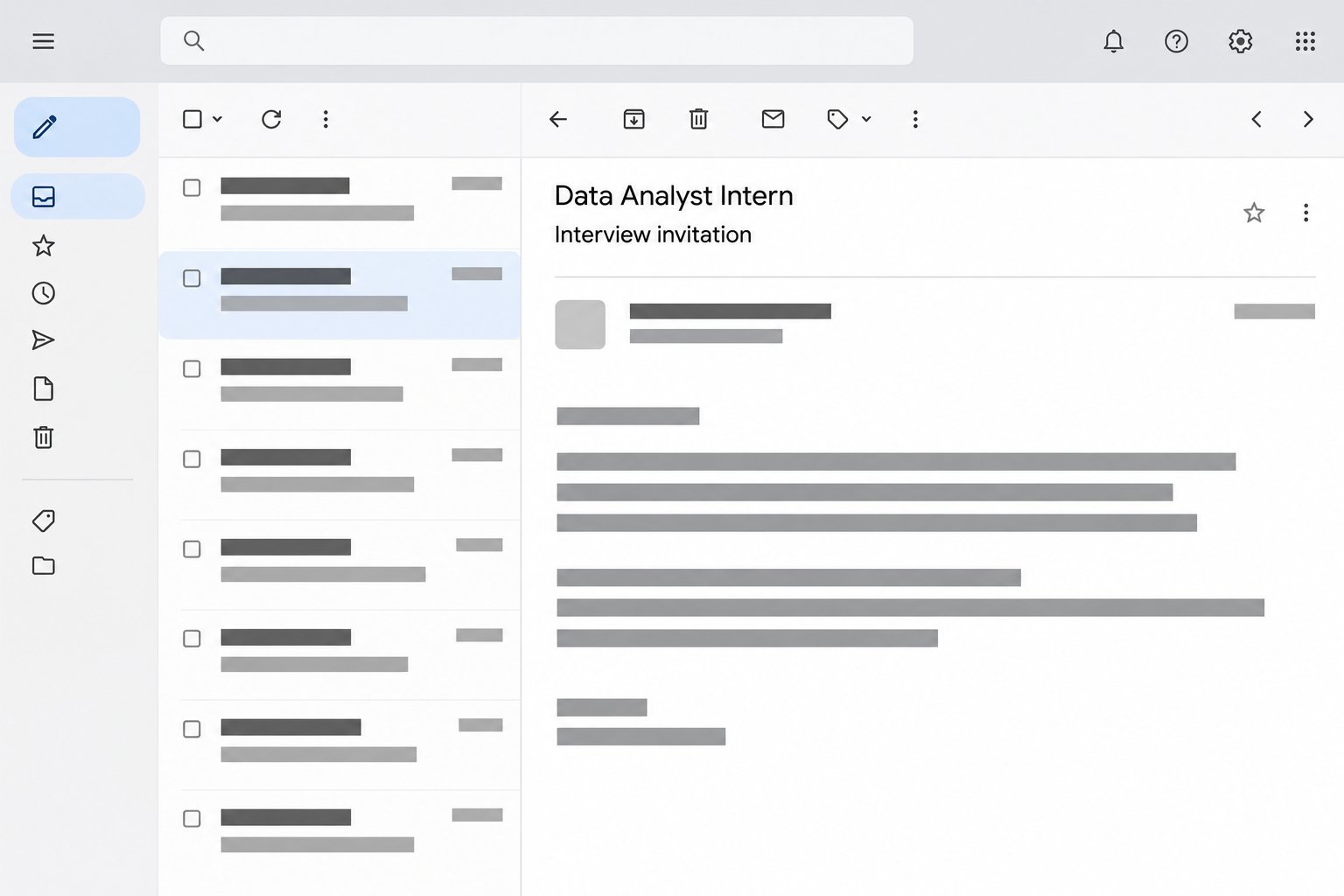
He went to the actual company for confirmation and learned the offer was fake. The image above illustrates the email format, not his original message.
What We Know About the Approach and What We Don’t
The case establishes an impersonation, not a breach of the company or Microsoft Teams. A legitimate messaging service can carry messages from someone who has no connection to the employer.
Sarva recalled unusually high pay, remote work, and flexible hours. Those features helped make the role appealing, but he didn’t need to prove the terms impossible before checking it.
The report doesn’t say he sent money, disclosed a tax identifier, or installed anything.
Treat requests for any of those actions as warning signs in your own search, not as events The Guardian documented in this case.
Checks You Can Make Before Answering an Interview Invitation
- Locate the company’s official website without using links from the message.
- Contact the employer through a number or address you find there and ask it to confirm the opening and interviewer.
- Check your application record for the role, its posting number, and the account where you applied.
- Keep tax, banking, and identity documents out of unverified chat messages.
- Ask a campus career adviser or a trusted person to review the invitation if you’re unsure.
A recruiter may make first contact before you apply. The difference is whether the employer can confirm the person and explain what the conversation is about.
How the Fake Mark Farrah Associates Internship Scam Works
Step 1: The Invitation Uses a Name You Can Verify Too Easily
Searching Mark Farrah Associates brings up a real business. That can answer whether the business exists without answering whether it sent the invitation.
It’s the difference between checking the employer and checking the sender. The second question is the one an impersonation needs you to skip.
Ask which team is hiring and what its job reference is. Then get the employer’s contact details independently instead of asking the sender where to call.
If you can’t find the opening online, there may be an ordinary explanation. The direct confirmation matters more than trying to decide from a missing listing alone.
Step 2: The Interview Moves to a Channel You Already Trust
Teams is a normal place to hold an interview. In this case, Sarva became concerned when he couldn’t identify the person conducting it, not simply because Teams was involved.
Some hiring teams use written questions for accessibility or scheduling. You can accommodate a written interview and still ask who will review it and through what official process.
If the organizer isn’t identified, don’t send documents to make up for missing information. A name supplied in chat needs the same independent verification as a name in an email.
You can pause without giving a reason to the interviewer. Save the meeting title or invitation details if they’re already visible, then contact the employer yourself.
Step 3: The Role Sounds Better Than the Details Provided
High compensation and flexibility may be genuine. In Sarva’s account, they appeared together with an unidentified interviewer and a separate invitation by text.
Ask what the role actually involves. For an analytics internship, ask which business problem you’d help solve, what data access is needed, and who would oversee your work.
You don’t need confidential client information to hear a credible answer. A real hiring process should be able to explain the work at an appropriate level.
Read the response before sharing work samples or agreeing to a test. Confirm that the assessment belongs to that opening and came from the actual employer.
Step 4: The Decision Shifts From Interviewing to Giving Something Away
In other fake job approaches, an applicant may be asked to pay a screening fee, accept a check for equipment, or supply details for supposed payroll.
The US Postal Inspection Service warns that fake checks can take time to discover. Don’t spend or forward the money while your bank checks it.
A legitimate employer may need identity and payment information once you’re genuinely hired. Verify both the offer and the onboarding process before sending those details.
If you encounter a fee or an equipment payment here, stop before acting. Sarva checked with the real company before treating the invitation as a job offer.
How to Verify an Internship Without Losing a Real Opportunity
Start With the Exact Role and Who Would Supervise It
Write down the title, hiring team, job number if provided, and the recruiter’s name. You don’t need to send more information to gather what is already in the invitation.
Look for the role in the employer’s own hiring system. If a job board post is the only listing, note the employer name and who submitted it.
Use an independently found business phone number or contact form. Ask whether the vacancy, recruiter, and interview format match what the company is using.
If an agency is involved, verify that relationship through the hiring company. An agency calling from a different domain is possible, but the different domain is not the confirmation.
You can say you’re checking before your interview. Give the employer enough information to find the position without resending your application, identification, or private portfolio.
If someone at the company cannot answer, ask how its recruiting team handles verification. Until you hear back, you can keep applying elsewhere without giving up a genuine opening.
Record Where You Applied So a Stranger Cannot Fill In the Gaps
Keep a private application list with the employer, role, website, and date for each submission. Add the recruitment contact or reference when you receive an official acknowledgment.
When an interview invitation arrives, compare the details with your entry. An application for one job isn’t proof that an unrelated offer with the same company name is genuine.
If you didn’t apply, you can ask how they found you. Treat the answer as a lead and verify it independently before sharing anything personal.
If you’re later moved to a different platform, keep the original email. That gives you something concrete to check if the person you meet is not the person described.
Keep Work Authorization Separate From a Recruiter’s Deadline
International students can face a second worry: whether turning down an uncertain position will affect a work placement or a plan to stay employed.
If you study in the US, bring the independently verified offer to your school’s international student office. Ask your designated school official what applies before starting work.
Employment requirements can depend on your status and work category. A recruiter’s promise, even if it mentions a deadline, cannot establish that you are authorized.
Keep a copy of what the school tells you. Don’t send a passport, identity number, or immigration document to a stranger who says they can speed that decision up.
Check the Employer Before You Send a Portfolio or Complete a Test
Share a public portfolio link instead of client files or private work, when that meets the hiring team’s needs. Ask who can access any submitted materials.
If the assessment asks for account information or sensitive data unrelated to the work, don’t complete it. Ask the verified hiring team whether it uses that assessment.
A timed skills exercise and a request to pay a fee are different things. The first should have a clear job-related purpose that the employer can confirm.
For a data exercise, ask whether you’ll be given a sample dataset. Don’t offer to paste your current employer’s records into a website the interviewer sent you.
If a supposed test requires access to your own accounts, ask what purpose that serves. You can demonstrate analytical skills without handing an interviewer passwords or private records.
What to Do if You Have Fallen Victim to This Scam
End contact and verify the vacancy through the actual company.
Don’t reply through the same meeting link or text thread. Use a contact route you found separately and ask the business to confirm the position and interviewer.
If the company says it didn’t send the message, save that response. Keep it with the invitation rather than trying to get the sender to admit anything.
Review what information you actually disclosed.
Make a list of the documents and account details you sent. Separate a phone number or public résumé from government identification, passwords, or banking information.
If you used a password on a page the sender supplied, change it through the genuine service on a trusted device. Update any other account that reused it.
Contact your bank if money or account information is involved.
Use the number on your card or your bank’s official app. Explain whether you sent money, shared details, or received a check you were asked to spend.
A visible check deposit isn’t proof it will clear permanently. Don’t forward the balance or buy equipment on the recruiter’s instructions while your bank reviews it.
Protect your identity if you sent sensitive documents.
US readers can start at IdentityTheft.gov and use the questions that match their exposure. Ask the relevant document issuer what steps it recommends.
If work or immigration records were involved, contact your school promptly through its actual student services office. Give the names of the documents, not the numbers, in an initial email.
Save and report the separate parts of the approach.
Preserve the email, application link, meeting details, and payment records privately. Report the listing or account from inside the platform that actually carried it.
In the US, report the incident at ReportFraud.ftc.gov. Describe the real employer that was impersonated and identify what happened, even if you stopped before paying.
Add safeguards without giving up your job search.
Keep using verified application routes and write down where each application went. Share the suspicious invitation with a career adviser so you have another person to check difficult cases.
Expect follow-up messages to reference the supposed role. Check any new request against the employer’s reply instead of trusting it because it knows your name or job title.
Frequently Asked Questions
Did Mark Farrah Associates Send the Internship Offer?
Sarva told The Guardian he contacted the real company and learned the offer was fake. The company’s existence did not make the person who contacted him an employee.
If you get a different invitation, verify it on its own. Don’t use an address or phone number from the disputed message to make that check.
Does a Text-Only Teams Interview Mean the Employer Is Fake?
Written interviews can be legitimate, so chat alone doesn’t settle it. You still need to know who is conducting the interview and whether they represent the company.
Pause if nobody can identify the organizer through an official route. The difference is who you’ve verified, not which chat app opens.
Can a Recruiter Contact Me Before I Apply?
Real recruiters can contact candidates who haven’t applied. Ask how the recruiter found you, which role they’re filling, and how the employer verifies their relationship.
Then confirm those details through the employer or agency directly. A recognizable company name in the message does not answer those questions.
Is It Safe to Send My Résumé Before the Interview?
A résumé with your professional history is different from a passport scan, tax number, or banking record. Only include the personal information someone needs to evaluate your application.
If you sent a résumé already, be alert to follow-up attempts that refer to it. Information taken from your own document doesn’t prove a recruiter is legitimate.
Should I Accept a Check to Buy My Work Equipment?
Don’t spend or transfer funds from a check sent by an unverified employer. A deposit may appear available before the bank finds a problem with the check.
If you already deposited it, talk to your bank. Explain who sent it and whether you bought equipment or sent any money onward.
What Should I Do if the Interview Was for an Internship I Need for School?
Take the unverified message to your career office or designated school official. They can help you check the role and identify the school’s rules for a genuine placement.
Keep your course or employment requirements separate from the sender’s demands. A deadline in a message does not establish that the role is approved.
The Bottom Line
Do not send money or identity documents to someone offering an internship you cannot verify. Confirm the vacancy and interviewer through the employer’s own contact route first.
If you already responded, save the messages and act on what you shared. Contact your bank, the relevant account provider, or your school through a channel you found yourself.

Join the discussion
0 commentsShare your experience or ask a question about this article.
Community experiences
Did this happen to you?
Your experience could help someone recognize the same scam. Submit a private report for our team to review.
I experienced this tooReports are reviewed before publication. Sharing publicly is always your choice.
Discussion
Start the conversation
Have a question or something useful to share? Add the first comment.