


Your phone rings once and stops. There’s no message, just a missed call from a number that looks close enough to a normal one.
Calling back feels like the fastest way to find out who it was. In this kind of scam, that’s exactly what the caller is counting on.
Overview
The return call is the part that can cost you
The one-ring phone scam uses a brief call or misleading voicemail to get you to dial back. The FTC describes the callback as the point where toll charges can arise.
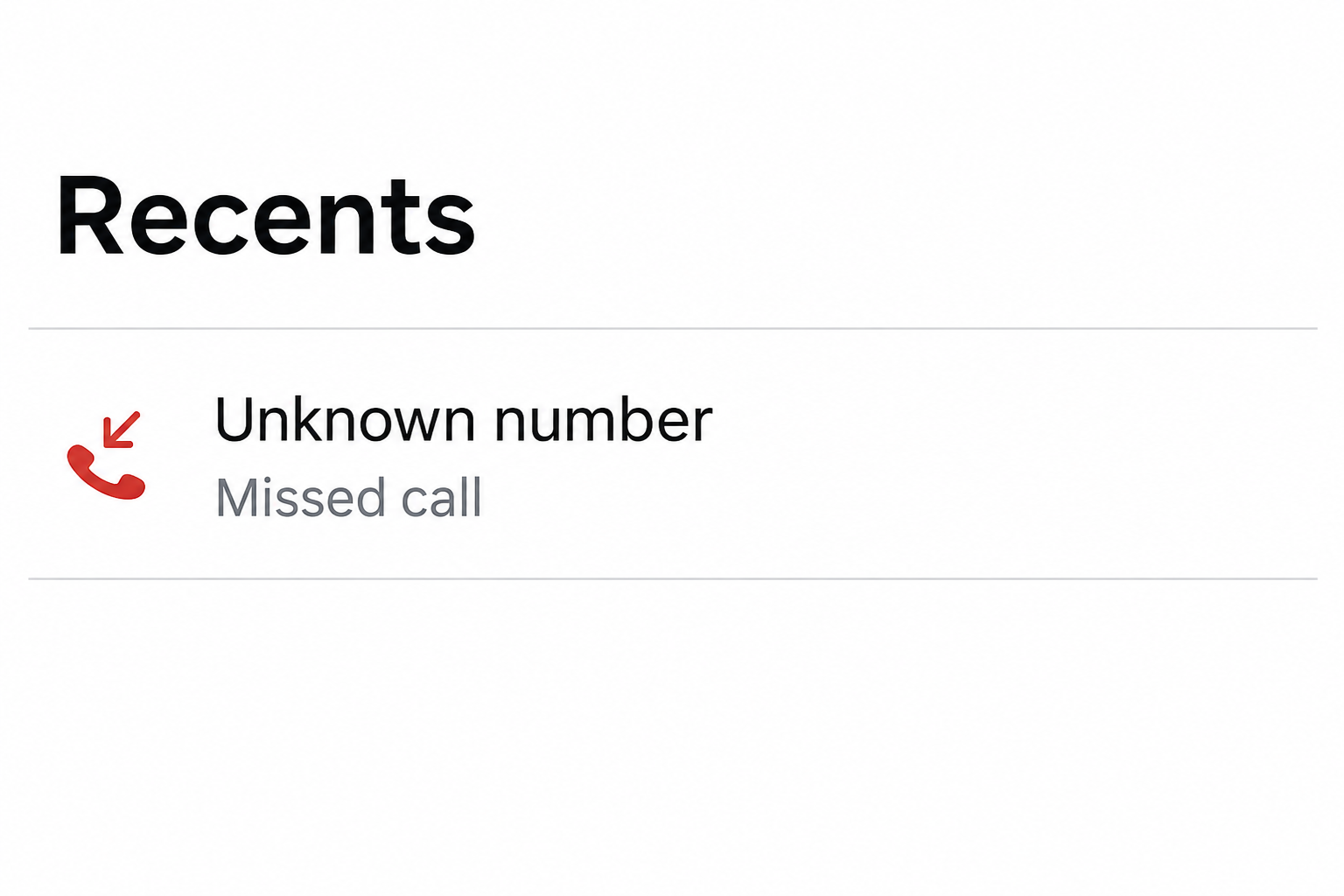
A missed call in your recent history does not establish that you made an outgoing call or owe a toll.
Check the direction of the call before assuming you were charged.
This is different from a caller convincing you to read out a bank code. In a one-ring scheme, merely dialing the destination can be enough to run up charges.
An area code is not a fraud verdict
The FCC’s rulemaking on one-ring calls describes calls whose displayed numbers can resemble domestic ones even when the callback destination is international.
A legitimate person can use a foreign phone number. A seemingly local number can also appear on a misleading call. Do not decide whether to trust it by geography alone.
If the callback could matter, identify the organization through a contact you already trust. You do not have to dial the number in your call history to see what happened.
Match your next step to what you did
- If you only saw the missed call, do not return it blindly. Check for a legitimate reason through an independent route.
- If you called back, look for the outgoing record and ask the carrier to explain any unexpected charges.
- If the conversation also involved a payment, login, or verification code, contact the affected provider about that separate action.
There is no need to declare every one-ring call a scam. The behavior tells you to be careful about the callback, not to accuse the owner of the displayed number.
How the One-Ring Phone Scam Works
Step 1: A call stops before you can decide whether to answer
A brief ring makes the call look like somebody had a poor signal, hung up too early, or reached the wrong person.
The temptation to call back is what the scheme relies on.
The scammer does not need to get your attention for long. A missed-call entry waiting on your screen may be enough to make you feel that you missed something important.
Some versions add a voicemail claiming you need to reschedule a delivery or respond to an urgent request. The story is there to make an unfamiliar callback feel normal.
That story can sound reasonable in isolation. If you do expect a package, open the original order and check its carrier and status, rather than dialing the voicemail.
Step 2: The number looks familiar enough to dial
Some international destinations use a number format that resembles U.S. domestic calling. You may not notice an overseas destination just from seeing a familiar number length.
Do not spend time memorizing lists of dangerous area codes. The same place can have legitimate businesses, families, and visitors, and an ordinary call can be interrupted for innocent reasons.
If you have a known contact outside the country, compare the missed call with the contact you already saved. If you cannot confidently match it, use your existing conversation instead.
The correct number to verify a notice can be entirely different from the number shown on your screen.
Use the official number you find independently, not a callback the stranger supplies.
Step 3: Your carrier may rate the return call
The cost comes from calling the destination, not from trusting a pitch or entering card details.
The FCC explains that connection charges and time-based rates can apply to the return call.
The charge may look like international, toll, or premium service activity on a bill. Do not try to calculate it from a stranger’s claim about how long you were connected.
If the line played silence or a recorded greeting, do not assume it was free. Hang up and check what the carrier recorded for the actual outgoing call.
The carrier can identify the line, date, and type of charge. The party you called is not a reliable source for deciding whether you were billed.
A Quick Check Before You Return an Unknown Call
If the caller claims to be an organization
Look for the organization in the records you already have.
That might mean an order number in the merchant app, a scheduling note in a patient portal, or a known office contact.
If the voicemail says you owe a fee, verify that claim separately. A legitimate appointment or shipment does not authenticate the caller who mentions it.
If a company you know cannot match the request, ask what contact route it normally uses. You can choose not to return the call even if the answer is inconclusive.
Do not use a website or number dictated by someone who is still on the line. End the contact and start over from a route you selected yourself.
If you expected a person or business from another country
An actual international caller is not inherently suspicious. Contact the person through a saved number, a known chat, or another independent channel to check whether they called.
If you need to make an international voice call, check the carrier rates before dialing. A domestic calling allowance does not necessarily cover the destination you have in mind.
If a friend recently changed numbers, ask a mutual contact through an established conversation.
There is no need to share the contents of a strange voicemail to authenticate a genuine caller.
If it was just a stray ring
You can leave the call unanswered.
An isolated missed call without a message is not a reason to replace a SIM card, erase a phone, or sign up for credit monitoring.
If calls repeat, save a few date and time entries before you change your phone settings. Examples make it easier to describe the problem without returning any calls.
If multiple entries show a similar number, you can provide the pattern without saying you know who made the calls. Caller ID can be misleading even when the digits repeat.
If the carrier offers a list of calls it blocked, compare dates and lines there rather than entering the unknown number in a paid lookup service.
Review how you receive important callbacks before silencing every unfamiliar number. Useful filters can help, but you may want to allow unsaved calls on days when you expect one.
If You Called Back, Check the Line and the Bill
Open the recent-call listing and identify the outgoing entry. Keep the call time, the displayed destination, and the duration available to compare with the bill.
Check account usage for the correct phone line. A family plan can have several numbers, and the total on the bill may hide a charge on a different line.
Billing entries can appear after the call. If a charge is not yet shown, ask the carrier when it expects the usage to appear and how you can review it.
If an amount appears, ask which rate applied and whether there was a separate connection charge. Describe what happened rather than assuming the carrier already knows it was unwanted.
Use your carrier’s official support from its app, bill, or account website.
Keep the case number and the amount under review. Do not expect a refund until the carrier confirms one.
Ask whether the carrier can limit international or premium outgoing calls on your line.
Check what else that affects if you travel, call relatives abroad, or depend on the line for work.
A prevention setting is not a dispute. Even if a carrier can block similar calls going forward, you still need a separate answer about the charge already shown.
When someone else manages the plan
Ask the account holder to check the affected line.
Share the date and time of the call privately rather than forwarding a suspicious callback number to the rest of the household.
If your phone was away from its usual network, check which charge the carrier is describing.
A roaming charge and an international outgoing toll are not necessarily the same line item.
If two people called the same unfamiliar number, document them separately. The carrier needs to know which lines were involved and whether either has a charge under review.
The person who owns the plan can ask what limits are available and whether they apply per line. Avoid changing a family member’s service without explaining what will change.
When a supposed follow-up comes from the carrier
If the original caller contacts you again about a refund, the second call does not authenticate the first. Use the case number from your own carrier conversation to follow up.
Ask your carrier to send any decision through your verified account, or request a reference you can check there.
Do not give a new caller a login code to release a credit.
Before closing your notes, compare the adjusted amount with the disputed line. A general account credit may not tell you which charge the carrier reviewed.
Keep the difference between a temporary adjustment and a final decision clear. If the outcome is unresolved, ask when the carrier expects to issue a written response.
If a disputed line reappears on a later bill, use the previous case and add the new date. Do not begin by calling the number that triggered the incident.
What to Do If You Receive or Return a One-Ring Call
- Leave the missed call alone. If you think it was important, use a trusted route to the person or organization instead of the number in the log.
- Hang up if you already dialed. Do not stay on the line to identify the caller or follow instructions to dial a second number.
- Keep the details privately. Save the time, line, and outgoing duration. Keep the bill entry if it appears, without circulating the full number publicly.
- Ask the carrier to explain any charge. Have it identify the destination and rate. Use its billing dispute route if the charge is unfamiliar or misleading.
- Ask about settings for repeat calls. Discuss filters or dialing restrictions that suit the line, while allowing for legitimate contacts you still need.
- Report suspected fraud after gathering details. Use the FCC consumer complaint center or ReportFraud.ftc.gov for applicable U.S. reports. Neither replaces contacting the carrier.
If someone also got account credentials or persuaded you to send money, contact the affected bank or provider. Keep that report separate from the charge for making the call.
Two Charges That Can Look Similar at First
An international call entered on your phone bill is not a card transaction from an unfamiliar merchant.
The first questions go to the carrier, not a payment link in a voicemail.
If a caller separately took payment details or asked for a transfer, give the issuer the actual card or bank transaction.
A carrier charge dispute will not reverse that separate payment.
For example, a person might return an unfamiliar call and hear a request for an additional booking fee. The call itself and the proposed fee are not the same expense.
Do not send a second payment to somebody who promises to erase the toll charge. Your own carrier can verify what appeared on the bill and what options are available.
If the carrier finds no outgoing call matching the suspected charge, ask it to explain the line item rather than fitting it to the missed call.
The line item could be tied to other phone activity.
Frequently Asked Questions
Can having a missed call on my screen trigger the scam’s toll charge?
The described one-ring toll scheme relies on a return call. Check that your history shows only an incoming missed call if you are unsure what you did.
Does one ring always mean a scam?
No, real calls can end abruptly. The safer decision is to check the identity independently before returning a call to a number you do not recognize.
Is a local-looking number safe to call back?
Not necessarily, because the display is not proof of the destination or who placed the call. Use the contact you already trust instead of guessing from its format.
What if I called back but heard nothing?
Disconnect and check your carrier’s usage for the outgoing call. Silence does not tell you whether a connection or time-based charge applied.
Should I replace my phone after a one-ring call?
The missed call alone does not establish device compromise. If you installed something, transferred money, or shared a code after answering, respond to that specific action.
Will my carrier automatically remove a one-ring charge?
Do not assume it will be reversed. Tell the carrier what happened, preserve the call and bill information, and ask for the outcome of its review.
The Bottom Line
Do not call an unknown number back just because it rang once. If the contact might be real, reach the person or organization through a number you already trust.
If you did return the call, check the correct line’s usage and bill. Ask your carrier to explain any unexpected charge before paying anyone who promises to fix it.

Join the discussion
0 commentsShare your experience or ask a question about this article.
Community experiences
Did this happen to you?
Your experience could help someone recognize the same scam. Submit a private report for our team to review.
I experienced this tooReports are reviewed before publication. Sharing publicly is always your choice.
Discussion
Start the conversation
Have a question or something useful to share? Add the first comment.