

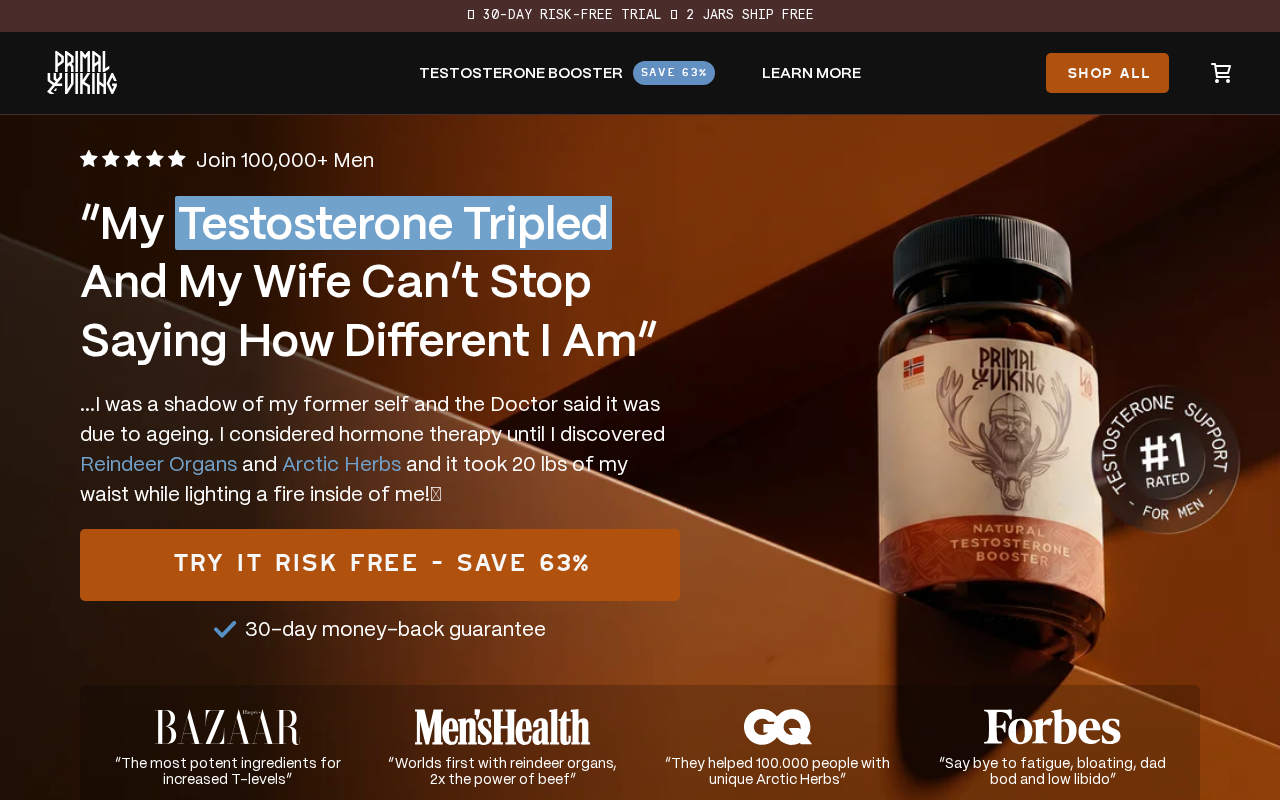
Primal Viking sells a testosterone-support supplement built around an unforgettable hook: reindeer organs, beef testicles and “Arctic” ingredients used by strong men of the past. It is excellent storytelling—but a dramatic origin story is not proof that the capsules deliver the results shown in the ads.
The company appears real and customers may receive the product. The question is whether the muscle, energy, confidence, sleep and fat-loss claims are supported strongly enough to justify the price.
Primal Viking Scam Overview
Primal Viking is sold through an active Shopify store operated under the name Norse Organics LLC. Its website provides policies and a business address in Austin, Texas, which makes it different from a completely anonymous fake shop.
However, the marketing gives shoppers reasons to be skeptical. The product is presented as a natural way to support testosterone and unlock broad improvements in strength, muscle growth, body fat, sleep, focus and confidence. Those are substantial outcomes, yet the site does not present a rigorous, independently published clinical trial of the finished Primal Viking formula.
The ads lean on ancestral imagery, organ-based ingredients, male transformation stories and media-style logos. That presentation can make a supplement feel battle-tested even when the evidence is mostly ingredient theory and testimonials. A real company can still sell a real product with exaggerated expectations.
What shoppers should understand
- Primal Viking appears to ship a real supplement. Our concern is the strength of the performance and testosterone claims, not a claim that every order disappears.
- No finished-product trial is shown. Research on individual nutrients or organ extracts cannot prove the complete formula raises testosterone or transforms body composition.
- Before-and-after images are not controlled evidence. Training, diet, lighting, posture, medication and editing can all change the result.
- The range of promised benefits is unusually broad. One capsule stack is associated with muscle, fat loss, sleep, mood and confidence without equally broad clinical support.
- Refunds depend on the written policy. Buyers should verify eligibility, deadlines and return costs before ordering multiple bottles.
What Primal Viking Claims
The supplement is promoted as a modern version of traditional nose-to-tail nutrition. Marketing says that freeze-dried reindeer and bovine organs, testicular tissue and selected herbs provide nutrients that support male hormones and physical performance.
Organ supplements can contain nutrients, but the key commercial question is not whether organs contain biologically active compounds. It is whether the exact capsule formula, at the advertised dose, survives processing, reaches useful levels and produces meaningful outcomes in people. The seller does not supply strong finished-product evidence answering those questions.
The Biggest Primal Viking Red Flags
The ancestral story does most of the persuasive work
Viking imagery creates a simple contrast: powerful men of the past ate organs, while modern men are deficient and weak. That story is memorable, but historical association is not a clinical mechanism. It also ignores enormous differences in lifestyle, diet, disease, life expectancy and training.
Testosterone claims require better evidence
Testosterone is affected by age, sleep, body weight, illness, medication and many other factors. A trustworthy claim that a supplement meaningfully raises it should be supported by controlled blood measurements in people using the finished product. General ingredient references do not meet that standard.
Transformation images can create unrealistic expectations
A muscular before-and-after photograph does not reveal whether the person followed a training program, changed diet, used other supplements or medication, or was photographed under different lighting. If an image is licensed, edited or unrelated to the product, it can be even more misleading.
Media logos do not necessarily mean independent endorsement
“As seen in” logos can refer to paid placements, syndicated press releases or brief mentions rather than a publication testing and recommending the product. Shoppers should look for a link to a specific editorial review and read what it actually says.
The legal terms protect the seller
Primal Viking’s terms identify Norse Organics LLC and include arbitration and class-action language. Such clauses are common in online commerce, but they are a reminder that buyers are accepting a legal agreement—not simply trying a risk-free wellness experiment.
How the Primal Viking Funnel Works
Step 1: The ad targets a familiar insecurity
The viewer is asked whether low energy, stubborn fat, poor sleep or declining confidence could be caused by falling testosterone. Several common problems are placed under one hormonal explanation.
Step 2: An unusual ingredient creates curiosity
Reindeer organs and beef testicles make the product stand out from ordinary multivitamins. The novelty encourages people to keep watching and gives the formula a rugged, exclusive identity.
Step 3: Ancestral language supplies authority
The pitch suggests that ancient warriors discovered a natural secret lost by modern men. This makes the recommendation feel older and more authentic than conventional supplement advertising, even though the commercial formula is modern.
Step 4: Testimonials turn possibility into expectation
Confident men, physique changes and enthusiastic reviews imply that improvements are common. The page may not show how many users experienced no change or how other lifestyle factors contributed.
Step 5: Bundles increase commitment
Multi-bottle discounts encourage customers to pay for several months before knowing whether the product agrees with them. The larger order also makes the headline savings look more attractive.
Step 6: The guarantee closes the sale
A refund promise reduces hesitation, but the customer still needs to follow the exact policy. Opened-product rules, deadlines and return shipping can determine whether the guarantee is practical.
Is Primal Viking a Scam or Legit?
Primal Viking appears to be a legitimate online supplement business, but its viral testosterone and transformation claims are not convincingly proven. We would not describe it as a fake shop that never ships. We would describe it as a heavily marketed supplement whose evidence does not match the size of the promises.
Buyers should expect capsules—not a guaranteed hormonal reset. Anyone with symptoms of low testosterone should seek proper testing and medical advice rather than relying on an advertisement that connects many ordinary symptoms to one commercial solution.
What to Do If You Already Bought Primal Viking
Check the full label before taking it
Compare the delivered ingredients, serving size and warnings with the product page. Do not use a bottle with a damaged seal, missing lot information or a label that differs materially from the offer.
Discuss hormone concerns with a clinician
Fatigue, sleep problems, low mood and changes in body composition can have many causes. A qualified professional can evaluate symptoms and order appropriate tests. Do not combine hormone-related supplements or medication without medical guidance.
Track results realistically
If you choose to use the product, do not rely on mirror impressions alone. Record dates, dose, side effects and relevant changes without altering several other supplements at the same time. Stop if you experience a concerning reaction.
Preserve the refund deadline
Save the order confirmation and current policy. Contact support early if you want to return it, ask whether opened bottles qualify, and request the correct return address and authorization. Use tracked postage.
Challenge billing or delivery failures with evidence
If the order never arrives, the seller keeps charging after cancellation, or the written guarantee is not honored, document every contact and speak with your payment provider before its dispute deadline expires.
Frequently Asked Questions
Does Primal Viking raise testosterone?
The seller has not provided convincing clinical evidence that the finished formula reliably raises testosterone to a meaningful degree. Individual ingredient theories are not enough to predict a person’s blood results.
Is Primal Viking a fake company?
The website identifies Norse Organics LLC and publishes store policies. That supports the conclusion that it is a real seller, though it does not validate every marketing claim.
Are reindeer organs a proven testosterone treatment?
No. The fact that an ingredient comes from reproductive or organ tissue does not establish that swallowing a processed capsule will raise human hormone levels or produce the advertised transformation.
Is the product worth the price?
That depends on expectations, but shoppers should not pay a premium assuming the supplement is clinically proven. Compare the complete dose, testing documentation, refund terms and alternatives—not the Viking story alone.
The Bottom Line
Primal Viking combines a real product with a powerful ancestral narrative. The formula may provide nutrients, but the website moves from that modest possibility to a long list of impressive male-performance outcomes without strong finished-product proof.
Our verdict: legitimate seller, overhyped supplement. Do not expect a capsule to replace medical testing, resistance training, sleep, nutrition or evidence-based treatment, and avoid large bundle orders made under advertising pressure.








