


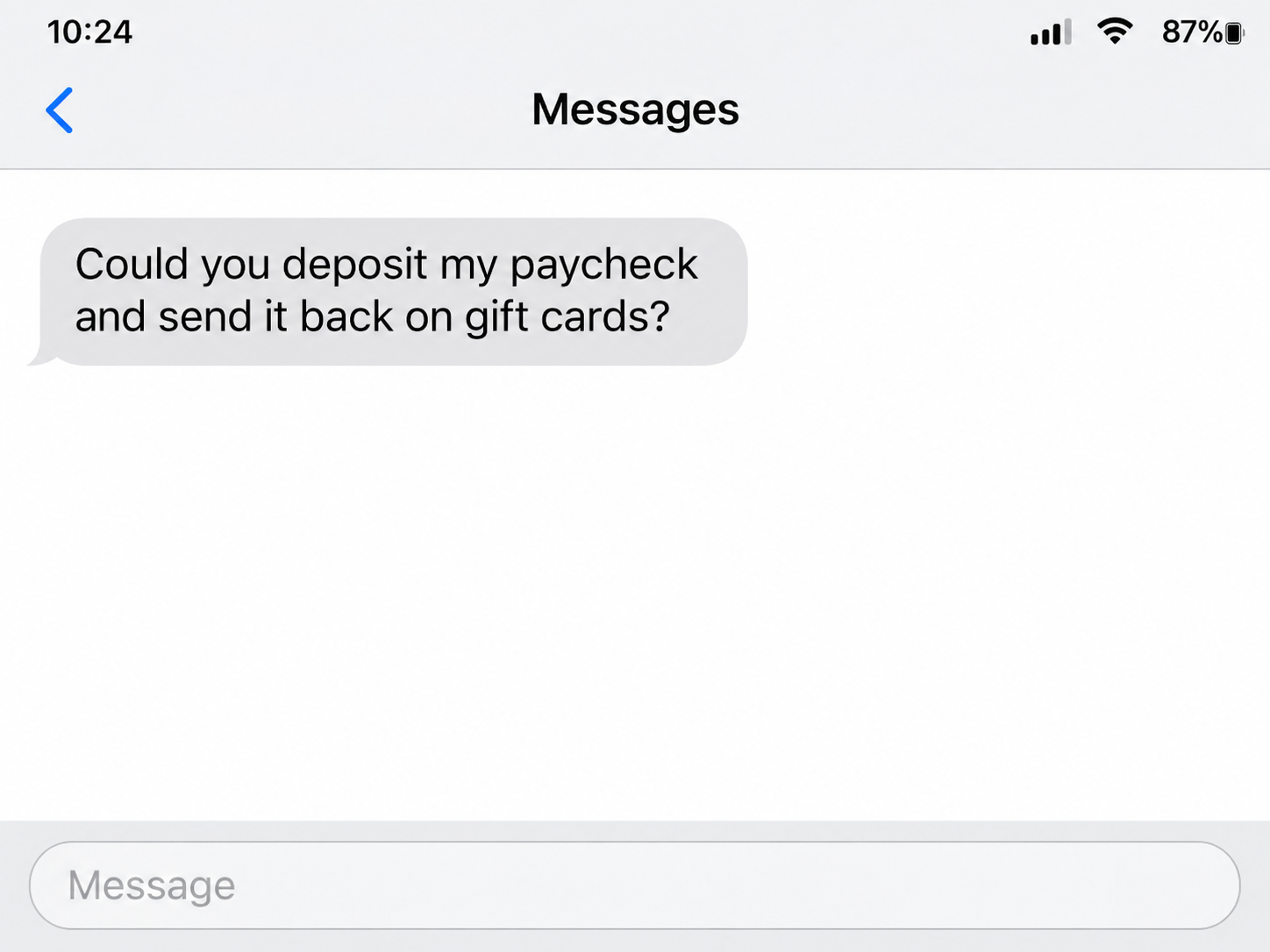
A man you’ve been getting to know online asks for a favor involving his paycheck. He says you can deposit it and send the money back on gift cards.
The deposit appears in the account. For the other person whose name is on it, the first sign of trouble may come much later.
Overview
A favor for someone she trusted became a series of payments
An adult child helped their mother sort out several returned bank deposits. She thought the checks were paychecks for a man she knew online.
She deposited the checks and bought gift cards for him for about a month. Then the bank began flagging the checks as fraudulent.
The reconstructed chat shows what the man asked for. It contains no card number or private information from the family.
The mother’s bank account was shared
The person who reported the incident said their own name was on the account. They learned the full sequence during a visit to the bank with their mother.
The account was affected by more than one returned check and payments that had gone out. The report does not establish a single check for the whole loss.
The online contact disappeared after the mother stopped sending money. The bank discussed a repayment arrangement specific to that family.
The deposit and the gift cards have different records
A credit appearing in your account tells you the bank has made funds available under its rules.
The bank can still reverse the credit if it later rejects or returns the check.
- Identify each check deposit and any later reversal in your bank records.
- Match each gift card purchase to the related request without sending the numbers again.
- Ask the bank which payments and deposits are still pending.
- Speak to a fraud specialist about protections available to both account holders.
The FTC’s fake check guidance explains why a visible deposit is no guarantee. The gift card money can be gone by the time a bank detects the bad check.
Why “I Just Need My Paycheck” Is a Persuasive Story
The mother thought she was helping someone she cared about. The money was presented as his earnings, which made the request sound different from a direct loan.
It looked as though he was sending money first.
But the bank could take back the check credit, and the card purchase was made with funds available in the family account.
The credit and purchase were separate. When the bank returned a check, the corresponding gift card purchase still had to be paid for.
The request may feel smaller when it happens one check at a time. A month of repeat deposits and card purchases can add up before anyone sees the full picture.
The FTC’s description of money mule scams includes people met online who send money and then ask the recipient to pass value along by gift card or transfer.
That description explains a wider pattern. This particular report associates the deposits with returned fraudulent checks and offers no conclusive information about the sender’s identity.
How the Paycheck and Gift Card Romance Scam Works
Step 1: The two people get to know each other online
According to the family member, the mother had been speaking with the man for some time and considered the relationship meaningful.
She had heard enough about his life for the favor to sound plausible.
The request looked like a favor for someone who needed help, rather than an opportunity to earn money.
Someone else reviewing it can still ask why he needs her bank account.
Step 2: The contact sends what he calls his pay
The other person describes checks as pay from work. Depositing his check is presented as a way to help him access money he says already belongs to him.
In the case reported, the mother accepted those checks and made deposits. The bank later identified the checks as fraudulent, according to her adult child.
Step 3: The contact asks for money on gift cards
The mother bought gift cards and sent the value back to the contact. Once a gift card number is shared, the issuer may have little time to act before redemption.
The FTC’s gift card guidance advises keeping the cards and receipts. Report the use of each card directly to the company responsible for it.
Step 4: A returned check removes the apparent funding
The bank’s reversal changes the transaction history. The credit you thought covered a purchase can disappear while the purchase you made remains on the account.
That difference can be hard to spot if deposits and withdrawals repeat. Ask the bank to identify which reversals correspond to which checks and which outgoing payments are separate.
Step 5: The effect reaches someone who never spoke to the scammer
In this case, the adult child’s name was on the account.
That meant they needed to understand what the bank planned to do, even though they did not know about the purchases.
The family went to the bank together and spoke with a fraud specialist.
That conversation gave them information the online contact could never provide, including how the bank had classified the checks.
What to Ask the Bank When Two People Share an Account
Establish the size of the problem in bank records
Request a list of deposits, reversals, posted purchases and outstanding items. A balance by itself can combine activity from several days and provide little context about how it changed.
Ask which entries the bank has already included in its total.
That can keep you from counting the same check and reversal twice when explaining the loss to another account holder.
Record the dates of recurring bills and incoming deposits. Ask what will happen to those payments if the bank changes access, places a restriction or closes the account.
Ask about your own role and options directly
The adult child reported that the fraud specialist discussed an arrangement with the family. Ask your bank about the terms and responsibilities that apply to your own account.
Find out what each person will need to sign and what permissions each person currently has. Get the bank’s explanation in writing if possible, especially around a proposed repayment.
If you need to redirect a paycheck or benefit, use the organization that makes the deposit. Confirm when any change will take effect before relying on it for bills.
Speak to a qualified adviser if the bank asks you to sign something you do not understand. Get the account agreement and the bank’s written description of what it proposes.
Help the person stop sending money without turning on them
A conversation that begins with blame can make someone defend the relationship. Start with what the bank confirmed and ask what the contact told them about the checks.
Bring transaction dates and explanations together, one at a time. That can show where the story and the account history part ways without making someone relive every message at once.
Acknowledge that the relationship felt real to the person who received the requests. Then focus on one thing you can do together, such as calling the issuer of a card.
If the contact returns after a break, keep the new message and tell the bank or issuer if it mentions another pending payment.
Avoid a fresh discussion about why he needs money.
Put the Checks and the Gift Cards on Two Separate Lists
Start with the checks that funded the purchases
On your statement, note each deposit you made for the contact and each matching reversal. Leave a blank beside a deposit until the bank can explain its status.
Use the original amount and date to identify a reversal. The date the bank removed the credit can be later than the day you bought the gift cards.
A check that looks like it came from a real employer can still be fraudulent. Let the bank investigate the document and explain whether any deposits remain under review.
The Consumer Financial Protection Bureau explains that a bank can generally take back funds from a fraudulent check.
Ask your bank to identify what it reversed and which account terms apply.
If the balance became negative, ask the bank to distinguish returned deposits from purchases and possible fees. Seeing those items separately makes a repayment discussion more concrete.
Identify the card companies one by one
List the store, purchase date and card issuer for each gift card. Give the issuer the appropriate details through its verified reporting route and keep your complaint reference.
Do the same for cards bought on different days, even if they came from the same store. An issuer may need to check separate card numbers and purchase receipts.
If you withdrew cash before buying a card, the bank record may only show the withdrawal. The store receipt can still identify when and where you bought the card.
Keep the cards and receipts away from anyone who contacts you first. A person who offers help through a private message could be asking for the same value again.
A retailer’s cash register and the company that issued the card may hold different records. If the store cannot check the balance, use the issuer’s own contact information.
Make room for ordinary payments from the shared account
Once expensive reversals appear, a normal electricity bill or rent payment can also be affected. Make the bank aware of anything due soon when you discuss restricting access.
Check accounts you pay from automatically before making changes. Ask your bank and payees how soon a new account or payment instruction would take effect.
The family’s account included more than one person, which complicated the response. Put each account holder’s questions in writing so the bank can answer them during the same call.
Keep copies of the signed account agreement and the fraud team’s explanation. That gives you something to review if a later person describes a different repayment amount.
If your family member feels embarrassed about how the checks arrived, make the first call together. You can begin with the date and amount of one returned deposit.
What to Do if You Have Fallen Victim to This Scam
-
Stop depositing checks for the online contact, and do not buy or share any additional gift cards, even if someone says the next check will cover them.
-
Call your bank’s fraud team and explain both parts of the scheme so it can review the check deposits and the purchases separately.
-
Tell the other account holder when you can and schedule a conversation with the bank about pending activity and access to the shared account.
-
Report each gift card purchase to the issuer, save the card and receipt, and ask whether there is a way to stop or recover unused funds.
-
Preserve the chats and payment records, report the profile to the platform that hosted it, and make a report at FTC ReportFraud.
-
Follow up on any bank restrictions or repayment proposals through the bank’s official channel and retain a written copy of what you agreed to.
If someone else is still buying the cards, ask them to pause while you call the bank together. Let the bank explain which deposits were actually returned and why.
Someone approaching you with a recovery offer may ask for the same card numbers or an upfront fee.
Take any such request back to the actual issuer through its own contact details.
Frequently Asked Questions
Can a check be fraudulent after my balance increases?
A bank can make some funds available before it finishes checking a deposit. Ask it about the specific check before sending value out or spending money against that credit.
Why would someone ask to receive their own paycheck as gift cards?
The request gives the person quick access to money you spend from your account. If their check later fails, the value you sent may still be gone.
Does the other person on the account have options?
The bank can explain who has access, what charges or reversals remain and whether it can change account access. Ask for the terms that apply to both people.
What should I bring to a meeting with the bank?
Take deposit records, receipts, gift card purchase dates and anything the online contact wrote about the checks. Keep the originals separate from the notes you make about what happened.
Can a gift card issuer recover the money?
Ask the issuer as soon as you can and have receipts ready. It can check the cards and explain what action is possible based on their status.
How can I help if my family member still believes the story?
Ask them to stop sending money until you can review the account together. Start with what the bank found, and make one call together if they’re willing.
The Bottom Line
Stop using your account to turn someone else’s checks into gift cards. If you already did it, contact the bank and the card companies through their official channels.
Bring both account holders into the conversation if the account is shared. Ask the bank to explain the returned checks, outstanding payments and options in writing.

Join the discussion
0 commentsShare your experience or ask a question about this article.
Community experiences
Did this happen to you?
Your experience could help someone recognize the same scam. Submit a private report for our team to review.
I experienced this tooReports are reviewed before publication. Sharing publicly is always your choice.
Discussion
Start the conversation
Have a question or something useful to share? Add the first comment.