


An online conversation turns personal, and the other person suddenly changes their tone. They have saved something private, and now they are talking about your family.
That frightening switch has appeared in real criminal schemes. The case involving Olamide Shanu shows how manufactured intimacy became a way to demand money from people online.
Overview
Private images became leverage for a payment demand
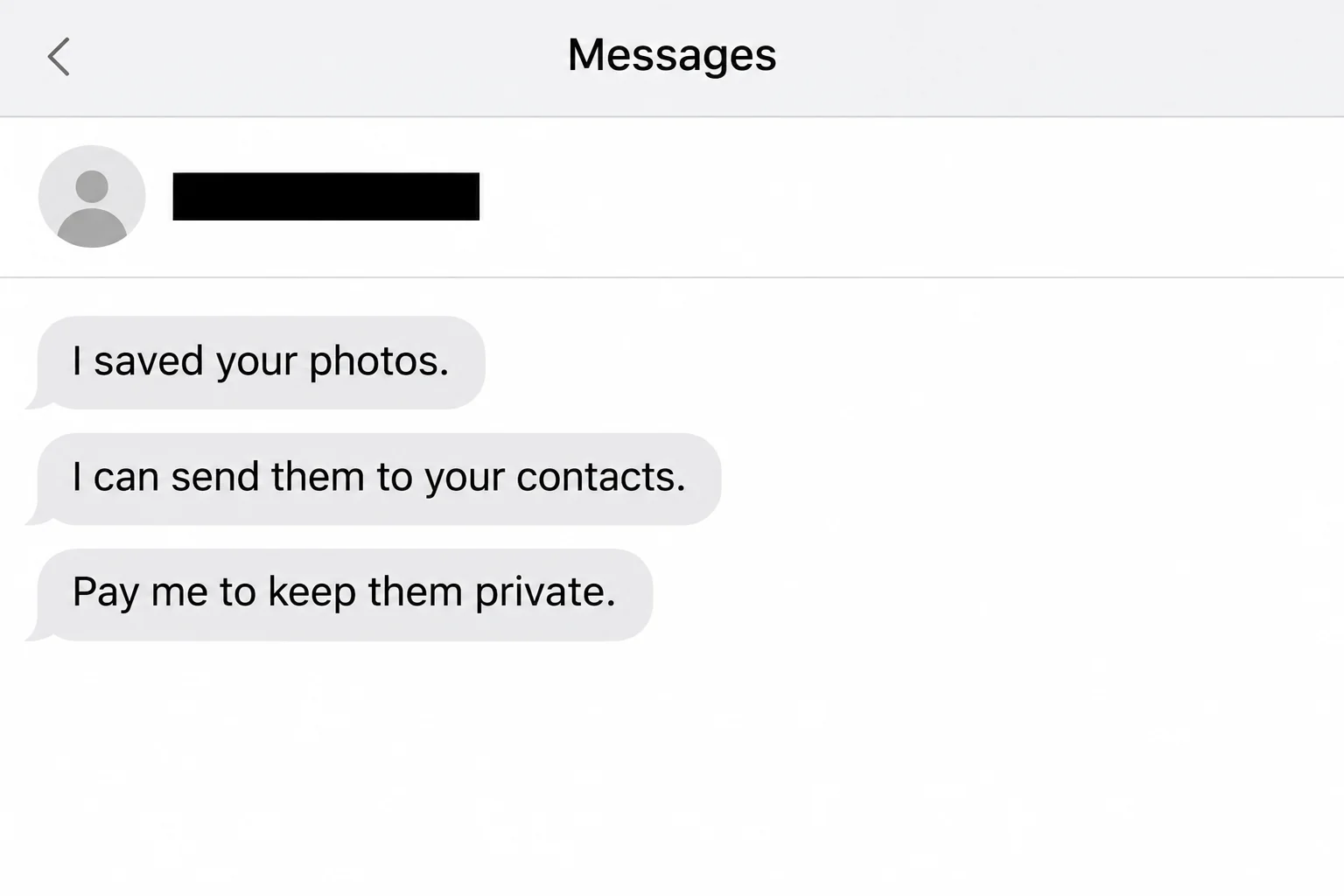
Shanu and his coconspirators persuaded people to send intimate images, then threatened to share them with the victims’ friends and relatives unless payments were made.
They also used false social-media identities to develop deceptive romantic relationships. Those victims were persuaded to send money for supposedly urgent needs after being promised a future together.
The chat illustrated above is a reconstruction of an extortion demand. It contains no victim’s images and does not reproduce an original conversation from the case.
The guilty plea concerns a documented criminal network
According to the DOJ guilty plea announcement, the schemes defrauded approximately 150 Americans. Shanu made more than $2.5 million from the frauds.
He pleaded guilty to conspiracy to commit money laundering in September 2026. The proceeds moved through peer-to-peer payment services and cryptocurrency wallets before reaching conspirators in Nigeria.
The named services were payment channels, rather than proof that those companies organized the fraud. The criminal operation used them to collect and move victims’ money.
A threat does not make the criminal your only source of help
The pressure can make paying seem like the fastest way to regain privacy. But sending money does not put you in control of copies held by another person.
- Stop sending money, further images, or new personal information in response to demands.
- Tell someone you trust and preserve the threatening account’s identifying details.
- Report the account through the platform and the threats through law enforcement.
- Use established free image-abuse services rather than strangers promising guaranteed removal for payment.
How the Online Sextortion Scam Works
Step 1: A false identity makes the conversation feel safe
The Shanu operation used deceptive online identities and emotional relationships. The person responding believed they were dealing with someone whose interest in them was genuine.
The need for affection or companionship is ordinary. Criminals exploited that need by making the relationship a means of obtaining material or payments they could use later.
Knowing a person’s username, seeing attractive photographs, or receiving affectionate messages does not establish their real identity. Those details describe the account presented to you.
The moment to ask for outside help is not limited to the beginning. A conversation that once felt comfortable can become abusive, and you can respond to that change.
Step 2: The conversation creates something the attacker can exploit
In the sextortion part of the case, victims were persuaded to send intimate images. The images then became the subject of threats directed at those same people.
In the romance fraud, the leverage developed differently. Victims trusted a promised romantic future and were asked to provide money for supposed urgent financial needs.
These approaches share manipulation, but the response should fit what happened to you. A threat involving photographs needs image-abuse support alongside attention to any payment.
There is no need to send additional private material to prove the first exchange was a mistake. The person making demands has already shown how they use it.
Step 3: The apparent relationship turns into a threat
The conspirators threatened to send victims’ images to friends and family unless money was paid. That replaced the earlier personal connection with a financial demand.
A list of your contacts can make the threat feel immediate. It may also make it harder to step away long enough to talk with someone supportive.
Try to bring another trusted person into the situation while preserving your privacy. You can describe the threat without showing them intimate material or forwarding any images.
Their most useful role may be helping you stop payments, record account details, and reach legitimate assistance. You do not need to handle all three tasks alone.
Step 4: Money is collected through familiar payment services
The scheme used peer-to-peer payment applications and cryptocurrency wallets to move proceeds. A familiar app could therefore appear in a transaction connected with criminal coercion.
The service’s normal operation does not tell you whether the demand behind a transfer is legitimate. Successful delivery of money also does not mean the threat has ended.
If you already paid, keep the payment record and recipient identifier. For cryptocurrency, record the receiving address and transaction reference without revealing access to your own wallet.
Ask the actual payment provider what protective or investigation measures are available. Do not send another payment because the threatening person says the first one failed.
Step 5: Control over the material remains with the attacker
Money cannot verify that somebody deleted a file, stopped sharing it, or discarded every copy. A reassurance from the person threatening you cannot independently establish those outcomes.
The FBI’s financial sextortion guidance warns that material can be distributed even when a victim pays. It recommends reporting, blocking the perpetrator, and saving useful account information.
This does not mean there is nothing you can do. It means the next steps should involve people and services whose role is to help you.
Stopping contact, reporting abuse, and seeking image-removal assistance address different parts of the problem. None requires you to purchase the blackmailer’s cooperation with another transfer.
Keep Evidence Without Spreading Private Images
The most useful initial record includes the threatening account’s username, profile address, message times, payment demands, and transaction information. Preserve the threats and the identity shown by the account.
Do not post intimate material publicly while asking whether an account is fraudulent. You can report coercion without turning a private image into a widely shared example.
If the material shows someone under 18, do not download or forward it to create a new evidence collection. Ask trained investigators or NCMEC how to proceed safely.
Keep any files already held on your own device private. The image-abuse tools described below can create digital fingerprints locally, without sending the actual images to the service.
Before blocking, record the profile information and the threatening text when you can safely do so. If continued contact feels overwhelming, prioritize getting help and stopping the interaction.
Preserving evidence should not become a reason to remain available for further threats. Investigators can explain what additional information they need through an authorized contact route.
If a platform supplies a report number or confirmation, keep that with the other records. Note whether you reported only the account or also a particular posted image.
Those are different problems for the platform to examine. A report about one account may not identify material that appears separately under another account or address.
What to Do if You Have Fallen Victim to This Scam
-
Stop paying and involve someone who can support you. Tell a trusted person that an online contact is threatening to share private material.
You do not have to show that person the images. Ask for help preserving the demands, contacting your payment provider, and finding legitimate reporting routes.
If you are under 18, tell a trusted adult promptly. The wrongdoing is the exploitation and threat, and embarrassment should not prevent you from getting assistance.
-
Record the account and report its threatening behavior. Preserve the profile address, username, relevant messages, payment requests, and any transaction receipts already available.
Use the platform’s reporting control on the account or conversation and identify blackmail or intimate-image abuse. Menu wording varies, so choose the category matching the conduct.
Then block the threatening account and retain any report confirmation. If material appears under another address, report that specific content as well rather than relying on the first report.
-
Contact the service that processed any payment you made. Open the genuine application independently and locate the transaction in its activity history.
Use its help or support route to report coercion, providing the recipient and transaction reference. Ask whether any pending payment can be stopped or investigated.
Save the response, including any request for additional evidence. Do not describe a completed transfer as recovered until the provider confirms that money has actually been returned.
-
Report the extortion through an established investigative route. The FBI accepts reports at 1-800-CALL-FBI, and local police can also receive threats and payment evidence.
For the Shanu case, the District of Idaho office lists 208-334-1211. Ask how to direct relevant victim information to the appropriate staff.
Have the account details and payment timeline ready, but do not email intimate attachments to a general office mailbox. Ask for the approved handling instructions first.
-
Seek free help appropriate to the person’s age in the images. Take It Down serves people pictured before age 18; StopNCII provides an adult-image route.
Age when the image was created matters even if you are older now. Use the instructions below to choose a service without downloading or circulating additional copies.
These tools work with participating services and have limits. Continue reporting actual threats and posted content rather than treating a submitted fingerprint as a universal deletion request.
-
Keep follow-up help separate from the person threatening you. Reject unsolicited offers to hack the attacker, recover payments, or erase every copy for a fee.
Use the report references when contacting platforms, payment providers, or investigators again. Update them if the threatening person changes accounts or makes another payment demand.
Make room for support after the immediate reporting is finished. A trusted person can help you review new messages without leaving you alone with the pressure.
Free Image-Abuse Help: Choosing the Right Route
Images taken before you were 18
NCMEC’s Take It Down can fingerprint eligible intimate images already on your device. The image remains there while its digital fingerprint is shared with participating platforms.
Open the service on the device holding the existing file and select Get Started. Use only material already in your possession, without requesting or downloading another copy.
The service’s FAQ says people without the original device or file should seek help through its CyberTipline route or call 1-800-843-5678.
When calling, explain that somebody is threatening to share an image taken before you were 18. Ask for assistance with the report and safe handling of existing evidence.
Take It Down does not cover every website or encrypted service, and its anonymous fingerprint process does not provide individual detection notifications. Report known postings and threats separately.
Adults with eligible images already on their device
StopNCII offers local fingerprinting for eligible adult intimate images. You must be depicted in the material and satisfy the service’s age and content requirements.
-
Open Create Your Case, read the eligibility rules, and agree only if they apply. Answer the age and identity questions accurately.
The form also asks about the setting, content, and whether sharing already occurred. Select the answers describing your own situation rather than following somebody else’s suggested responses.
-
At the file-selection stage, choose eligible files already held on your device. Check the listed filenames before advancing to review; do not select unrelated chat screenshots.
The service generates fingerprints locally, rather than sending the images themselves. If a file is rejected, use its support guidance instead of sending the image to a stranger.
-
Create the required password, review the case details, and read the consent statements. Submit only after checking the selected files and accepting the fingerprint-sharing terms.
Keep your password and the case number shown after successful creation. The service warns that a lost password cannot be reset, and losing those details prevents status checks.
StopNCII helps participating companies identify matching material under their rules. It cannot promise removal across the entire internet, so keep reporting known abuse through the affected platform.
Frequently Asked Questions
What exactly did Shanu plead guilty to?
He pleaded guilty to conspiracy to commit money laundering. The official announcement connects that plea with an international operation involving financial sextortion, romance fraud, and moving the proceeds.
Will sending money guarantee that my images stay private?
Payment does not give you control over files another person holds. FBI guidance warns that attackers can distribute images despite receiving money, so seek help before making further transfers.
Should I forward the images to prove what happened?
Preserve the threatening account and messages without circulating intimate material. If images involve someone under 18, do not download or forward copies; obtain safe-handling instructions from trained assistance.
Can adults use Take It Down for childhood images?
The relevant age is when the material was created. Someone pictured before age 18 can seek Take It Down assistance even after becoming an adult, subject to its requirements.
Does creating a fingerprint automatically file a police report?
Image fingerprinting and reporting a crime are separate actions. Report threats to investigators and abusive accounts to the platform, keeping the references for each process you complete.
Do I need to hire a company promising guaranteed removal?
Established free services are available, and the FBI warns against paid sextortion assistance offers. No stranger can substantiate a promise to erase every copy held by an attacker.
The Bottom Line
Do not send money or additional images to someone using private material as leverage. Shanu’s case shows how online relationships and payment services were exploited within a criminal network.
If you are being threatened, involve someone trustworthy, preserve the account details, and report the abuse. Use free, established image-help services while keeping any payment investigation separate.

Join the discussion
0 commentsShare your experience or ask a question about this article.
Community experiences
Did this happen to you?
Your experience could help someone recognize the same scam. Submit a private report for our team to review.
I experienced this tooReports are reviewed before publication. Sharing publicly is always your choice.
Discussion
Start the conversation
Have a question or something useful to share? Add the first comment.