


A security warning names TRIPAUL3, but your computer still seems to work. It is difficult to know what to trust when nothing obvious has changed.
Before deleting unfamiliar files or buying a supposed emergency fix, work out what the warning actually says and which computer it concerns.
Overview
A Windows remote-access threat, not an ordinary document problem
TRIPAUL3 is reported as a remote-access Trojan targeting 64-bit Windows. Its described functions include remote control, surveillance, and theft of credentials or files.
That makes the response broader than deleting one download. The affected system and accounts used through it may both need attention.
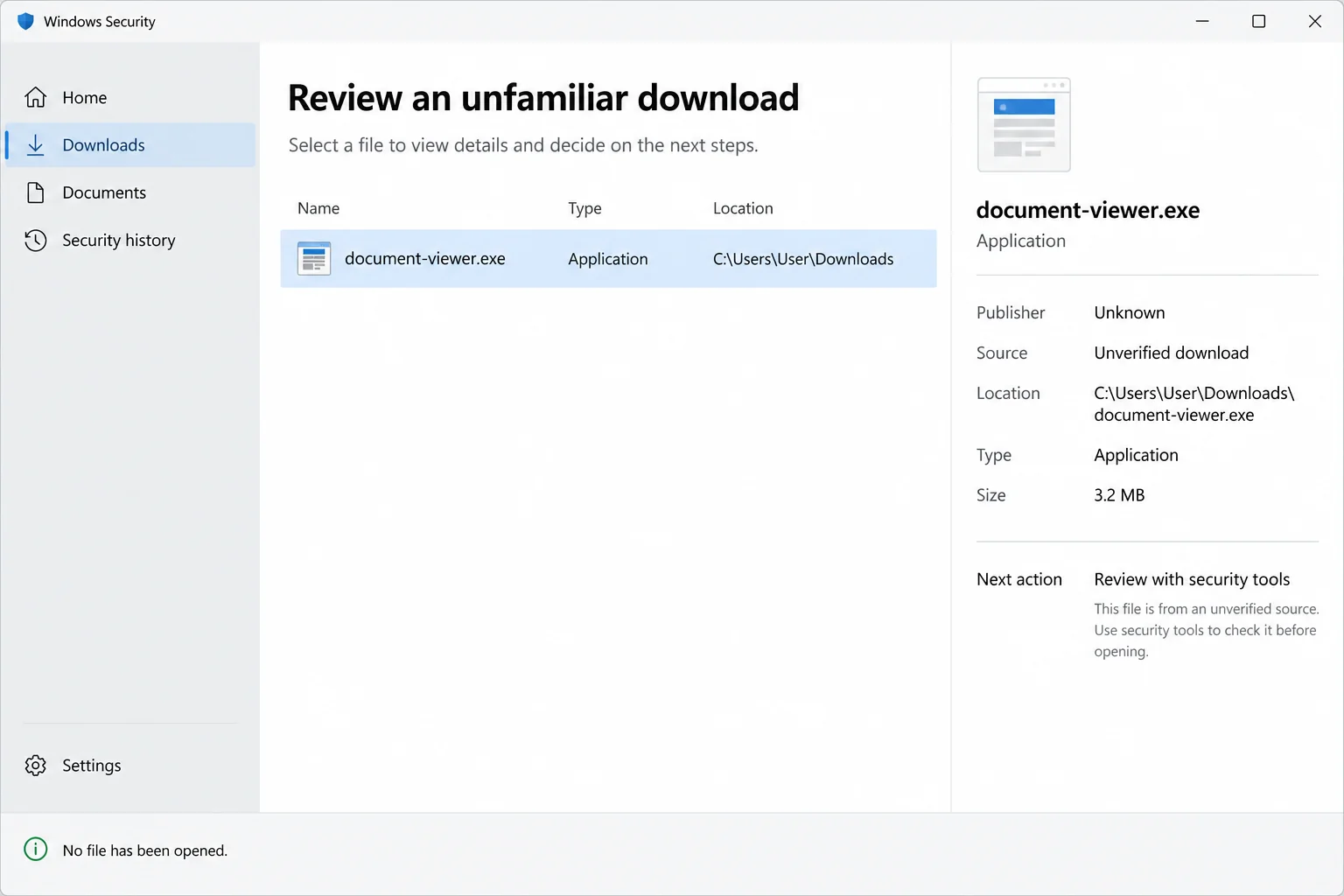
The lead illustration is a fictional file-review interface. It is not a genuine Windows Security screen or a test showing TRIPAUL3 on a particular computer.
A malware name does not tell you how your device was exposed
No specimen was executed or infection reproduced here. An exact initial delivery route cannot be assigned to an individual reader from the family name alone.
Keep the alert, detection location, and relevant activity together. They help distinguish a blocked download from code that actually ran.
A browser popup displaying a malware name is not equivalent to a finding inside your real security software. Confirm the source of the warning first.
The priorities are containment, cleanup, and account protection
- Stop using a potentially compromised computer for sensitive sign-ins.
- Preserve useful evidence before making sweeping changes.
- Use trusted Windows tools and recover exposed accounts from an unaffected environment.
This guide separates those jobs. A completed scan can help address malware, but it cannot bring back information already copied or certify every account.
Start by Identifying the Warning You Actually Have
Open the security application from its normal installed shortcut or Windows settings. Do not use a download button inside a webpage claiming your computer is infected.
Look for an actual detection record. Note the product, exact detection text, date, file path, and action already taken.
A quarantined file and an active threat are not the same status. Keep the tool’s wording rather than turning every alert into a confirmed live intrusion.
Similarly, a slow application, busy fan, or unfamiliar process is not enough to identify TRIPAUL3. Performance problems have many possible explanations.
If this is a work computer, report the observation before attempting personal repairs. The device may belong to a wider incident your administrator is investigating.
Do not erase a suspicious file merely because its name resembles a technical term. Legitimate components and malicious files can both use plausible names.
A useful first decision is whether you need routine scanning, immediate containment, or professional assistance. Let the actual evidence guide that choice.
How a TRIPAUL3 Remote-Access Incident Can Develop
Step 1: Untrusted software gets an opportunity to run
A remote-access infection requires an entry route. Depending on the incident, that might involve a download, a malicious attachment, or access already present on the system.
Those are possibilities to investigate, not a claim that one particular email or installer delivered every TRIPAUL3 infection.
Think back to recent activity without reopening suspicious items. Record anything relevant, including a security warning that was dismissed or an unfamiliar program installed.
A file’s location can help reconstruct the sequence. Something in Downloads may need different investigation from a detection in a running process.
Do not reinstall the suspected program to confirm your memory. The original event and existing records are safer starting points.
Step 2: Remote access makes the computer an unreliable place for secrets
The defining concern with a RAT is unauthorized access. The operator may interact with the compromised environment rather than merely display advertisements.
When surveillance or credential theft is possible, typing a replacement password on that computer can expose the replacement too.
Move urgent account recovery to an unaffected device. This is a practical boundary, not a claim that every account was definitely stolen.
Consider the computer’s role. A personal browsing machine, a finance workstation, and an administrator’s laptop hold different access and require different response scope.
Tell support about that role early. They need to know what the device could reach, not just the malware name in a report.
Step 3: The absence of visible disruption can delay a response
A computer may continue opening documents and browsing normally while unauthorized activity is investigated. Normal performance does not establish trustworthy access controls.
Equally, a crash does not prove an attacker is currently watching. Avoid interpreting every inconvenience as confirmation of the worst possibility.
Use security findings, account records, and professional investigation where available. They provide a firmer basis than watching the mouse pointer for unusual movement.
Do not wait for financial loss before acting on a credible detection. Containment aims to prevent further exposure while the facts are assessed.
Keep any affected backup or shared-storage connections in mind. Tell your incident team about them before reconnecting media to a potentially compromised machine.
Step 4: Cleanup must be followed by recovery checks
Removing a detected component addresses part of the incident. Account sessions, copied files, unauthorized settings, or additional software may need separate review.
A detection that returns after restarting is a reason to seek more help. Repeatedly dismissing the alert does not resolve the cause.
A trusted reinstall may be appropriate when integrity cannot be established. That is a planned recovery operation, not a first instruction to erase everything.
Preserve necessary data and arrange access to legitimate installation media before taking that route. Managed devices should follow their organization’s recovery process.
The goal is a system you can use with justified confidence, not simply a screen that no longer displays a warning.
What to Do After a Suspected TRIPAUL3 Detection
-
Pause sensitive activity. Stop banking, work approvals, password changes, and wallet use on the affected computer until the exposure is assessed.
If active compromise is suspected, disconnect its network connection and contact trusted support. Use another device for the conversation.
Do not grant remote access to someone who contacted you through a popup or unsolicited call. A malware concern should not become a support impersonation incident.
-
Preserve the information needed for a decision. Save the alert details and note what occurred before it appeared, without running the suspicious item again.
For work equipment, let IT determine what evidence must be collected. Unplanned cleanup can remove information useful for understanding the wider incident.
Keep the summary factual. “The tool quarantined this file” is more useful than an unsupported assertion that every password or document has been stolen.
-
Plan safe scanning. Use the Windows-specific sequence below or your organization’s approved tools. Obtain software through maintained, trustworthy routes.
Malwarebytes can help scan and quarantine malicious software. Its findings do not establish whether a password or document was copied before cleanup.
Do not disable protection to install an unknown cleaner. If a genuine security application will not start, seek help rather than improvising with advertised repair utilities.
Keep scan reports and record any restart requested by the tool. Those results help determine whether further remediation is needed.
-
Protect accounts independently. From a clean device, address exposed email, work, financial, and other important accounts according to their actual use on the computer.
Review active sessions, recovery contacts, and authorized applications as well as passwords. Account access may require more than one control to restore.
Contact the genuine financial provider promptly if unauthorized activity is visible. Malware removal should not delay reporting an actual payment problem.
-
Get help when trust remains uncertain. Persistent detections, administrator-level access, business secrets, or repeated security failures may justify specialist investigation or a supported rebuild.
Use your organization’s response team or the MalwareTips Windows malware-removal help forum for unresolved personal-computer cases.
Share logs only through the appropriate process and review them for private information. Never post passwords, wallet secrets, or confidential documents to prove the problem.
After recovery, AdGuard can help filter some harmful advertising. It neither removes a remote-access infection nor repairs an account whose credentials were exposed.
Windows Cleanup for a Suspected Remote-Access Infection
Step 1: Establish a safe place to work
For a managed computer, stop here and follow IT’s incident instructions. The remaining steps are for a personal Windows device when a supported cleanup is appropriate.
Keep external backup drives disconnected. Do not browse personal accounts on the affected installation while preparing scanners.
Use a clean device to obtain instructions and verify download sources. If transferring a legitimate installer, avoid carrying the suspected file alongside it.
Network isolation and obtaining updates need coordination. Ask a technician how to prepare current tools if reconnecting the computer would create unacceptable risk.
Step 2: Inspect Windows Security and run the appropriate scan
Open Windows Security, then Virus and threat protection. Review current findings and obtain current security intelligence when safely possible.
Under Scan options, select the scan appropriate to the situation. A Full scan checks more than a quick scan and may take longer.
Microsoft Defender Offline restarts the computer to scan outside the normal Windows session. Save open work and read the restart notice before starting it.
Microsoft’s scan guidance explains these options. Follow the current interface and do not treat one clean result as proof that no data was exposed.
Step 3: Install Malwarebytes, scan Windows, and quarantine threats
Use this procedure on a personal Windows PC after preserving the incident details. For a managed computer, let your security team decide when scanning should begin.
Malwarebytes can find and quarantine threats. Its free Custom Scan is separate from paid real-time protection and Threat Scan. Neither edition supplies ransomware decryption keys.
-
Download the Windows installer.
Open the official download page using the button below. Select Free Download there and save the Windows installer.
If the affected PC cannot browse safely, use a trusted computer and arrange an appropriate transfer without exposing clean backup media.
Malwarebytes for WindowsManual scanning and quarantine, with optional paid protection.
Opens the official free-scanner page. Choose its Windows download; paid protection is optional.
-
Open the setup file.
Open Downloads and double-click the MBSetup file. If Windows requests permission, check that the prompt identifies Malwarebytes before allowing the installation.

-
Complete setup without accepting unwanted extras.
Select Install, choose the appropriate Personal or Business device option, and continue. Business-managed computers should be handled through their administrator’s process.

Review any browser extension, trial, or subscription offers. Skip optional features you do not want, then select Open Malwarebytes when setup finishes.

-
Choose a supported scan.
Find the Scanner tile on the dashboard. For a free Custom Scan, open its three-dot menu, select Advanced Scan, and choose Custom Scan.
Expand the file-location selector and select the system drive and relevant locations. Review potentially unwanted program settings, then select Start Custom Scan.
A paid or eligible trial edition may also offer Threat Scan. Use the controls available in your edition; do not disable Windows protections to unlock another option.

-
Let the scan complete and inspect its findings.
Keep the computer powered on while scanning and wait for the results. A large Custom Scan can take longer than a scan limited to common locations.
Review each detection and its location. Leave confirmed threats selected and choose Quarantine. Save the report if a detection is unclear rather than adding it to exclusions.
The results illustration uses sample detections to show the Quarantine control. Those names are not identifiers for the malware discussed in this article.

-
Finish removal and handle a requested restart.
Follow the quarantine prompts. If a restart is requested, save your work and coordinate it with anyone preserving evidence before restarting.

Reopen the application afterward and review the result. Repeated detections, blocked removal, or signs of continuing access need further investigation, not an automatic clean-device conclusion.
The screen design can vary by installed release. Follow the named controls and the vendor’s current scan instructions if your version looks different.
Step 4: Check unresolved findings without deleting files by guesswork
Use a second scanner when the original findings, continuing symptoms, or a trusted responder justify it. It is not a requirement to purchase several products.
HitmanPro provides an optional second opinion when a Windows infection or unresolved finding warrants another check. Run scanners sequentially, not at the same time.
Scanning is free. Removal needs an eligible one-time 30-day trial or a paid license. A computer that already used its trial may not qualify again.
-
Obtain HitmanPro from the established download route.
HitmanProOptional second-opinion Windows scanner.
Free scan. Removal requires an eligible trial or paid license.
-
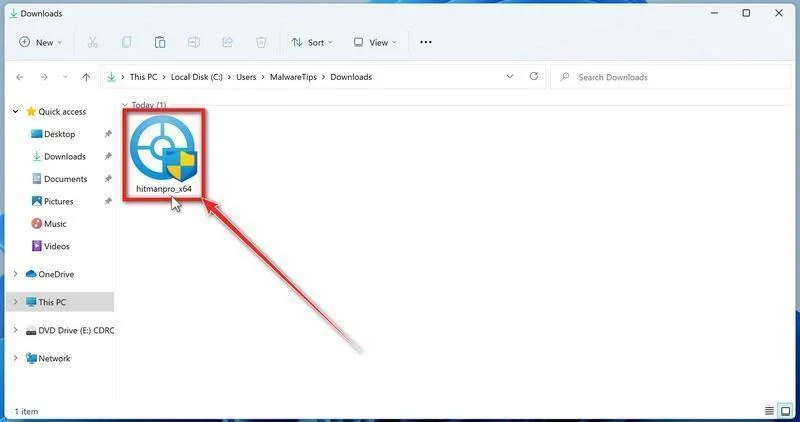
Launch the downloaded program.
Open Downloads and run the appropriate HitmanPro file for your system. Check the publisher in any Windows permission prompt before allowing it.
-
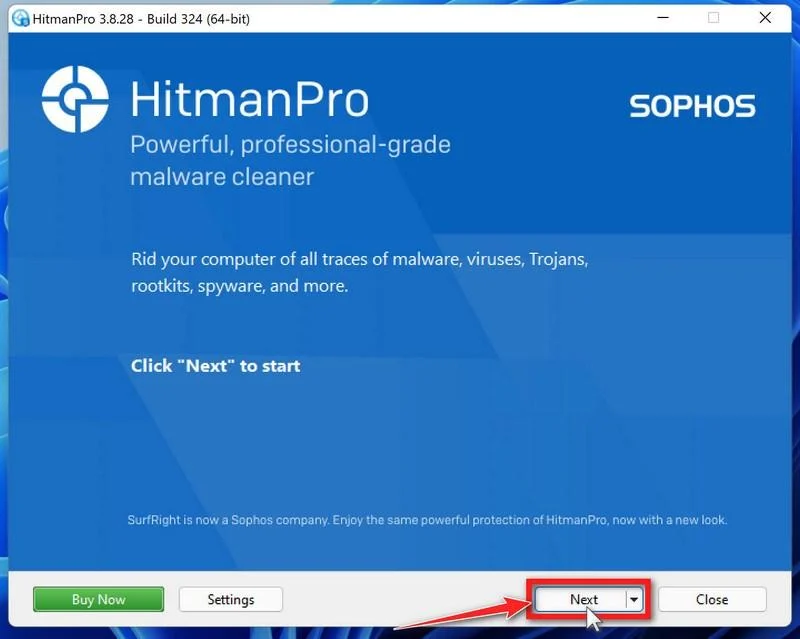
Start the scan.
Open HitmanPro, select Next, and follow its license and setup prompts. Its cloud checks require an internet connection; arrange controlled access if the PC was isolated.
-
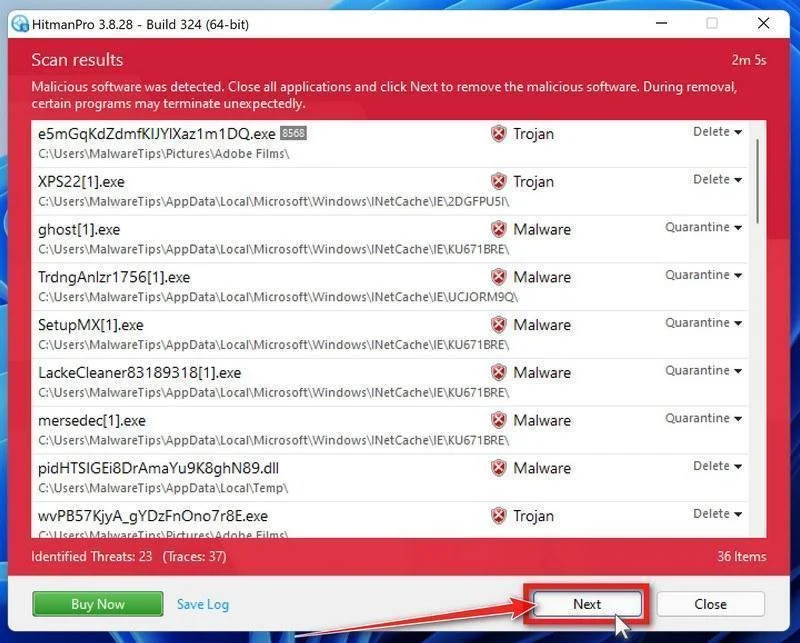
Review the results before removal.
Allow scanning to finish. Inspect the listed objects and proposed actions, then select Next for confirmed unwanted items. Save uncertain findings for qualified assistance.
-
Use an eligible license and complete cleanup.
If available, select Activate free license and follow the trial prompts. Otherwise, use an existing license or retain the report; do not assume purchase is mandatory.
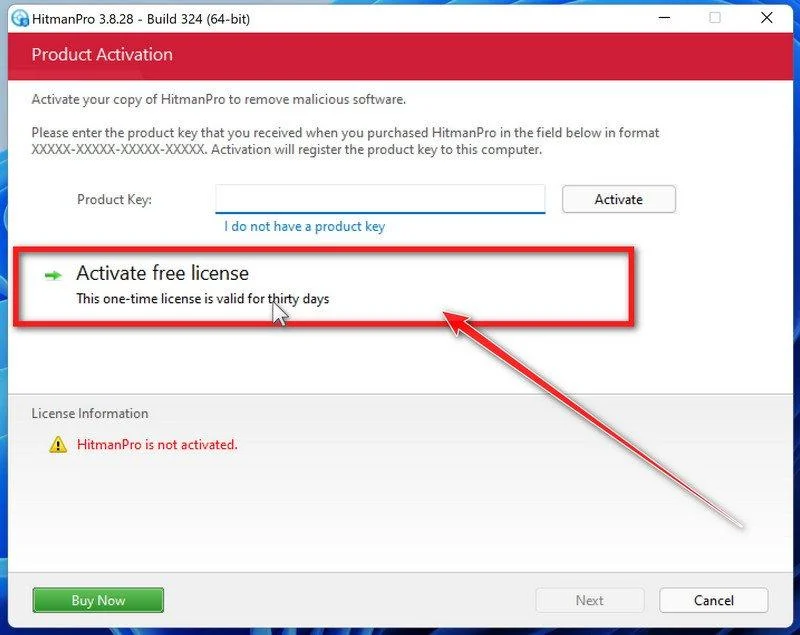
Finish the proposed cleanup and restart if requested. If problems persist, keep both scanners’ reports and seek help rather than repeatedly activating unfamiliar repair tools.
Step 5: Verify the device before restoring normal use
Confirm that the intended quarantine actions completed and the security tool is working. Review new findings after any required restart.
Restore documents carefully, keeping executables and suspicious archives out of the recovery set. Reinstall needed applications from genuine sources.
Reconnect backup media only when the environment is ready. Do not use your only good copy as a trial run for an uncertain recovery.
Check that your ordinary applications came from their intended publishers. Do not restore an unfamiliar installer merely because it was included in an older backup.
Continue the account review even if the machine now works normally. Device health and the privacy of information previously exposed are separate outcomes.
Make the Account Recovery List Specific
Start with the services actually used on the affected computer. Prioritize accounts that can reset others or authorize valuable actions.
For each one, record the recovery action, suspicious activity found, and any support reference. Keep secrets out of that checklist.
If a browser held a password manager session, consult the manager’s genuine incident guidance. Do not assume changing one master password automatically fixes every saved account.
If cryptocurrency secrets may have been exposed, obtain wallet-specific help from a trusted device. A scanner cannot replace the secret controlling an account.
For shared systems, coordinate with other users rather than silently changing their access. They may need to assess their own sessions and credentials.
Record unresolved questions for support. A planned follow-up is safer than treating the disappearance of an alert as the end of every related risk.
Frequently Asked Questions
What is TRIPAUL3 RAT?
It is reported as a Windows remote-access Trojan with surveillance and information-theft capabilities. A credible detection warrants device containment and account review.
Does an unfamiliar process prove TRIPAUL3 is present?
No. Process names and slow performance are insufficient to identify a malware family. Preserve reliable security findings and seek help interpreting them.
Should I delete every file named in an online guide?
No. File names can overlap with legitimate software. Use detection context and supported quarantine rather than arbitrary deletion of system files.
Can a clean scan restore stolen passwords?
No. Scanning addresses malicious software. Replace exposed credentials and review account access separately from the device cleanup.
Do I always need to erase Windows immediately?
No. Assess the evidence and recovery options first. A supported rebuild may be appropriate when integrity remains uncertain, especially for sensitive or managed systems.
Are these instructions for Android or iPhone?
No. This guide concerns Windows. Do not run Windows installers or apply its system instructions to a different platform.
The Bottom Line
Do not rerun a suspicious file or rely on normal performance to dismiss a credible TRIPAUL3 warning. Contain the Windows device and use trusted cleanup assistance.
Recover exposed accounts from an unaffected environment. If system integrity cannot be established, arrange a supported rebuild rather than returning to sensitive work with unresolved access.

Join the discussion
0 commentsShare your experience or ask a question about this article.
Your progress
Did these steps help?
Let us know how the guide worked for you.
Describe what you see and the step you reached. Keep passwords and other private information out.
Discussion
Start the conversation
Have a question or something useful to share? Add the first comment.