

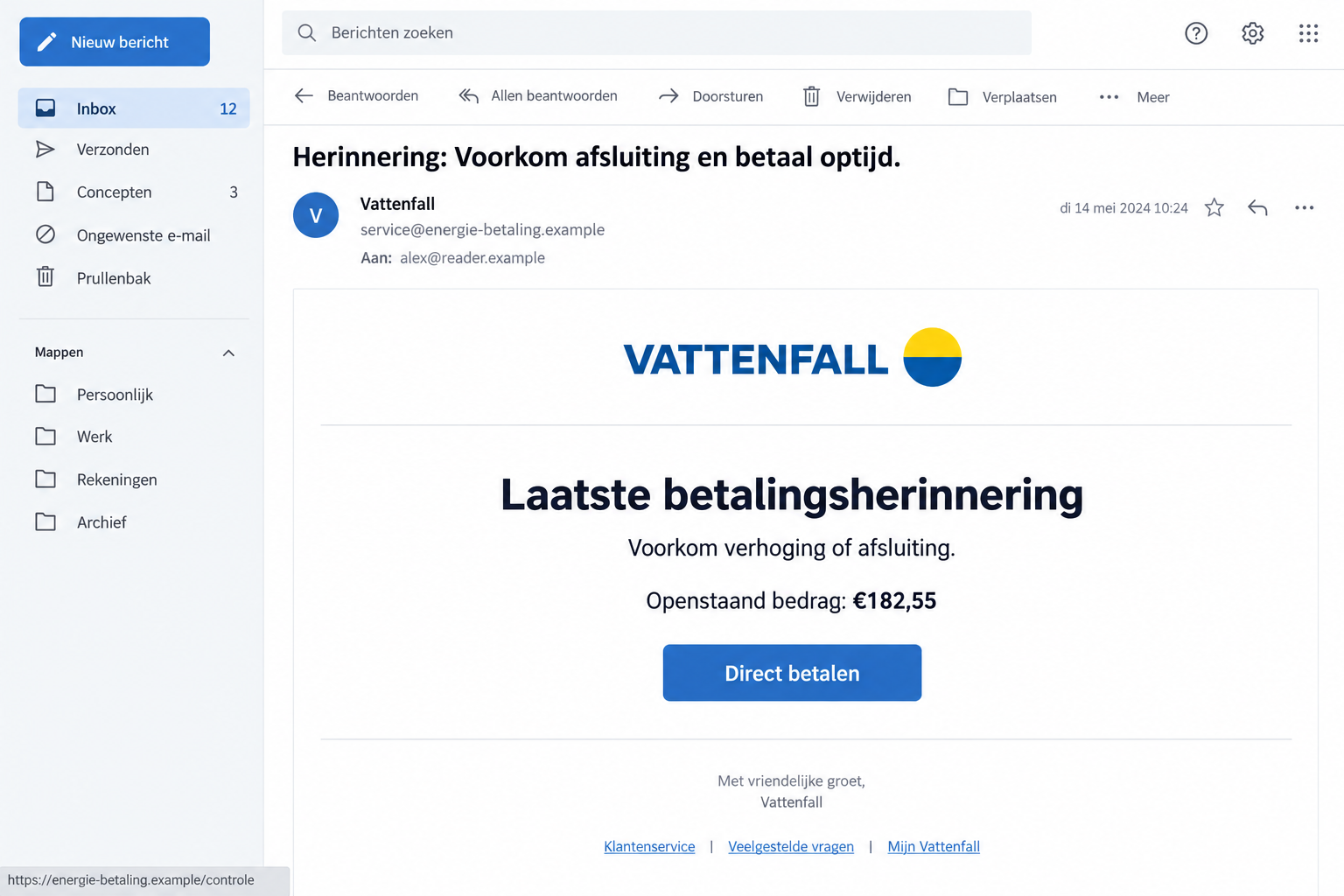
A Vattenfall email warns that an unpaid bill could lead to disconnection. There’s a payment button, and the amount looks plausible enough to worry about.
When the threat concerns your energy supply, it’s tempting to deal with it immediately. First, make sure you’re dealing with the right company.
Overview
A False Bill Borrows a Real Household Worry
The Vattenfall email scam impersonates the energy supplier with reminders about supposedly unpaid charges. Some versions threaten extra costs or disconnection.
That pressure makes a payment button look like a way to protect your home. The sender wants payment to come before verification.
The real Vattenfall isn’t the scam operator. Its recognizable name and ordinary billing language are being used to make a false request convincing.
The Lure Appears in Confirmed Phishing Warnings
Vattenfall warns about phishing emails using its identity, including unpaid-bill messages. It directs uncertain customers to their genuine account or app.
One reported false reminder demands €182.55 and invokes iDEAL or Wero. That is the example’s amount, not a fixed charge across every version.
The lead image illustrates the message with fictional sender details. Its date and interface are illustrative, not an original capture or evidence of an actual debt.
Check the Balance, Not the Email’s Confidence
Don’t use the warning itself to decide what you owe. Start a separate visit to the genuine service and inspect your invoices and correspondence.
- The central hook is avoiding disruption to your energy supply.
- A familiar amount, logo, or payment brand doesn’t verify the recipient of your money.
- Real payment emails can exist, so “all payment links are fake” is the wrong rule.
- If money or financial details reached an impersonator, contact the bank or payment provider promptly.
Why the Shutoff Threat Changes How You Read
Most people can ignore an implausible prize. A warning about electricity or heating is harder to dismiss because it touches daily life.
You may start reviewing your memory rather than the message: Did a direct debit fail? Did someone else in the household overlook a notice?
The email benefits from that uncertainty. You don’t need to believe every detail to decide that paying quickly might be safer than waiting.
But paying the wrong recipient doesn’t resolve a real energy bill. Verification protects the payment itself, not just your personal information.
A plausible amount can deepen the effect. A figure that resembles a household bill may attract less suspicion than an extravagant demand.
Don’t try to authenticate a message by deciding whether the amount feels normal. Compare it with the actual invoice in your genuine account.
If you’re already having payment difficulties, ask the real supplier for help. A stranger’s deadline isn’t a substitute for the company’s actual account process.
You can take the underlying concern seriously without accepting the email’s proposed solution. That distinction is the quickest way out of the pressure.
How the Vattenfall Email Scam Works
Step 1: A Reminder Claims an Earlier Payment Was Missed
The message arrives as an account matter rather than an unfamiliar offer. It asks you to believe that the payment problem already exists.
A phrase such as final reminder implies earlier correspondence, whether or not you remember receiving it. That can make you blame a missed email.
Start with your records instead. Check which supplier serves the property and who in the household manages the account.
If someone else normally pays, speak to them through your usual contact method. Don’t pass the email along with instructions to use its button.
Step 2: Higher Costs or Disconnection Make Delay Feel Dangerous
The reported August reminder threatens consequences for leaving the supposed balance unpaid. That turns a billing question into an apparent household emergency.
The threat is part of the false message. Receiving it does not establish that your supply is scheduled for disconnection.
Don’t let the sender define the only available response. An independent account check can tell you whether there’s a real issue to address.
If the real account does show arrears, keep using verified supplier channels. A coincidental genuine debt still doesn’t validate an impersonator’s instructions.
Step 3: Recognizable Payment Names Make the Button Look Ordinary
Familiar payment branding fits the story of an energy bill. It can make a false request seem less unusual without identifying the recipient.
A name or logo inside an email is content the sender can copy. It isn’t confirmation from a bank or payment service.
On any genuine payment flow, understand what you are approving. Don’t confirm a request merely because its screen looks familiar or its amount resembles the email.
The final payment destination and fields aren’t exposed in the reported specimen. We cannot claim that every version takes cards or requests banking credentials.
Step 4: The Recipient Is Pushed to Act Before Checking the Account
The sender has supplied a problem, a consequence, and a convenient button. The intended shortcut is to follow that sequence without leaving the message.
Break it before entering information or approving a transaction. Open the supplier’s service yourself and compare the account record.
If you’ve already submitted something, stop there. Don’t send a second payment to clear an error or complete a supposed verification.
Work from your bank’s record to establish what happened. A false page’s receipt or error message isn’t a reliable account of where money went.
Real Vattenfall Payment Emails Do Exist
Vattenfall does send genuine payment emails. That makes this scam harder to spot than a message asking for an obviously unusual payment.
Vattenfall describes its legitimate online payment process. A failed or missed payment can produce a genuine email offering payment options.
That means the presence of a payment button alone doesn’t settle the question. The safe fallback is to open Mijn Vattenfall independently.
The company also identifies Docdata as part of its card-payment process. An authorized processor is different from an arbitrary outside destination.
Don’t memorize a single visual layout and assume every variation is fraudulent. Genuine interfaces can change, while criminals can copy an old design perfectly.
For a doubtful demand, use the account and contact information you reach yourself. You shouldn’t need to establish the legitimacy of a processor from the email.
Vattenfall’s published recognition guidance lists multiple sending domains. Check its current guidance rather than assuming only one address can ever be legitimate.
A familiar sender remains one clue, not permission to surrender codes or account details. The requested action and independently confirmed account record matter too.
Checking the Bill Through Mijn Vattenfall or the Energie-App
Use a trusted bookmark or the genuine app already on your device. Don’t install an app offered by the suspicious email.
Review the invoices and their payment status. Compare the billing period and customer account, not just the headline amount.
Look at correspondence as well. The supplier’s guidance points customers there to check whether a new email or letter is available.
If the record doesn’t explain the request, contact Vattenfall through its published customer-service options. Describe the disputed demand without supplying unnecessary sensitive material.
For a shared household, agree who will make the check. Two worried people can otherwise investigate separately or accidentally pay the same supposed demand.
After checking, keep a short note of the genuine balance and any advice received. That makes later reminders easier to assess.
If you cannot recognize the billing period, ask the supplier to explain it before approving payment. Don’t rely on a stranger’s summary of your energy use.
If you recently moved, confirm which property and customer account the genuine charge concerns. Old household paperwork shouldn’t be used to validate a new email automatically.
For someone managing bills for a relative, keep the check collaborative. The account holder can review the real record without handing login codes to an unsolicited caller.
What if You Can’t Sign In?
A login problem doesn’t make the email’s alternative route trustworthy. Use the real site’s recovery process or contact support independently.
If you changed an email address recently, explain that to the supplier. Don’t send a password or login approval to someone who offers to fix it.
If a family member normally manages the account, ask for their help rather than borrowing credentials through a chat conversation.
You can still preserve the suspicious message while sorting out account access. There’s no need to solve every issue through the sender’s deadline.
Personal Details Don’t Prove the Supplier Sent It
A correct name or customer-looking reference can make a reminder more convincing. It doesn’t prove that the person contacting you controls the real account.
Some information may be copied, guessed, or obtained elsewhere. Receiving a phishing email doesn’t establish a data breach at the energy company.
Vattenfall’s data-protection guidance explains how personal details can make deceptive approaches more credible. Treat unexpected requests as requests to verify, not as proof of identity.
If someone calls after the email, don’t confirm more details to help them “locate” you. End the call and contact the supplier yourself.
A person who knows the amount in the message could simply have sent it. Their familiarity with the warning isn’t independent corroboration.
Be especially careful if the conversation shifts to banking approvals or moving money. Those are separate actions, not routine proof that a bill belongs to you.
What to Do if You Have Fallen Victim to This Scam
Begin with any financial exposure, then secure accounts and report the impersonation. Don’t wait for the sender to acknowledge that something went wrong.
-
Call the payment provider after a payment or financial disclosure. Use a verified app or number and explain that the bill was fraudulent.
Give the transaction time, amount, and recipient information shown by the bank. Ask which protective or recovery steps are still available.
If you exposed a card, mention that even when no charge appears. If you approved a banking request, describe the approval as precisely as possible.
-
Check the genuine energy account separately. Confirm whether anything is actually outstanding and whether the supplier received a payment.
A transfer to an impersonator doesn’t necessarily reduce a genuine balance. Ask customer service how to handle any real account issue without paying twice unnecessarily.
-
Replace a password submitted to the false page. Change it through the real service and review recovery information for unexpected changes.
Secure other accounts using that password, especially your email. A unique replacement limits the damage from exposing one credential.
-
Keep the original demand and payment evidence. Save the message and any transaction receipt from the financial provider.
Note what you entered and whether you installed anything. Don’t post full bank details or customer records in a public warning.
-
Report the impersonation through genuine channels. Alert Vattenfall using its official contact page. Suspicious emails can also go to Fraudehelpdesk’s reporting address.
If money was stolen or identity information misused, seek police or appropriate official fraud assistance. Keep the reference numbers so the reports can be connected.
-
Deal with downloads or persistent redirects when they occurred. Opening a payment message alone doesn’t prove that malicious software reached your device.
For an unexpected program or suspected infection, Malwarebytes can help assess malware. AdGuard may reduce unwanted ads or redirects where relevant.
Neither reverses a transfer or changes a stolen password. Continue the bank and account steps even if a device check finds nothing.
Don’t Let a Second Caller Turn Concern Into Another Payment
After a frightening bill, an offer to help can sound welcome. That doesn’t mean a new caller or message has been independently verified.
Don’t let someone who contacted you dictate the recovery process. Find the supplier or bank yourself, outside that conversation.
If they ask you to approve a transaction to cancel another one, stop and ask the real financial provider what the screen means.
If they offer a refund but demand an advance transfer, don’t pay. A further payment needs a legitimate basis, not reassurance from a stranger.
These are precautions for later approaches, not a claim that every false Vattenfall email leads to the same follow-up.
When helping a relative, focus on the bank record and official account. Repeatedly rereading the threatening email can make its urgency feel more convincing.
Once the immediate issue is handled, agree on one trusted place to check future bills. A simple routine is more useful than trying to memorize every scam address.
Frequently Asked Questions
Is the Vattenfall Shutoff Email a Confirmed Scam?
The documented false reminder is phishing, and Vattenfall warns about this impersonation pattern. A similar-looking message should be checked through the genuine account.
Does Vattenfall Ever Send a Real Payment Link?
Yes. Its official payment guidance describes genuine payment emails. If you’re uncertain, use Mijn Vattenfall independently rather than deciding from the button alone.
Is €182.55 Always the Scam Amount?
No. That figure appears in one reported example. A different amount doesn’t make another suspicious reminder genuine.
Can the Email Sender Disconnect My Energy?
The false message doesn’t establish a real disconnection process. Check any actual balance or supply concern with Vattenfall through verified channels.
What if the Message Knows My Name?
A personal detail isn’t conclusive sender verification. Confirm the request independently, and don’t assume receiving the email proves a breach at Vattenfall.
Will Paying the Scammer Clear My Real Bill?
Don’t assume so. Check where the payment went with your bank, then ask the genuine supplier about the actual account balance.
The Bottom Line
Don’t pay through the false shutoff warning. The Vattenfall email scam uses a household worry to rush you past checking the real bill.
Open the genuine account or contact the supplier independently. If you already paid or exposed financial details, involve your bank immediately and preserve the message.

Join the discussion
0 commentsShare your experience or ask a question about this article.
Discussion
Start the conversation
Have a question or something useful to share? Add the first comment.